
Printing & Materials
Digital, offset, screen — choose the right process, paper and ink for cost and quality
- Audience
- Designers・Procurement Staff・Brand Owners
- Digital Printing
- Offset Printing
- Inkjet Printing
- Screen Printing
- Letterpress
- Gravure
- Paper Materials
- Ink
- Cost

Smudging on Specialty Art Paper? UV vs. Soy Ink Drying and Material Choices
Struggling with ink that never dries and causes set-off smudges on art paper or foil board? A production consultant with a decade of floor experience breaks down the physical differences between UV curing and traditional soy inks, giving designers and buyers a clear strategy for material selection and finishing
Food Packaging Ink Buying: A Field Guide to the Common Traps
Bad food packaging ink rarely fails on color. It fails on migration risk, missing paperwork, and brand liability. This piece walks through the buying-side checklist, direct contact, outer print, monolayer paper, multi-layer laminate, designers, printers, and brand owners can run it before sending files to print
After Longview's Shutdown, Paper Risk Gets Repriced
Nippon Dynawave's Longview mill is still paying employees during the shutdown. For Taiwan print shops, that comes down to three things: paper substitution, quote validity, and customer approval documents This piece takes the procurement and production-floor consulting view of MINDS to unpack how a North American mill outage reaches Asia, and which forms small and midsize shops should fill in today
Insert Card Design That Actually Works
Don't squeeze everything your brand wants to say onto a small slip of paper A useful insert tells customers exactly what to do in the 30 seconds after opening the box, so design, print, and repurchase tracking all line up

A Print Buying Guide for E-commerce Unboxing
To get e-commerce unboxing right, first treat thank-you cards, stickers, tape, cushioning inserts, and cartons as one brand visual system, not as 5 separate orders to price-shop Written from a print consultant's point of view, this guide breaks down the places where design, purchasing, and production handoff most often go wrong, so small and midsize brands can build a steady, easy-to-reorder unboxing experience on a limited budget
How to Print Pantone 872C Metallic Gold
To print Pantone 872C with a true gold finish, the right move is to treat it as a metallic spot color, not convert it directly to CMYK and force it through process printing This article breaks down the practical print-shop decisions behind metallic ink, foil stamping, paper, proofing, and design file setup
Cracking Packaging Cost Blind Spots: How Budget Paper Can Print a High-End Look
Many startups spend heavily on high-end paper for their packaging, ignoring the cost-effective strategy of pairing budget paper with precise finishing. This guide breaks down quote structures to help you spend your budget in the right places
Can't Print Hairlines and Small Text? A Guide to Paper Absorption and Prepress Pitfalls
Fine lines that scale effortlessly on screen often turn into broken lines or blurry smudges on the printing press. This article synthesizes over a decade of production line experience into concrete sizing metrics to help you bridge the physical gap between design and finished product

From Pilot Run to Mass Production: How to Smoothly Transition Files and Budgets from Digital to Offset Printing?
The same design looks stunning in the pilot run but turns out off-color and cost-prohibitive in mass production. This article guides you through three practical dimensions, print run, color, and imposition, to master the cost crossover point between digital and offset printing, ensuring that outsourcing is no longer a guessing game
Avoiding Corrugated Box Printing Pitfalls: A Screen and Flexo Prep Guide for E-commerce Packaging
E-commerce shipping boxes are often a consumer's first touchpoint with a brand. However, designers frequently apply poster-printing concepts to corrugated cardboard, resulting in muddy ink and dull colors. Drawing from production line realities, this article clarifies the differences between screen printing and flexography on boxes to help you avoid artwork prep pitfalls early on
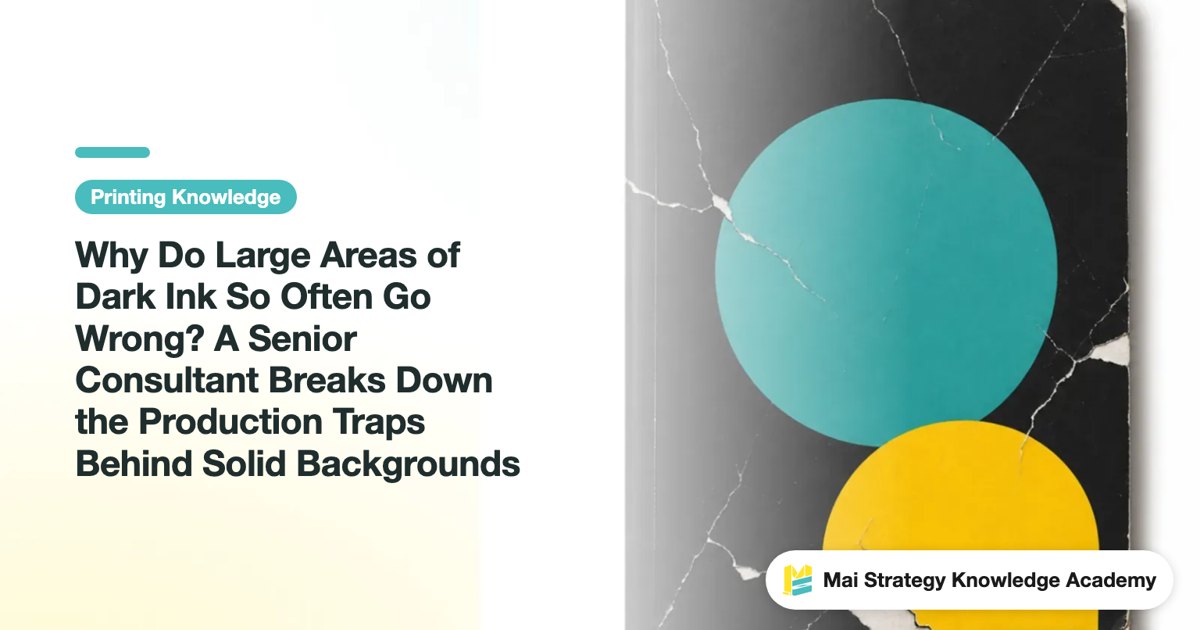
Why Do Large Areas of Dark Ink So Often Go Wrong? A Senior Consultant Breaks Down the Production Traps Behind Solid Backgrounds
Large-area dark printing on catalog covers, packaging boxes, and the backs of business cards may look like nothing more than filling the background with color, but in practice it is one of the job types where production risk is most concentrated. This article walks you through the root causes behind why dark solid backgrounds so easily run into trouble, from ink drying mechanisms and total ink coverage control to finishing timing, as well as the preventive steps designers can take before sending files to print

Will Choosing Packaging Boxes Based Solely on Basis Weight Lead to Pitfalls?
The exact same 300gsm paper can yield entirely different stiffness, crease lines, and tactile feel when made into small boxes, shipping boxes, or hanging boxes. Through packaging structure practice, this article breaks down basis weight, thickness, grain direction, fibers, lamination, and post-processing, ensuring designers and procurement specialists know exactly what to ask before sampling

Why Won't the Ink Dry? A Senior Consultant Breaks Down UV Printing and Special Substrate Decision-Making
A design can look stunning on screen, but if the ink won't dry on plastic or foil stock, you've got a disaster. Drawing on over a decade of production line consulting experience, this piece walks you through when it's worth spending up on UV printing and how to sidestep the delivery-killing pitfalls of setoff and blocking
Acrylic and Metal Merchandise Printing: How to Choose Between Screen Printing and Digital UV Flatbed Printing?
When producing brand merchandise like acrylic standees, metal nameplates, or aluminum alloy ID badges, the first decision point is the process. MINDS has long handled printing projects on non-paper materials and has summarized four decision-making dimensions, minimum order quantity, color performance, scratch resistance, and proofing cost, to help you choose the right process before placing your order, rather than realizing you took the wrong path only after the proofs return

How to Write AI Proofing Feedback That Actually Works
The scariest thing after receiving a digital proof, color proof, or white dummy isn't that the client has comments. It's that those comments read like a mood report. This article uses the "Seven-Column Proofing Feedback Form" from MINDS floor consultants to turn subjective feelings into revision language that printers can act on, designers can track, and buyers can sign off on
Spot color automation means the ink room needs a rethink
Heidelberg ChromaStar pushes spot color from hand-mixed ink to formula, dispensing, and measurement on the same line. Here we break down, from the pressroom floor, how spot color automation actually works, and what small and mid-sized print shops in Taiwan, brand owners, and designers should change first
How to Read Print Quotes Fairly
When quotes from three print shops vary widely, do not rush to choose the cheapest one. A fair comparison lays out size, paper, finishing, lead time, tax, and delivery terms so every dollar can be traced back to a specification

How Should a Print Proof Sign-Off Process Be Defined? A Complete Guide to Building a Traceable Approval System
When a print job goes wrong, the root cause is almost always "we agreed on it verbally" or "I thought it had already been changed." Proof sign-off is not just paperwork; it is a traceable, accountable safeguard before production begins. This article walks through how to design an approval system layer by layer, from screen proofs and digital proofs to final proofs: what to check, who should sign, and how responsibility is assigned when revisions are made after sign-off
Why Screen Printing Can Print on Special Materials
Screen printing can handle plastic, metal, glass, fabric, and dark materials. The key is ink film thickness, ink adhesion, and the drying method If you are working on acrylic signs, metal nameplates, spot thick ink, or special inks, this article will help you judge what to ask first and what to avoid

How to Control Costs When Updating Holiday Packaging
The easiest place to overspend on holiday packaging is not design fees, but rebuilding your standard packaging from scratch every time. This article uses modular packaging thinking to break down the trade-offs among belly bands, stickers, hang tags, outer sleeves, shopping bags, and fully retooling the box, helping short campaign windows such as Mid-Autumn Festival, Lunar New Year, and Mother's Day spend precisely, deliver on time, and sell through
How to Estimate Costs for Short-Run, Multi-Version Printing
The biggest trap in short-run, multi-version printing is judging costs by total quantity. What really eats your budget are version switches, color proofing, imposition, and split post-press operations. From a procurement perspective, this guide breaks down digital printing, gang-run offset, and custom-run offset so you can figure out the most logical approach before requesting quotes
PPWR Countdown: Who's on the Hook for Ink Documents
PPWR pulls packaging compliance up to the final-packaging level, and inks and coatings come along for the ride into the technical file. This piece untangles the DoC, heavy metals, PFAS, and supplier data so Taiwan's printers and brand buyers know who to ask for what

When to Choose Screen Printing for Durable Printed Pieces
For durable printed pieces such as outdoor stickers, plastic signs, fabric, and metal nameplates, the reason to choose screen printing is usually not beauty, but whether the ink layer, adhesion, and abrasion resistance can hold up in real-world use This article uses the print-order evaluation method commonly used by MINDS Printing to help designers, buyers, and printing professionals distinguish when screen printing is the right choice and when inkjet or digital printing makes more sense
Textile 2027: What Small and Mid-Sized Print Shops Need to Watch
FESPA turning Textile 2027 into an independent sourcing event sends a clear signal to print shops: textile printing is back on the diversification table. This article breaks down trade show signals into practical decisions for small and mid-sized print shops, designers, and brand buyers in Taiwan: which jobs to take on first, and which equipment investments to hold off on