
Why Do Recycling Plants Still Reject Packaging with a Recycling Symbol?
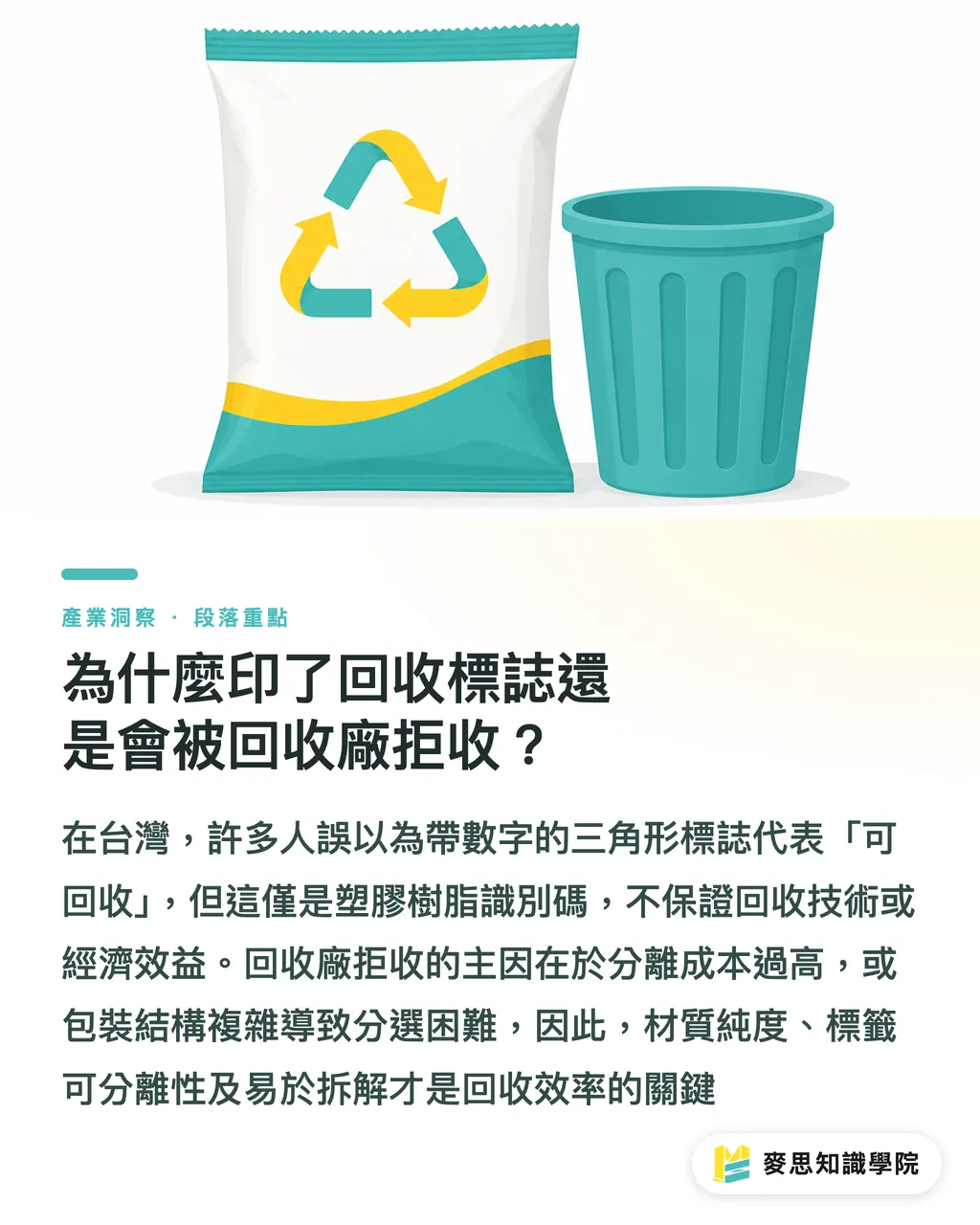
・Misleading Symbols: Many people mistake the numbered triangle symbol for 'recyclable.' In reality, its original definition is just a Resin Identification Code. It gives zero guarantee that recyclers have the tech or economic incentive to process it
・The Harsh Reality: What I see on the floor at recycling facilities is simple. If separation costs exceed the material's scrap value, or if the structure is so complicated that automated sorters misread it, the package gets tossed straight into general waste
・The Real Key to Recycling: Actual recycling efficiency comes down to material purity, label separability, and whether the physical structure comes apart easily
Which Structural Combinations Are Considered Disasters by Recycling Plants?
・PET Bottles with PVC Shrink Sleeves: This is the bad combo I see most often in cosmetics and beverage packaging. PVC and PET have nearly identical densities, making them almost impossible to separate in water float-sink tanks. Even trace amounts of PVC label residue will contaminate an entire batch of recycled PET flake
・Foil-Lined Paper Boxes: Laminating aluminum foil inside paperboard for moisture resistance gives great protection, but standard mills cannot separate paper from foil. It inevitably heads straight to the incinerator
・Multi-Material Flexible Pouches: Multi-layer films like foil-laminated pouches boost shelf life, but commercially viable recycling tech for multi-material films simply does not exist at scale today. They are almost universally treated as non-recyclable
・Spot UV and Heavy Lamination: Heavy spot UV coatings or thick plastic films severely disrupt paper de-inking and repulping, dragging down the quality of recycled paper fibers
How Do California SB 54 and EU Regulations Impact Design Decisions?
・Regulatory Hurdles: California SB 54 mandates that all packaging sold in the state must be 100% recyclable or reusable by 2032. This is no longer just about brand PR. It is a baseline survival requirement for export orders
・Shifting Trends: Talking with Western clients lately, the push toward mono-materials is unmistakable. Solutions like all-PP dispensing pumps cut down disassembly headaches on the recycling side
・Digital Sorting: To improve sorting accuracy, major global brands are rolling out digital watermarking tech like HolyGrail 2.0. This places much higher demands on print registration precision and ink consistency
How Should You Pitch Structural Changes to Clients?
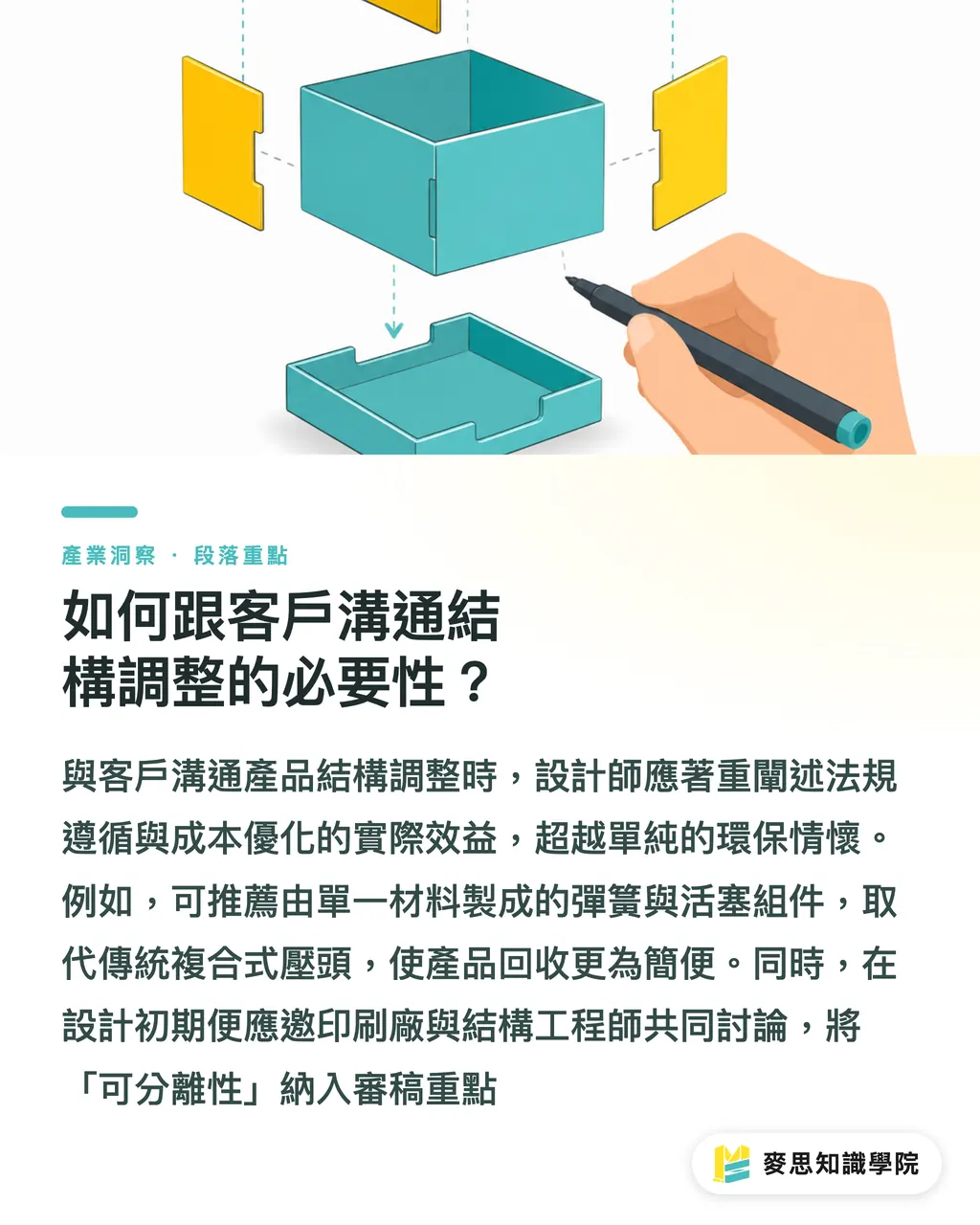
・Communication Strategy: Do not just pitch eco-friendly ideals. Bring hard numbers on regulatory risk and cost savings. Show clients exactly which finishing steps and raw material costs get eliminated by simplifying the structure
・Practical Fixes: If a brand demands that exact tactile feel during dispensing, suggest all-plastic springs and pistons instead of traditional pumps with stainless steel springs. That way, the whole container goes into the bin without needing to be violently ripped apart
・Expert Advice: Bring your printer and structural engineers into the room during the design phase. Make 'separability' a mandatory checkpoint on your design review list, such as switching to easy-tear labels or caustic-washable adhesives
Key Takeaways
・Numbers in a triangle do not mean recyclable. Material purity is the true ticket into the circular loop
・Never mix PET and PVC in one design. It is pure poison for the recycling stream
・Mono-materials are the fastest route to complying with US and European environmental regulations right now
・Check de-inking efficiency and label wash-off performance with your printer before locking the design
Going Deeper
From where I sit as a consultant, sustainable design is not about slapping on more eco-labels. It is about stripping out unnecessary composites. For designers and brands, future competitiveness comes down to who can make packaging purer. This is not just about clearing tough rules like California SB 54, but also cutting future carbon tax exposure. The next wave of print transformation will shift from surface decoration to a race for functional, circular structure
Further Reading
・[Why Was Your Eco-Labeled Packaging Rejected? 5 Golden Rules for Circular Packaging Design](/zh-TW/knowledge/circular-packaging-design/)
・[Should We Scrap the Recycling Triangle? How One Symbol Misled Consumers for 30 Years](/zh-TW/knowledge/research-brief-should-we-scrap-recycling-logo-packaging-truth/)
・[The Beauty Packaging Dilemma: A Practical Guide to Balancing Sustainable Materials and Precise Dispensing](/zh-TW/knowledge/beauty-packaging-sustainability-dispensing-precision-trends/)
・[The Reusable Cup Packaging Revolution: When Containers Become Media, How Printers and Designers Should Respond](/zh-TW/knowledge/reusable-cup-packaging-design-strategy/)
FAQ
- What if my packaging requires multi-layer materials to keep products fresh?
- Look for suppliers with mono-material barrier tech, such as all-PE or all-PP multi-layer films. While structurally multi-layered, recycling streams process them as a single material
- If a paper box has a recycling symbol, does that mean it can go straight into the paper bin?
- Not necessarily. If the box has a heavy plastic lamination or an interior foil lining that cannot be separated, recyclers will reject it. Switch to plastic-free barrier coatings or water-based varnishes instead
- Why does spot UV coating hurt recyclability?
- UV-cured inks do not release cleanly during repulping. Tiny cured particles get mixed into the recycled pulp, causing black specks and blemishes on the finished sheets that ruin their resale value
- Won't mono-material packaging make the product look cheap?
- Not at all. Modern finishing techniques achieve a premium aesthetic through structural folding, laser embossing, or specialty eco-friendly inks. It comes down to celebrating the raw material's texture rather than hiding behind heavy plastic laminates
Related articles


The Print × AI weekly
The print and AI know-how designers, brands and enterprises can use before they commit — one email, every week
MINDS Free Tools
AI background removal, a LINE sticker maker, spine & imposition calculators — all free, right in your browser, no upload.
MINDS Group
Need actual printing or gifting services?
From premium printing to online ordering and festive gifts — the MINDS Group sister brands take it from here.