
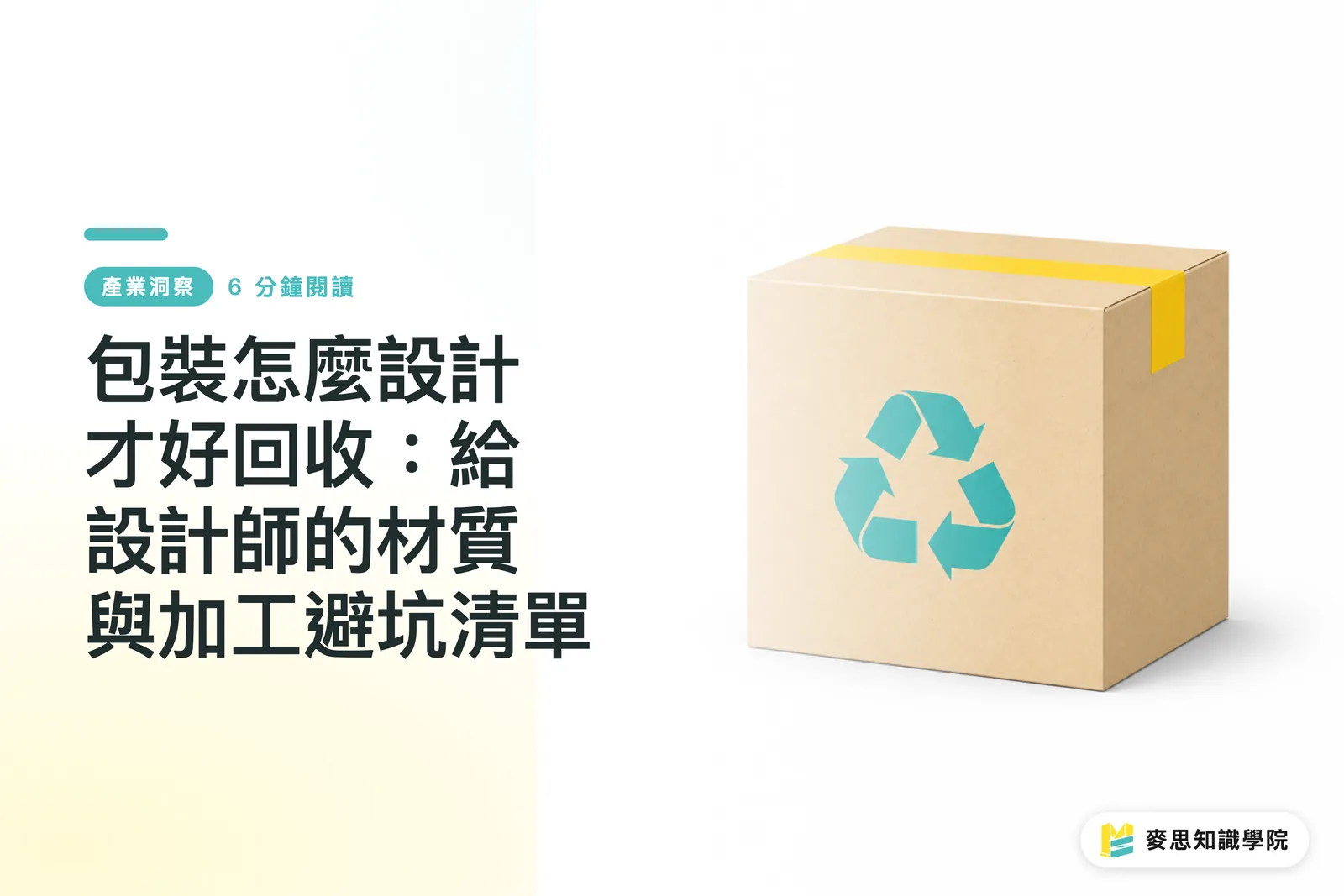
Recyclable Design Is About More Than the Main Material
Whether packaging will be accepted by a recycling facility is not decided by the main material alone. A common case: the box itself uses good paper, but a glossy film, scratch-resistant coating, foil stamping, or plastic window is added on top. Once the recycling plant's optical sorter scans it, it reads the pack as a composite material and sends it straight to incineration
・Main material: paper, paperboard, and single-material plastics such as PET or PE are the baseline entry points for recycling systems
・Lamination and coating: OPP gloss film, matte film, UV coating, and textured varnish often seal off the paper fibers, which then affects later pulp recovery
・Lamination and windows: PET window sheets, foil lamination, and double-layer composite paper must be separated before recycling. If separation costs too much, the material is usually rejected
・Ink and metallic finishing: large-area foil stamping, metallic inks, and thermochromic inks are treated as contaminants by paper mills
From the client projects I have worked on, if recyclability is not part of the decision tree during the paper box design stage, changing course at proofing or even mass production almost always means remaking the die line or choosing new materials. Time and cost both multiply

Why Do Recycling Facilities Still Reject Packaging With a Recycling Mark?
The recycling mark, the triangle with a number, is a material identification code, not a recycling guarantee. It tells you what material the packaging is made from, but it does not answer whether that package can be processed by the current recycling system
・Misleading marks: PET number 1 is recyclable in theory, but once it is laminated to paper as a composite sheet, recycling facilities cannot separate it and will reject it
・Finishing that seals fibers: when a paper box is covered with OPP film or scratch-resistant varnish, those films can clog filters during pulp recycling, causing the whole batch to be scrapped
・Composite structures are hard to dismantle: a three-layer structure of paper + foil + plastic cannot be separated with the equipment most paper mills already have
・Ink residue exceeds limits: some heavy-metal inks or thermochromic inks make pulp unsuitable for remanufacturing, so paper mills reject the job outright
In plain terms, the recycling mark only proves that the material of one component is recyclable by itself. It does not guarantee that the whole package can enter the recycling process. In Taiwan, paper mills tend to have lower tolerance for ink, films, and metallic layers than mills overseas, because the local recycling system is smaller and its sorting accuracy is more conservative
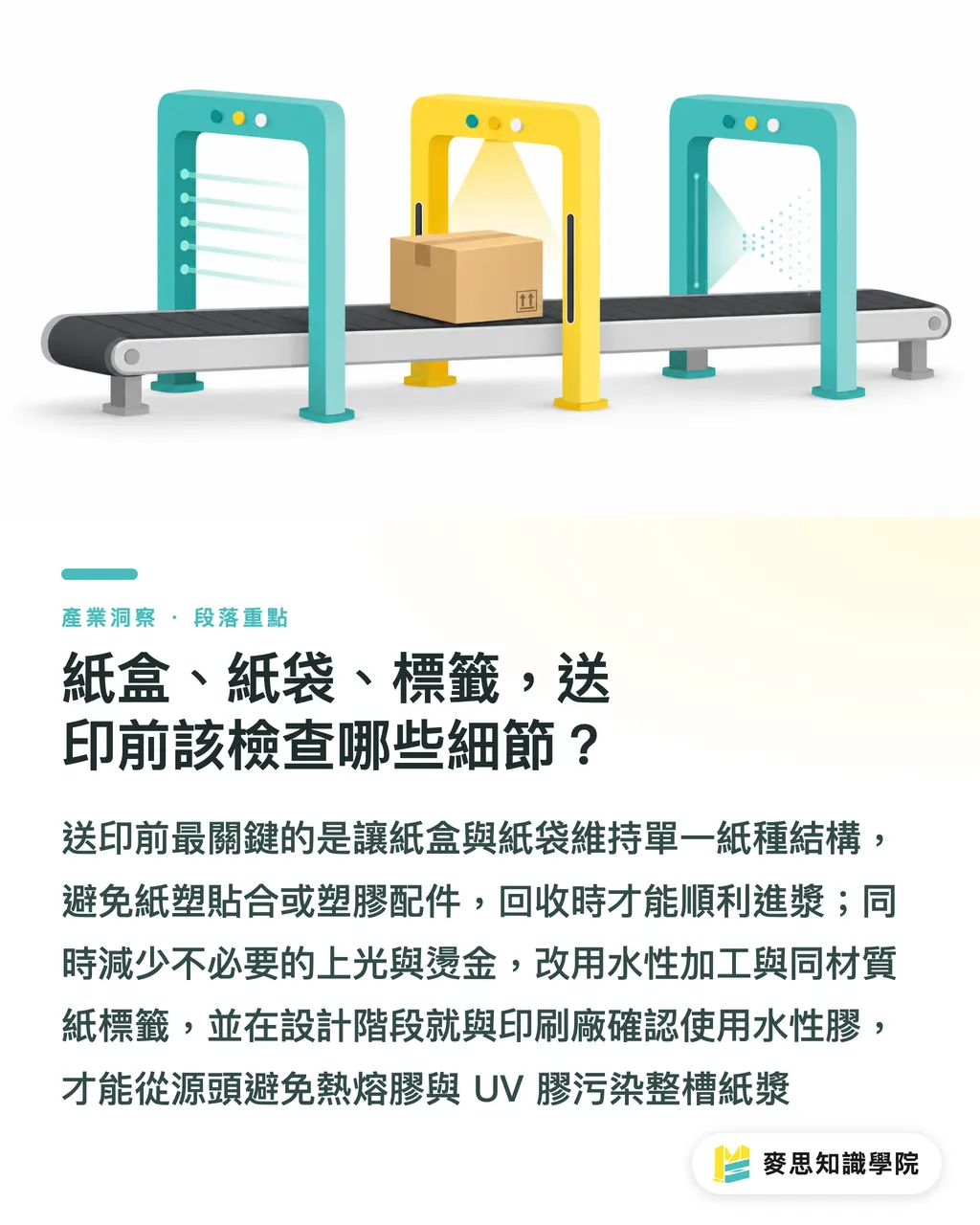
What Should You Check Before Sending Paper Boxes, Paper Bags, and Labels to Print?
This checklist comes from the items I most often see overlooked on the production side. If designers check it item by item before sending files to print, they can save most of the time lost to rejected jobs and reprints
MINDS (MS, mid- to high-end fully custom commercial printing) uses three recycling checks before print:
・① Keep the main structure to one material: use a single paper type for the box body, such as gray-back coated board, white card, or kraft board. Avoid paper + plastic laminated structures. If a paper bag handle needs reinforcement, use paper rope or punched rope handles instead of plastic cord
・② Cut surface finishing where you can: remove unnecessary OPP film and UV coating. Use water-based coating or protective spray instead. Keep foil stamping to the logo and key decorative areas, never full coverage
・③ Make ink and lamination separable: avoid metallic ink, thermochromic ink, and silver underprint where possible. If a window is unavoidable, use an origami-style inner structure instead of a plastic patch. For labels, choose paper labels made from the same material as the body to avoid hot-melt adhesive residue
Adhesive is another common blind spot. Water-based glue can be dispersed at the paper mill, but hot-melt glue and UV glue clump during pulp recycling and contaminate the whole pulp tank. Confirm the adhesive type with the printer during the design stage, not after mass production has already exposed the issue
How Do You Balance Shelf Impact With Recycling Convenience?
The question designers worry about most is this: if we remove gloss film, foil stamping, and window sheets, will the packaging become too plain and lose shelf appeal? The answer is not an either-or choice. It is about using finishing only where it matters
・Build depth through structure: embossing, debossing, and folded-paper structures can create dimension with visual impact comparable to foil stamping, while adding no burden at the recycling end
・Use ink to build color: spot-color overprinting can create tonal depth. It is cheaper than metallic ink and easier to recycle
・Use local finishing instead of full coverage: keep foil stamping to the logo and main visual. Apply UV coating only to key areas. The package becomes much more recycling-friendly right away
・Choose heavier paper stock: with thick card stock above 350g, the feel of the paper itself becomes a selling point, removing the need for added stiffness treatments
From the clients and projects I have handled recently, European and American brands have clearly moved toward a subtractive philosophy in packaging recyclability over the past two years: skip film when film is not needed, skip foil stamping when it is not needed, and let the structure and paper itself become the brand language. Taiwan's regulations are moving a little more slowly, but client-side interest has risen noticeably over the past six months, especially for orders exported to the United States and California. After extended producer responsibility rules such as SB 54 took effect, the compliance cost of composite-material packaging started flowing directly back to brands
How Should Design Decisions Be Sequenced?
The easiest mistake in packaging design is working backward from aesthetics to materials. Decide the look first, choose materials next, and think about recycling last. That path usually does not work. Reverse the order instead:
・Step one, set the recycling target: which recycling system should this package enter? Paper recycling, plastic recycling, or composting? Different targets lead to completely different material choices
・Step two, choose one main material: once the main material is chosen according to the recycling target, every structure, finish, and ink choice should build around it without breaking its recycling path
・Step three, plan the structure and die line: decide the box-forming method, number of folds, and window placement at this stage to avoid die-line changes later
・Step four, decide surface finishing: use less wherever possible. For necessary finishing, confirm the recycling compatibility of the adhesive, ink, and coating
・Step five, then do the visual design: create within the limits set by the previous four steps. That is when the design can survive both mass production and recycling
After these five steps, hold one material confirmation meeting with the printer before sending the job to print, usually during proofing. Align the paper type, adhesive type, ink, and finishing one by one in a checklist. This can prevent more than 90% of rejection and reprint risk

Key Takeaways
・A recycling mark is a material identification code, not a recycling guarantee. Composite structures can cause paper mills to reject the package
・The decision sequence for paper box design should be reversed: the recycling target comes before visual appeal
・Lamination, coating, foil stamping, window sheets, and adhesive are the five biggest finishing traps behind recycling rejection
・Subtractive design is harder than additive design. Embossing, folded-paper structures, and ink overprinting can replace part of the finishing effect
・One material confirmation meeting before printing can save three times the cost of rejection and reprinting afterward
Further Reflection
For print manufacturers, the shift toward recyclable packaging means paper inventory, coating equipment, and adhesive procurement all need to adjust. Demand for single-material structures and water-based finishing will keep growing, while utilization of traditional lamination lines will inevitably fall. For graphic designers, bringing recyclability into early-stage decisions is not a limit on creativity. It moves the design language away from surface decoration and toward the essential beauty of structure and paper
Suggested next step: audit the packaging projects currently in progress or about to go to print, and run them through the MINDS (MS) three recycling checks before print from this article. Mark the points that may trigger rejection. Then choose one or two projects and apply subtractive design through the full process as internal case studies. If you need a second opinion on packaging recyclability decisions, or want to bring the full checklist into your team's print SOP, talk with the consulting team at Mai Strategy Knowledge Academy or the proofing team at MINDS (MS), and turn the concept into practical print-ready standards
Further Reading
・No external sources cited. This article is based on practical industry consulting experience
FAQ
- Does packaging with a recycling mark always get recycled?
- Not always. The recycling mark, the triangle with a number, is a material identification code. It tells you that the material of that component is recyclable by itself, but it cannot guarantee that the full package can be processed after entering the recycling system. Composite materials, lamination, and hard-to-separate structures can all cause recycling facilities to reject it
- Which affects recycling less, OPP gloss film or matte film?
- Both affect pulp recycling, because films can clog filters during the pulping process. If surface protection is necessary, switch to water-based coating, protective spray, or local coating instead of full-surface lamination
- Can a paper box window, which lets consumers see the product inside, still work with recycling?
- Yes. Replace the plastic laminated window sheet with an origami-style inner structure or a cut-and-fold window design. The paper in the window area should be the same material as the box body so it can enter pulp recycling together, without the need to separate a plastic sheet
- Will foil stamping always cause recycling facilities to reject the package?
- Not always. Large full-surface foil stamping has a high rejection risk because the metallic layer is hard to separate during pulping. Small local foil stamping, such as a logo or key accent, may be accepted by some paper mills. Keep it within 10% of the total area and confirm recycling compatibility with the paper mill in advance
- How can designers know whether the adhesive they choose will create recycling problems?
- Water-based glue can be dispersed during the pulping process and is the most recycling-friendly option. Hot-melt glue and UV glue can clump and contaminate pulp. Before sending the job to print, ask the printer for the adhesive MSDS and recycling compatibility notes, and record them in the proofing meeting minutes to avoid disputes later
Related articles


The Print × AI weekly
The print and AI know-how designers, brands and enterprises can use before they commit — one email, every week
MINDS Free Tools
AI background removal, a LINE sticker maker, spine & imposition calculators — all free, right in your browser, no upload.
MINDS Group
Need actual printing or gifting services?
From premium printing to online ordering and festive gifts — the MINDS Group sister brands take it from here.