
What Should You Decide First in Packaging Carton Design?
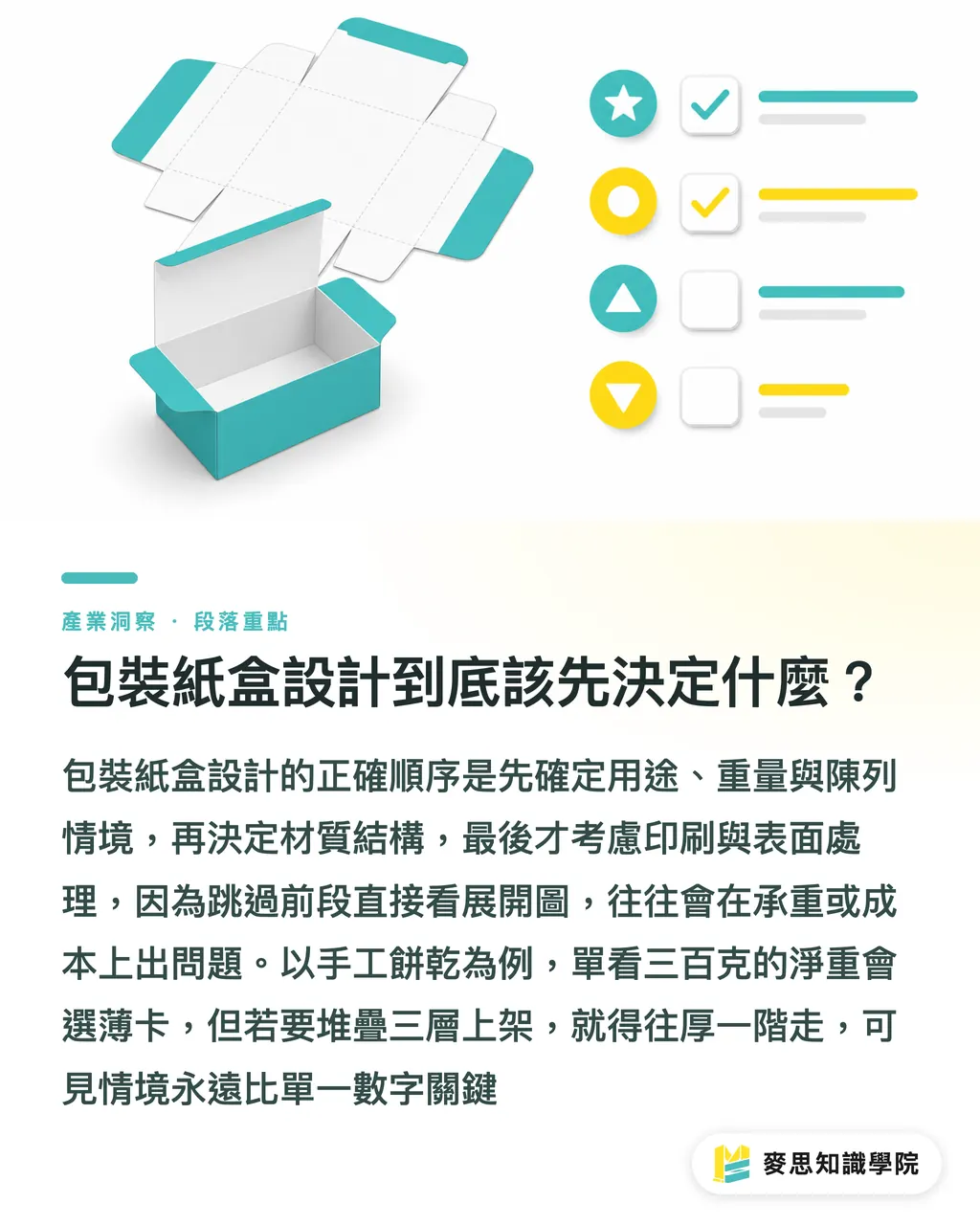
Here is the bottom line: the right order for carton design is to define the use case and weight first, then choose the material and structure, and only after that discuss printing and surface effects. Reverse that order, and trouble begins
I have seen too many clients sit down and immediately show me a beautiful dieline, asking whether we can print it as is. The problem is that they have not yet figured out how heavy the product inside will be, whether the box needs to be stacked, or whether it will be displayed on shelves. No matter how beautiful the artwork is, if the box cannot bear the load and collapses under pressure, the design is wasted
In practice, I always ask three questions first:
・What will it hold: weight, shape, whether it releases oil or moisture. This determines the basic paper stock requirements
・How will it be shipped and displayed: whether it needs stacking, a hanging structure, or a window to show the contents
・Budget and quantity: large runs can spread out dieline and plate costs; small runs need unit cost calculated carefully
A common example is a box of handmade cookies. The net weight may be only 300 grams, but the client wants to stack three layers for shelf display. If you only look at the weight, you might choose a thinner card. But once stacking compression is considered, you need to move up to a thicker grade. Use case and context always matter more than a single number
What Is the Difference Between Folding Cartons and Corrugated Boxes, and What Are They Used For?
These two categories are the ones most often confused. In simple terms, a Folding Carton is for lightweight products, refined presentation, and strong print quality; a Corrugated Box is for load bearing, shipping, and protection
Folding cartons use a single layer of paperboard, commonly between 250 and 400 gsm. They are suitable for cosmetics, food, and 3C accessories: lightweight products that need polished printing. Their advantage is a smooth surface that works well with foil stamping, embossing, and spot coating
Corrugated boxes have a wavy fluted core in the middle. That structure provides compression strength and cushioning. Common flute types include:
・B flute: a finer flute, about 3 mm thick, with a relatively smooth printing surface. Suitable for retail outer boxes and laminated color boxes
・E flute: even finer, about 1.5 mm, often used for premium corrugated color boxes that balance compression strength and print quality
・A/C flute: coarser, thicker, and stronger in compression, mainly used for large shipping cartons
One key rule of thumb: if your product will be shipped by courier or stacked layer by layer on a pallet, do not cut corners on the corrugated layer. A folding carton may look cheaper, but if it does not protect the product, the cost of damage and returns will far exceed the money saved on paper
Why Does Choosing the Wrong Material Force Everything to Be Redone?
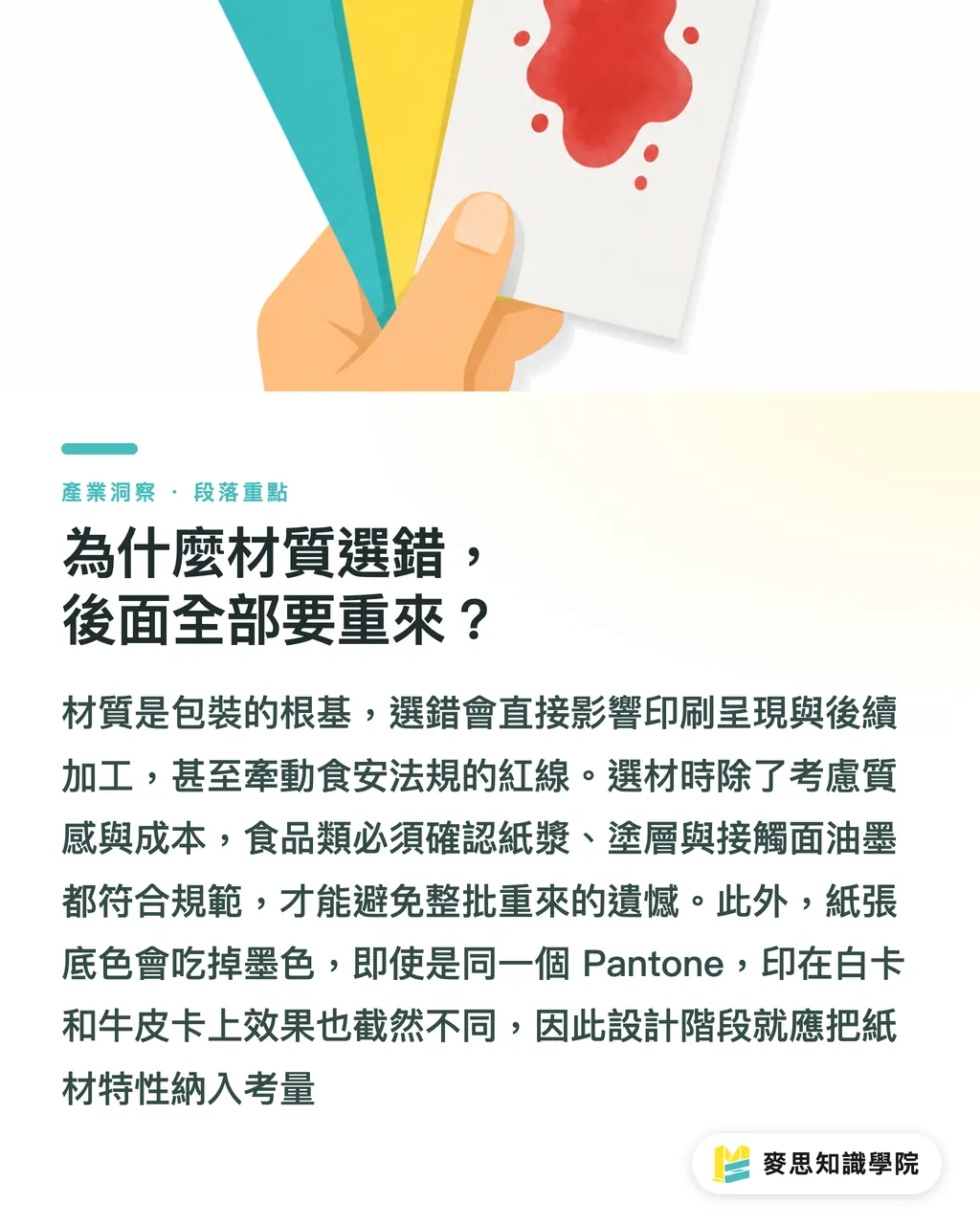
Because the material determines printability, the feasibility of post-press finishing, and, most importantly, food safety compliance
Paper materials generally include white card, duplex board with gray back, kraft board, and specialty paper. My material selection logic is as follows:
・White card, or white on both sides: printable on both sides with a clean, refined feel. Suitable for cosmetics and health products that need a premium look
・Duplex board with gray back: white printable front and gray back, lower in cost. Suitable for standard retail color boxes where the back side is not visible anyway
・Kraft board: natural kraft color with a fibrous feel. Suitable for brands with eco-friendly, handmade, or lifestyle positioning
・Greaseproof or laminated paper: essential for food and oily products. I learned this the hard way on lunch box projects
Food contact surfaces are an absolute red line. For anything that goes into someone's mouth, the pulp should be virgin and unbleached, the coating must meet heat-resistance requirements, and the ink on contact surfaces should be eco-grade. Break any one of these three bottom lines and, at best, you will need to reproof; at worst, the whole batch may be scrapped and could even create legal exposure. Clarifying food safety requirements early can save a large amount of wasted money
Another easy point to overlook: paper absorbs ink and springs back. The same Pantone color looks very different on white card and kraft board. Kraft board is yellowish and darker, so light colors often barely show. The base color of the paper must be factored into the design from the start, not discovered with surprise after proofing
If the Structure and Dieline Are Wrong, Even Beautiful Printing Cannot Be Assembled
A paper box is three-dimensional, but designers usually work in flat design software. That gap is where the biggest problems happen
The dieline is the skeleton of the box. Every line on the unfolded layout has meaning: solid lines are cuts, dashed lines are crease lines, and different colors represent different processes. I often see designers draw fold lines as decorative lines. The factory then makes the die according to the artwork, and the box cannot fold into the intended shape at all
Several structural details must be checked carefully:
・Leave at least 3 mm of bleed: cutting has tolerance, and full-bleed designs without bleed will show white edges
・Keep important text and logos at least 3 to 5 mm away from fold lines and edges: creases can break or blur the text
・Window openings, tabs, and locking structures must be verified with a blank mockup first: what looks smooth in 2D may not lock securely in 3D
・Paper grain direction should follow the main fold lines: folding against the grain can cause cracking and fuzzy edges, especially on thicker stock
My standard process is to make a physical blank sample, or dieline mockup, before mass production. Use the actual paper and actual die to fold it, then place the real product inside. Looking at it a hundred times on screen is not as useful as folding it once by hand. This step alone can prevent more than 80% of structural failures
Outsourcing overseas adds another layer of communication risk. Folding cartons, corrugated boxes, and specialty structures all use different English terminology. If you only search for "Paper Box," you will never find the details you need. Before discussing specifications with an overseas supplier, align the terminology first, or miscommunication can easily turn into a pile of unusable products
How Should You Choose Post-Press Finishing Without Overdoing It?
Post-press finishing is the final step that can elevate the perceived quality of a box, but overusing it makes the result look cheap while increasing both cost and lead time
I usually classify common surface treatments this way:
・Coating or lamination, glossy or matte: basic protection. Matte film feels understated; glossy film looks saturated and eye-catching. Cosmetics often use matte film
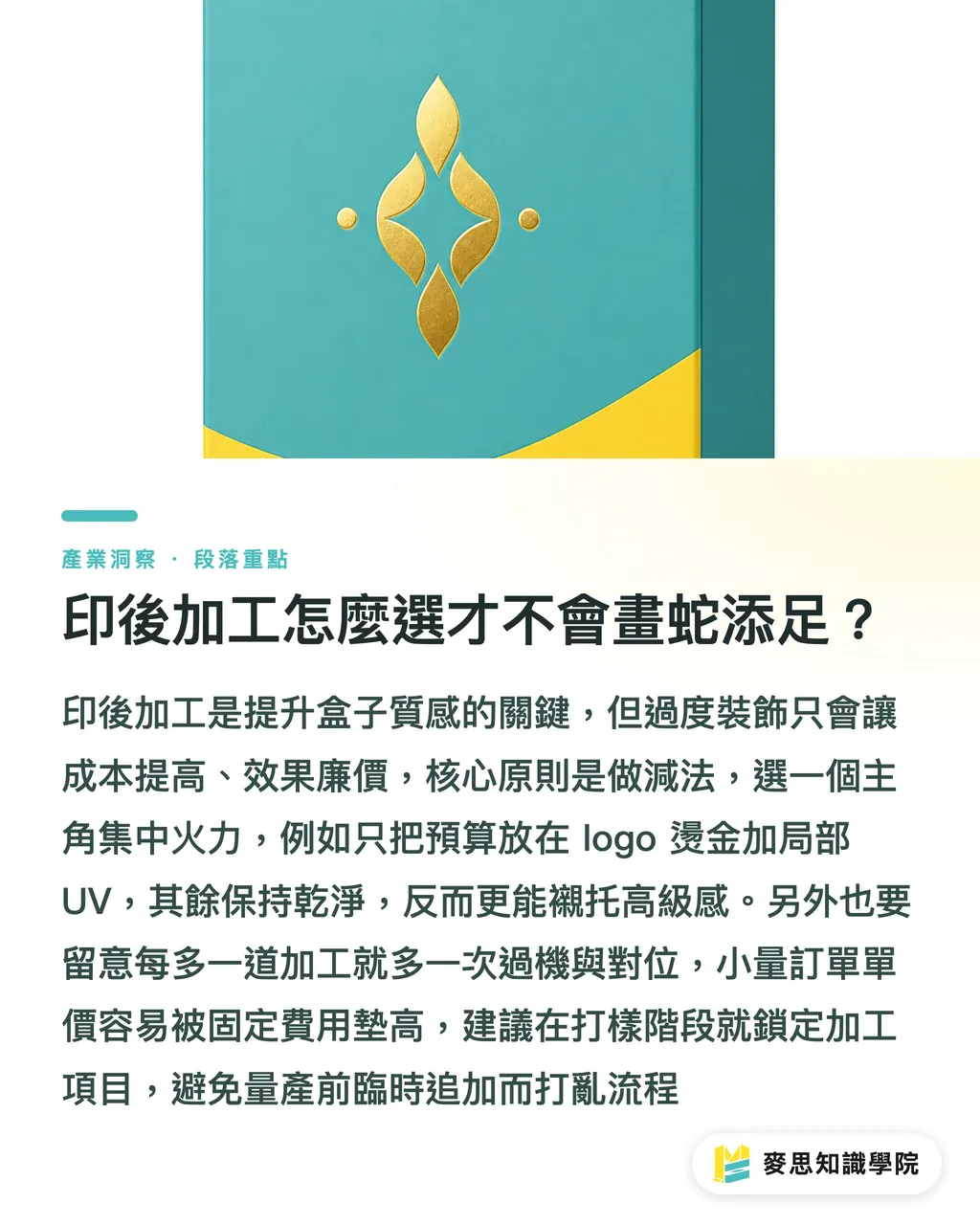
・Gold or silver foil stamping: most effective as a local accent on the logo. Full-surface foil is expensive and often looks tacky
・Embossing or debossing: adds tactile depth and works especially well with matte film
・Spot UV: applying glossy spot UV over matte film creates a light-and-shadow contrast that is one of the most cost-effective ways to create a refined feel
One piece of advice I often give clients: subtract from finishing, do not keep adding. Choose one hero effect and focus the budget there, such as logo foil stamping plus spot UV, while keeping everything else clean. If you apply three effects at once, each one gets diluted, and the box looks cluttered rather than premium
You also need a clear sense of cost. Every additional finishing process means one more machine pass, one more registration step, and more labor time. For small orders, these fixed costs can push the unit price up sharply. Lock in finishing decisions during the proofing stage. Do not suddenly add foil stamping right before mass production, because that effectively forces the whole workflow to be rearranged
Key Takeaways
・The correct order for carton design is use case and weight first, material and structure second, printing and finishing last. Get the order wrong, and you will likely have to redo the job
・Folding cartons are lightweight and refined; corrugated boxes are for load bearing and shipping. If the product needs stacking or courier delivery, do not skip the corrugated layer
・There are three red lines for food contact surfaces: virgin pulp, heat-resistant coating, and eco-grade ink. Break one and the whole batch may be scrapped
・Always fold a physical blank sample before mass production. Looking at it a hundred times on screen is not as useful as folding it once by hand
・Use subtraction, not addition, in post-press finishing. One focused hero effect is far better than applying three effects at once
Further Thoughts
The real cost in paper box production is not the paper. It is the back-and-forth. Every extra proof, every dieline revision, and every reprint consumes far more time and money than the unit price of the material. That is why thinking through use case, material, structure, and finishing at the beginning is what truly saves money. For designers, the next step is to start building your own dieline template library, making bleed, safe margins, and paper grain direction part of your defaults instead of relying on the factory to catch mistakes later. For brand owners, working with a partner who can connect design, printing, finishing, and proofing in one conversation is far easier than outsourcing each step separately and watching everyone shift responsibility. What MKA does in this area is connect these links so you can avoid unnecessary detours
FAQ
- What should be decided first in packaging carton design?
- Decide the use case and weight first, then choose the material and structure, and only after that discuss printing and surface finishing. You need to know what the box will hold, how heavy it is, and whether it needs stacking or shipping before the design artwork has real meaning. Reversing this order is one of the easiest ways to end up redoing the whole batch
- How do I choose between a folding carton and a corrugated box?
- A folding carton uses single-layer paperboard. It is lightweight, prints well, and suits cosmetics, food, and 3C accessories that are light and need an attractive printed finish. A corrugated box has a fluted core in the middle for compression strength, making it suitable for products that need stacking or courier shipping. If it needs to ship, do not cut corners on the corrugated structure
- What material standards apply to paper boxes for food?
- There are three red lines for food contact surfaces: the pulp should be virgin and unbleached, the greaseproof coating must withstand the required usage temperature, and the ink on contact surfaces should be eco-grade. Foods that release oil must use greaseproof or laminated paper, otherwise the box can easily absorb oil, deform, or leak
- Why is a blank sample necessary for paper box design?
- A paper box is three-dimensional, while designers work in flat software, so there is always a gap. A physical blank sample is folded using the real paper and real die, allowing you to catch problems early, such as crease lines running through text, tabs that do not lock tightly, or white edges caused by insufficient bleed. It can prevent most structural failures
- Which post-press finishing options are worth the cost?
- Use subtraction, not addition, in finishing. The most cost-effective approach is to choose one hero effect and focus the budget there, such as logo foil stamping plus spot UV. Every additional process adds another machine pass and registration step, which can sharply increase unit cost on small orders. Finishing choices should be locked in during proofing
Related articles



The Print × AI weekly
The print and AI know-how designers, brands and enterprises can use before they commit — one email, every week
MINDS Free Tools
Spine width and imposition calculators — skip the manual math, free in your browser.
MINDS Group
Need actual printing or gifting services?
From premium printing to online ordering and festive gifts — the MINDS Group sister brands take it from here.