
Overview
After recent conversations with brand clients and designers, I can feel a very clear shift: people are no longer asking only whether packaging "looks good." They are starting to ask whether it is "fun to play with."
In the past, when we talked about packaging, we talked about structure, visuals, and cost. Now, one more keyword has entered the conversation: "experience."
This did not come out of nowhere. From what I have observed over many years on production lines and with clients, consumer attention is getting harder and harder to capture. Pure visual impact is no longer enough. Brands need deeper interaction to build a connection, and packaging is the medium with the lowest cost and the broadest reach
What Is Curiosity-Driven Design?
Simply put, it means turning packaging into a "mystery waiting to be solved." Hidden information and surprise elements are used to tease out consumers' curiosity, making them want to explore and interact on their own
A recent report by the U.S. trade publication Packaging Digest backs up what I have been seeing. It points out that Curiosity-Driven Design is a trend heating up noticeably in 2026. Brands are actively using puzzles, hidden messages, and other interactive mechanisms to strengthen customer attachment
This goes one step beyond the "unboxing experience" we used to talk about. Unboxing is passive. The surprise comes from the product itself. Curiosity design is active. It begins the moment you get the product and makes you want to "try playing with it."
How Coca-Cola's "Hidden Sticker" Works
Among recent examples, the one that has played curiosity design most fully is the collaboration between Coca-Cola and the well-known trading card brand Panini
What makes this case so effective is how simple and direct it is:
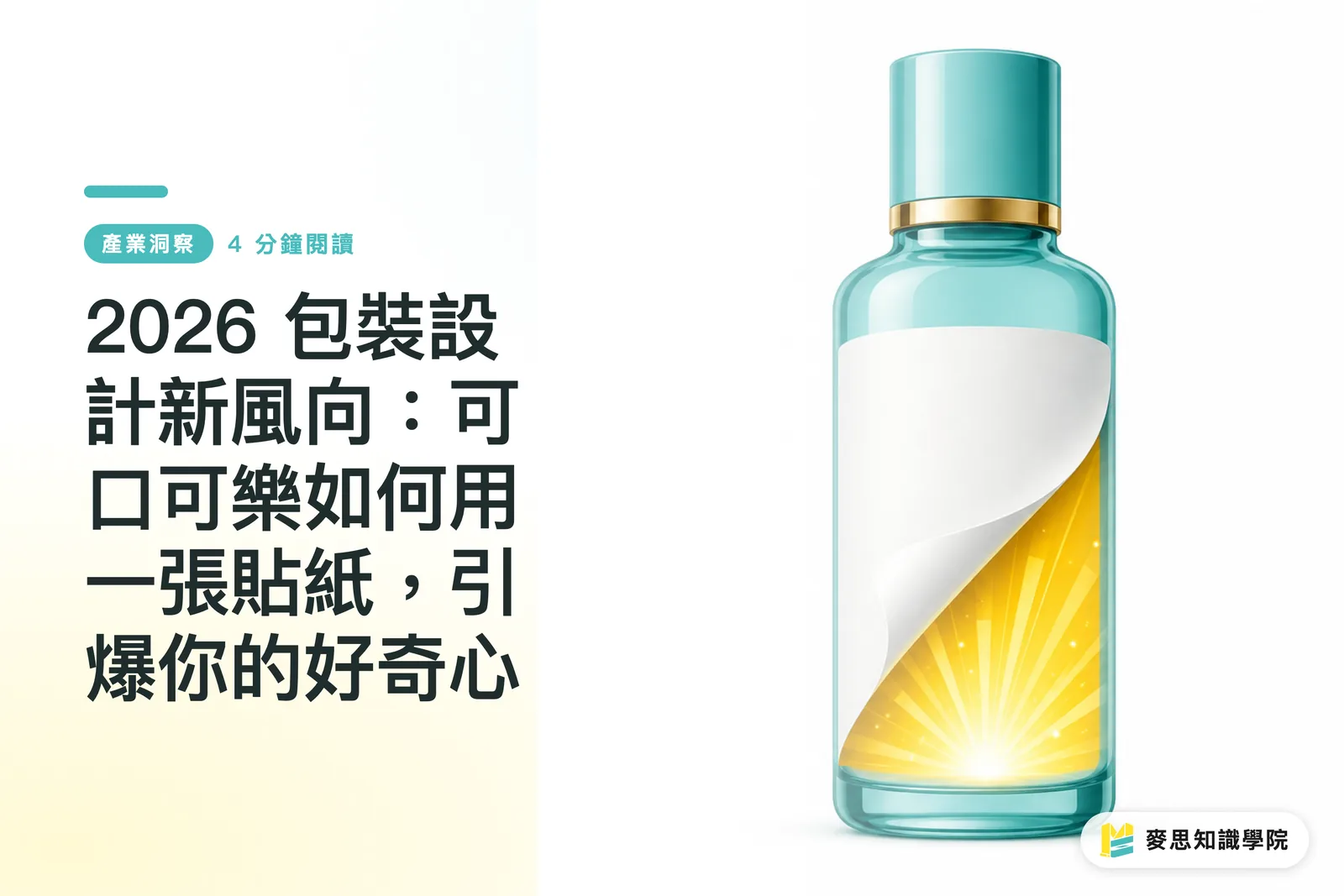
・They hid a random player sticker directly underneath the beverage label
・If you do not peel off the label, you will never know which player is inside
・That scratch-card-style sense of the unknown perfectly triggers people's urge to collect and their gambler's instinct
What happened next? Consumers who wanted to complete the full sticker set did not just buy one bottle. They bought again and again, even pulling friends in to buy and trade together. The whole process naturally fermented on social media, creating discussion far beyond what ad spending alone could buy. This is a clean example of turning packaging from a "cost" into a "marketing weapon."
How Print Shops Can Catch This Wave of "Interactive Value"
When designers and brand clients start thinking this way, those of us on the print manufacturing side cannot stay stuck in the mindset of "just printing the artwork."
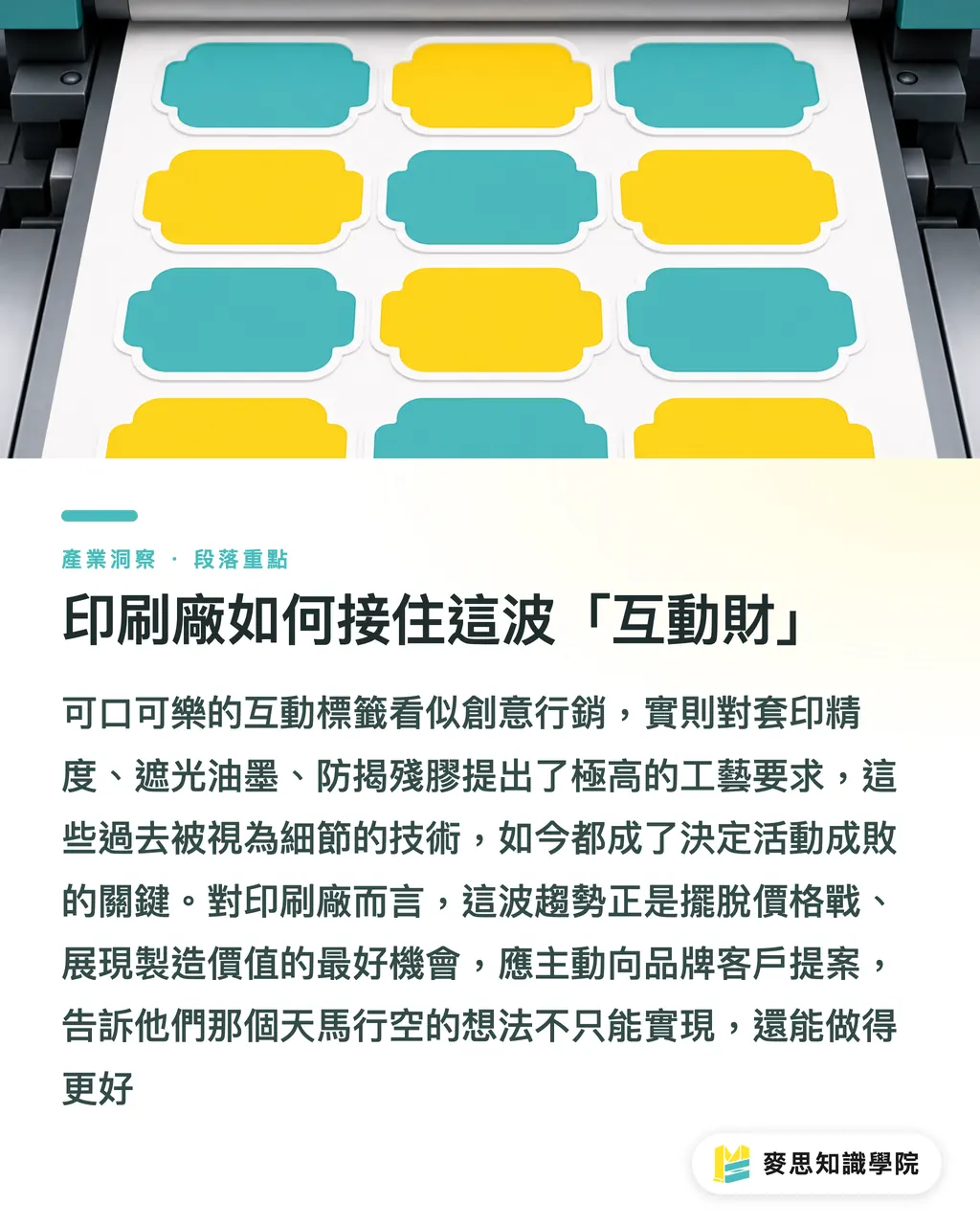
Coca-Cola's case looks simple, but it is actually a real test of printing technique:
・Registration accuracy: the graphics, text, and tear line on the inside and outside of the label must be positioned with absolute precision. If not, the experience falls apart
・Opaque ink: the sticker design underneath cannot be easy to see through, or the surprise is gone. That puts high demands on the ink's covering power
・Anti-peel residue control: the label has to peel off easily, but it also cannot leave behind a mess of ugly adhesive residue. This is a serious test of adhesive formulation and coating technique
Technical points that may once have been treated as "details" are now, under the rise of curiosity design, the "key factors" that decide whether a marketing campaign succeeds or fails. For print shops, this is exactly the best chance to stand out from price wars and show the value of craft
Instead of waiting passively for clients to place orders, we should be taking the initiative to pitch ideas and tell them: "That idea you have, we can make it happen, and we can make it even better."
Key Takeaways
・The value of packaging is shifting from "protecting the product" to "creating an experience"
・Curiosity is a powerful engine for repeat purchases and social sharing
・Interactive design raises the bar for printing technique, and that is also an opening for print shops to increase their value
・Brand clients and designers should make the "interaction layer" a standard part of packaging planning
・Technical capability is the foundation that brings creative design to life. Print shops need to upgrade their mindset and become solution providers
Further Thoughts
For brand clients and designers in Taiwan, my advice is this: stop treating packaging as an accessory to the product. Plan it as an independent "media product." At the ideation stage, ask one more question: "Beyond looking good, can my packaging be more fun?" "What kind of interaction would consumers want to have with my packaging?" Put the "interaction layer" into your design thinking, and you will find a whole new continent
For fellow print shops, I feel this even more strongly. In recent years, there has been a lot of talk about automation and sustainable materials, but those are issues of "efficiency" and "responsibility." Curiosity design is directly tied to "business." This is an excellent opportunity for us to move from passive producers to proactive "creative realization partners." Do not just wait for clients to come with artwork and ask for a quote. We should study these new techniques ourselves, make samples, then bring those samples to clients and say: "Look, packaging can be played this way. Want to try it?" When you can offer solutions that go beyond expectations, clients naturally stick with you. This is also the direction MINDS Printing has been working toward, helping clients bring bold, free-ranging ideas precisely into production through one-stop integrated service
Further Reading
FAQ
- What is Curiosity-Driven Design?
- It is a packaging design strategy that uses hidden information, puzzles, or surprise elements to spark consumer curiosity and make people actively interact with the packaging, deepening brand connection and purchase intent
- Besides Coca-Cola's hidden stickers, what are other examples of interactive packaging?
- Common examples include patterns printed with special inks that only appear under certain light or temperature conditions, mazes or puzzles printed on the inside of packaging boxes, or QR Codes that lead to online puzzle games
- What printing techniques matter when producing this kind of interactive packaging?
- The key techniques include high-precision registration to align inside and outside graphics, high-opacity ink, or opaque ink, to prevent designs from showing through, and special adhesive backing with anti-peel residue treatment so no marks are left after peeling. These all directly affect the quality of the interactive experience
- What benefits does interactive packaging design bring to brands?
- The biggest benefit is that it can effectively increase consumer attachment and social discussion, turning a one-time purchase into ongoing brand interaction and collecting behavior, while encouraging consumers to share the unboxing process on their own and create free word-of-mouth marketing
References
- 2026 包裝設計關鍵字:好奇心驅動設計崛起,從可口可樂藏貼紙看互動包裝新玩法 · packagingdigest.com
Related articles
The Print × AI weekly
The print and AI know-how designers, brands and enterprises can use before they commit — one email, every week
MINDS Free Tools
AI background removal, a LINE sticker maker, spine & imposition calculators — all free, right in your browser, no upload.
MINDS Group
Need actual printing or gifting services?
From premium printing to online ordering and festive gifts — the MINDS Group sister brands take it from here.