

Why Are Paper Boxes Labeled 'Recyclable' Often Treated as Trash at Processing Plants?
Because the composite coatings and plastic films added for grease and water resistance keep paper fibers from separating in the recycling plant's hydrapulper. Over the past few years helping clients refine sustainable packaging, my biggest fear is hearing a brand say, 'We switched entirely to paper, so we're sustainable now, right?' According to an August 2026 report by Packaging Insights, sustainability claims for fiber-based packaging are facing a harsh reality check
Paper itself is recyclable, but packaging has to protect the product. To block moisture, oxygen, or grease, paperboard often requires lamination, plastic films, or thick layers of specialty inks and UV coatings. When these composite materials enter the local recycling system, most paper mills in Taiwan lack the equipment to separate plastic film from paper fibers cleanly. For recyclers, processing these 'fake paper boxes' costs far more than the recovered material is worth. In the end, entire batches get sent to the incinerator. Brands spend a fortune on 'eco-friendly packaging,' only to end up with wasted resources and a ticking PR crisis

How Can Brands Eliminate Recycling Roadblocks Early in Packaging Design?
Make 'what happens to this at the recycling plant' your very first design checkpoint, not the last. Many designers create a gorgeous layout first, and only after the artwork is approved do they ask the printer if they can swap in eco paper. That order is completely backwards. To avoid claiming one thing while reality delivers another, I strongly recommend applying Mai Strategy's three pre-press checkpoints before proofing to cut unrecyclable designs off at the source
Looking at actual production line operations, here is what you need to align on with your structural designer:
・ Coating alternatives: Drop traditional PE coatings in favor of water-based barrier coatings or repulpable eco films
・ Adhesive volume: Cut down on large-area gluing and switch to interlocking tabs or spot gluing to hold packaging together
・ Ink coverage: Avoid heavy solid flood printing, as excessive ink requires massive amounts of chemicals during the deinking process
If your internal team lacks experience evaluating structural and material compatibility, bring in a manufacturer with structural development and green manufacturing expertise early, such as MINDS. Having people who understand machines and materials review your design is far more effective than scrambling through ESG regulations after the fact
How Can You Write Sustainable Packaging Copy Without Being Accused of Greenwashing?
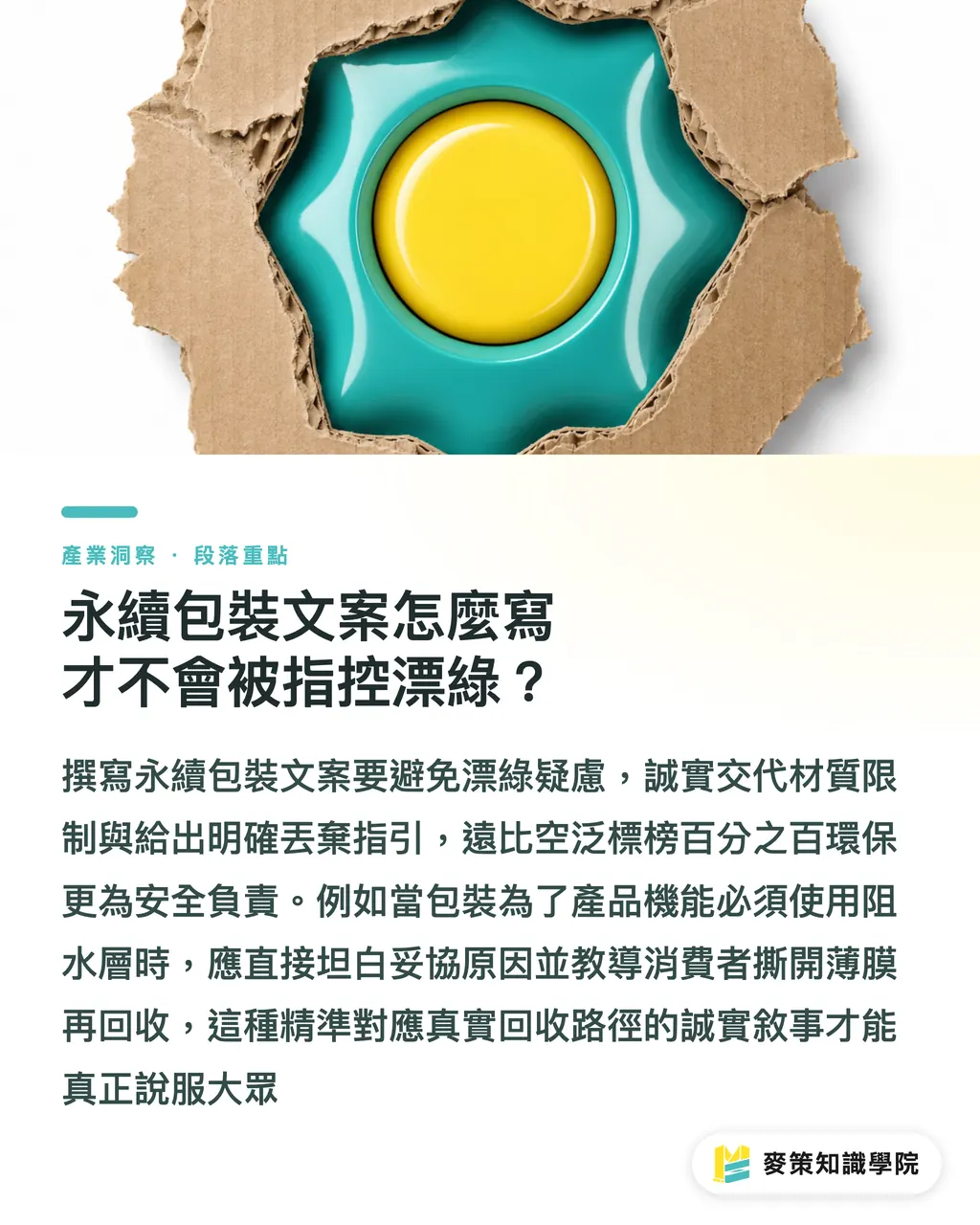
Be upfront about material limitations and provide clear disposal instructions. That is far safer and more responsible than printing '100% Eco-Friendly' on the box. When writing back labels or website sustainability pages, many marketers automatically link 'paper' to zero emissions and saving the planet. But consumers and regulators are much sharper now. They will call you out if you try to spin hard-to-recycle composite packaging as a green product
Your copywriting and visuals must accurately reflect the actual local recycling pathway of that packaging. If your paper packaging genuinely requires a moisture barrier to protect the product, say so openly. Tell consumers about the trade-offs made to protect product quality, and guide them on proper sorting (like peeling off the film before recycling the paper). If you are unsure whether your public sustainability claims cross the line, the external communications guide from the Mai Strategy Knowledge Academy consulting team can help you calibrate your messaging across B2B and B2C to keep risks to a minimum
Key Takeaways
・ Paper boxes lined with waterproof film and heavy coatings are not eco paper. They are hard-to-recycle composite monsters
・ The true destination of sustainable packaging is the pulper at the recycling mill, definitely not the consumer's trash bin
・ Involving your print supplier early in structural design saves far more money than paying for PR damage control later
・ Ditch empty eco slogans and clearly state the material breakdown and real disposal steps on the packaging
Food for Thought
Audit your company's flagship 'eco-friendly packaging' product lines right now. Tear open a corner of the box to see if there is a layer of plastic film. Feel the surface for a thick waterproof coating. If the answer is yes, you are paying a hefty green premium for trash that ends up in an incinerator. Sit down with your packaging supplier, review the actual local recycling path for these materials in Taiwan, and turn sustainability from a marketing buzzword back into a manufacturing reality
Further Reading
FAQ
- What is a composite structure in paper packaging?
- It refers to coating paper with PE film or laminating plastic layers to resist oil and water. This makes it far more difficult for paper mills to separate paper fibers from plastic
- Why does heavy color printing on paper boxes hurt recyclability?
- Heavy ink coverage requires massive amounts of chemicals for deinking, which can lower the quality of recycled pulp so much that recyclers reject it altogether
- How can brands prove their packaging is genuinely recyclable?
- Drop vague slogans and label the actual material composition and correct local sorting instructions right on the packaging, while ensuring the structure contains no inseparable plastic films
- Are water-based coatings completely foolproof?
- Water-based coatings are indeed easier to pulp than traditional plastic films, but you still need to verify whether the coating thickness and formulation meet the processing standards of local paper mill pulpers
Related articles



The Print × AI weekly
The print and AI know-how designers, brands and enterprises can use before they commit — one email, every week
MINDS Free Tools
AI background removal, a LINE sticker maker, spine & imposition calculators — all free, right in your browser, no upload.
MINDS Group
Need actual printing or gifting services?
From premium printing to online ordering and festive gifts — the MINDS Group sister brands take it from here.