
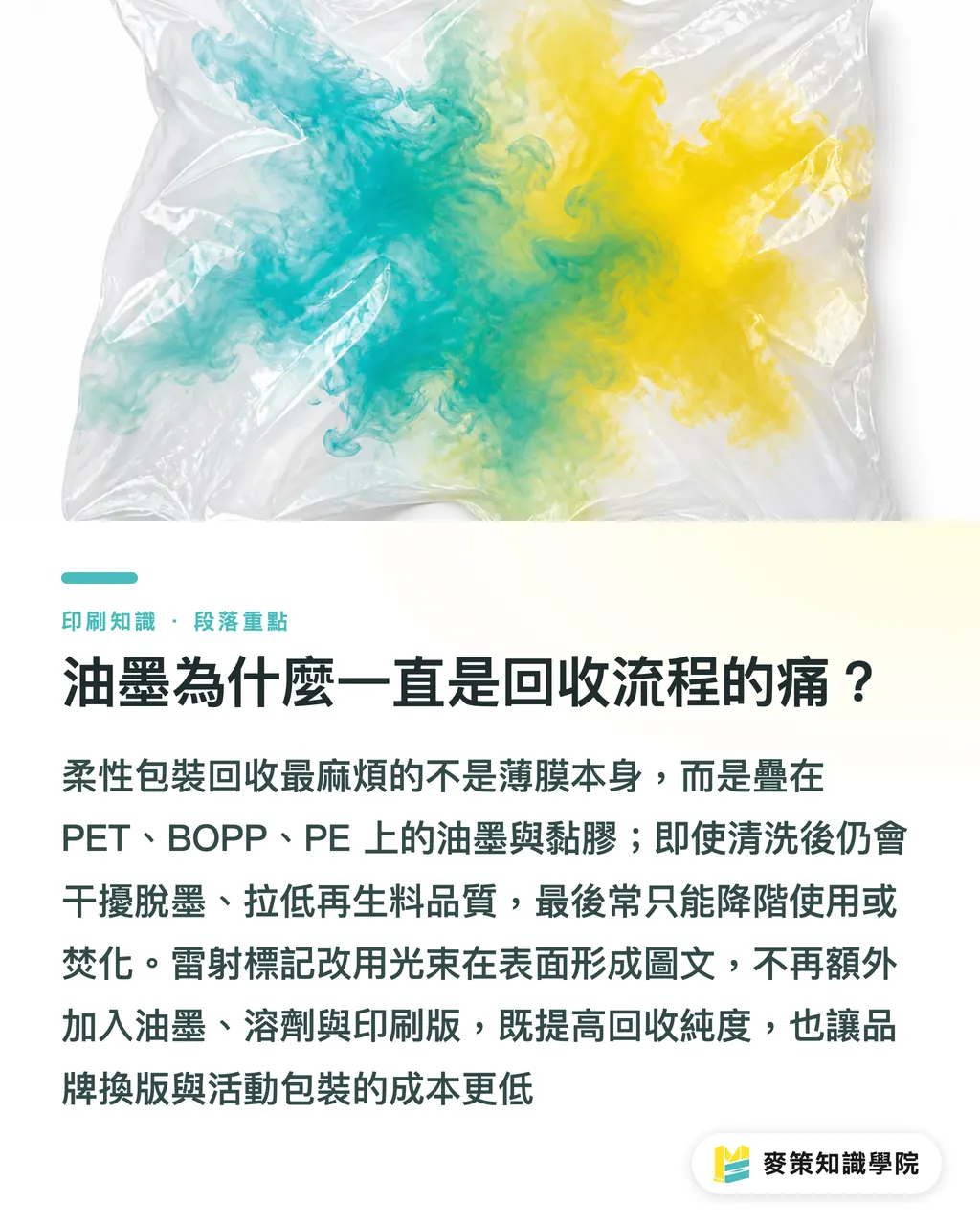
Why Ink Has Always Been Recycling's Biggest Headache
Ink layers are flexible packaging's most difficult pollution source at the recycling end, those snack bags, shampoo refill pouches, coffee bags we all know well. Traditional printing uses solvent-based or water-based inks layered on plastic films like PET, BOPP, and PE to achieve color saturation and adhesion stability. But even after washing at recycling, residual ink and adhesive cause material to downgrade, ending up either as lower-grade products or incinerated
・The ink layer interferes with deinking, the process of washing printed film into reusable recycled material or resin pellets, lowering final purity
・Multi-color printing requires solvents, adhesives, and base coats, making the material structure complex
・Changing designs means remaking printing plates; swapping SKUs or promotional packaging adds cost
Laser marking takes a different path: a focused beam etches images and text directly onto the film surface, changing the surface color or microstructure without adding any extra materials. For recyclers, one less pollution layer means higher purity in recycled material. For brands, no printing plates, no ink inventory, and design or promotional packaging changes cost nothing
That's why I've been hearing much more about 'going inkless' design from my export clients these past months, the driver is recycling quality, not aesthetics
What Exactly Did Mondi's Two Packages Do?
Mondi brought two award-winning cases at once, one for e-commerce inner pouches, one for retail flexible bag structures. Both center on the same thing: replacing ink printing with laser marking so the packaging itself recycles better
・E-commerce inner-pouch solution: corrugated outer box paired with recyclable, laser-marked inner pouches in formats like re/cycle StripPouch and re/cycle FlexiBag
・Simplified structure: fewer decorative layers and composite materials make it easier to achieve mono-material recycling design, where the entire bag uses just one plastic type, PE or PP, for easier sorting
・Sustainable material flexibility: can incorporate bio-based (plastics from renewable sources like plants) or PCR (post-consumer recycled) content, adjusted per application
The concept won the German Packaging Award 2026 in the sustainability category, judges were looking at three things hitting simultaneously: design change speed, recycling-friendliness, and brand flexibility. Mondi's own product impact assessment shows bio-based laser-marked StripPouch had notably lower CO₂ emissions compared to traditional fossil-based printed laminated pouches
Jens Koesters, technical services manager at Mondi Consumer Flexibles' innovation group, made this direct in the official explanation: customers are squeezed by sustainability targets, complex product portfolios, and rapid market changes. This solution gives them a way forward that's recyclable and lets design changes happen fast
Put plainly: going inkless isn't just environmental, it's business
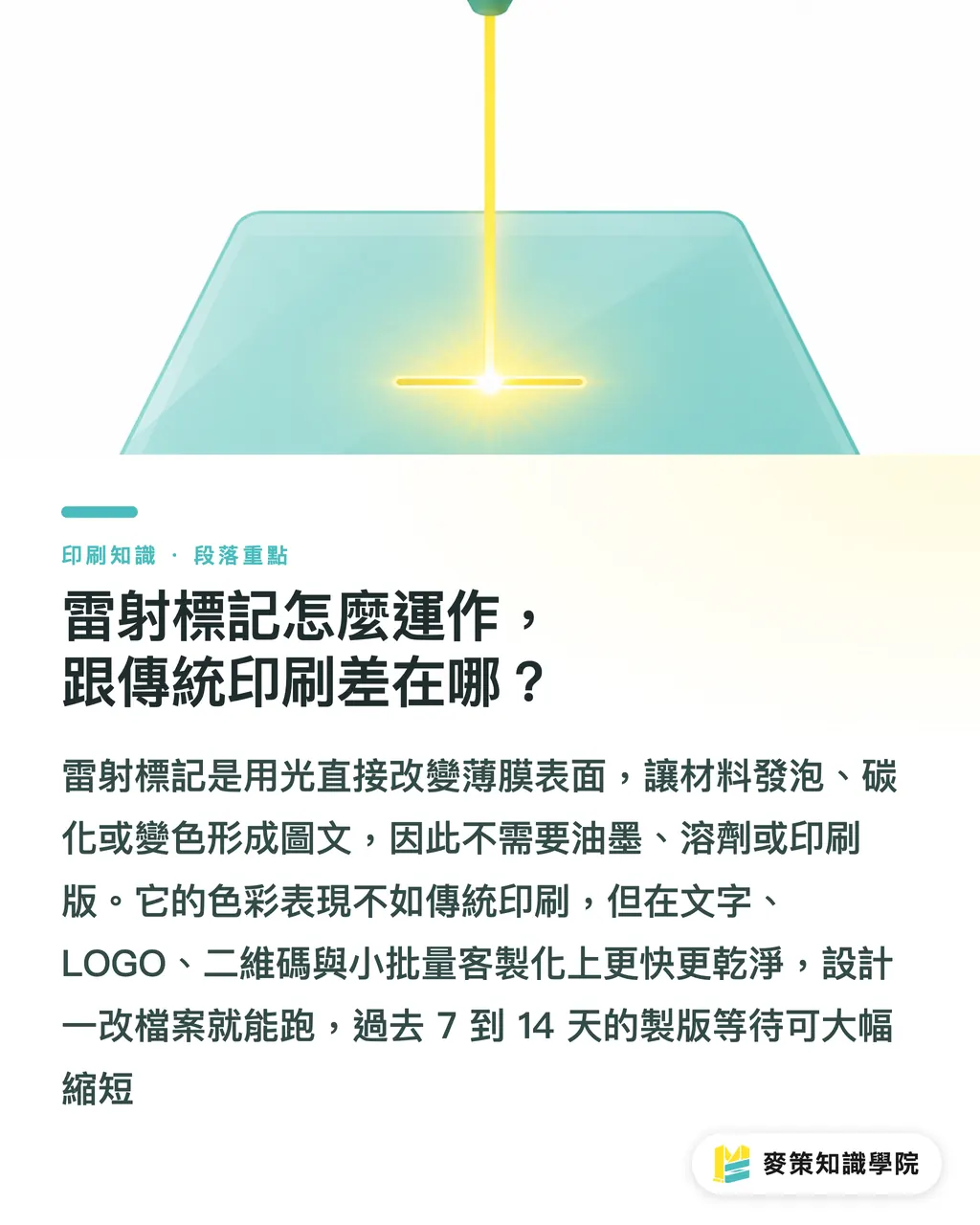
How Laser Marking Works and Where It Differs From Traditional Printing
Laser marking uses a CO₂ fiber laser to precisely etch the film surface, creating micro-structures in the material, foaming, carbonization, or discoloration, that show up as visible images and text. The whole process is light and material: no ink, no solvent, no printing plates
Three dimensions separate it from traditional printing:
・Visual output: color saturation and gradients don't match ink, but lines, QR codes, logos, and text work perfectly. It's 'reductive design,' not full-color printing
・Design change speed: update the file and you're done, no plate washing, no ink mixing, no color matching. Promotional packages and small-batch customization become feasible
・Recycling-friendly: fewer ink and adhesive layers mean less interference in deinking and sorting, making PCR percentages and mono-material design easier to hit
Simple as it sounds, this shifts the entire supply chain rhythm. Printing plates used to take 7 to 14 days; now a confirmed file runs immediately. Ink waste and inventory used to be fixed costs; now they're zero. Failed deinking used to force downcycling; now you get higher purity
・For designers: layer your information, let laser carry key messages, and question whether full-color is necessary
・For procurement: factor in design-change costs, not just the printing quote
・For factories: make going inkless a new service offering, pitch it proactively
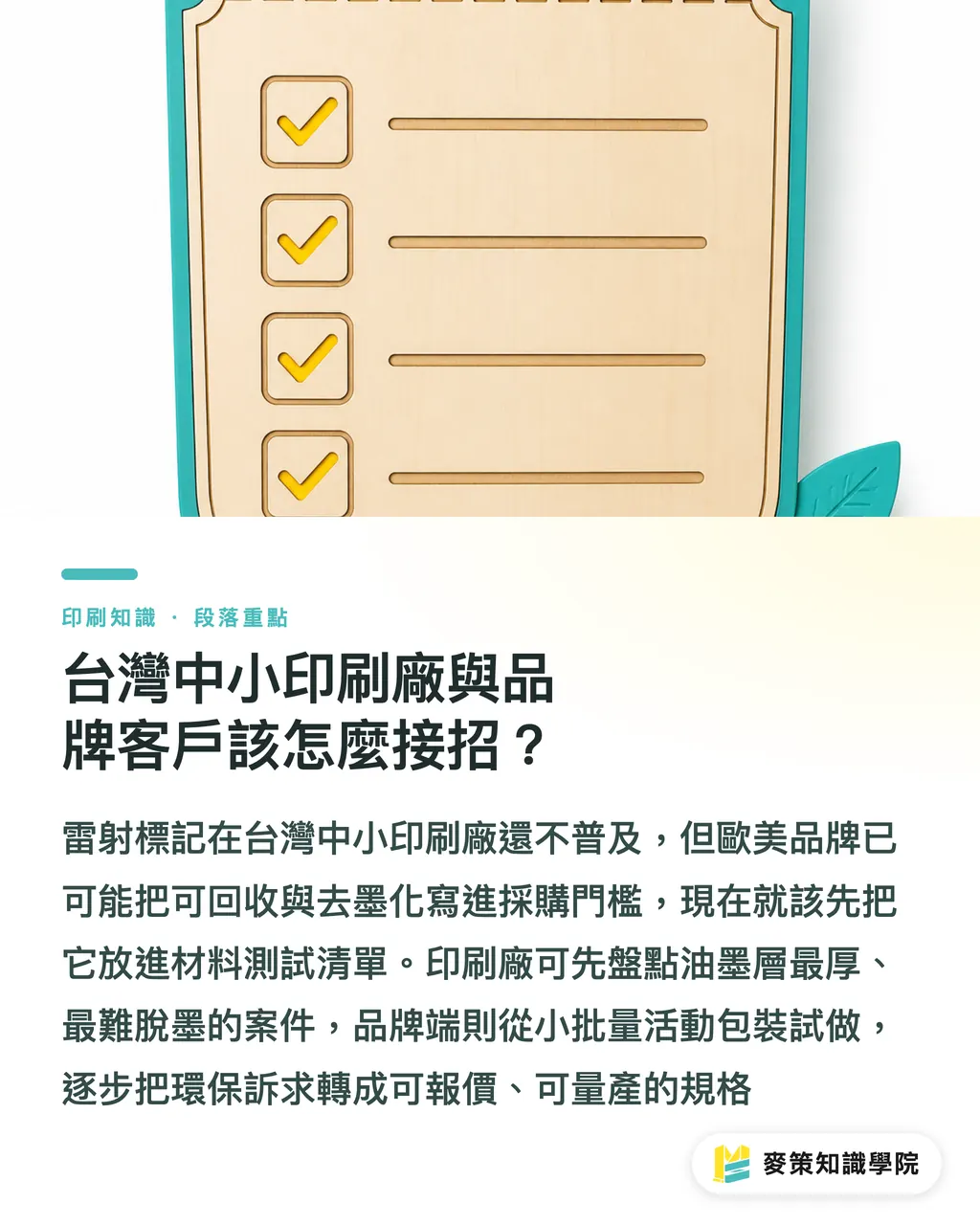
How Should Taiwan's Printers and Brand Clients Respond?
Laser marking isn't yet widespread in Taiwan, most small and mid-sized factories don't have CO₂ fiber laser machines, and material suppliers are still working through laser response properties. But that's no reason to wait. Mondi's two cases send a clear signal: Western brand customers will write 'recyclable + inkless' into their RFPs as a purchasing threshold
For printing factories, three things to start with:
・Inventory your customers' material structures and identify the ones with the thickest ink layers and hardest deinking, pitch those first
・Check with equipment suppliers about leasing or outsourcing laser marking rather than buying right away
・Create a 'reducing-ink design guide' for customers' design teams to start the conversation in pre-press
For brands and design teams, three things to consider now:
・Separate 'essential information' from 'decorative information,' letting laser and minimal design carry the important messages
・Ask your printer if they can do an inkless option and add this to your factory audit checklist
・In the short term, pilot with promotional packaging and small-batch custom work before rolling out to full production
If your brand is preparing for European export or customers are pushing PCR percentages, add laser marking to your materials testing list now. You don't need to go all-in, but it should be on the list
Need further evaluation of whether your materials work with laser, or want to learn how to convert existing designs to inkless versions? Talk directly to consultants at MINDS to turn 'sustainability claims' into 'priceable specs.' For quick trials of small samples or promotional packages, order directly from MINDS Printing
Key Takeaways
・Ink is flexible packaging's toughest recycling challenge, going inkless directly boosts recycled material purity
・Laser marking replaces ink with light-etching, no printing plates, no solvents, no inventory
・Mondi's two cases validate both e-commerce inner pouches and mono-material flexible bags
・Visuals don't beat full-color printing, but design change speed, recycling-friendliness, and brand flexibility clearly win
・Taiwan's factories don't need to rush buying machines, but should put 'going inkless' into customer proposals and pricing frameworks
Broader Implications
This case teaches Taiwan's printing industry more than just 'buy a new machine', it signals a shift in the entire service model. We used to sell 'printing services'; now we need to sell 'material application consulting.' Once ink steps back, a printer's value isn't just applying color, it's helping customers decide which information goes to laser, which to minimal ink, which to digital inkjet
For design teams, this is a chance to rethink what truly needs to be communicated. For SaaS and AI tools, this case opens a new frontier: laser marking file prep, color simulation, and machine parameter recommendations can all add software value
I'd recommend factories start by cataloging customers' materials and inks, pick 3 jobs that are easiest to transition, and pitch proactively. Flip green transition from 'customers demanding it' to 'we have the answer already.'
Further Reading
FAQ
- How does laser marking differ from traditional ink printing?
- Laser marking uses a beam to etch images directly on the film surface, no ink, no printing plates. Traditional printing layers ink on film for vibrant color, but that interferes with deinking during recycling
- Why does flexible packaging need to go inkless?
- Ink and adhesive are the biggest pollution sources in flexible packaging recycling, they force downcycling or incineration. Going inkless directly improves recycled material quality and PCR percentages
- How does mono-material packaging connect to laser marking?
- Mono-material design uses one plastic type for easy sorting, but ink layers break that purity. Laser marking doesn't introduce foreign materials, they're a natural pairing
- Can small and mid-sized printers in Taiwan do laser marking now?
- Most don't have their own machines yet, but can start with materials testing, outsourced production, and design guides, you don't need to buy equipment right away
- Does laser marking have good enough visual results?
- Full-color and gradients can't compete with ink, but logos, text, QR codes, and line art work perfectly. Reductive design actually aligns better with sustainability messaging
Related articles
The Print × AI weekly
The print and AI know-how designers, brands and enterprises can use before they commit — one email, every week
MINDS Free Tools
AI background removal, a LINE sticker maker, spine & imposition calculators — all free, right in your browser, no upload.
MINDS Group
Need actual printing or gifting services?
From premium printing to online ordering and festive gifts — the MINDS Group sister brands take it from here.