
Why Are Brands Rushing for Plastic-Free Solutions While Taiwanese Printers Are Left Scrambling?
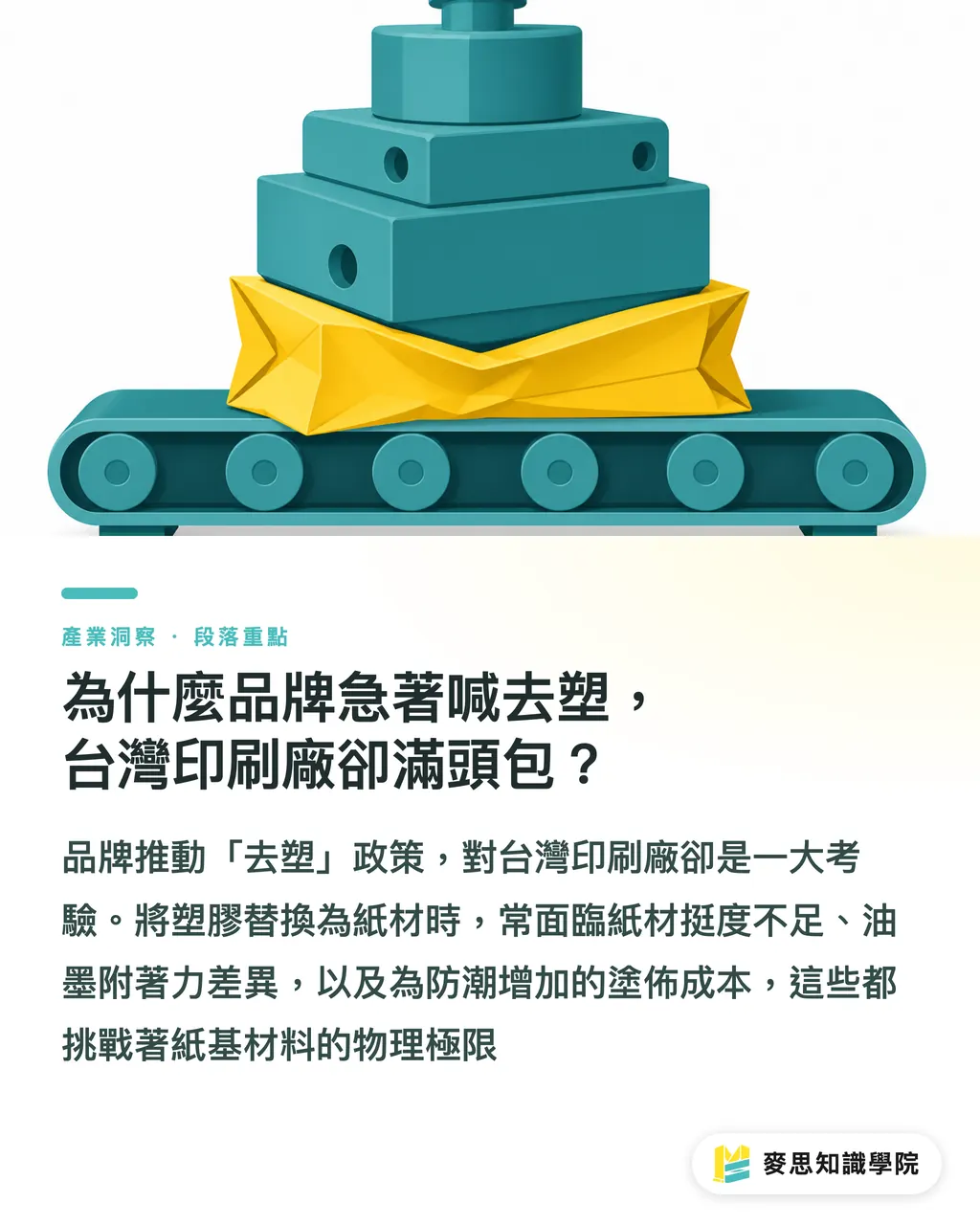
Over the past two years, whenever I visit clients, the procurement side is constantly talking about EPR and plastic reduction targets
But as a front-line professional, I know all too well that replacing plastic film with paper is definitely not as simple as changing a quote
Small and medium-sized printers in Taiwan currently taking these ESG orders often get stuck on insufficient paper stiffness leading to packaging deformation, ink adhesion being completely different from plastic, and the skyrocketing coating costs added just for moisture resistance
Just like the high-spec Trading Card Game (TCG) packaging I've seen before, achieving 99% light shielding and moisture resistance with paper is almost challenging the physical limits of paper-based materials
Without first assessing the processing limits of the machinery and material compatibility, rushing into an order will definitely lead to complaints from the production line
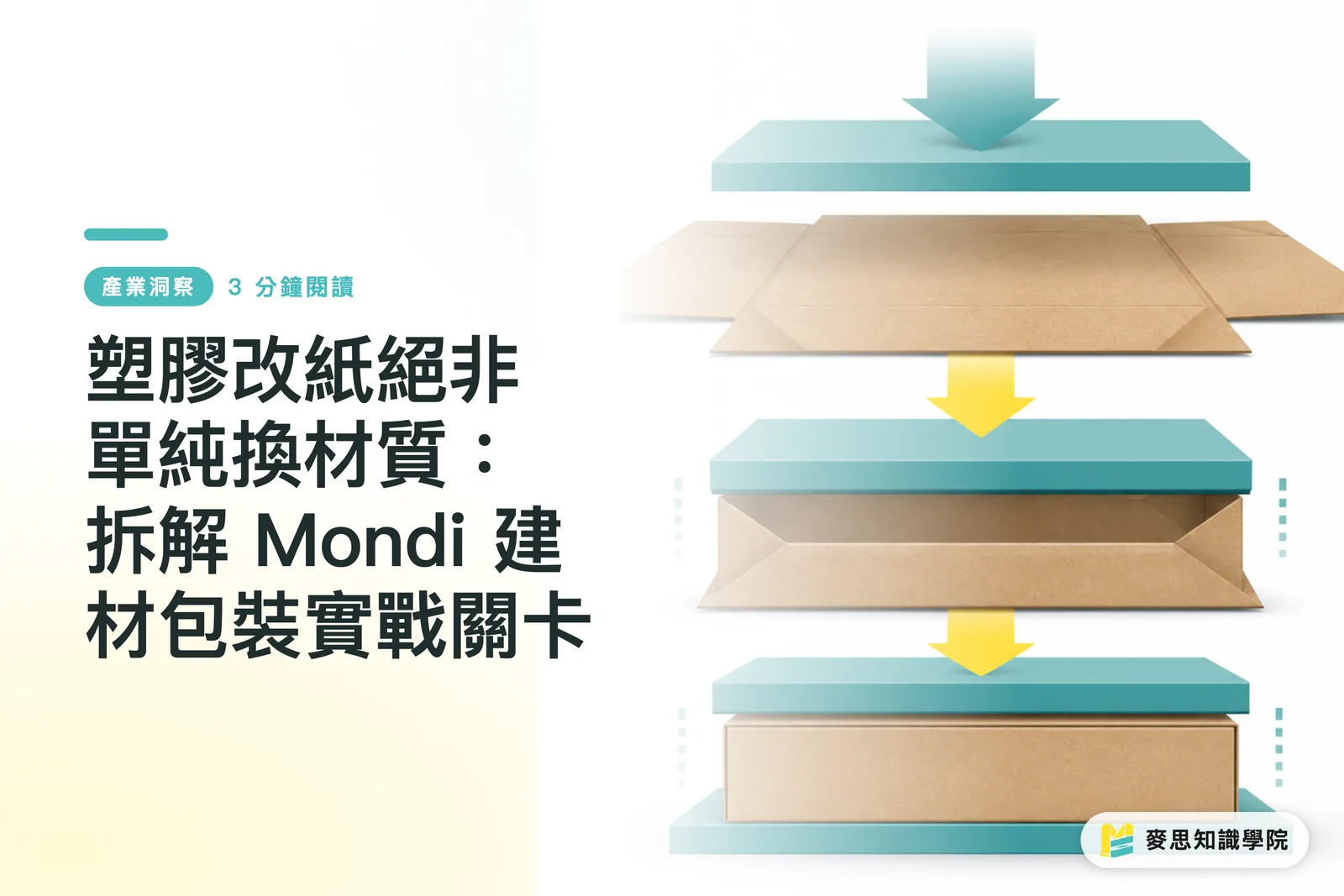
How Did Mondi Overcome Packaging Structures for Heavyweight Construction Materials?
In this case, Mondi helped global construction giant Swiss Krono switch their wood flooring outer packaging from plastic shrink wrap to kraft paper
The real key was their logic in matching material selection with machinery
They introduced high-strength Eco/Vantage Kraft Pro kraft paper containing 20% recycled content
And they directly collaborated with packaging equipment manufacturer Hugo Beck for production line integration
Wood flooring is extremely heavy; a box of 10 laminate planks exerts high puncture force on the corners of the packaging
Mondi used the high puncture resistance of this kraft paper to successfully withstand the heavy pressure on the corners
This proves that as long as the correct weight and fiber structure are chosen, paper can still handle industrial-grade heavy-duty requirements
How Did 'Paperless Manuals' Actually Become a Reality After Switching to Paper?
Many people think switching packaging to paper is only about reducing carbon emissions
But from a printer's perspective, the high printability of paper is the secret weapon for saving clients money
When using plastic film packaging in the past, Swiss Krono had to print separate manuals or brand cards to insert into the package
After switching to Mondi kraft paper, because the ink performance is stable, they could print the brand visuals and installation instructions directly onto the outer packaging
This involves a layout reconfiguration, much like the resealable aluminum cans currently being discussed in the industry, where one small change affects everything, even barcodes and safety zones must be rewritten alongside the structure
Once this hurdle is cleared, extra paper inserts can be completely eliminated, significantly lowering overall packaging costs
Details Hidden in the End-User Experience: Why Changing Packaging Can Save Customers 24 Hours?
This is what I consider the most brilliant aspect of the entire case, yet it's often overlooked by designers
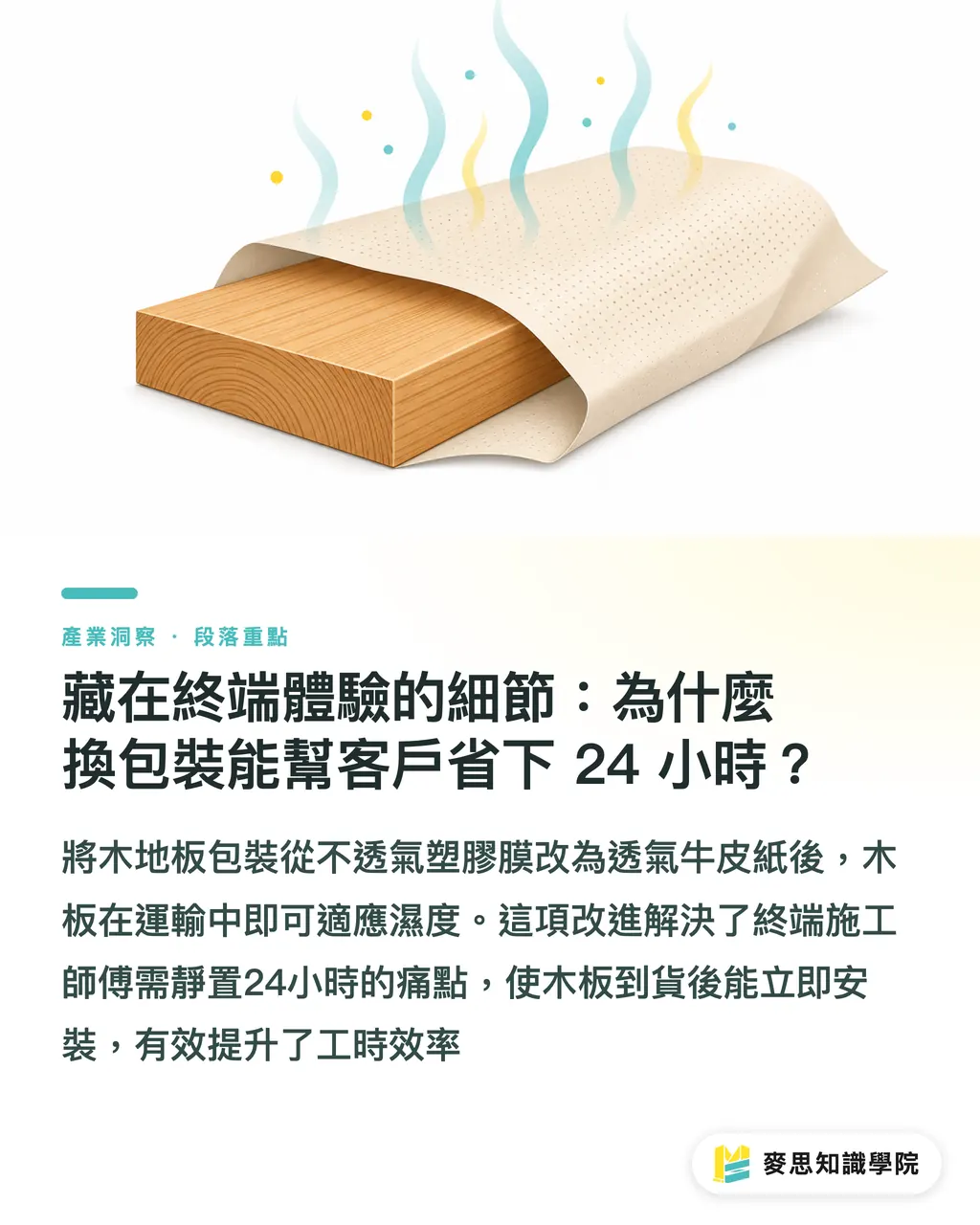
In the past, when wood flooring was wrapped in plastic film, moisture would easily get trapped inside
After receiving the goods, installers had to unpack and let the boards sit for 24 hours to acclimate to the ambient humidity before installation
Now, switching to breathable kraft paper packaging allows the wood planks to 'breathe' naturally during transport
Once the goods arrive at the site, installers can unpack and start working immediately
When you pitch this end-user pain point to brand clients, the value of going plastic-free translates directly into actual man-hour reductions and efficiency upgrades
Key Takeaways
・The winning point for plastic-reduced packaging lies in the recalibration of machine compatibility and structural strength
・Using the advantage of paper's high printability to combine outer packaging and manuals is an excellent incentive to convince clients
・The biggest highlight of going plastic-free is sometimes hidden in the end-user experience; the breathable paper material saving 24 hours of acclimation time for wood flooring is the best evidence
Further Thoughts
Faced with urgent ESG demands from brands, Taiwanese printing and packaging factories cannot simply remain at the passive level of providing eco-friendly paper catalogs
You must discuss production line compatibility with clients and even help them re-plan the graphics and layout on the packaging
If replacing the entire set of packaging is too expensive, you can suggest clients start with labels or lids with smaller contact areas to test the waters; this is often the most cost-effective shortcut
In the future, within the integrated design and printing process at MINDS, we can take these material physical properties and production line constraints into account early in the structural planning stage, helping brands avoid many trial-and-error pitfalls
Further Reading
FAQ
- What are the most common pitfalls when clients want to switch from plastic to paper packaging?
- The most common issues are insufficient paper stiffness leading to deformation and surface moisture treatments significantly driving up costs. Before going live, it is essential to conduct machine tests for puncture resistance and production line compatibility
- What specific materials did Mondi use this time to help the construction material factory switch to paper packaging?
- They used Eco/Vantage Kraft Pro kraft paper with 20% recycled content, paired with dedicated Hugo Beck packaging machinery, to successfully wrap a box of 10 heavy-duty wood flooring planks
- Besides carbon reduction, what are the actual benefits for brands in switching to paper packaging?
- The excellent printability of paper allows instructions to be printed directly on the outer layer, saving the cost of extra inserts; the breathable characteristic also eliminates the need for moisture-sensitive products like wood flooring to sit and acclimate after unpacking
References
- Mondi helps Swiss Krono move from plastic to paper · thepackagingportal.com
Related articles
The Print × AI weekly
The print and AI know-how designers, brands and enterprises can use before they commit — one email, every week
MINDS Free Tools
AI background removal, a LINE sticker maker, spine & imposition calculators — all free, right in your browser, no upload.
MINDS Group
Need actual printing or gifting services?
From premium printing to online ordering and festive gifts — the MINDS Group sister brands take it from here.