
Why are international brands taking the lead in "stripping down" packaging?
・Recently, when discussing Extended Producer Responsibility (EPR) regulations with export clients, their anxiety was palpable
・In the past, we always thought that simply paying the declaration fees was enough, but regulations are forcing brands to shift from "passive disclosure" to "active material reduction."
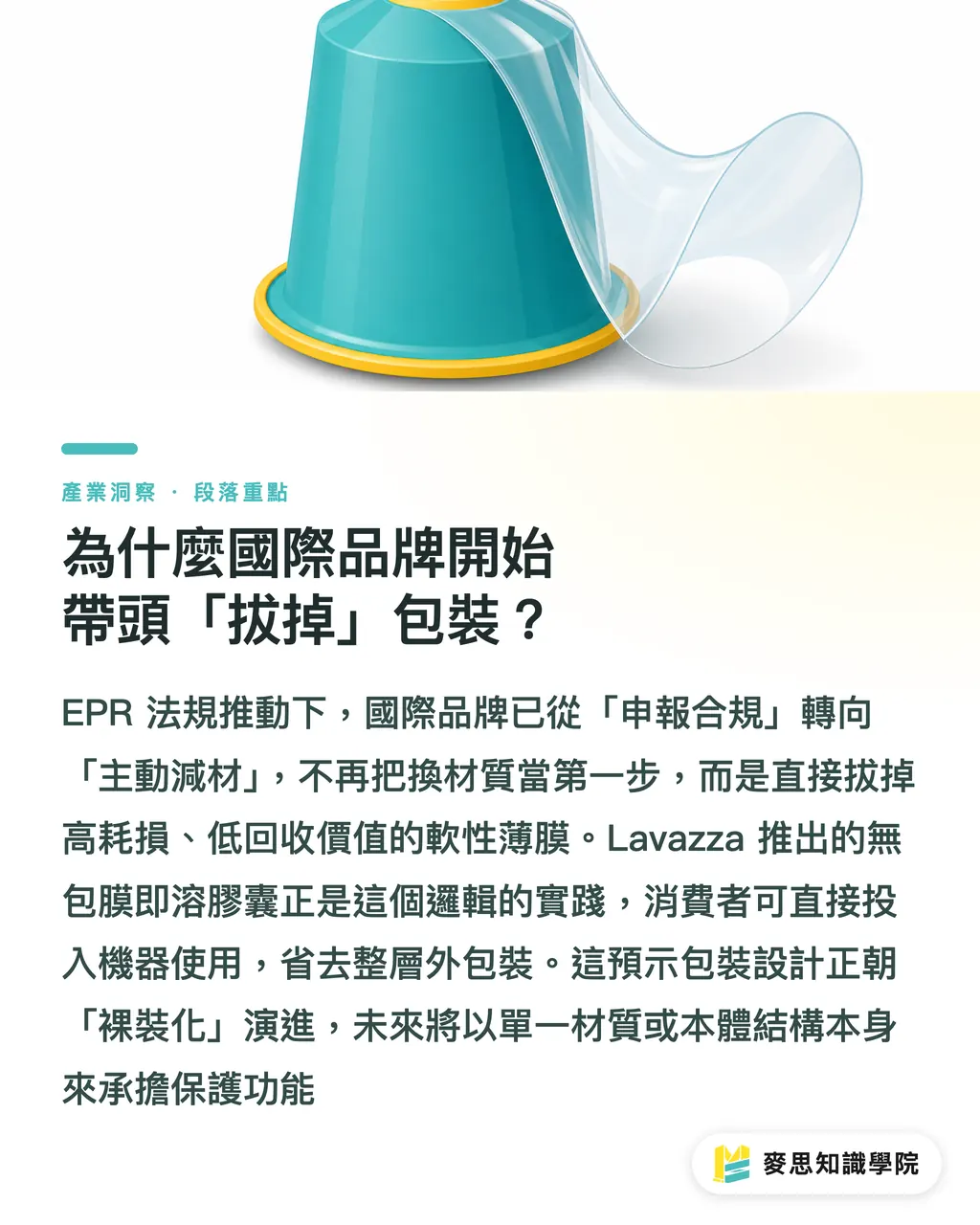
・According to the latest intelligence released by Packaging Dive, Lavazza has just launched instant coffee capsules using Tabli technology
・The biggest breakthrough of this capsule is the complete removal of the outer packaging film, allowing consumers to throw the capsule directly into the machine
・From my practical experience, this follows the same logic as the "removing plastic from lids and labels" trends I've mentioned before
・Changing material compositions for entire packaging systems carries too much risk; however, stripping away flexible films, which are high-waste and have low recycling value, is the fastest shortcut for brands to achieve their ESG goals
・This suggests that future packaging design will increasingly lean toward "naked" or minimalist packaging, relying on mono-materials or inherent body structures to solve protection issues
What pain points can a unified "Reusable" symbol solve?
・For packaging to be recyclable, it's not enough to just use the right materials; consumers must also be able to understand them
・On our production lines, we often print a multitude of eco-labels for different countries, yet end consumers still end up tossing them into the wrong bin
・The U.S. has recently officially launched a unified national "Reusable" icon, with Portland, Oregon, selected as the pilot site for regulatory certification
・The commercial significance of this move lies in establishing a visual consensus
・When the market has a credible and unified visual symbol, brands no longer need to sing different tunes when planning their packaging visuals
・For designers and printing plants, this means that future layouts must reserve specific space for these compliance marks
・Also, these marks usually come with strict color and size specifications, requiring an upgrade to prepress approval mechanisms
How does switching to low-carbon aluminum affect packaging cost structures?
・As decarbonization moves into deep-water territory, brands are starting to squeeze margins and carbon emissions at the upstream raw material level
・The latest liquid cartons launched by packaging giant Elopak have directly replaced the internal water- and light-blocking aluminum foil layer with low-carbon aluminum
・This replacement reduces the overall carbon footprint of the packaging by approximately 30% compared to traditional materials
・This confirms my long-standing observation: sustainable packaging is no longer a compromise that sacrifices protective strength or visual aesthetics
・Suppliers can now swap out high-carbon components without changing existing carton forming logic
・Once these low-carbon alternative materials achieve scalable production capabilities, they will become a mandatory requirement in brand procurement RFPs
・Packaging manufacturers unable to provide these materials or lacking processing experience will lose their eligibility to even submit quotes
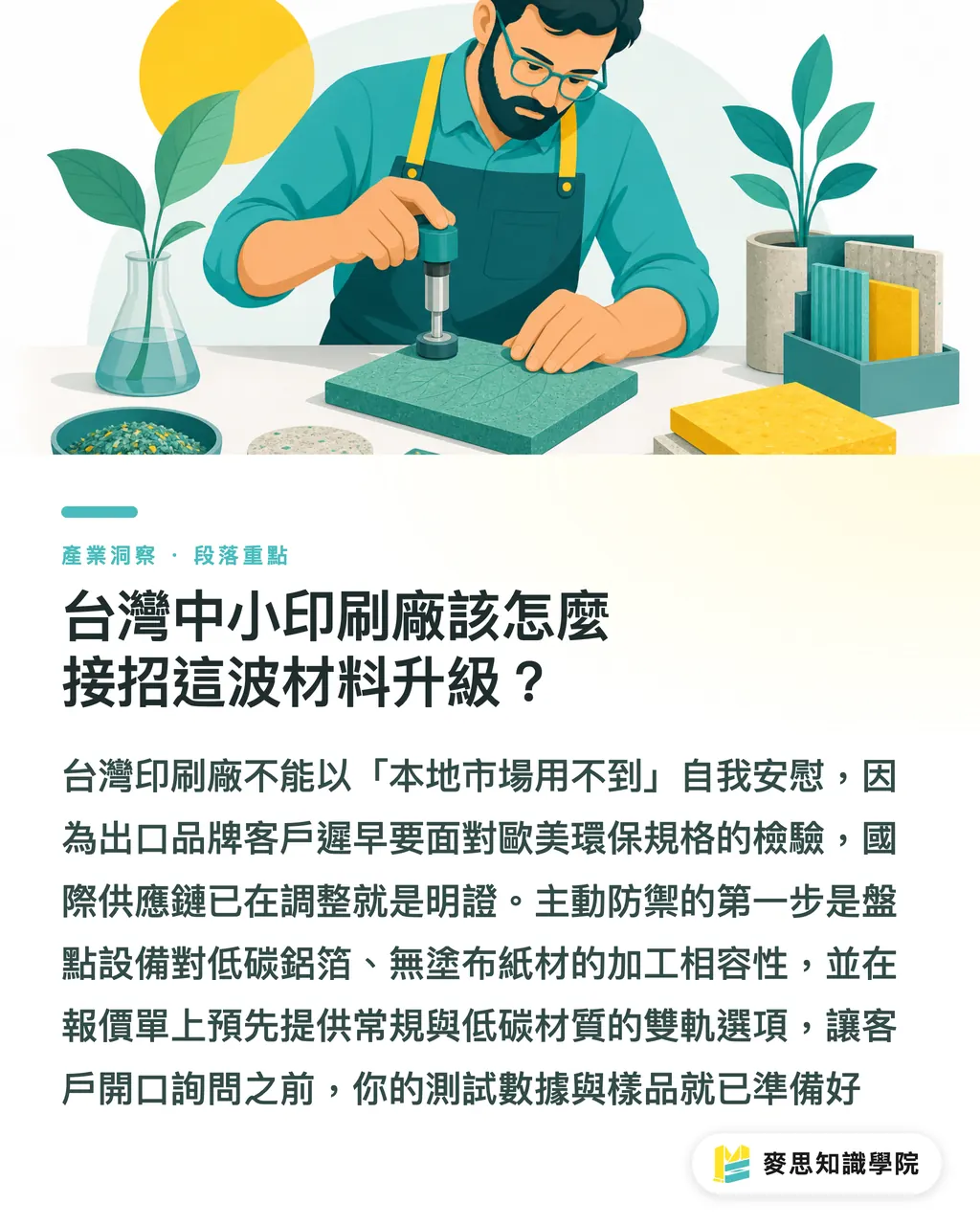
How should SMEs in the Taiwanese printing industry respond to this wave of material upgrades?
・Many peers see these international cases and their first reaction is that the Taiwan market doesn't need them yet
・But don't forget that Taiwan is export-oriented; your brand clients will eventually have to face scrutiny from the European and American markets
・The simultaneous arrival of these three cases shows that international brands are already adjusting their physical supply chains
・Taiwanese printing and packaging manufacturers must now adopt an active defense
・・Inventory the compatibility of existing in-house equipment with new eco-materials (such as low-carbon aluminum foil or uncoated paper)
・・Test the tolerance and physical protection limits of film-free packaging during storage and transportation
・・Proactively provide clients with dual-track options for "Standard Material" and "Low-Carbon/Easily Recyclable Material" on quotes
・Rather than waiting for clients to ask if you can handle foreign specifications, it is better to have the test data and samples ready beforehand
Key Takeaways
・Removing high-waste outer films and flexible packaging is the fastest shortcut for brands to achieve environmental results
・Unified reusable symbols will become standard equipment for packaging visual design in European and American markets
・Low-carbon materials have reached the mass production threshold and will shift from a "bonus point" to a "ticket to entry" for brand procurement
・Printing plants must test the processing limits of new materials early to avoid being eliminated in the next wave of order reshuffling
Extended Reflections
・For MINDS clients and the broader printing industry, this is an excellent opportunity for system upgrades
・As packaging materials and compliance marks become increasingly complex, relying on manual memory for quoting and prepress checks will inevitably lead to errors
・Implementing a SaaS system to build an automated database of international environmental regulations and corresponding material die-cuts is the fundamental solution for preventing customer complaints
・The next step is to evaluate adding a material carbon footprint estimation module to the management system, allowing sales reps to present carbon reduction benefits directly during the quoting phase, this will be your strongest weapon for winning major orders from export brands
Further Reading
FAQ
- Why did Lavazza launch film-free coffee capsules?
- To directly reduce the usage of flexible plastic film and the difficulty of recycling. This is a source-reduction strategy that increases consumer convenience and environmental benefits by allowing them to drop the capsule directly into the machine without removing the film
- What are the benefits of the U.S. promoting a unified "Reusable" symbol?
- It solves the pain point of confusing labeling across brands, which previously led to incorrect consumer recycling habits. The pilot in Portland, Oregon, will help establish a standardized visual communication mechanism
- Will switching to low-carbon aluminum affect existing production lines at packaging plants?
- The Elopak case shows that modern low-carbon aluminum can be introduced without sacrificing physical protection or existing carton forming logic, though packaging plants still need to test processing compatibility in advance
- How should small and medium-sized printing plants respond to this trend in sustainable packaging?
- They should proactively audit equipment adaptability for new materials and provide dual-track options for standard and low-carbon materials during the quoting phase to assist brand clients in meeting overseas compliance requirements
References
- 三個永續包裝突破同步落地:無外包裝膠囊、可重複使用標誌、低碳鋁材的商業意義 · packagingdive.com
Related articles
The Print × AI weekly
The print and AI know-how designers, brands and enterprises can use before they commit — one email, every week
MINDS Free Tools
AI background removal, a LINE sticker maker, spine & imposition calculators — all free, right in your browser, no upload.
MINDS Group
Need actual printing or gifting services?
From premium printing to online ordering and festive gifts — the MINDS Group sister brands take it from here.