
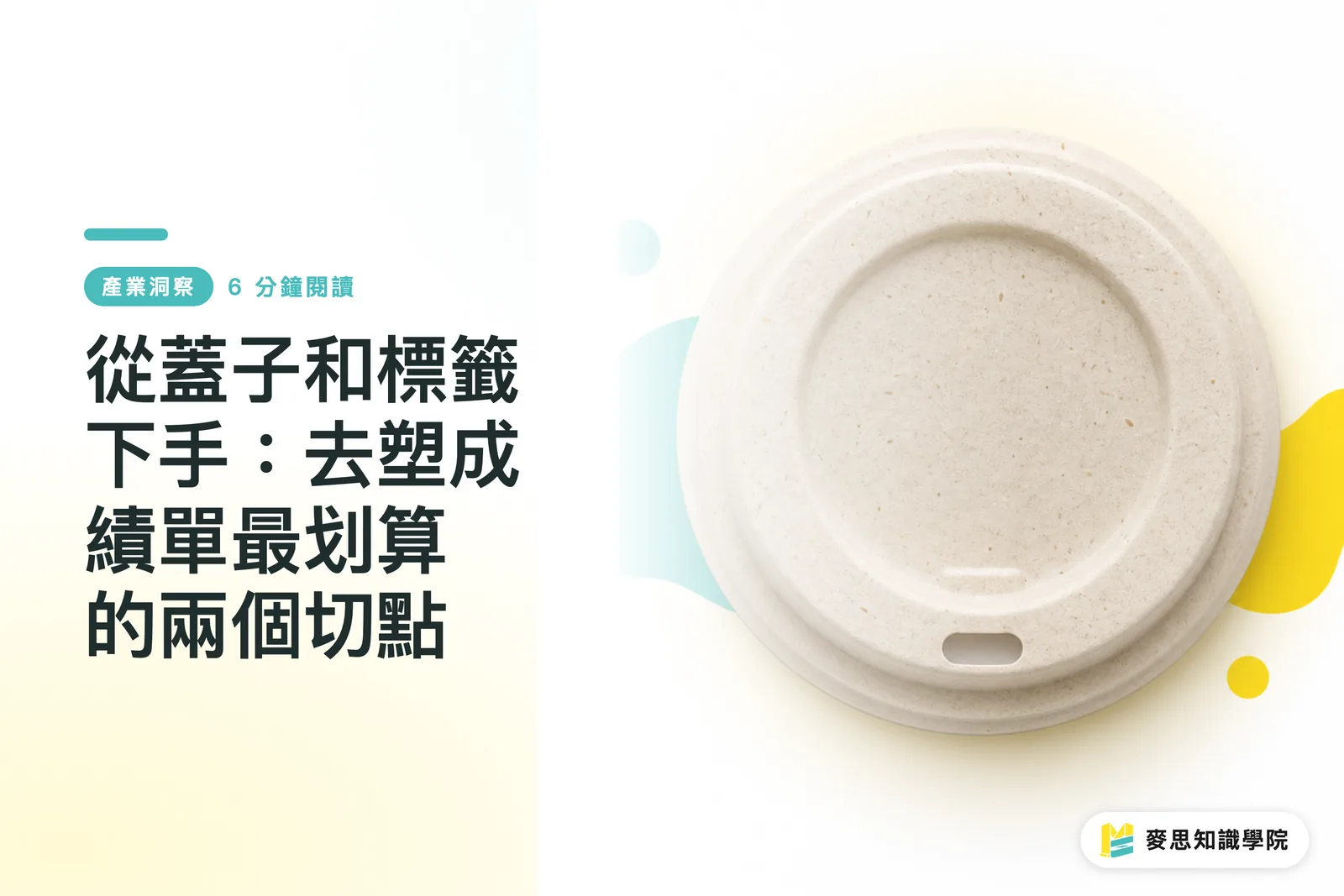
Why Start Plastic Reduction with Lids and Labels?
Mention 'plastic reduction' and most brand owners instantly get a headache. They picture tearing down their entire packaging line, throwing out old molds, replacing equipment, and re-doing certifications. One look at the quote and the boss turns pale
Huhtamaki's partnership with Finnish fast-food chain Hesburger takes an approach I really like. Instead of overhauling the whole cup, they simply replaced the PE plastic lid with a fiber-based lid
What is a lid? It's the high-touch surface consumers pull back with their fingers and put to their lips every day. It's one of the most visible plastic components on a drink cup
Around the same time, Chilean fruit exporter Copefrut adopted Sinclair's home-compostable fruit labels, sticking them on every piece of fruit on store shelves. That's the final visual touchpoint consumers see before placing items in their cart
Put these two cases together and the message is clear. Plastic reduction doesn't have to happen all at once. Starting with high-touch, high-visibility small components is the smartest opening move
In my experience running between factory lines and clients, full packaging overhauls take months and cost millions. Replacing a lid or a label takes less time, requires far smaller investment, and gives consumers an upgrade they spot instantly
Where Is the Real Technical Hurdle for a Fiber Lid?
Don't let 'it's just a lid' fool you. When fiber materials touch food, the real challenges begin
The key achievement of Huhtamaki's fiber lid is its food contact safety certification. That took serious engineering
Raw fiber naturally absorbs water and oil. Pour in a drink, and the lid hits heat, grease, and acid. The fiber structure has to hold up without migrating chemical substances into food. Every test must be passed
Traditional PE lids work so well because plastic is naturally waterproof, greaseproof, and cheap. Swapping in fiber means forcing an absorbent material to do a waterproof job
That brings us to the second obstacle: coatings. Fiber lids usually rely on a water-based or bio-based barrier coating to function. But that coating cannot ruin recyclability or compostability, or you end up with a half-baked plastic alternative that creates even worse waste problems
For Taiwanese fiber molding and paper container manufacturers, this is a massive opportunity. Whoever masters the pipeline of fiber substrates, food contact certification, and barrier coatings first will capture brand orders transitioning away from plastic
Why Are Compostable Labels a Differentiation Opportunity for Printers?
Labels hit even closer to home for print businesses, making them something small and medium printers in Taiwan should watch closely
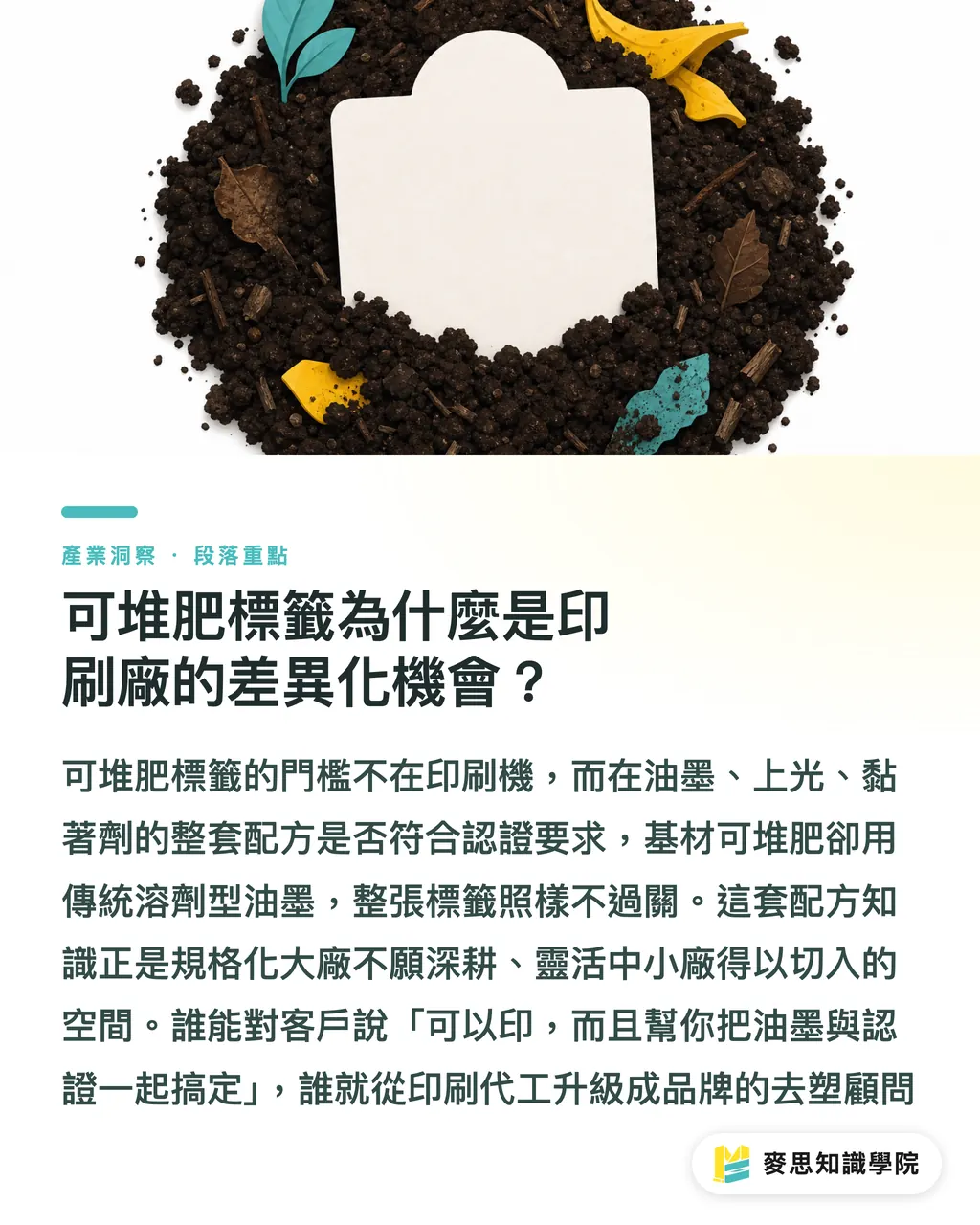
The tricky part of Sinclair's home-compostable labels isn't whether you can print on them. It's whether they remain compostable after printing
Compostable substrates are more delicate than standard PP or PE label stocks. Surface tension, ink absorption, and drying conditions are completely different. Ink adhesion, color fastness, and UV curing brittleness must all be tested rigorously
Ink compatibility matters even more. To earn a 'home compostable' certification, every layer, including ink, varnish, and adhesive, must be compostable or harmless. If you force traditional solvent inks onto a compostable base, the entire label fails the composting process
In short, compostable labels don't test your printing presses. They test your formulation knowledge across inks, varnishes, and adhesives. That's a niche rigid mega-factories avoid, but nimble mid-sized shops can exploit
Over the past couple of months, I've seen a noticeable surge in clients asking if eco-friendly labels can be printed without losing certifications. Most are OEM suppliers for Western and Japanese brands, squeezed by buyers demanding compostable or plastic-free options
If you can answer, 'Yes, and I'll handle both the ink system and certification for you,' you step up from a simple contract printer to a brand's plastic-reduction consultant
How Should Small and Medium Taiwanese Printers Capitalize on This Wave?
Don't wait until brand clients arrive with spec sheets to start learning. By then, you're stuck passively quoting prices
Here is the practical roadmap I recommend:
・Start with one high-touch component: Test small items like lids, labels, or seal stickers. Prototyping costs are low, certification scopes are manageable, and you can iron out the full workflow first
・Test 'substrate + ink + varnish' as an integrated system: Going compostable isn't just swapping paper. You must switch consumables together. Document your formulation logs from every trial run; that's your proprietary technical asset
・Clarify certification requirements upfront: Food contact requires FDA or EU compliance frameworks. Compostability comes in industrial and home grades. Different tiers open up different orders, so find out what your client needs before quoting
・Turn results into visible sales tools: The true value of plastic reduction lies in visibility. Help clients quantify plastic saved and eco-materials used, turning it into a single, punchy claim for their packaging
This plastic reduction trend won't stop just because material changes are expensive. European PPWR deadlines and extended producer responsibility (EPR) laws worldwide are pushing everyone in the exact same direction
Starting with small items like lids and labels offers the highest ROI and the fastest path to proof points. It's the perfect opportunity for Taiwanese mid-sized printers to elevate themselves from OEM contract shops to sustainable brand partners
Key Takeaways
・You don't need a full packaging overhaul to cut plastic. Starting with high-touch, high-visibility parts like lids and labels means shorter turnaround, lower investment, and instant consumer recognition
・The real hurdle for fiber lids lies in food contact certification combined with barrier coatings. It's forcing an absorbent material to do a waterproof job. Whoever masters this technical line gets the orders
・Compostable labels test formulation compatibility across inks, varnishes, and adhesives, not press hardware. That's a niche rigid mega-factories ignore but flexible mid-sized shops can win
・Industrial and home compostability are distinct certification tiers leading to different business opportunities. Confirm exact certification requirements before providing a quote
・Documenting formulation logs from every eco-friendly trial run builds the proprietary technical assets needed to turn contract printing into plastic-reduction consulting
Further Thoughts
For print manufacturers, the most immediate win is establishing a standard prototyping process for eco-friendly substrates. Accumulating data on surface tension, ink absorption, drying times, and adhesion for delicate fiber and compostable materials builds an in-house recipe library. When clients ask questions, you can respond with confidence instead of testing from scratch every time. For designers, plastic-free parts deliver ESG value precisely because they are visible. Visual messaging on labels and lids should build sustainability directly into the design, rather than slapping on a green leaf graphic after the fact. For AI integration, machine learning can compare historical prototyping parameters and recommend formulations, structuring veteran craftsmen's trial-and-error experience to slash testing time for new materials. For SaaS and one-stop service providers, the opportunity lies in combining material selection, ink compatibility, and certification alignment into a single consulting entry point so brand clients don't have to manage three separate suppliers. What MINDS (mid-to-high-end bespoke commercial printing) is doing is stitching together the pipeline from substrates and inks to certifications, letting clients kick off their plastic reduction journey with a single lid or label
Further Reading
FAQ
- Does plastic reduction require replacing an entire packaging system?
- No. Starting with high-touch, high-visibility components like lids, labels, and seal stickers is the opening move with the lowest investment, shortest timeline, and highest consumer impact. Huhtamaki swapping to fiber lids and Copefrut adopting compostable labels follow this exact strategy
- Can fiber cup lids come into direct contact with food?
- Only after passing food contact safety certification. Raw fiber absorbs liquids and grease, so a water-based or bio-based barrier coating is usually required. The fiber lids supplied by Huhtamaki to Hesburger are fully certified for food contact safety
- Why are compostable labels so difficult to print?
- The challenge isn't whether you can print on them, but ensuring the inks, varnishes, and adhesives are also compostable or harmless. If the substrate is compostable but the ink is not, the entire label contaminates the composting process and fails home-compostable certification
- What is the difference between industrial compostability and home compostability?
- They represent distinct certification levels. Home compostability has stricter requirements and aligns with different sales opportunities. Confirm which tier your brand client requires before selecting substrates and formulating inks
- What should small and medium printers in Taiwan do right now?
- Pick a small component to test the waters. Treat the substrate, ink, and varnish as a unified system during trial runs, document your formulation logs, and clarify food contact and compostability certification levels early to master a complete workflow
References
- Huhtamaki 供應 Hesburger 全新纖維杯蓋 · packaginginsights.com
Related articles


The Print × AI weekly
The print and AI know-how designers, brands and enterprises can use before they commit — one email, every week
MINDS Free Tools
AI background removal, a LINE sticker maker, spine & imposition calculators — all free, right in your browser, no upload.
MINDS Group
Need actual printing or gifting services?
From premium printing to online ordering and festive gifts — the MINDS Group sister brands take it from here.