
Overview
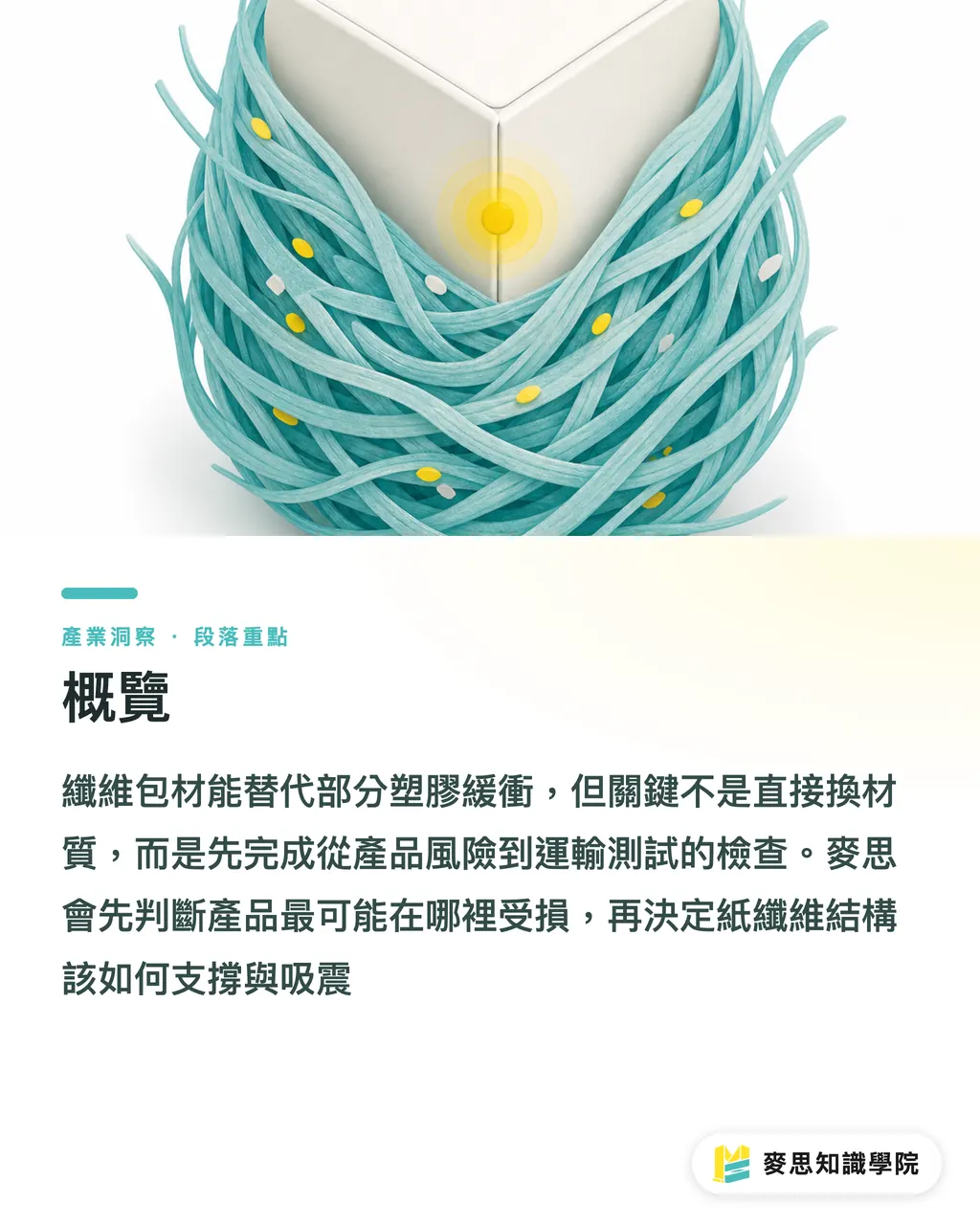
Fiber-based packaging can replace part of plastic cushioning, provided it passes a clear check from product risk to transit testing. MINDS (MS, mid-to-high-end custom commercial printing) looks at these substitution projects by asking where the product will break first, then deciding how the paper fiber structure should be designed
Can Fiber-Based Packaging Really Replace Plastic Cushioning?
Yes, but don't treat this as a simple choice between paper and plastic
Fiber-based transport packaging: replacing plastic inserts with paper fiber materials, allowing the outer box and fixing structure to share transit protection, aiming to deliver products intact to the warehouse
Packaging Insights reported DS Smith designed fiber-based transport packaging for water filters. I view this case as a clear signal: sustainable packaging has moved from display boxes to transit packaging. Water filters aren't lightweight freebies; they have real weight and structures vulnerable to stress during transport
For SMBs, material names come second; protection capacity comes first. If products arrive cracked or deformed, driving up complaints, eco-friendly claims won't save the deal
What Does the DS Smith Water Filter Case Teach Us?
The most interesting part of the DS Smith water filter case is that the hero is transport packaging, not a sleek display box made for photo shoots
Transit packaging faces rough, real-world conditions: warehouse handling, pallet stacking, truck vibrations, and last-mile drops. For paper fiber to replace plastic cushioning, these impacts must be absorbed through smart structural design, not just thicker outer walls
I've seen plenty of plastic-reduction projects on the production line. First-round samples look great in your hand, but second-round bottlenecks pop up around packing speed and insert placement. One extra fold or one misaligned tab slows down the entire packing line
That's the takeaway for Taiwanese packaging plants: switching from plastic to fiber requires evaluating the product, paper material, inserts, and logistics path all at once
What 3 Checkpoints Should SMBs Evaluate?
The MINDS (MS) 3-step fiber substitution check shifts the conversation from 'should we cut plastic' to 'can we actually mass-produce this.'
・① Product weight and weak points: figure out which part of the product is most vulnerable to impact. For products like water filters, look beyond outer dimensions to check connectors, housing, and filter media positions
・② Structural strength of paper: design the outer box, inserts, and fasteners as one system. Flute direction, crease placement, and load-bearing area all affect deformation under stacking
・③ Packing efficiency and transit testing: a nice sample feel isn't enough. You need packing seconds, stacking conditions, and simulated transit results written directly into the spec sheet
If SMBs are replacing plastic foam with paper fiber structures, the Mai Strategy Knowledge Academy consulting team usually suggests starting with a shared spec sheet. This keeps brands, designers, box manufacturers, and packaging lines on the same page
Why Brands Can't Just Ask 'Is It Recyclable?'
Brands often ask 'is this recyclable?' But with transit packaging, there's a second question: will this design shift damage risks straight to customer service and returns?
The EU PPWR is pushing recyclable design into export packaging specs more frequently. For Taiwan's supply chain, this brings both pressure and opportunity. The pressure means no exaggerated material claims; the opportunity means suppliers can stand out using test records and structural design
I remind brand clients not to slap '100% recyclable' on artwork too early. Make sure material combinations, adhesives, and insert structures are fully documented before letting designers refine the messaging tone
When you need to rework retail boxes, insert cards, and outer shipping cartons together, MINDS can step in during early prototyping to save time across print surfaces, structural lines, and warehouse labeling
How Can Design, Manufacturing, and SaaS Teams Execute This?
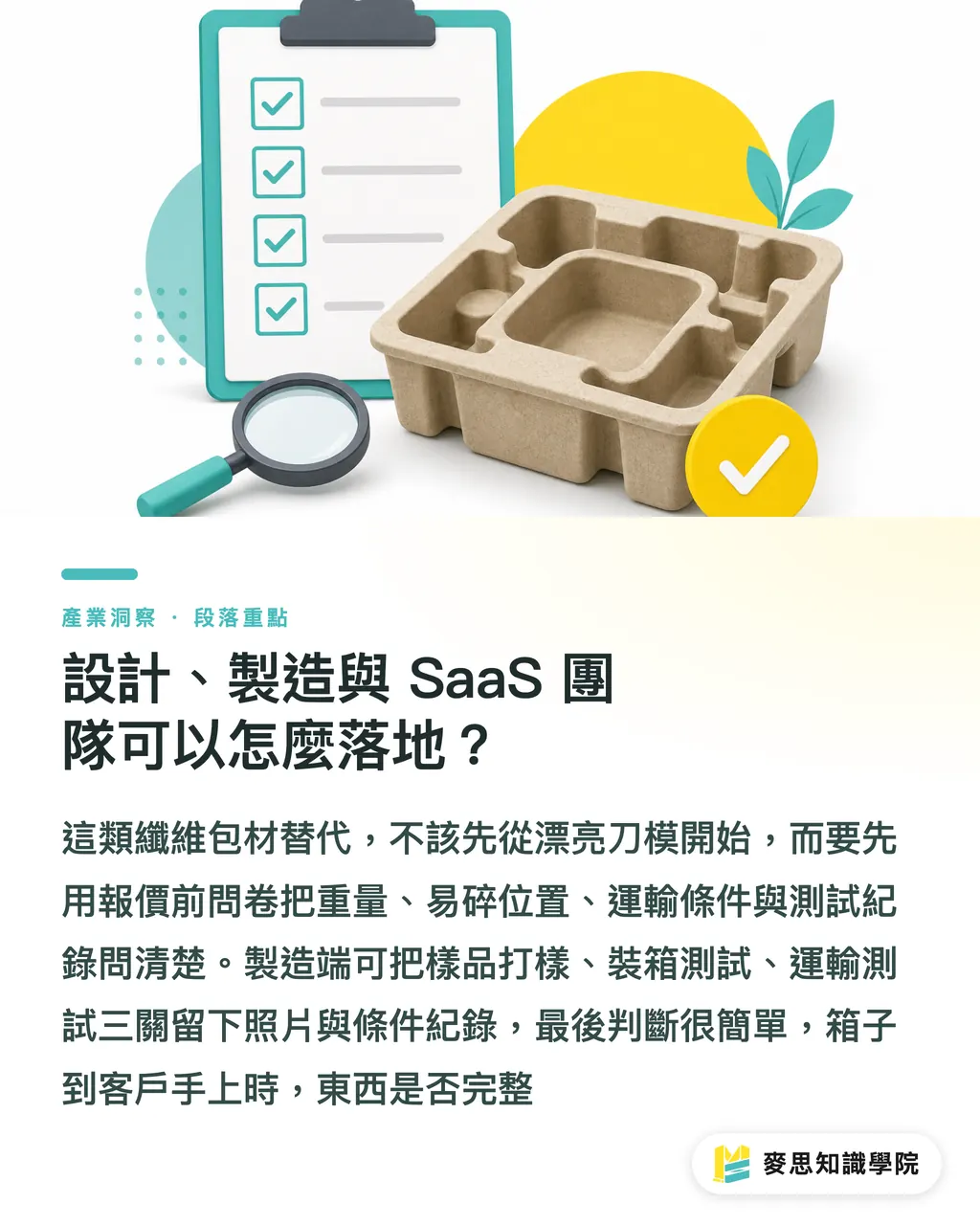
Projects like this should start with a pre-quote questionnaire, not a pretty dieline
・Print manufacturing: split fiber substitution projects into three milestones: prototyping, packing tests, and transit tests, documenting photos and conditions at each step
・Graphic design: verify structural lines and stress points before arranging brand visuals, avoiding large die-cut windows or excessive foil stamping that weaken box protection
・AI applications: use AI to spot gaps in spec documents, like missing weight data, fragile spots, or test logs, while leaving final decisions to physical prototyping
・SaaS teams: turn the MINDS (MS) 3-step fiber check into a procurement questionnaire so sales reps gather all necessary transit packaging specs before quoting
Replacing plastic with fiber comes down to a simple, practical test: when the box reaches the customer, is the product intact?
Key Takeaways
・Whether fiber packaging works depends on how the product takes hits during transit
・The biggest mistake in plastic reduction is changing the material without updating inserts and outer boxes together
・Paper structural strength needs transit tests to prove itself, not just sample feel
・Before asking about recyclability, brands should ask if damages and complaints will spike
・When packaging suppliers clearly define test conditions, quotes won't turn into race-to-the-bottom price cuts
Further Thoughts
Replacing plastic with fiber packaging is a structural test for manufacturing, a constrained creative exercise for design, and a spec management task for AI and SaaS. I suggest SMBs start with small-batch testing on a single SKU, run through the MINDS (MS) 3-step check, and then decide whether to roll it out across the entire product line
Further Reading
FAQ
- Can fiber-based packaging completely replace plastic cushioning?
- Fiber packaging can replace a portion of plastic cushioning. For heavier products with vulnerable parts, like water filters, confirm protection capabilities through prototyping and transit tests before pursuing full replacement
- What can Taiwanese SMBs learn from the DS Smith water filter packaging case?
- The DS Smith water filter case reminds Taiwanese SMBs that sustainable packaging has expanded into transport packaging. Suppliers must handle protection, packing efficiency, and logistics testing rather than simply swapping eco-friendly materials
- What is the first step for small-to-medium packaging suppliers adopting fiber-based packaging?
- Small-to-medium suppliers can use the MINDS (MS) 3-step fiber check to evaluate product risks, confirming weight, fragile points, and transit conditions before starting structural prototyping
- What should designers keep in mind for fiber transport packaging projects?
- Designers need to ground visual artwork within structural constraints, ensuring die-cut windows, creases, and insert placement don't compromise protection before finalizing recycling icons and brand messaging
- How can SaaS or AI tools help packaging suppliers?
- SaaS or AI tools excel at spec auditing and pre-quote questionnaires, prompting clients to fill in missing weight details and test logs, though final decisions still rely on physical prototyping and transit testing
Related articles

The Print × AI weekly
The print and AI know-how designers, brands and enterprises can use before they commit — one email, every week
MINDS Free Tools
AI background removal, a LINE sticker maker, spine & imposition calculators — all free, right in your browser, no upload.
MINDS Group
Need actual printing or gifting services?
From premium printing to online ordering and festive gifts — the MINDS Group sister brands take it from here.