
Overview
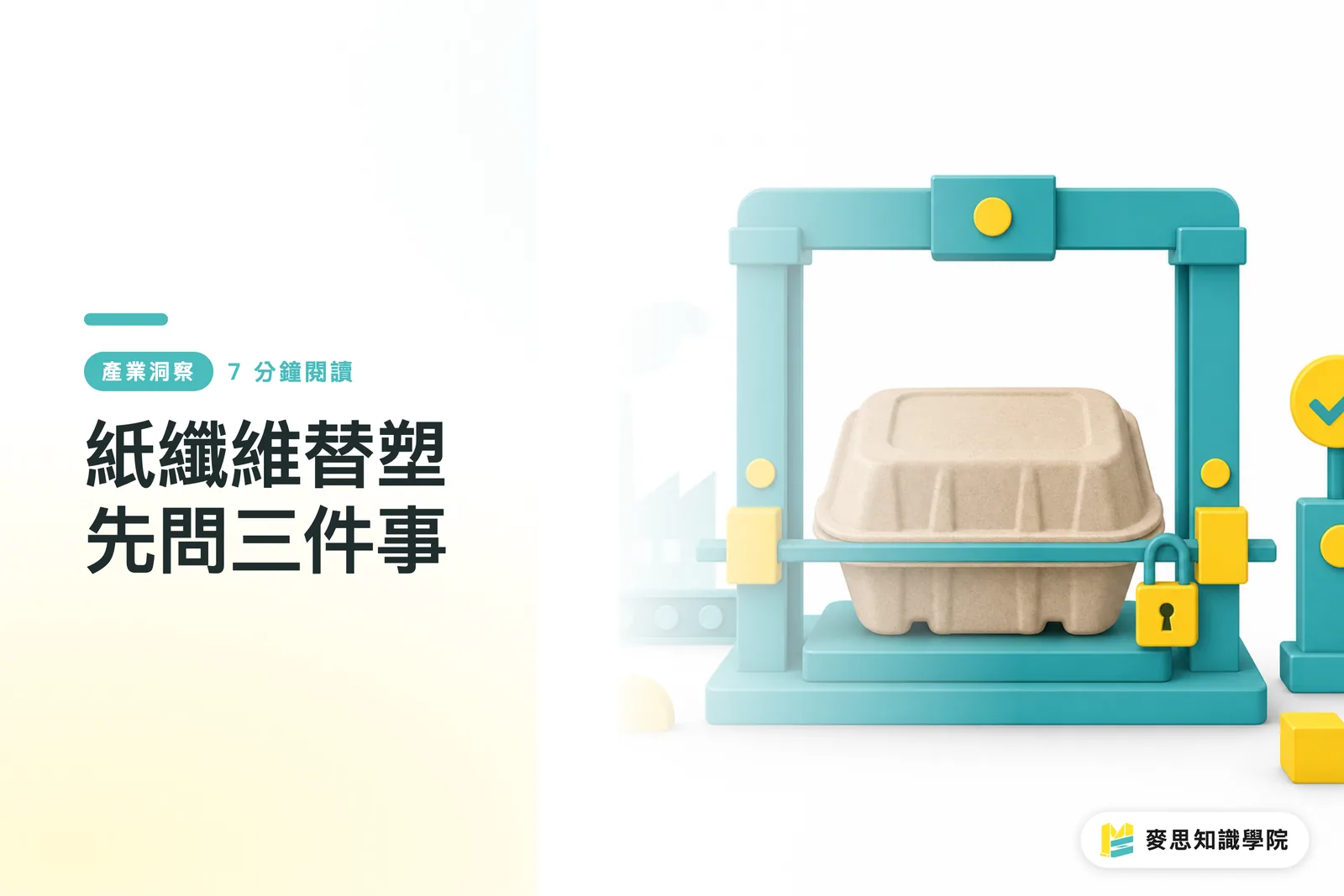
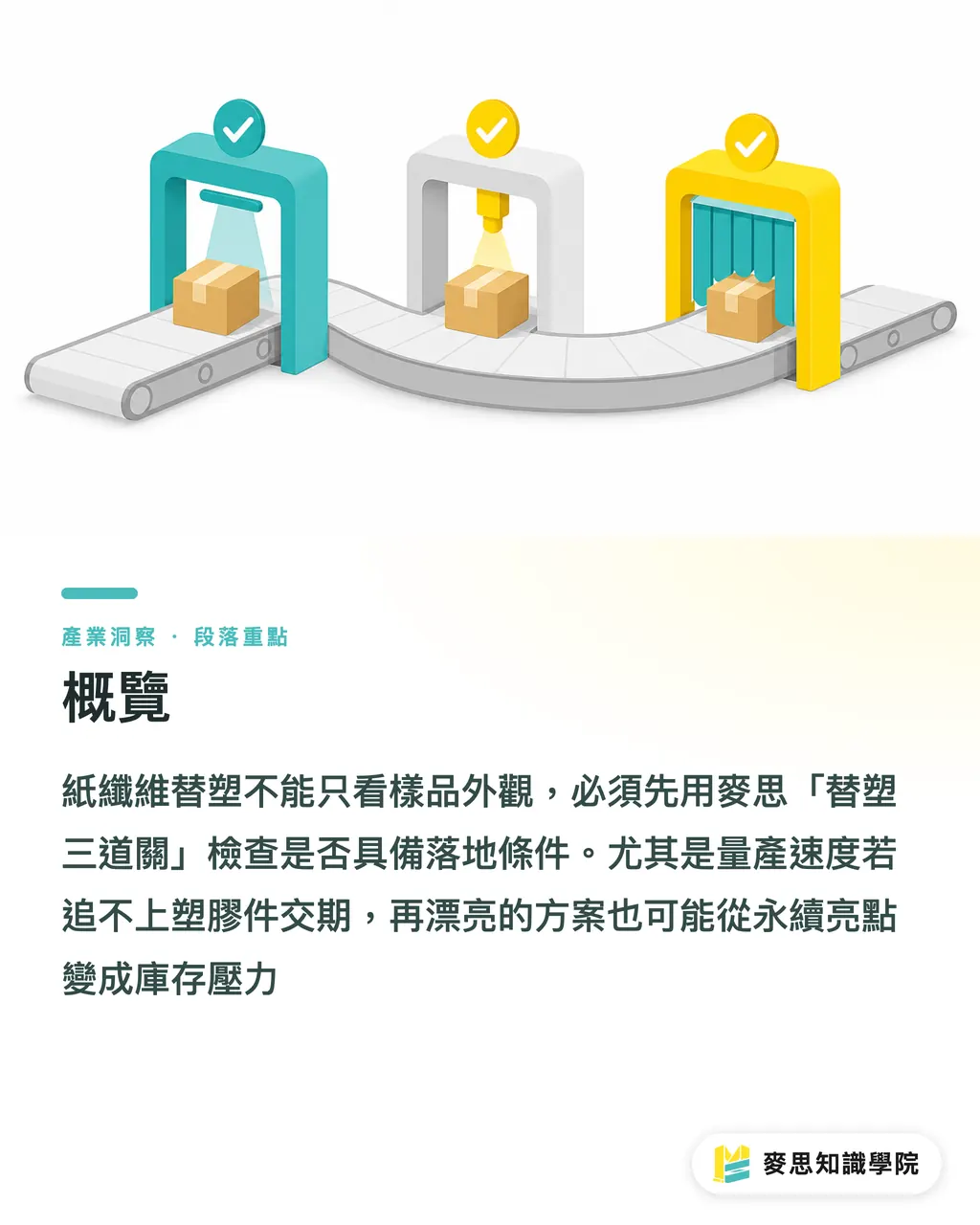
Before taking on a paper-fiber-for-plastic job, I run it through MINDS's (MS, mid-to-high-end fully custom commercial printing) "Three Gates for Substituting Plastic." Skip one and a pretty sample becomes dead inventory fast
・① Production speed: can it keep up with plastic part lead times
・② Cost model: can the unit price land where procurement will sign
・③ End-of-life reality: can it enter a stream that actually gets sorted and processed
What 3 Things Should You Check First When Swapping Plastic for Paper Fiber?
A Packaging Insights scale-up story noted that on July 15, 2026, Fiberdom and Kiefel went public with turning Duranova paperboard into 3D molded packaging inserts for consumer electronics. Inserts like these need to position, protect, hold dimensional tolerance, and keep surface quality, miss any one and you get a customer complaint
I break a job like this into three work orders first, because the biggest trap with paper-fiber substitution is talking material names without ever talking product risk, line takt, or where the part ends up
・Production speed: a single Kiefel Natureformer KFD 75 line has the potential to push past 80 million pieces a year. That's finally in the same league as mainstream packaging
・Cost model: plastic inserts for electronics are already a high-volume, low-unit-price, tight-tolerance category. A paper-fiber option has to answer unit price and yield rate at the same time
・End-of-life reality: once you add coatings, adhesives, inks, or laminates to paper fiber, the recycling side will check first whether it can be repulped, sorted, and decontaminated. The brand story comes second
How Does dry-molded fiber Turn Paperboard into 3D Packaging?
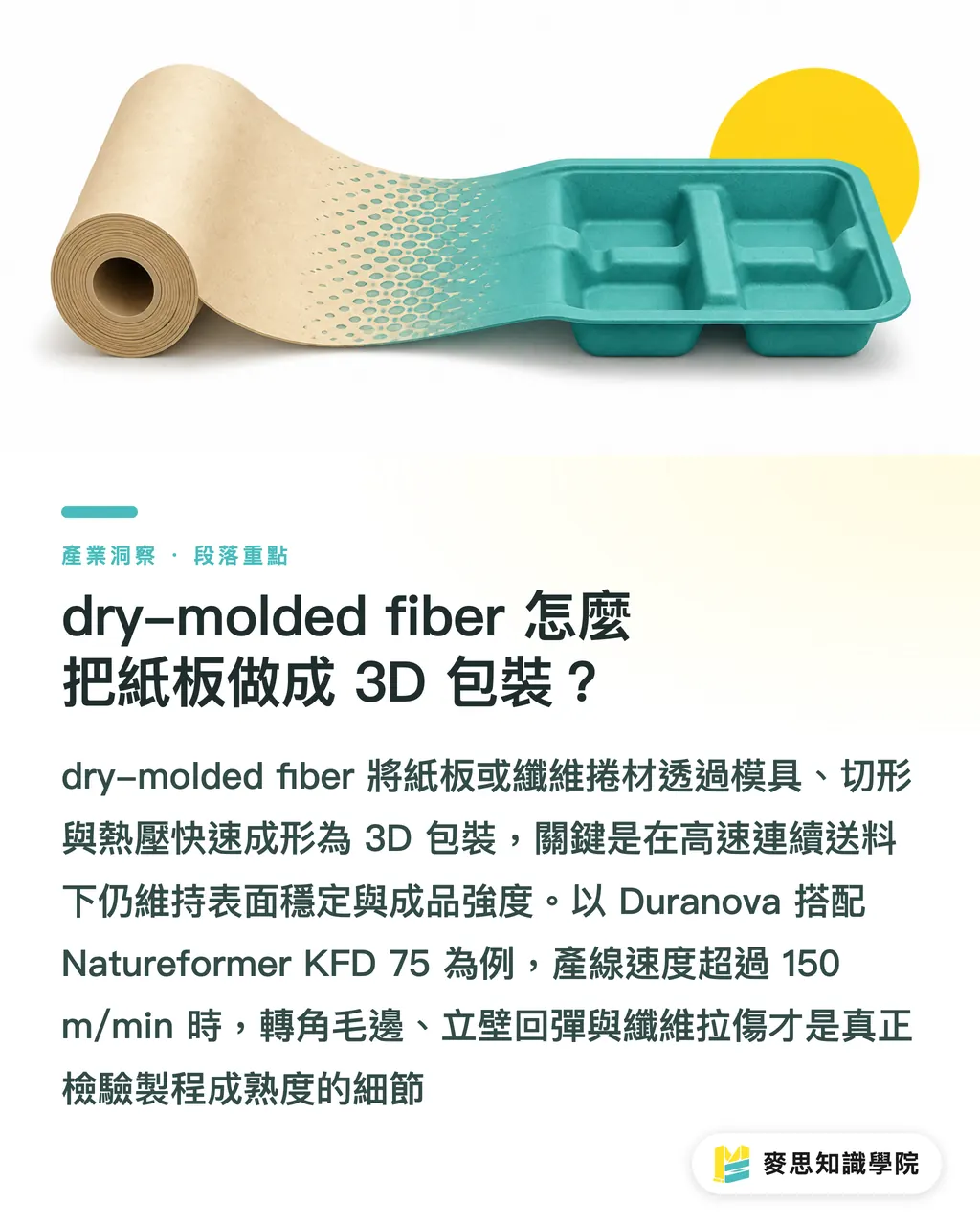
Dry-molded fiber is a process where paperboard or fiber webstock is formed into 3D structures through tooling, cutting, and hot pressing. The moisture path is lighter. What matters is high-speed continuous feed, short press cycles, surface stability, and finished-part strength
Fiberdom and Kiefel this time used Duranova, made from FSC-certified wood pulp or paperboard, paired with the Natureformer KFD 75 dry-forming machine, continuously converting industrial-size paperboard rolls into 3D molded products. The report says line speed runs past 150 m/min while still holding consistency
When I look at paper-fiber parts on a line, the first things I touch are the corners and sidewalls. Corner fuzz, sidewall springback, and surface fiber scuffing usually surface process problems long before any green-colored slide does
Why Does 80 Million Pieces per Year per Line Matter So Much?
The signal that a single KFD 75 line can top 80 million pieces a year is pretty blunt: dry-molded fiber has moved past hand-feel samples and show pieces and is now hitting mainstream packaging's hardest questions, continuous production, short press cycles, and stable surfaces
For Taiwan's small and mid-size printers, that number doesn't mean everyone should go buy the same class of equipment tomorrow. It means the quoting mindset has to change. Paper-fiber packaging can't just carry a premium because "the material is greener." It has to come back to: how many seconds does one package take on the line, how much scrap, and can secondary finishing keep up
・Sample speed: hand-trimmed edges can look great. That doesn't mean continuous feed at 150 m/min stays stable
・Tooling speed: complex shapes rely on tooling to compress cutting, pressing, and ejection time
・Inspection speed: electronics inserts protect mobile devices and small electronics. Dimensional drift turns straight into assembly and return costs
・Delivery speed: brand procurement looks at monthly shipment and replenishment capacity, not a single sample photo
How Do You Build a Cost Model That Doesn't Lie?
Fiberdom and Kiefel picking consumer electronics inserts as the test part looks like a practical call to me. Plastic inserts already sit under heavy cost pressure, tight tolerance, low unit price, high speed, all at once. If a paper-fiber option can hold up here, then it earns the right to talk about bigger markets
I ask brands to split substitution cost into 4 columns. Don't just compare paperboard unit price against plastic unit price
・Material: paperboard or fiber webstock like Duranova needs to be checked on source, caliper, consistency, and availability
・Tooling and press time: complex 3D shapes have to count cutting, hot pressing, demolding, and trimming together
・Surface and print: if the paper-fiber surface needs color, film, labels, or a better hand feel, secondary finishing will move unit cost
・Logistics and humidity: Fiberdom's CTO mentioned Duranova can handle applications with big humidity swings. Taiwan brands still need to fold warehouse, ocean freight, and channel conditions into the test plan
For brands that want to move electronics inserts, gift box trays, or e-commerce cushioning to paper fiber, the right move is to have MINDS (MS) review dieline, paper stock, print method, and shipping test conditions together, open up the cost questions before trial production
Where Does the Recycling Reality Stall, and How Can Taiwan's Small and Mid-Size Shops Plug In?
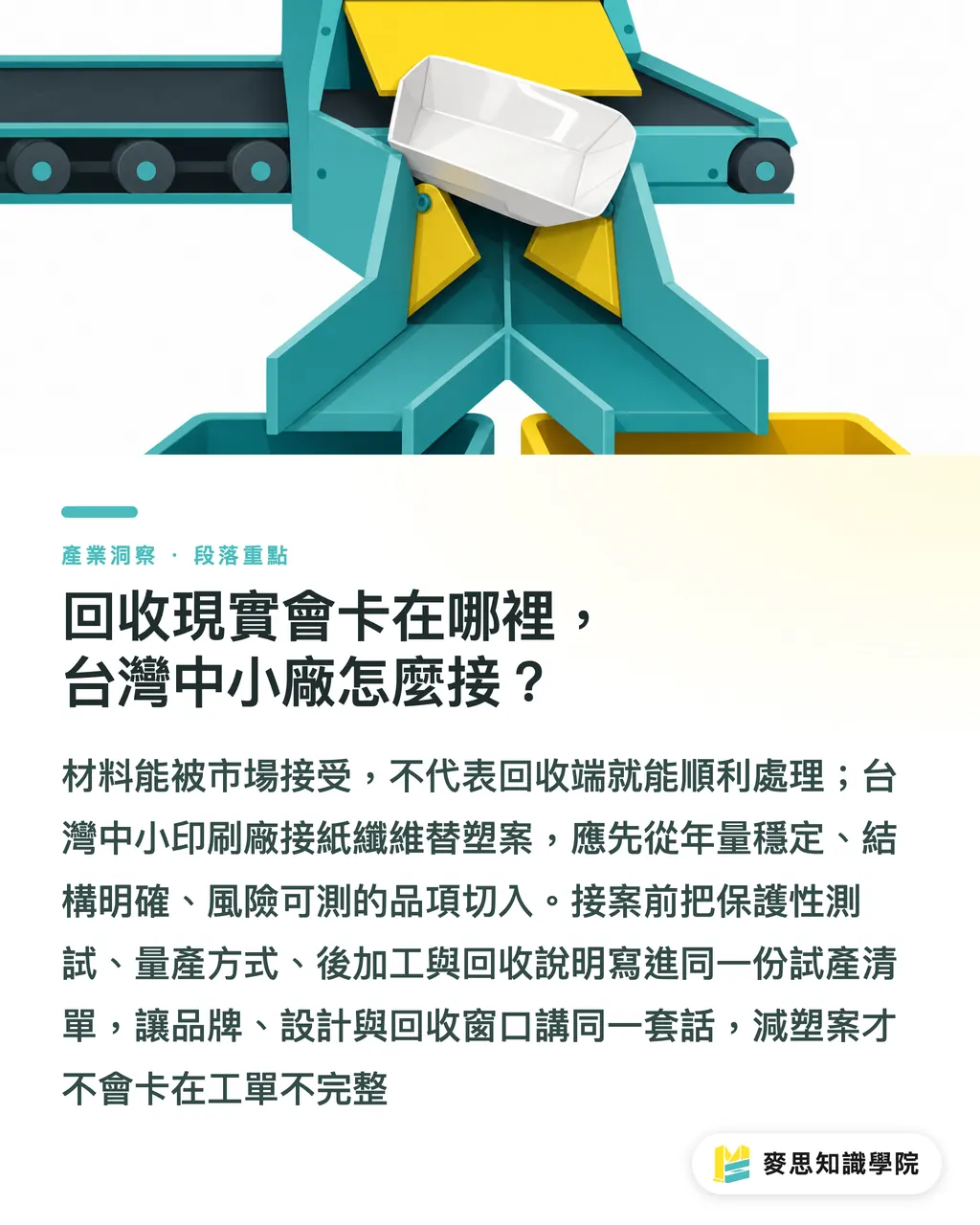
In the European packaging world lately, people cheer bio-based packaging on one side and talk about fiber-based packaging's circularity headaches on the other. Both stories together are useful: getting a material accepted by the market is one road. Getting the recycling stream to handle it cleanly is a different road
Taiwan's small and mid-size printers don't need to take on a paper-fiber-for-plastic project at full size from day one. I'd suggest picking a part with stable annual volume, a clear structure, and measurable return risk first, think electronics inserts, dry-goods packaging trays, gift box fixture pads, or e-commerce cushioning
・Before taking the job, ask about product risk: electronics hate scratches, food trays hate oil and moisture, e-commerce pieces hate drops. Write the test conditions down clearly
・During sampling, ask about production method: pulp molding, paperboard forming, and dry-molded fiber have different takt and surface conditions. You can't quote them off the same sheet
・During quoting, ask about secondary finishing: inks, coatings, lamination, and adhesives all change how the recycling side judges the part
・At delivery, prepare 3 documents: a structural drawing, test conditions, and recycling notes, so brand procurement, designers, and the recycling contact all speak the same language
When the Mai Strategy Knowledge Academy consulting team helps brands put together a substitution proposal, we put packaging protection, print finishing, and recycling labeling into a single trial-production checklist. The thing that kills a plastic-reduction project usually isn't the concept, it's a work order that wasn't fully written
Key Takeaways
・Looking at paper-fiber substitution by sample makes you optimistic too early. Looking at the continuous line gets you closer to the truth
・The 80-million-pieces-per-year signal is a reminder to printers: substitution packaging has entered takt and yield competition
・Cost has to be calculated across material, tooling, press time, surface treatment, and logistics loss together
・If the recycling end can't tell coatings, adhesives, and fiber paths apart, the plastic-reduction story gets discounted at the finish line
Further Thinking
On the manufacturing side, treat paper-fiber substitution as structural engineering, not just a material swap. On the design side, draw 3D inserts, visual surfaces, and the unboxing feel into the dieline together. AI tools fit best at spec comparison, BOM version cleanup, shipping test records, and recycling label checks first. For SaaS teams serving packaging, the next step is to put material, tooling, press time, yield, return reasons, and recycling notes on a single work order, so procurement, design, the printer, and the brand side waste less time guessing back and forth
Further Reading
FAQ
- Can paper-fiber packaging really replace plastic inserts?
- It can replace some plastic inserts, but it has to clear protection, production speed, and cost first. The Fiberdom and Kiefel case is about consumer electronics inserts, that doesn't mean every food, cosmetics, or e-commerce package can be swapped in directly
- How is dry-molded fiber different from traditional pulp molding?
- Dry-molded fiber runs paperboard or fiber webstock through a continuous forming path, tooling, cutting, hot pressing, and high-speed feed are the focus. Traditional pulp molding usually involves a water-based fiber slurry, dewatering, and drying, so takt and surface conditions come out different
- Should Taiwan printers buy dry-molded fiber equipment first?
- Equipment purchase should sit behind product mix, projected annual volume, shared tooling rate, and recycling labeling. Small and mid-size shops are better off starting with design review, structural sampling, secondary finishing tests, and supply chain partnerships
- How should a brand client start a paper-fiber substitution project?
- Pick a pilot product with stable annual volume, a clear shape, and measurable return risk, electronics inserts or gift box trays work well. Hand the dieline, BOM, shipping test conditions, and recycling notes to the supplier at the same time for evaluation
Related articles

The Print × AI weekly
The print and AI know-how designers, brands and enterprises can use before they commit — one email, every week
MINDS Free Tools
AI background removal, a LINE sticker maker, spine & imposition calculators — all free, right in your browser, no upload.
MINDS Group
Need actual printing or gifting services?
From premium printing to online ordering and festive gifts — the MINDS Group sister brands take it from here.