
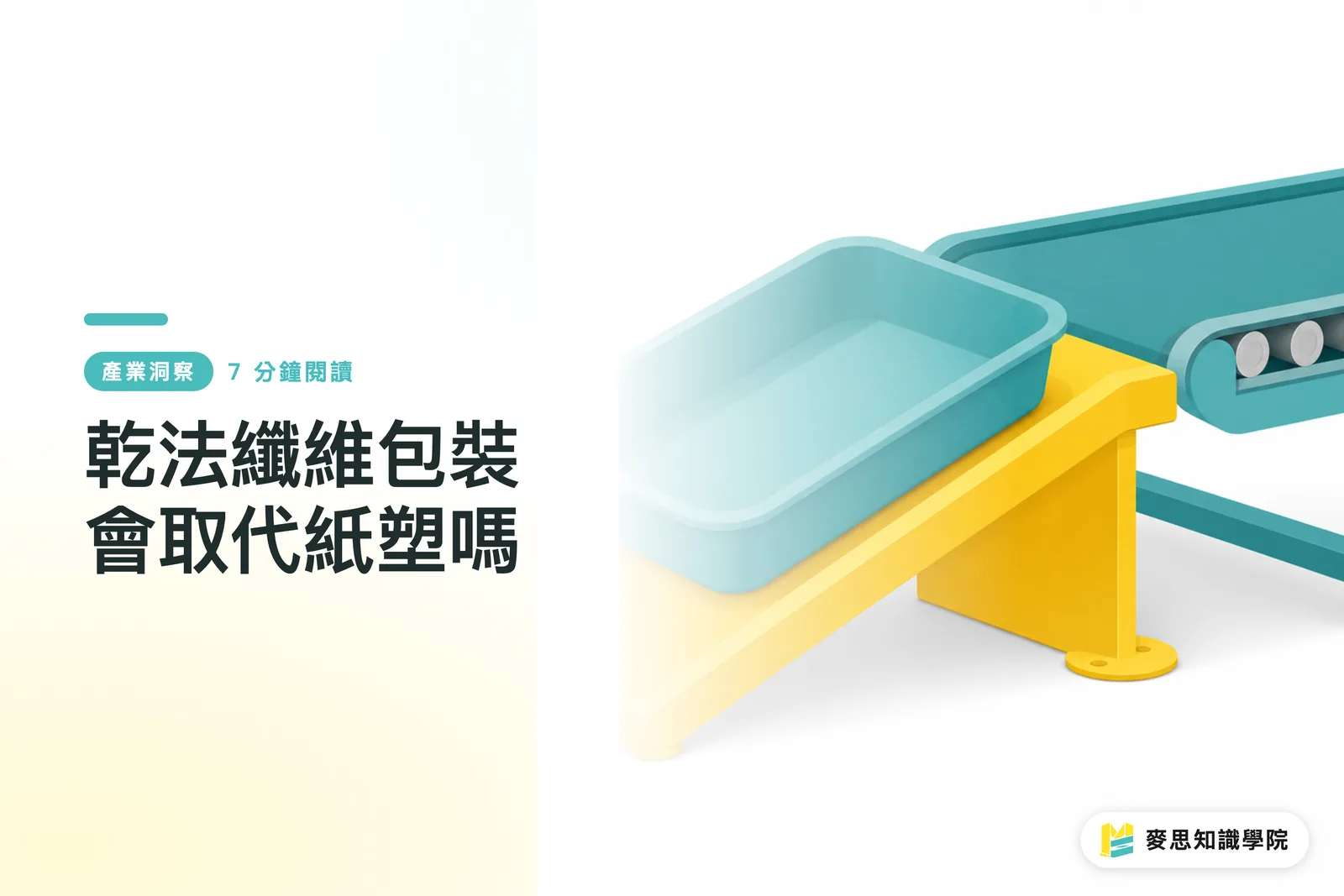
What Is Dry-Formed Fiber Packaging?
Dry-formed fiber packaging has been circulating in packaging circles lately, so I want to ground it right away: this isn't about swapping a plastic tray for a paper one. It's about pushing fiber forming closer to industrial-scale production
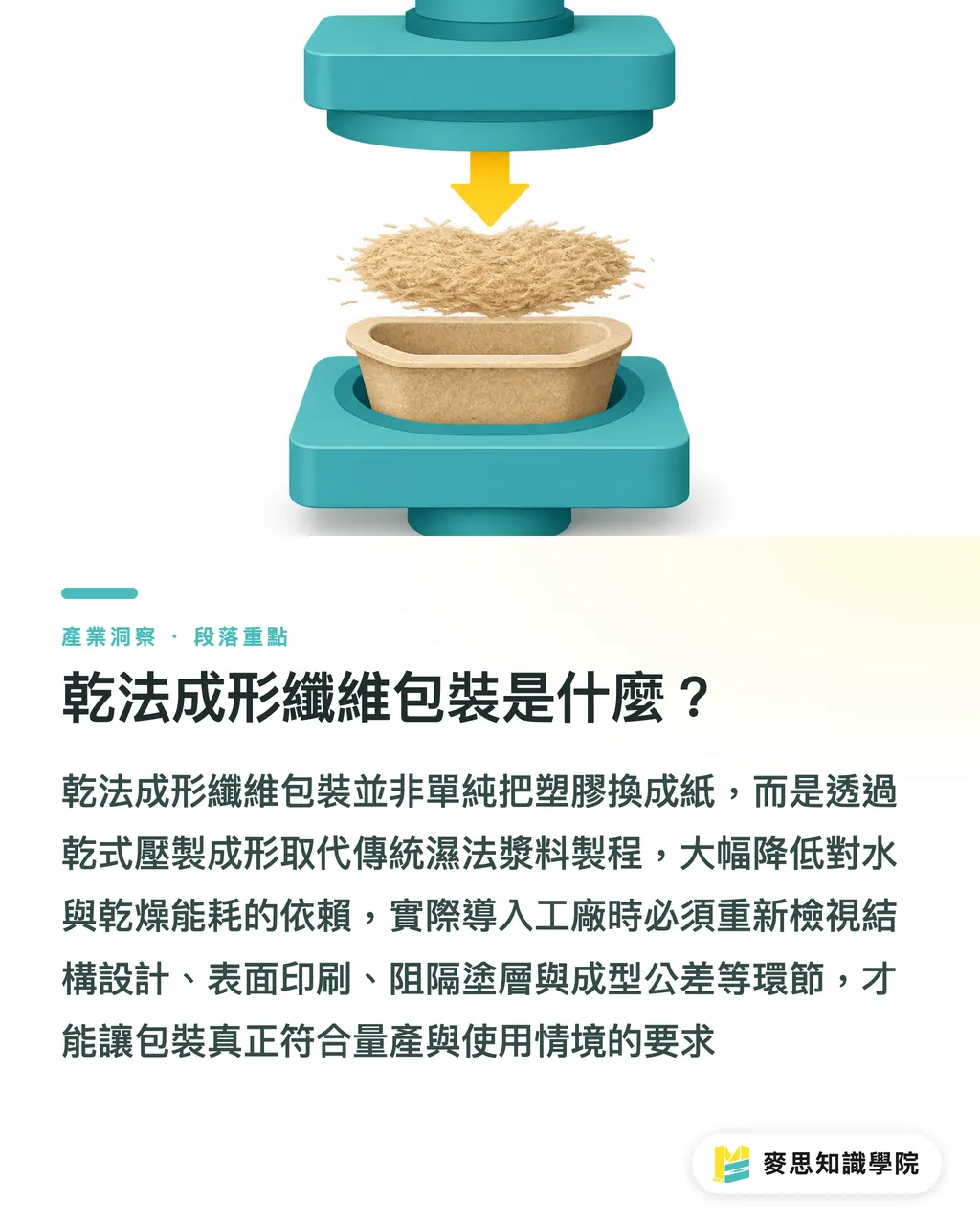
As Packaging Insights reported, Yangi is scaling dry-formed fiber packaging through its Cellera platform. The key difference is reduced reliance on the water and drying energy that traditional wet forming demands
That difference matters more than it sounds
Wet forming works by suspending fiber in slurry and then removing the water; dry forming shifts the pressure onto forming efficiency, tool stability, fiber laydown, and downstream control
On the factory floor, this immediately surfaces 4 problems:
・Structural design: For the same tray, lid, or insert, fiber orientation drives support strength and edge/corner integrity
・Surface printing: Dry-formed fiber surfaces aren't offset paper, ink adhesion, color saturation, and fine type reproduction all need fresh testing
・Barrier coatings: Water, grease, and heat resistance determine whether the pack can handle food, takeout, e-commerce cushioning, or beauty inserts
・Forming tolerance: The pack has to stack, snap, seal, and run on an automated line. A single missed detent becomes a customer complaint
I often tell clients that going paper-based isn't finished the moment the material changes
Going paper-based means re-sequencing material, process, form, print, and end-use scenario together
Why Does the Cellera Platform Make the Mass-Production Conversation More Real?
What makes Yangi worth talking about isn't only the dry-formed fiber direction, it's the platform language of Cellera
The worst place for a packaging material to sit is where the samples look great but production is painful
Any solution a brand's procurement team will actually adopt has to clear at least 3 gates:
・Specification gate: Consistent dimensions, weight, and edge strength within the same run, otherwise automated lines keep stopping
・Surface gate: The artwork has to hold up after real printing: legible, scannable, shelf-ready, not just pretty in a render
・Cost gate: Brands will pay a small premium for sustainability, but they won't write a blank check
Cellera signals Yangi's intent to turn dry-formed fiber from a one-off project into a repeatable, scalable production method
That's a nudge for Taiwan's small and mid-sized printers: the questions clients ask are going to get more granular
It used to be "do you have eco-friendly packaging?"
Now it's "can you hold the look and feel, can it run on our line, can you do two sizes, can you work with our existing outer box and labels?"
If the answer is still just "we can do paper," it's going to get handed off to someone who understands the process better
Will Dry-Formed Fiber Become the New Mainstream Alternative to Paper-Plastic?
My read: it will become the new mainstream for specific categories first, it won't eat the entire paper-plastic market in one bite
The reason is simple: packaging substitution has never been a material vote; it's a use-case exam
Dry-formed fiber is well-suited to break in through 3 demand buckets:
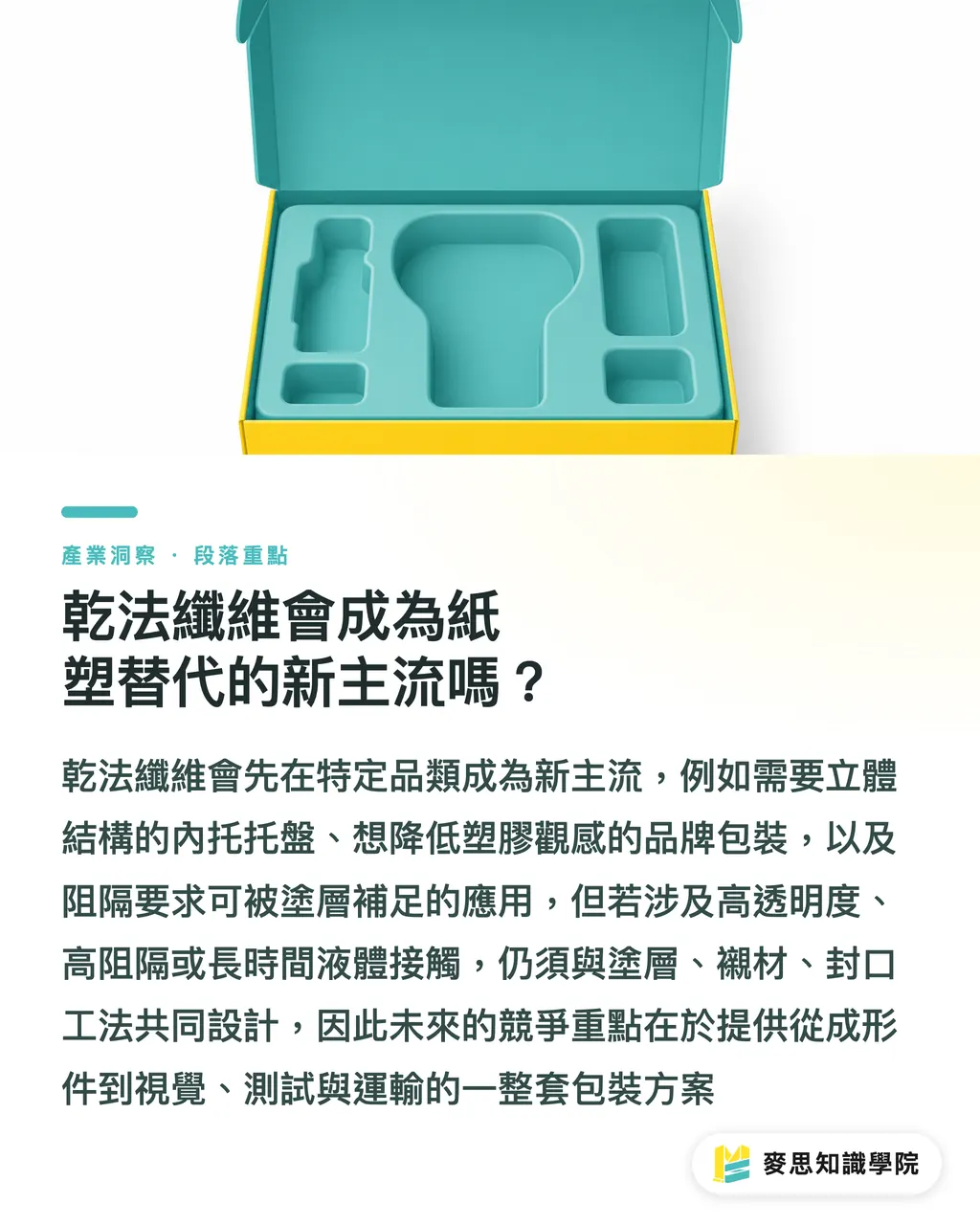
・Products needing 3D structure: inserts, trays, cushioning parts, fiber forming already excels at producing shape
・Brands wanting to dial down the plastic look: beauty, food takeout, consumer electronics accessories, these read more clearly as "less plastic" on the shelf
・Categories where barrier needs can be met by coatings: When basic grease or moisture resistance, or short contact times, is enough, adoption moves faster
But it shouldn't be over-hyped
If a product needs high transparency, extreme barrier performance, prolonged liquid contact, or must survive complex hot/cold cycles, dry-formed fiber still has to be designed together with coatings, liners, and sealing methods
That's where the opportunity sits for printers and converters
Going forward, clients aren't just buying a formed part, they need a deliverable packaging system: outer box, insert, label, graphics, barcode, abrasion testing, and stacking for transport, all reviewed together
What 4 Capabilities Should Printers and Designers Build First?
If I were running a small or mid-sized printer in Taiwan, I wouldn't rush to claim I have a dry-formed fiber solution
I'd build these 4 capabilities first, because they're the ones that turn into order language fastest
・First, a material sample library: at minimum, keep molded fiber, paperboard, coated paper, and mono-material flexible packaging separate so clients can feel the difference
・Second, a print test card: run the same logo, QR code, 6 pt type, and full-bleed swatch through different fiber surfaces and compare the results
・Third, a structural review workflow: when artwork comes in, check snaps, draft angles, stacking, and tooling direction before sampling, don't wait until the prototype won't fit the product
・Fourth, a barrier requirements questionnaire: food, grease, moisture, temperature, contact time, each one changes the coating and material decision
Designers need to reset their thinking too
Paper-plastic substitution isn't copying a plastic part's shape in fiber
Fiber has its own grain and backbone, let thickness, radii, edges, embossing, and white space do the talking
Good fiber packaging design doesn't hide the fact that it's paper fiber
It makes you feel like the material was always meant to look this way
What Can Brand Clients Do Right Now?
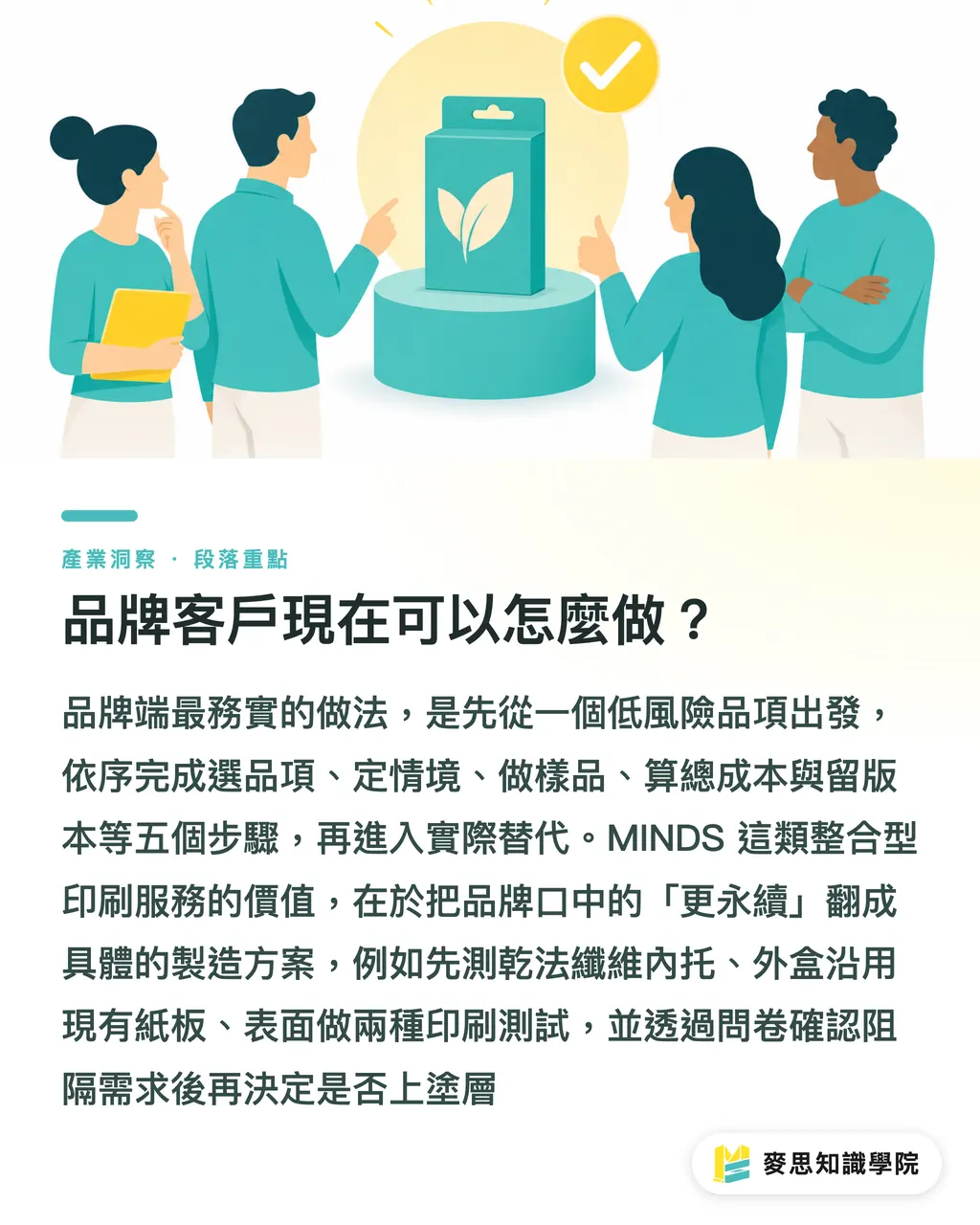
The most practical move for brands is to start substitution validation on one low-risk SKU
Don't go after the hardest hero package first
I'd recommend a 5-step approach:
・Pick the SKU: start with inserts, cushioning, or short-cycle-use packaging, stay away from high-barrier, long-shelf-life requirements for now
・Set the scenario: identify which stresses the pack will face, water, oil, heat, cold, pressure, or long-haul transport
・Make samples: test structure, print, coating, and assembly together, don't judge by looks alone
・Calculate total cost: roll up material, tooling, scrap, and line-stoppage risk, don't compare unit price only
・Keep a version log: record what worked and what didn't, so the next revision doesn't fall into the same hole
An integrated print service like MINDS can play a real role here, translating a brand's design language into manufacturing language
When a client says "I want to be more sustainable," the factory can't just answer "switch to paper."
A better answer sounds like: this SKU can start with a dry-formed fiber insert, keep the current paperboard for the outer box, run two print trials on the surface first, confirm barrier needs via questionnaire, and then decide whether a coating is required
That's what actually solving the problem looks like
Key Takeaways
・The point of dry-formed fiber packaging isn't a material swap; it's a reset of forming efficiency, structural stability, and downstream converting together
・Cellera is pulling dry-formed fiber from eco-concept toward production spec, and brand procurement will start asking much more granular process questions
・Paper-plastic substitution will mature first in inserts, trays, cushioning parts, and low-to-mid barrier packaging
・Printers need to build surface testing, structural review, barrier judgment, and sample management before they can catch this material wave
・For brands, validating sustainability packaging on one low-risk SKU is steadier than redesigning an entire product line at once
Further Thoughts
For print manufacturing, dry-formed fiber pushes capability from "we can print it" to "we can design it, form it stably, and hand it off to converting." For designers, fiber can no longer be treated like paperboard with a texture overlay, start thinking from thickness, radii, embossing, and snap-fit geometry. For AI and SaaS teams, the tools that create real value aren't the ones that generate pretty packaging renders; they're the ones that turn material conditions, print limits, barrier needs, and cost versions into a decision-ready workflow. For brand clients, the next step is concrete: pick one insert or cushioning part, test structure, print, coating, and line compatibility together
Further Reading
FAQ
- What is dry-formed fiber packaging?
- Dry-formed fiber packaging uses a dry forming approach to produce three-dimensional fiber packs. The goal is to cut the water and drying-energy dependence of traditional wet forming, bringing fiber packaging closer to a mass-producible industrial solution
- Will dry-formed fiber packaging replace paper-plastic?
- It will replace some paper-plastic use cases first, especially inserts, trays, cushioning parts, and low-to-mid barrier packaging. Categories that need high transparency, strong barrier performance, or prolonged liquid contact still require more complete coating and structural design
- Why should printers pay attention to Yangi's Cellera platform?
- By scaling dry-formed fiber packaging through Cellera, Yangi signals that market focus is shifting from material showcase to production spec. Printers who only know paper stock and printing, and not forming tolerance, barrier coatings, and converting, will struggle to win this kind of work
- What's the first step for a brand wanting to switch to fiber packaging?
- Start with one low-risk SKU, such as an insert, cushioning part, or short-cycle-use pack, and test structure, print, coating, and line compatibility together. Don't evaluate based on sample appearance alone
- What should designers watch out for when designing dry-formed fiber packaging?
- Treat fiber as a material with thickness, grain direction, and forming limits, don't copy a plastic part's shape verbatim. Radii, edges, embossing, snap-fit features, and white space all affect whether the pack can be mass-produced
Related articles


The Print × AI weekly
The print and AI know-how designers, brands and enterprises can use before they commit — one email, every week
MINDS Free Tools
AI background removal, a LINE sticker maker, spine & imposition calculators — all free, right in your browser, no upload.
MINDS Group
Need actual printing or gifting services?
From premium printing to online ordering and festive gifts — the MINDS Group sister brands take it from here.