
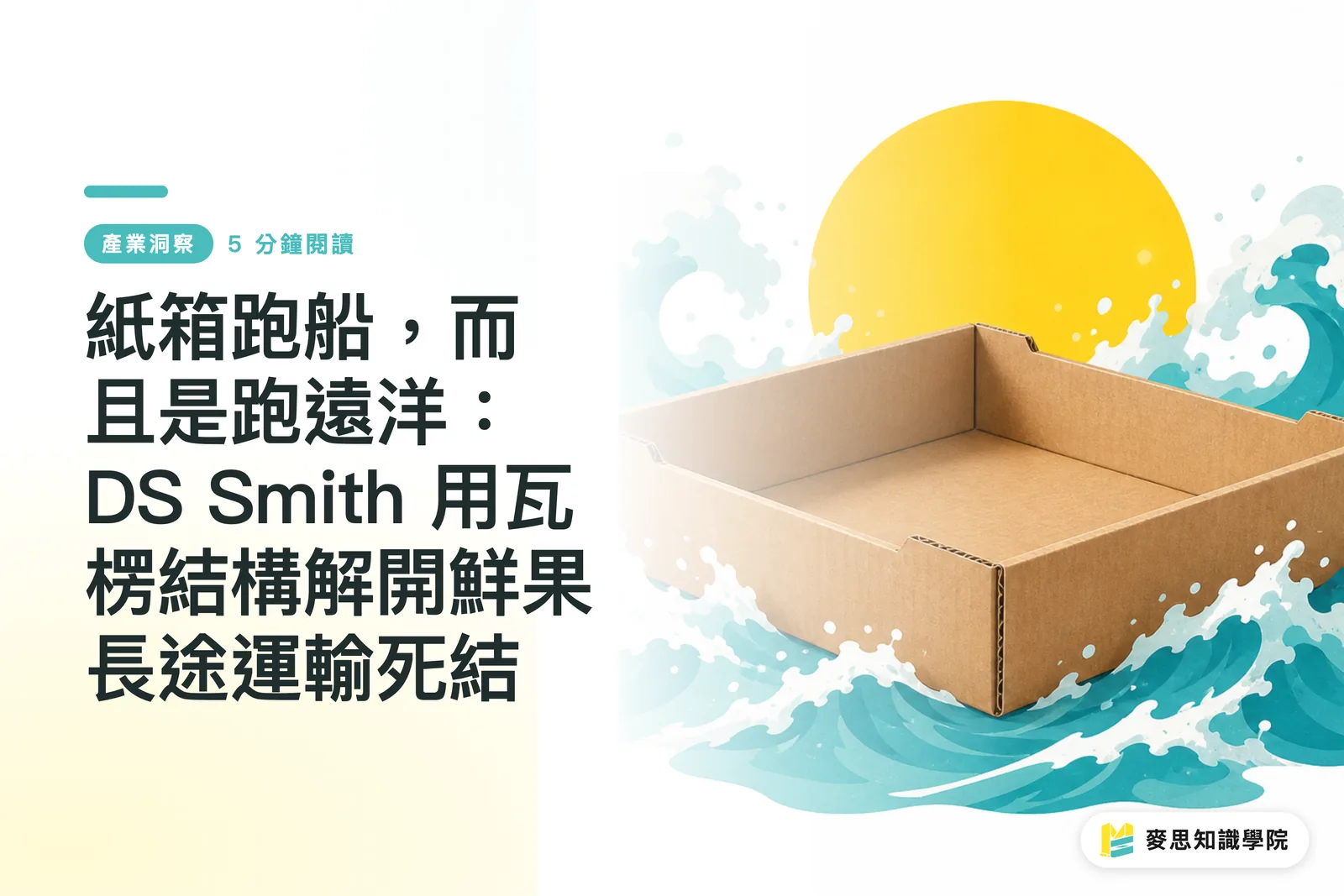
For delicate fruit shipped overseas, is plastic really the only option?
I recently spoke with several clients in agricultural exports, and packaging is still the biggest headache. That is especially true for delicate fruit such as kiwifruit and grapes, which need long-haul cross-ocean cold-chain shipping. A single voyage can easily take more than a month. Inside the container, humidity is high, temperature swings are large, and the cartons must be stacked layer upon layer. Traditional paper boxes simply cannot hold up, so exporters often fall back on reusable plastic crates, or RPCs
But the EU Packaging and Packaging Waste Regulation, PPWR, is closing in step by step. The market's demand to move away from plastic is getting harder to ignore. Plastic crates work well, but they have also become a serious problem for brands. It is almost a deadlock
So for delicate fruit traveling by ocean freight, is paper packaging really out of the game?
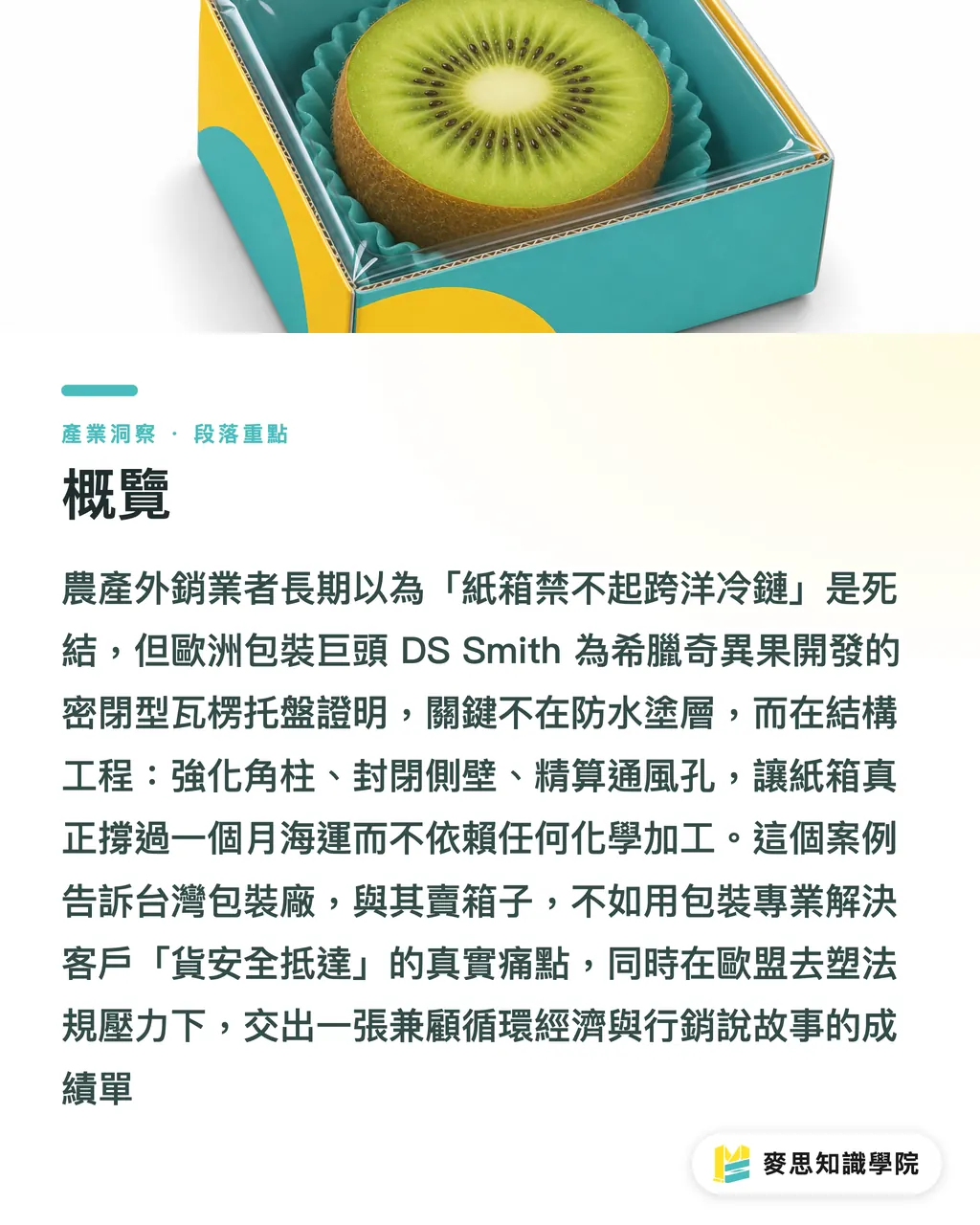
Why can't waterproof coatings save cartons at sea?
In the past, when print shops tried to solve moisture problems, the thinking was very direct: start with the material. Add film lamination or special coatings to the board, and try to keep moisture out. But there are several problems with that:
・Costs are high, and recycling becomes harder afterward. That runs against the spirit of the circular economy
・The effect is limited. Under extreme humidity at sea for more than 45 days, even the strongest coating cannot guarantee success
・The physical pressure from stacking is what finally crushes the box. That is not a problem a coating can solve
So for a long time, the industry has shared a reluctant consensus: for long-distance, high-humidity cold-chain transport, paper boxes just do not have a role to play. At most, they are suitable for short routes or air freight with better humidity control. This has made it hard for many premium fruits from Taiwan to escape the limits of plastic packaging materials when exported
Without chemical coatings, how can a paper box survive a month at sea through structure?
The key is not waterproof coating. It is corrugated structural engineering
European packaging giant DS Smith recently gave us a completely new way to approach the problem. The company developed a closed-type corrugated tray called the "Closed-Type Tray" for a Greek kiwifruit exporter, directly taking on long-haul transatlantic shipping. And it worked
What makes this tray impressive is not some magical waterproof technology. It goes back to the fundamentals: structural engineering. According to information released by DS Smith, the key design points include:
・Closed side walls and an integrated top cover: traditional fruit boxes often have open hand holes on the sides for easier handling, but those openings also let moisture in. This design is almost fully enclosed, blocking moisture intrusion at the source. Ventilation holes are then created in specific positions through die-cutting, so the fruit can still breathe
・Reinforced corner posts and internal structure: DS Smith redesigned the box's internal support structure, especially by adding reinforced corner posts at all four corners. This greatly improves vertical stacking strength and keeps the cartons from being crushed in the ship's hold
・Lightweighting and automation: the material uses high-quality virgin paper fiber. It is made as light as possible while still maintaining strength, increasing the load per shipment. The tray structure is also designed to work with automatic forming machines for fast assembly, which matters a lot for high-volume production regions
Every year, DS Smith delivers about 1.5 million of these trays to customers around the world. This is no longer an experiment. It is a mature solution proven in the market
How can next-generation carton design satisfy environmental rules and business interests at the same time?
Why this is an important lesson for Taiwan's agricultural exports
This DS Smith case offers several important takeaways for print shops and brand clients in Taiwan
First, it proves that "replacing chemical coatings with structural design" is feasible and more competitive. When the packaging itself is strong enough and resistant enough to humidity, you no longer need to depend on expensive extra processing that is not environmentally friendly. This directly answers the core demands of regulations such as the EU PPWR: easy recycling and material minimization
Second, it shows that the value of a packaging plant is no longer just "selling boxes." It is providing solutions. The client's real problem is "how do I get my kiwifruit safely to the Port of Rotterdam," not "give me a waterproof carton." Starting from the client's actual pain point and using packaging expertise to solve a business problem, that is the key to escaping price wars
Finally, for brands and agricultural exporters, this is an excellent entry point for balancing ESG performance with commercial value. Using this all-paper, recyclable packaging not only reduces carbon footprint and the hassle of waste handling. It is also a strong marketing story in itself, one that can move European and American consumers who care about sustainability
Key Takeaways
・In high-humidity environments, packaging design should shift its focus from "chemical waterproofing" to "physical structure."
・Through structural engineering, corrugated cartons can now replace plastic returnable crates in long-haul ocean cold-chain transport
・Sustainable packaging is not only about environmental protection. It is also a business strategy for entering European and American markets and raising brand value
・The core value of a packaging plant lies in engineering capability that solves clients' supply-chain pain points, not manufacturing alone
・Packaging that complies with international regulations such as PPWR will become a key competitive edge for Taiwan's exports
Further Thoughts
This case left a deep impression on me. It perfectly reflects the "integrated packaging mindset" that MINDS has long advocated. We should not position ourselves only as printed product manufacturers, but as business partners to our clients
For fellow printers, this is both a warning and an opportunity. The warning is this: if we are still stuck comparing whose paperboard is cheaper or whose coating is more water-resistant, the road ahead will only get narrower. The opportunity is that the market now has room for higher-value services: structural design and packaging consulting. We should invest in structural design talent, learn to simulate and verify with tools such as SolidWorks or ArtiosCAD, and upgrade packaging from a "consumable" into a vehicle for product protection and brand value
For brand owners or designers with export needs, the next time you plan product packaging, you can raise the level of the brief. Instead of telling the print shop what carton specifications you want, invite them to discuss the supply-chain challenges your product will face. A good packaging partner should be able to ask you, "What does the temperature and humidity curve inside your container look like?" and "Where is your main target market? What recycling regulations apply there?" Then they should design a solution tailored to you, balancing protection, sustainability, and cost efficiency. That is what true one-stop service looks like
Further Reading
FAQ
- Can this corrugated tray really last for more than a month at sea?
- Yes. Its strength comes from an engineered internal structure and reinforced corner posts, not from the paperboard alone. This design passed demanding high-humidity and stacking-pressure tests simulating more than 45 days of transatlantic ocean shipping
- So is this carton completely waterproof?
- The design focuses on moisture resistance, not waterproofing. Its closed side-wall structure blocks moisture entry as much as possible while keeping the structure stable and preventing collapse after exposure to humidity. That is different from the traditional approach of pursuing surface waterproof coatings
- Will cartons with this special structure be expensive?
- The initial investment in design and tooling may be higher, but from the perspective of the full supply chain, the overall value may be better than traditional options or plastic crates. Lightweighting improves freight efficiency, compliance with environmental regulations helps avoid potential penalties, and automated assembly can reduce labor
- Can print shops in Taiwan make packaging like this?
- Technically, absolutely. The key is whether print shops are willing to move from a manufacturing mindset to a consulting and engineering mindset. That means investing in structural design software and talent, and gaining a deeper understanding of clients' industry pain points. This is exactly where the opportunity for industry upgrading lies
References
- 鮮果跨洋運輸的紙質化突破:DS Smith 密閉型瓦楞托盤如何取代塑膠周轉箱 · thepackagingportal.com
Related articles

The Print × AI weekly
The print and AI know-how designers, brands and enterprises can use before they commit — one email, every week
MINDS Free Tools
AI background removal, a LINE sticker maker, spine & imposition calculators — all free, right in your browser, no upload.
MINDS Group
Need actual printing or gifting services?
From premium printing to online ordering and festive gifts — the MINDS Group sister brands take it from here.