
Overview
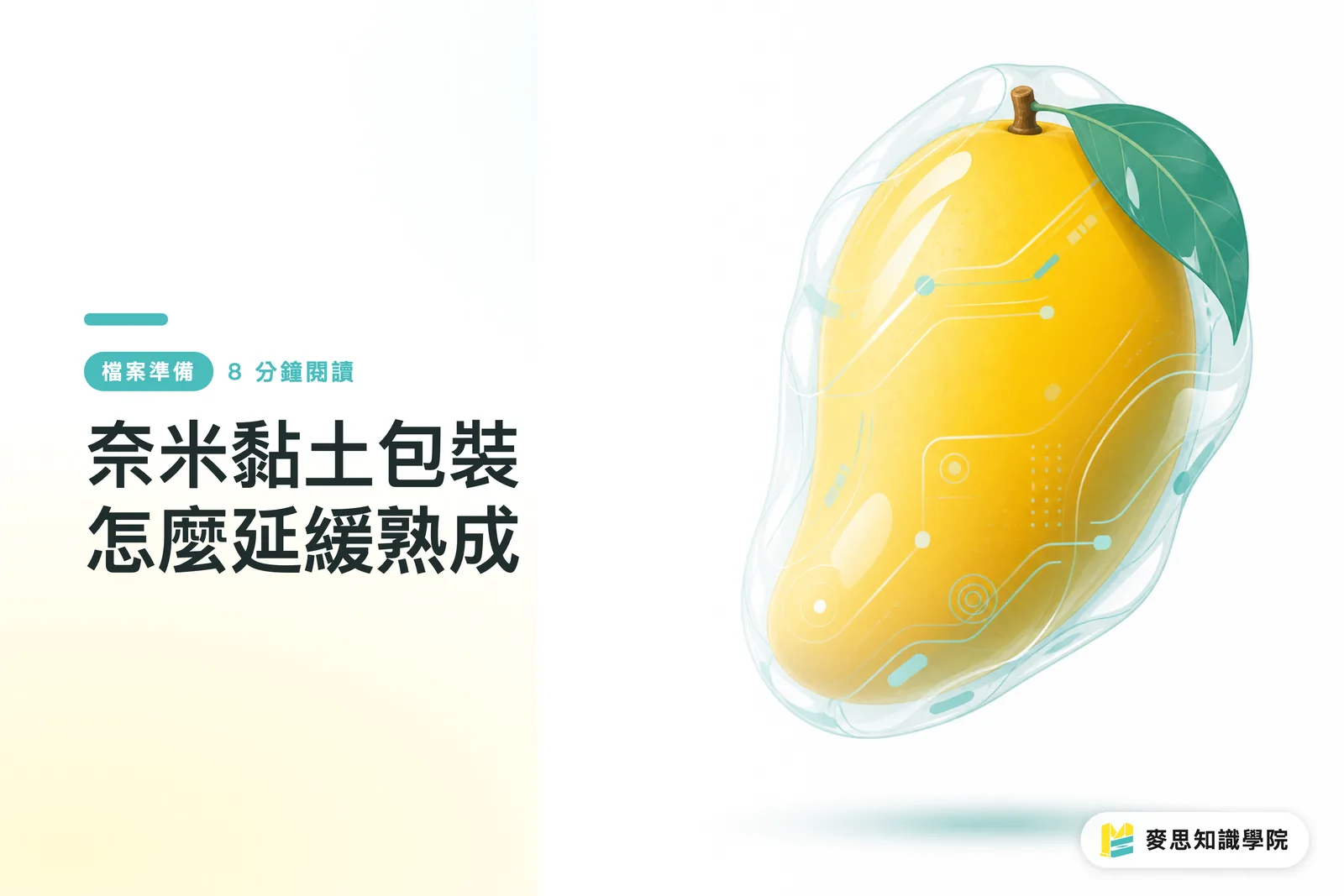
The key to nanoclay packaging is turning clay-based materials into a functional layer that adsorbs ethylene and affects moisture and gas exchange. This helps ripening-sensitive fruits like mangoes, bananas, and avocados slow down their transition to overripe states during transport. I recommend evaluating this through the three checkpoints of functional packaging layers from MINDS (MS, mid-to-high-end bespoke commercial printing): 1. whether the material actually traps ethylene, 2. whether the packaging structure preserves that functionality, and 3. whether cold chain and ventilation conditions can consistently replicate the results
What Is Nanoclay Packaging?
Nanoclay packaging refers to incorporating chemically modified platy clay materials such as montmorillonite into packaging structures or functional coatings. By taking advantage of their high specific surface area to adsorb ethylene and affect moisture movement, it slows down produce ripening and quality loss
This is very practical for printing plants
It does not ask you to suddenly turn into an agtech company. Instead, it pushes the capabilities already on your production line, film materials, coating, lamination, and breathability control, one step further toward active packaging
A report by Packaging Insights on July 2, 2026, titled Researchers test clay packaging to control produce ripening, noted that researchers at the University of Copenhagen tested chemically modified montmorillonite clay and confirmed that it adsorbs and retains ethylene
My take on this technology is simple: once you can control ethylene, you touch on what makes produce packaging truly valuable
Export fruits are not afraid of unappealing cartons. They fear arriving in Japan, Hong Kong, or Singapore with their visual appearance intact but their flavor already past its prime
The source material mentioned that experimental setups delayed ripening in mangoes, avocados, and bananas by about 4-7 days. That number is attractive, but you cannot turn it straight into a mass-production promise
What printing and packaging teams really need to grasp is the direction: freshness preservation is changing from passive barrier protection to active management
How Does Clay Control Mango and Banana Ripening?
Agricultural products such as mangoes, bananas, avocados, tomatoes, and kiwifruits have a ripening process closely tied to ethylene
The more enclosed the packaging space, the faster ethylene accumulates, which speeds up ripening and spoilage
Nanoclay works like a small buffer
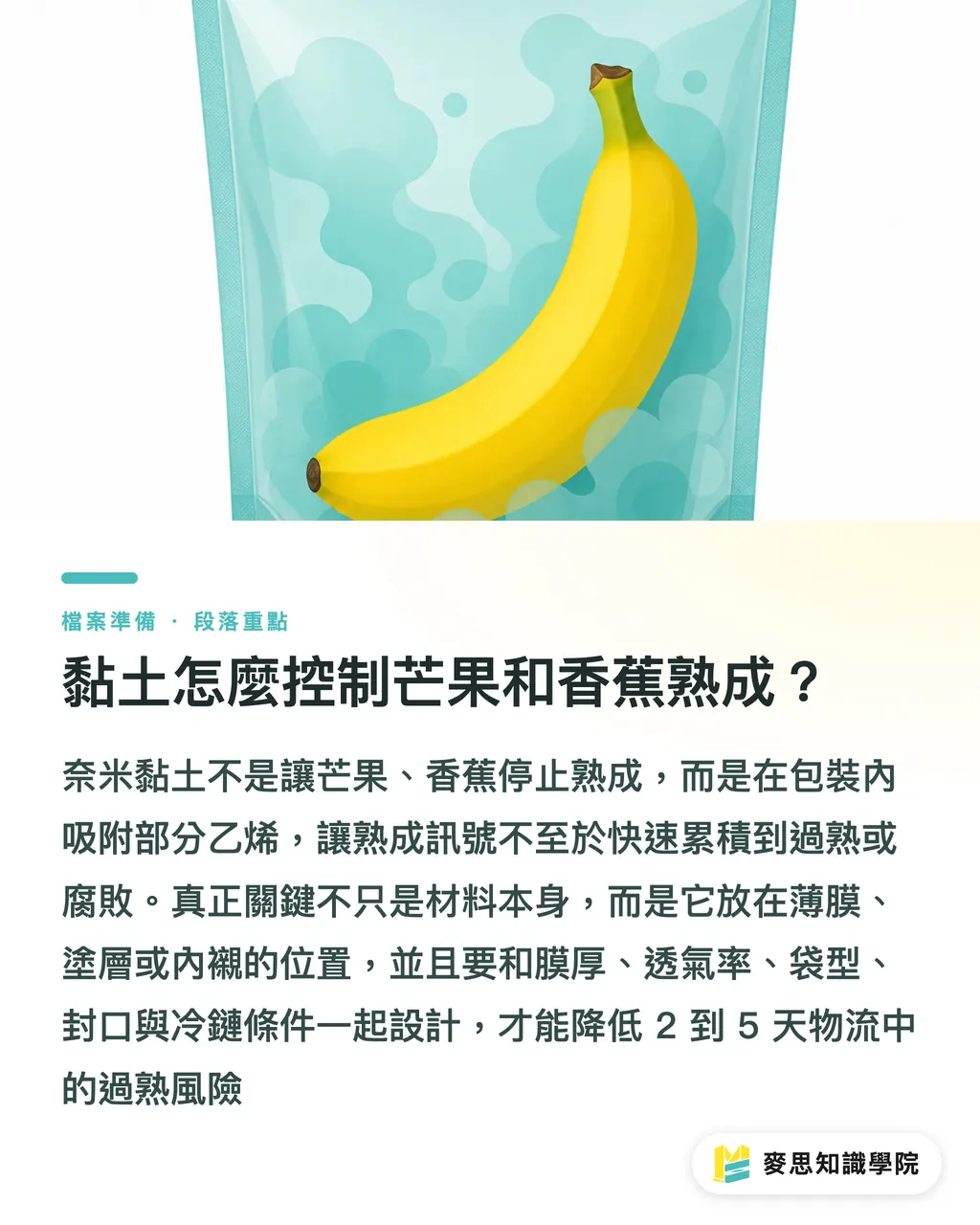
It does not freeze the fruit, nor does it stop the fruit from breathing. Instead, it catches part of the ethylene inside the packaging so the ripening signals do not surge out of control
From a print converting perspective, there are 3 key design points here:
・ Material location: Nanoclay can be positioned as film masterbatch, a pre-coat layer, or a post-process coating layer. Different locations affect adsorption efficiency and food contact risks
・ Packaging space: Placing the same material inside a bag for a single mango, a bag for six bananas, or a full box liner creates completely different ethylene concentrations and adsorption loads
・ Environmental conditions: The source report mentioned that temperature and humidity still need testing, because water molecules can compete with ethylene for adsorption sites. Refrigerated and room-temperature settings will not automatically yield identical results
This is what I often remind packaging converters: functional materials do not work just because you throw them into the formula
They must be designed alongside film thickness, breathability rate, bag style, sealing, perforation, and cold chain conditions
If Taiwan's Irwin mangoes are destined for Japan, the packaging question is not simply asking whether this film has a high barrier
A more precise question should be: can this packaging lower the risk of over-ripening across 2-5 days of logistics variables?
How Far Is This Technology from Commercialization?
In the Packaging Insights report, researchers estimated the technology's current maturity at TRL 3
This means the scientific concept and ethylene-trapping function have been demonstrated in the lab, but they have not been validated within complete packaging systems under real supply chain conditions
TRL 3 is an important threshold
It tells printing plants that they can start learning, finding material partners, and designing pilots, but they should not immediately package it as a standard product that guarantees extended shelf life
I break commercialization down into 4 aspects:
・ Raw material safety: Whether the material suits food packaging applications, and whether it involves direct contact, indirect contact, or interlayer structures
・ Processing stability: Whether ethylene adsorption capacity remains intact after coating, drying, lamination, and heat sealing
・ Logistics validation: Whether performance can be replicated under refrigeration, room temperature, high humidity, and long-distance transport
・ Client claims: Saying a packaging material helps regulate ripening vs. guaranteeing a 7-day extension carries two completely different levels of legal risk
The source report also mentioned that the next step is pushing toward TRL 6 prototype validation
This is good news for small and medium-sized printing plants in Taiwan. Major brands wait until TRL 8 or TRL 9 to make high-volume purchases, but the converters that secure an early foothold are usually those who know how to build test records and specification documents during TRL 3-6
When reviewing new materials like this, the consulting team at Mai Strategy Knowledge Academy recommends that clients start with small-batch A/B testing rather than overhauling an entire production line right away
The first money made in functional packaging often comes not from mass production, but from understanding the validation process better than your client
How Can Taiwan's Produce Export Sector Apply This?
Taiwan's produce export packaging faces an old problem: origin quality is strong, but packaging specifications often lag behind retail channel language
Delicious fruit is one thing. Whether it can stably endure transport, stocking, display, and unboxing is quite another
The most promising application of nanoclay packaging in Taiwan is not swapping out materials across all produce, but focusing first on 3 scenarios:
・ High-value fruits: Premium items like Irwin mangoes, boutique bananas, and avocados. Lowering loss per box even slightly creates room to negotiate higher packaging material prices
・ Short to medium-haul exports: Markets like Japan, Hong Kong, and Singapore have fixed shipping durations and retail paces, making supply chain testing easier
・ Branded produce: Agricultural associations, cooperatives, and brand owners with existing gift box, traceability, or retail packaging needs accept functional packaging premiums more readily than bulk markets
For printing plants and designers, this is not just about sticking on a pretty label
It means adding a functional layer section to packaging spec sheets, including test conditions in sampling quotes, and upgrading proposals from visual drafts to packaging performance solutions
I recommend using the three print-submission checkpoints from MINDS (MS) for internal evaluation first:
・ 1. Purpose checkpoint: Is this packaging meant for display, transport, ripening delay, or complaint reduction? Each objective demands different material requirements
・ 2. Structure checkpoint: Bag shape, perforations, film materials, coatings, and carton liners must be evaluated together. A single material cannot salvage a faulty structure
・ 3. Validation checkpoint: Run control groups using the same batch of fruit. Record temperature, humidity, days elapsed, appearance, and ripeness changes. Without records, you have no bargaining power
If a brand client only wants small-batch trial sales, MYS (Mai Printing) is suitable for handling outer boxes, labels, hangtags, and small-volume retail packaging first
If a client wants to discuss export-grade structures, specialty films, spot coating, composite packaging materials, and high-end print integration, MINDS (MS) is better suited to help translate design drafts into samplable, quotable, and testable packaging solutions
What Should Printing Plants Prepare Right Now?
Over the past month or two in packaging projects, I have clearly felt a shift in how clients ask about sustainable packaging
They used to ask if it was recyclable. Now they ask if it can cut damage, extend display time, or reduce returns
Nanoclay packaging lands right on this shift
Its value lies not in introducing a novel standalone material, but in pushing printing converters from delivering printed goods to managing risk before products hit the shelf
Small and medium-sized printing plants can take 5 initial steps right now:
・ Build a material catalog: Reach out to suppliers of PE, PP, coating liquids, adsorbent materials, and functional masterbatches. Ask first about food packaging compliance and test data
・ Learn specification terminology: Master terms like ethylene adsorption, humidity, ventilation, TRL, and shelf life study so material suppliers do not dictate your quotes
・ Conduct small sample tests: Start with 1 fruit variety, 2 packaging structures, and 3 observation days to build your own shop-floor intuition
・ Maintain converting flexibility: If inline coextrusion or wide-web coating is impractical in the short term, run pilots using liner sheets, adsorbent pads, or localized functional layers first
・ Manage claim risks: Packaging copy can state that it helps regulate the ripening environment. Avoid lightly writing promises like guaranteed 7-day extension
There are entry points here for AI and SaaS, but don't overcomplicate it
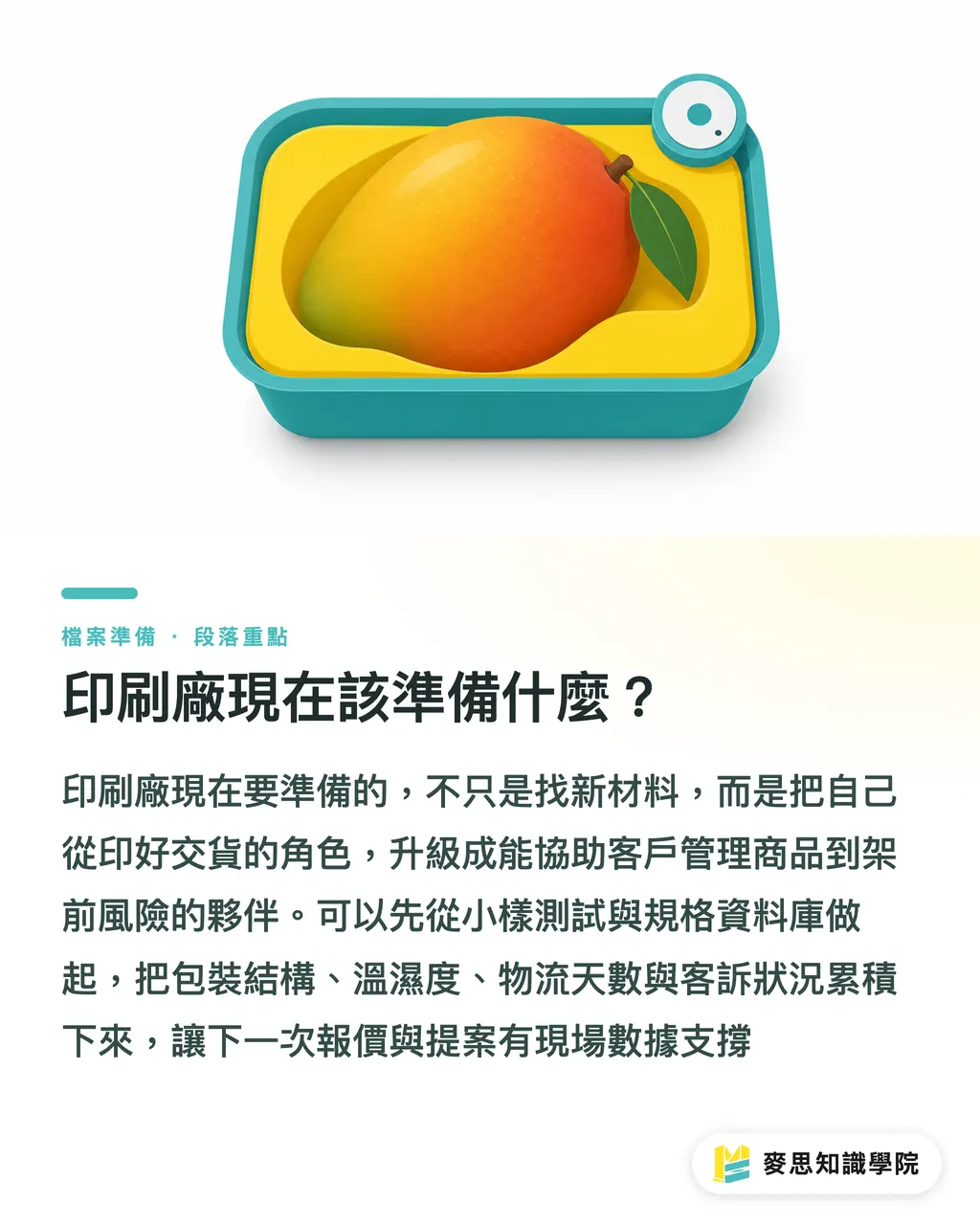
The most practical approach is organizing test data, fruit varieties, packaging structures, temperature, humidity, transit days, and complaint records, into a specification database. That way, your next quote isn't guessed off top of head
In the end, functional packaging is not about who heard of nanoclay first
It comes down to who can bridge materials, production lines, testing, and client vocabulary
Key Takeaways
・ The essence of nanoclay packaging is managing ethylene with functional layers, not blindly slapping on thicker films to block everything
・ TRL 3 signifies laboratory potential, but also means real-world cold chain, humidity, and packaging system validations are required before mass production
・ Taiwan's produce export sector should start testing with high-value, short-to-medium-haul, branded export items, not low-cost bulk fruit
・ Printing plants must upgrade from knowing how to print to knowing how to validate. That is where functional packaging commands a premium
・ Packaging performance that can be documented, compared, and replicated is what qualifies as a specification clients are willing to pay for
Further Reflections
For print manufacturing, nanoclay packaging reminds us that future packaging value addition lies beyond colors, tactile feel, and lead times. It rests in functional layer design and validation capabilities. Designers must begin understanding how bag styles, ventilation holes, labeling copy, and material claims interlock. AI and SaaS teams can structure packaging test data into a searchable spec library, helping brands turn every export trial order into data for their next decision. The most pragmatic next step for small and medium-sized Taiwanese plants is picking 1 fruit, 1 retail channel, and 2 packaging structures to run control tests, creating their very first functional packaging benchmark record
Further Reading
FAQ
- Can nanoclay packaging really extend fruit shelf life?
- Nanoclay packaging has the potential to delay ripening by adsorbing ethylene, but the technology maturity mentioned in current public reports remains at TRL 3. This means it has completed lab demonstrations, but still requires real-world supply chain testing to confirm its performance
- Which Taiwanese agricultural products are best suited to test nanoclay packaging first?
- Fruits with high ethylene-sensitivity, higher unit value, and clear export routes, such as Irwin mangoes, bananas, and avocados, are far better candidates for small-batch testing than low-cost bulk items
- Can printing plants add nanoclay directly into PE films for mass production?
- Jumping straight to mass production is not recommended. Printing plants should first confirm food packaging suitability, processing stability, humidity impact, and cold-chain test results before choosing between masterbatch, pre-coatings, liner sheets, or post-process coatings
- How does nanoclay packaging differ from standard high-barrier films?
- Standard high-barrier films focus on blocking oxygen, moisture, or aroma loss. Nanoclay packaging falls under active packaging, focusing on adsorbing ethylene and modifying the ripening environment inside the package
- What should brand clients prepare before adopting functional packaging?
- Brand clients should first define their target fruit, shipping duration, storage conditions, and acceptance standards, then ask the printing plant to conduct control group tests. Avoid evaluating packaging material value solely on a single phrase like extending shelf life by X days
Related articles

The Print × AI weekly
The print and AI know-how designers, brands and enterprises can use before they commit — one email, every week
MINDS Free Tools
AI background removal, a LINE sticker maker, spine & imposition calculators — all free, right in your browser, no upload.
MINDS Group
Need actual printing or gifting services?
From premium printing to online ordering and festive gifts — the MINDS Group sister brands take it from here.