
Overview
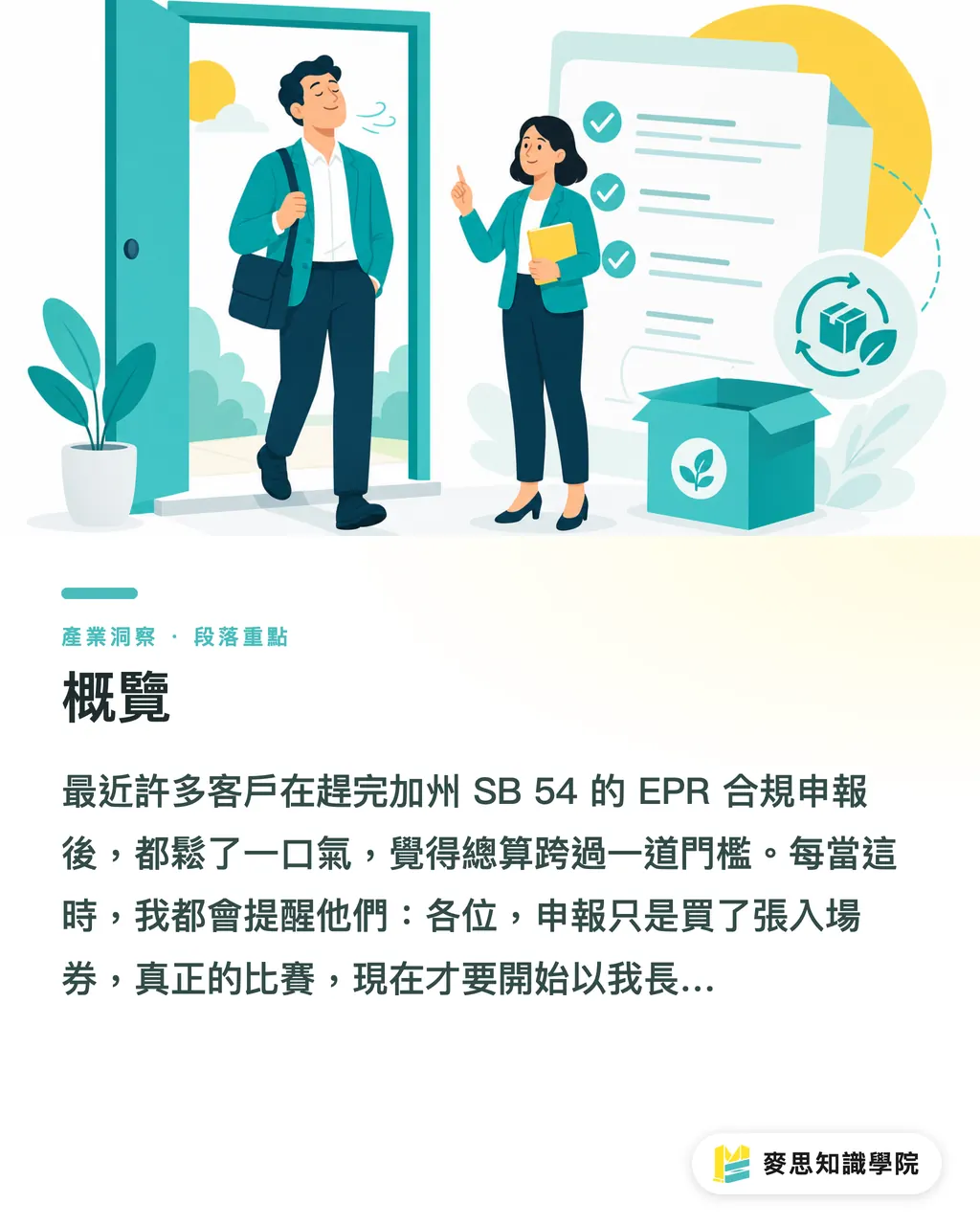
Recently, many clients felt a sense of relief after rushing to finish their California SB 54 EPR compliance reporting, believing they had finally crossed a threshold. Whenever this happens, I remind them: Folks, the reporting is just buying an entrance ticket; the real race is only just beginning
Based on my long-term observations on production lines and with clients, this California reporting deadline at the end of May certainly forced many brand owners to seriously examine their own packaging materials for the first time. But submitting a report and actually being "recyclable" are two completely different things
Done Reporting? Why Flexible Film is the Next Ticking Time Bomb
The biggest significance of this reporting deadline is that it exposed a long-hidden ticking time bomb in the industry: the recycling dilemma of flexible films
You and I know very well that from snack bags and coffee packaging to e-commerce PE mailing bags, these types of composite film materials, lightweight, cheap, and protective, are almost ubiquitous in modern commerce. But here's the problem:
・Lack of recycling infrastructure: To this day, there is still no recycling system globally that can "scale" the processing of post-consumer flexible films. Their complex materials and tendency to get dirty make recycling plants unwilling to handle them
・Brands forced to foot the bill: Under California SB 54 regulations, if your packaging lacks existing recycling channels in California, the producer (i.e., the brand) must pay to establish or subsidize a recycling mechanism. This is a staggering potential expense
・2028 is the real test: This reporting was just an inventory check. The regulation's real teeth lie in the "actual recycling rate" required by 2028. If your packaging material recycling rate fails to meet the target by then, you will face massive fines or exclusion from the market
Packaging Dive's report also confirms my observations: while most brands have submitted their documents, they are almost all still in the rushed stage of evaluating alternative materials for handling flexible films, with absolutely no standard answers yet

How Should Taiwanese Manufacturers Respond? Compliance is Not Just for the Legal Department
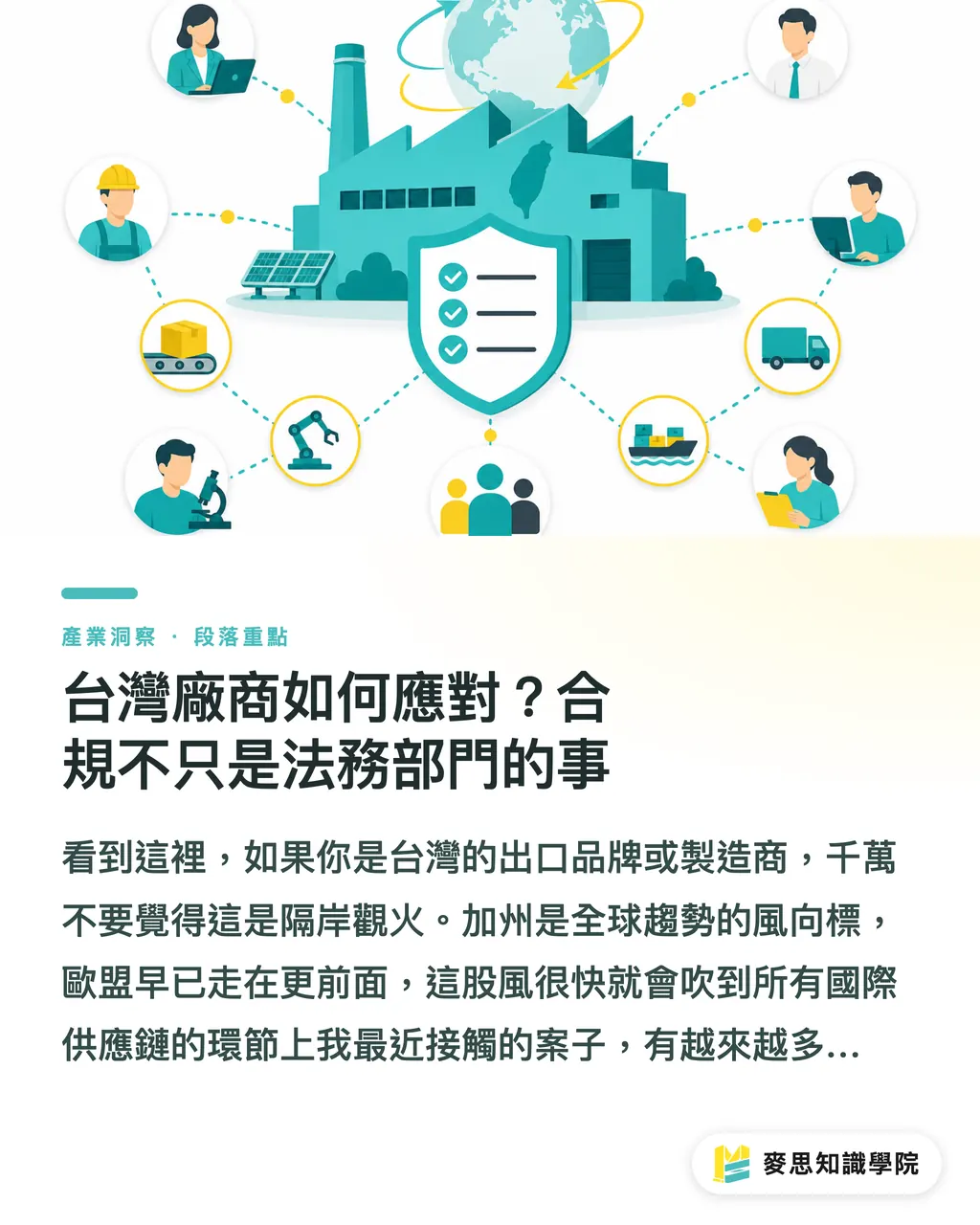
At this point, if you are a Taiwanese export brand or manufacturer, please do not think this is merely watching a fire from across the river. California is a trendsetter for global standards, and the EU is already further ahead. This wind will soon blow into all segments of the international supply chain
The projects I have been involved in recently increasingly involve consultations on "material inventory" and "design changes." This indicates that the market trend is shifting; sustainability compliance is no longer just a matter for the legal or CSR departments, but an operational issue directly impacting product development and supply chain management. Brands must take action immediately:
・Step 1: Inventory material composition immediately
You must know very clearly what materials make up every product you sell overseas, from outer cartons, cushioning materials, and color boxes to the product packaging itself. This is the foundation for all decision-making
・Step 2: Identify high-risk packaging materials
Which packaging materials fall under the previously mentioned flexible films? Which are composite materials glued together in a way that makes them difficult to separate? List these high-risk items as priorities
・Step 3: Seek "mono-material" solutions
Start from the design side and convert packaging to mono-materials as much as possible. For example, for bags that previously used PET/VMPET/CPP laminates for barrier properties, can they be switched to a single PE or PP material with a barrier coating? This can significantly increase recycling feasibility
・Step 4: Explore alternative systems
In addition to changing materials, also think about changing the "system." Recently, I noticed a Swedish startup, Meadow, designed an aluminum pre-filled dispensing system for the hotel industry, which is a great example. It replaces "single-use" with "refillable," fundamentally solving the waste problem. The feasibility of B2B channels is being verified and is worth our tracking
This is an all-out war spanning material science, supply chain management, and business models; the earlier you start preparing, the more room you have for maneuver
Key Takeaways
・EPR reporting is just the first hurdle for compliance; the actual recycling rate in 2028 is the real test for brand owners
・The lack of scalable recycling solutions for flexible films is currently the biggest gap in sustainability compliance for brands
・Immediately taking inventory of product packaging material composition is the top priority for all export brands
・Sustainability compliance is now a supply chain management issue, not just the responsibility of legal or design departments
・Prioritizing "mono-material" design is the most direct and effective method for increasing packaging recyclability
Extended Reflections
This regulation-driven packaging revolution presents both a challenge and a huge opportunity for printing manufacturing, design, and even the software service industry. My suggestion is: do not just view EPR as a cost or a hassle, but use this opportunity to rethink your core value
・For printing manufacturers: Your role is no longer just "printing the image." You should become a "material consultant" for your clients, assisting them in analyzing packaging materials, providing alternative solutions, and even establishing small-batch proofing services to test the printability and processability of new materials. Having cross-brand machine networking and data analysis capabilities (such as recent breakthroughs by the BOBST Connect platform) will be critical, enabling you to help clients accurately calculate material usage and carbon footprints, this is the new value
・For designers and brand clients: In the past, when talking about packaging design, we emphasized visuals, tactile feel, and protection. Now, "recyclability" and "ease of disassembly" must become equally important design principles. Designers need to work closely with material suppliers and printing plants from the very source; this is not a linear process, but a cross-disciplinary collaboration
・For SaaS and AI adoption: Under this trend, "data" is gold. Software platforms that can track packaging material history, automatically calculate EPR fees for different countries, and simulate the impact of material changes on costs and carbon emissions will become rigid requirements for brand owners. MINDS' one-stop integration service is exactly within this context, using digital toolchains to help clients respond more intelligently to this global sustainable transformation, from design and procurement to production
Further Reading
FAQ
- What is EPR? What does it have to do with our company?
- EPR (Extended Producer Responsibility) is a regulation requiring brand owners to pay for and take responsibility for the entire life cycle of their product packaging (including collection, sorting, and recycling). If your products are sold in markets with EPR regulations (such as California or many EU countries), you must comply; otherwise, you may face fines or a ban on sales
- SB 54 is just a California law; why should Taiwanese manufacturers care?
- California is the world's fifth-largest economy, and its environmental regulations (like past vehicle emission standards) often become templates for the US and even the globe. EU packaging regulations are even stricter. This is an irreversible trend for global exports, and early preparation is the only way to avoid losing orders
- Our company uses a lot of flexible film packaging and it's hard to replace in the short term. What should we do?
- Start your assessment immediately. First, research the possibility of switching to "mono-material" flexible films (such as all-PE or all-PP), which are accepted in some emerging recycling channels. Second, discuss with your packaging suppliers to understand their R&D progress on alternative materials (such as paper-based packaging or biodegradable materials). Third, start calculating the cost impact of paying EPR fees so you can make informed business decisions
References
- EPR大限已至:品牌商現在必須搞懂的包裝回收合規三件事 · packagingdive.com
Related articles


The Print × AI weekly
The print and AI know-how designers, brands and enterprises can use before they commit — one email, every week
MINDS Free Tools
AI background removal, a LINE sticker maker, spine & imposition calculators — all free, right in your browser, no upload.
MINDS Group
Need actual printing or gifting services?
From premium printing to online ordering and festive gifts — the MINDS Group sister brands take it from here.