
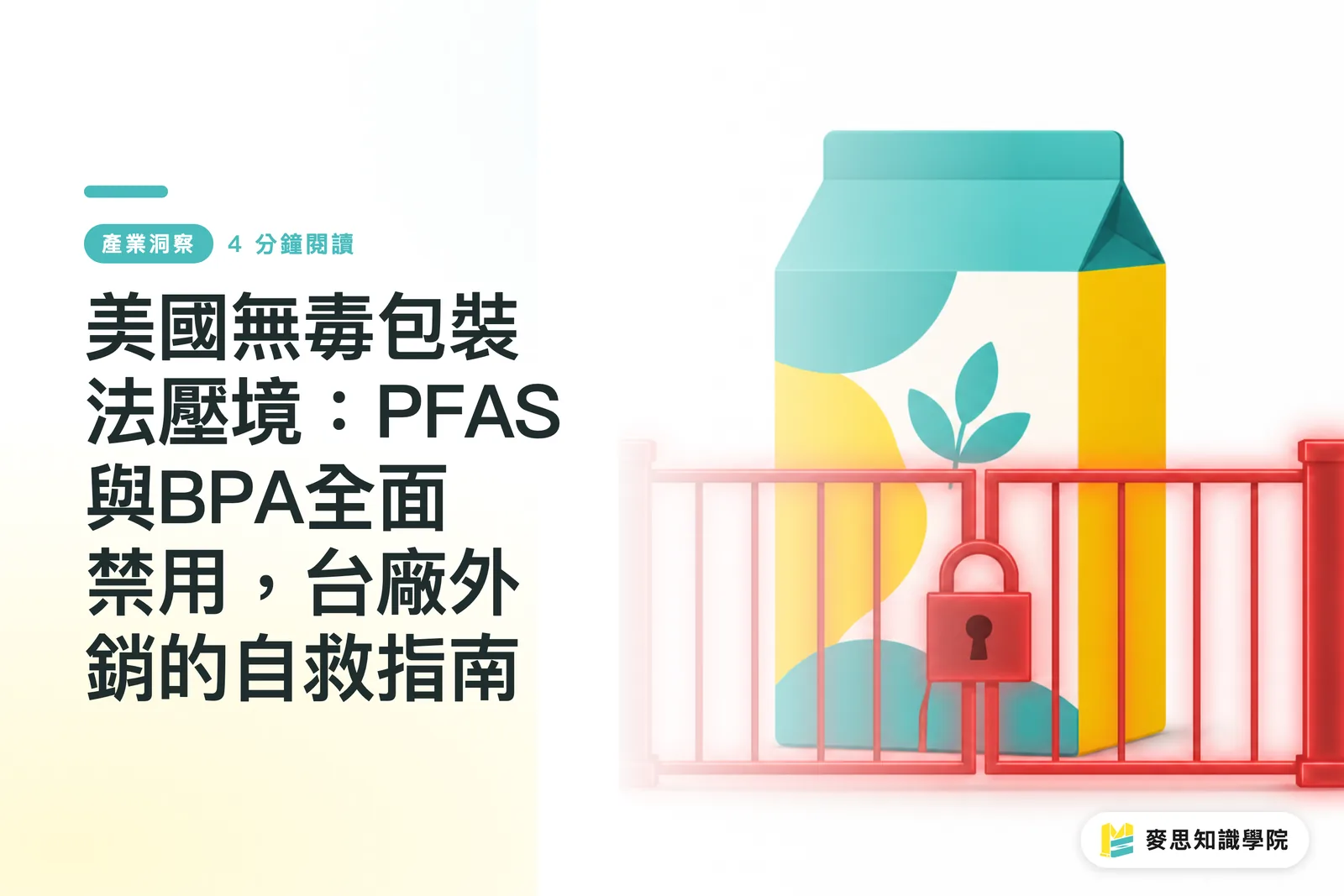
Why is the US cracking down on non-toxic food packaging now?
I was having tea recently with a few veterans who do contract manufacturing for North American food packaging. Everyone was asking: we just finished dealing with the EPR reporting for California's SB 54, so why is there another new regulation?
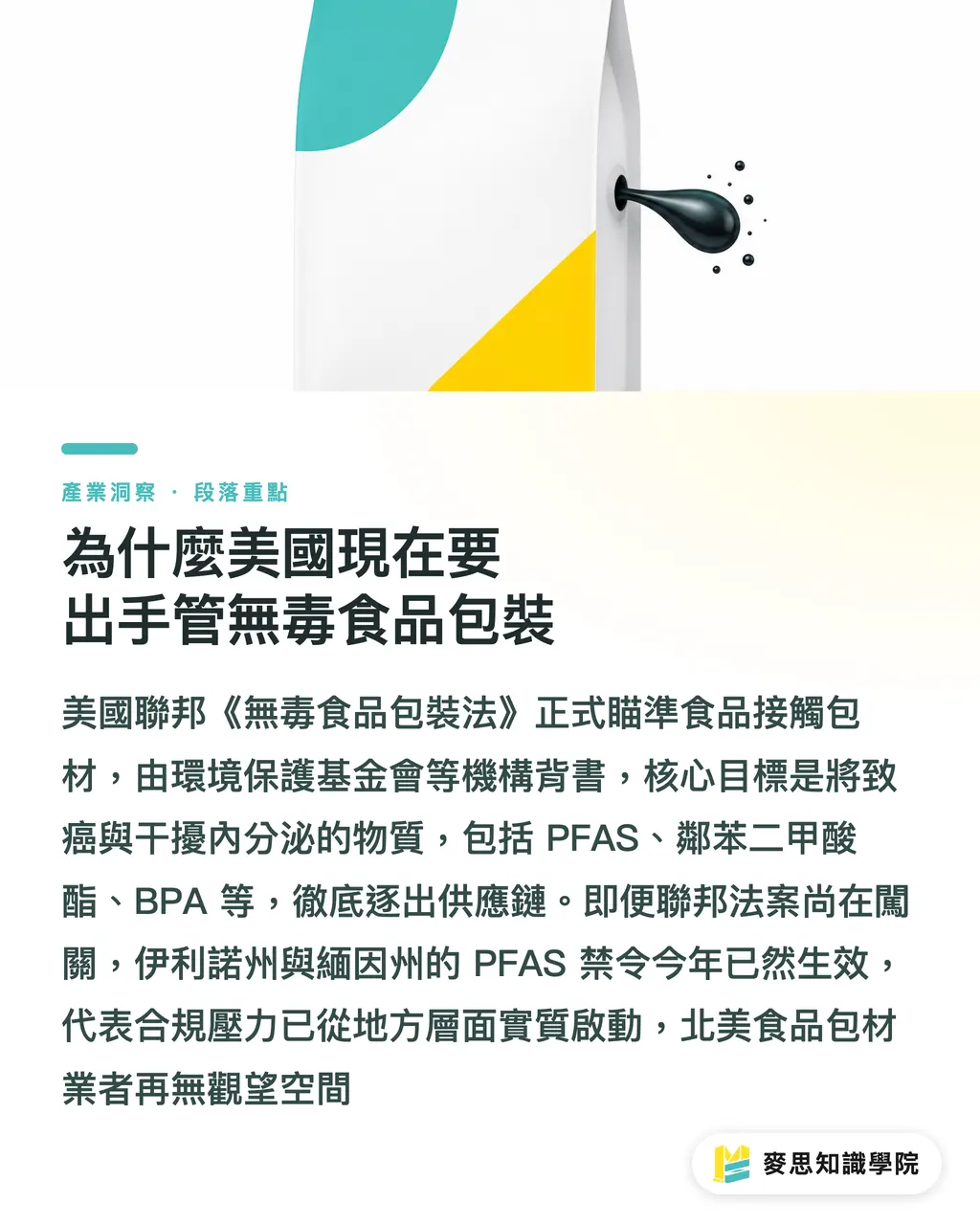
This time, the 'No Toxics in Food Packaging Act,' proposed by Senator Richard Blumenthal, Representative Jan Schakowsky, and others, directly targets food-contact packaging and processing materials
Backed by organizations like the Environmental Defense Fund (EDF) and Consumer Reports, the core demand is straightforward: completely remove carcinogens and endocrine disruptors from the dining table
Even though the federal bill is still in the legislative process, it is not intended to override state-level regulations. PFAS bans in Illinois and Maine are already in effect this year, meaning the compliance clock for the market has long since started ticking
Many of the materials we use on our production lines every day are being explicitly targeted and banned by this wave of legislation:
・Ortho-phthalates (plasticizers)
・PFAS ('forever chemicals')
・BPA (Bisphenol A)
・Common processing substances like benzene, formaldehyde, and ethylene oxide
From EU PPWR to the new US law: What has fundamentally changed in brand clients' requirements?
Looking back at the cases I've handled over the past two years, from the EU's PPWR mandatory design reviews to California's mandated material recovery rates for 2028—the trend is extremely consistent
In the past, export brand owners only cared about the word 'recyclable.' Now, they are being forced by regulations to look upstream, demanding safety and traceability from beginning to end
The current US proposal includes a clever preventative mechanism that explicitly forbids replacing these toxins with 'equally problematic alternatives.'
The most direct impact on Taiwanese export factories is that you can no longer simply swap BPA for BPS or BPF to satisfy requirements; clients will demand a complete list of material ingredients
This is already a tangible trade barrier. Even the slightest oversight could result in entire shipments being blocked by customs, or you could be held liable for the brand owner's fines and subsequent order cancellations
How can small and medium-sized printing and packaging plants prepare in advance?
Many contract manufacturers in central and southern Taiwan are used to simply printing whatever designs clients provide and using whatever materials they are told to use. This passive model will be a major disadvantage in the next two to three years
In the face of increasingly strict ingredient scrutiny, here are the first few steps Taiwanese factories can take to build transparency in their supply chain:
・Inventory existing inks and coatings: Immediately confirm with suppliers whether food boxes use the targeted PFAS water-and-oil-repellent coatings and whether adhesives contain formaldehyde
・Examine plasticizers in flexible films: For food packaging used at room temperature or for microwave heating, confirm the levels of ortho-phthalates and obtain the latest inspection certificates
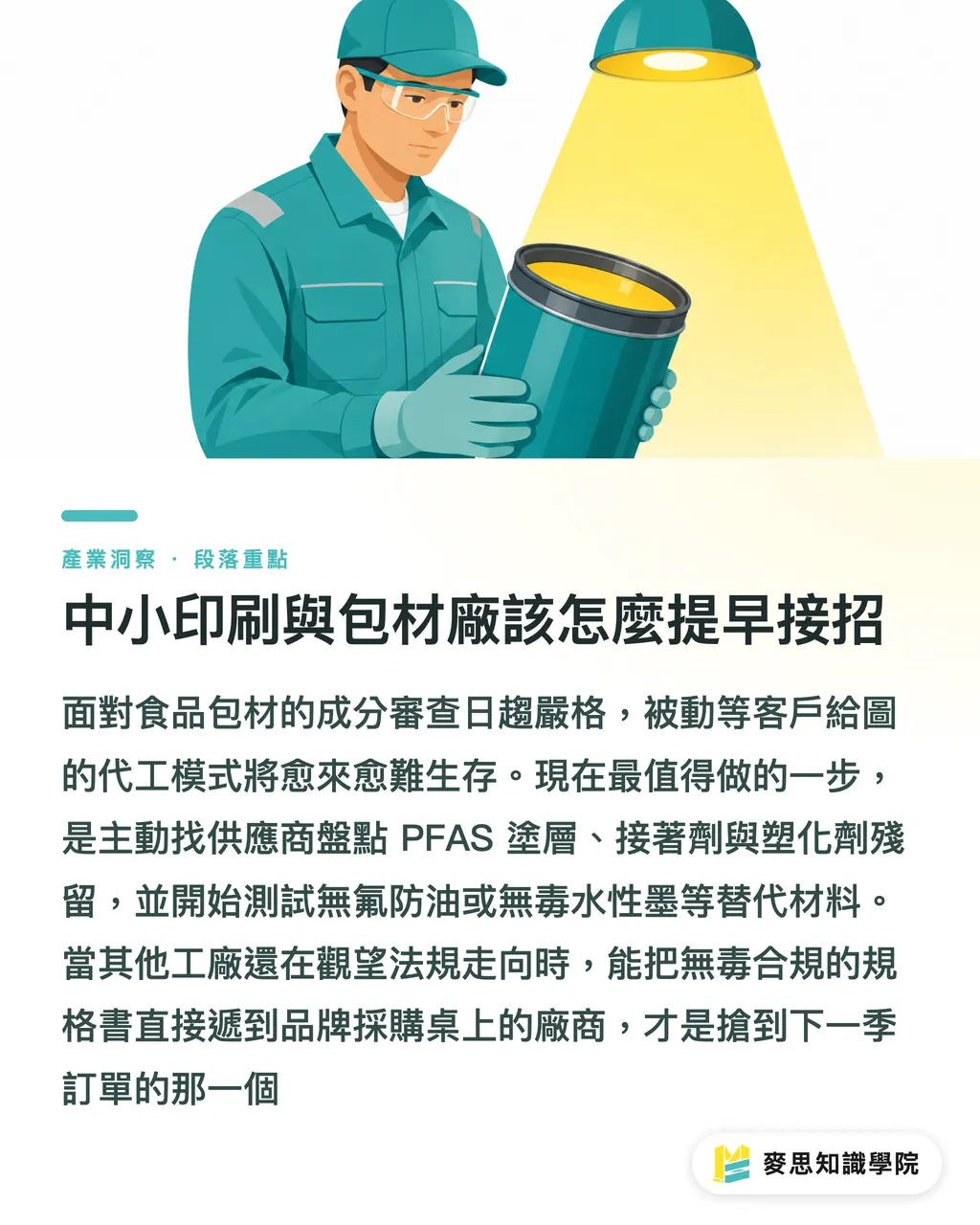
・Lock in alternative materials early: Test fluorine-free oil-repellent paper or new non-toxic water-based inks with upstream material suppliers, and turn this into a selling point in your proposals to clients
While other factories are still waiting to see if regulations will pass, if you can proactively place non-toxic compliance specifications on a brand purchaser's desk, the next season's orders will be yours
Key Takeaways
・The US 'No Toxics in Food Packaging Act' targets chemicals like PFAS and BPA, with state-level bans in Illinois and Maine already in effect this year
・Brand-side requirements have upgraded from passive recycling to proactive scrutiny of raw materials, with compliance pressure shifting directly to Asian contract manufacturers
・Printing plants must transition from passive order-taking to active proposal-making, proactively confirming non-toxic alternatives with ink and film suppliers and preparing inspection lists
Extended Reflections
For teams like MINDS, which handle everything from structural design to printing and manufacturing, or for our fellow designers, we can no longer focus solely on whether a layout looks beautiful or if the color saturation is vibrant
In future design blueprints, material compliance will be as fundamental and mandatory a field as die-cut lines
Turning the restrictions of foreign regulations into service value, helping clients 'clear mines' by navigating them away from chemical danger zones, is the most profitable path ahead
Further Reading
FAQ
- When will this US non-toxic food packaging law formally affect Taiwanese factories?
- Although the federal proposal has only just been introduced, the PFAS bans in Illinois and Maine have already taken effect this year, meaning export factories are already facing spot checks and material traceability requirements from brand owners
- If our packaging is only printed on the outer layer and does not directly touch food, is it still regulated?
- The bill primarily targets food-contact substances and processing materials, but in practice, brand owners usually require proof that the entire package, including outer inks and adhesives, is free of specific toxins to avoid liability
- Will swapping BPA for other bisphenol alternatives pass the requirements?
- No. The new bill specifically aims to block problematic substitutes and explicitly includes related compounds such as Bisphenol B, S, F, and AF on the blacklist of unsafe substances
References
- 美國國會提案限制食品包裝中的 PFAS、鄰苯二甲酸酯與 BPA · packagingdive.com
Related articles

The Print × AI weekly
The print and AI know-how designers, brands and enterprises can use before they commit — one email, every week
MINDS Free Tools
AI background removal, a LINE sticker maker, spine & imposition calculators — all free, right in your browser, no upload.
MINDS Group
Need actual printing or gifting services?
From premium printing to online ordering and festive gifts — the MINDS Group sister brands take it from here.