
Overview
Whether varnished and foiled post-press finishes are recyclable depends heavily on the technique used. Traditional plastic lamination and heavy UV varnish strip paper of its ability to repulp, whereas aqueous gloss coating, cold foil stamping, and aqueous barrier coatings preserve full paper recyclability
Based on years of hands-on experience from production consultants at MINDS, brands looking to prevent green packaging from becoming incinerator waste must evaluate post-press recyclability right at the design proposal stage
Repulpability in waste paper recycling is defined as the physical property of a paper product that allows its fibers to disintegrate quickly in pulping equipment and separate non-paper impurities through screening
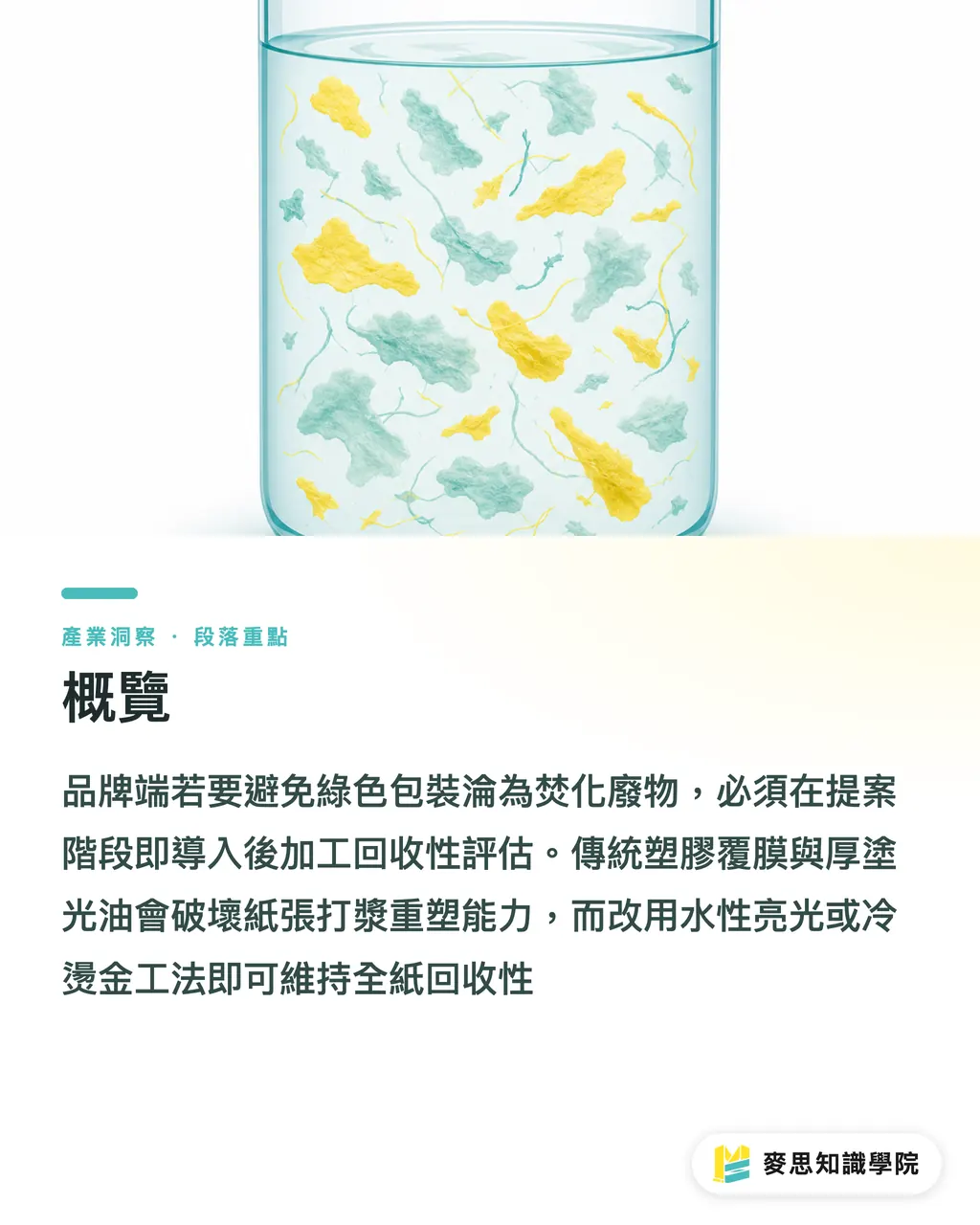
Why Does Recyclable-Labeled Packaging End Up in Incinerators? How Post-Press Finishing Destroys Repulpability
・Double-sided BOPP plastic lamination at a thickness of 0.02 mm cannot disintegrate in water. As pulpers run, the plastic film wraps around saw-toothed blades, prompting paper mills to reject entire batches on the spot
・Repulpability testing in recycling tanks allows only 15 to 20 minutes. If surface coatings fail to detach quickly, paper fibers remain wrapped inside plastic film and get baled up for incineration
・I have seen too many tragic cases on the production line. A designer picks exquisite imported specialty paper, only to cover the entire box in heavy-tack gloss film. That puts a permanent plastic armor on the paper, severing it from the recycling loop entirely. It is painful to watch
・Don't panic just yet
Plastic Lamination, Aqueous Coating, and Cold Foil: How Do They Differ in Deinking at Recycling Plants?
・BOPP plastic lamination: Film thickness is around 12 to 18 microns, offering top-tier scuff and water resistance. During repulping, large sheets of film fail to break down, resulting in a rejection rate over 90% in paper mill screening equipment
・UV varnish: Film thickness is around 3 to 5 microns, delivering high gloss and surface hardness. UV curing forms a cross-linked network resin. Particles remain too large during deinking, clogging 0.15 mm screens and disrupting centrifugal separation
・Aqueous coating (gloss/matte): Coating thickness is around 1 to 3 microns, offering basic scratch and splash protection. It emulsifies and disperses quickly in hot water pulping, achieving a centrifugal deinking pass rate of up to 95%
・Traditional hot foil stamping: The foil layer consists of a 1 to 2 micron PET carrier and hot-melt adhesive, giving a strong metallic luster. If the adhesive fails to separate completely, it breaks into sticky micro-particles that contaminate paper pulp
・Cold foil stamping (plastic-free transfer): The metallic layer is ultra-thin with no carrier film left behind, offering sharp detail. In strong alkaline deinking tanks, it floats away with ink residue on froth, seamlessly entering standard pulp cycles
・Aqueous barrier coating: A plastic-free greaseproof and waterproof coating that blocks moisture and oil. It disintegrates 100% in standard mill pulping tanks, achieving true full-paper recycling
Combining High Texture with Full Paper Recyclability: What Are the Plastic-Free Embossing and Aqueous Coating Alternatives?
・Aqueous barrier coating technology: Acrylic emulsions paired with nano-dispersion technology form an ultra-thin barrier on the paper surface. Achieving grease resistance of Kit 7 or higher, it contains zero PE or BOPP film coating
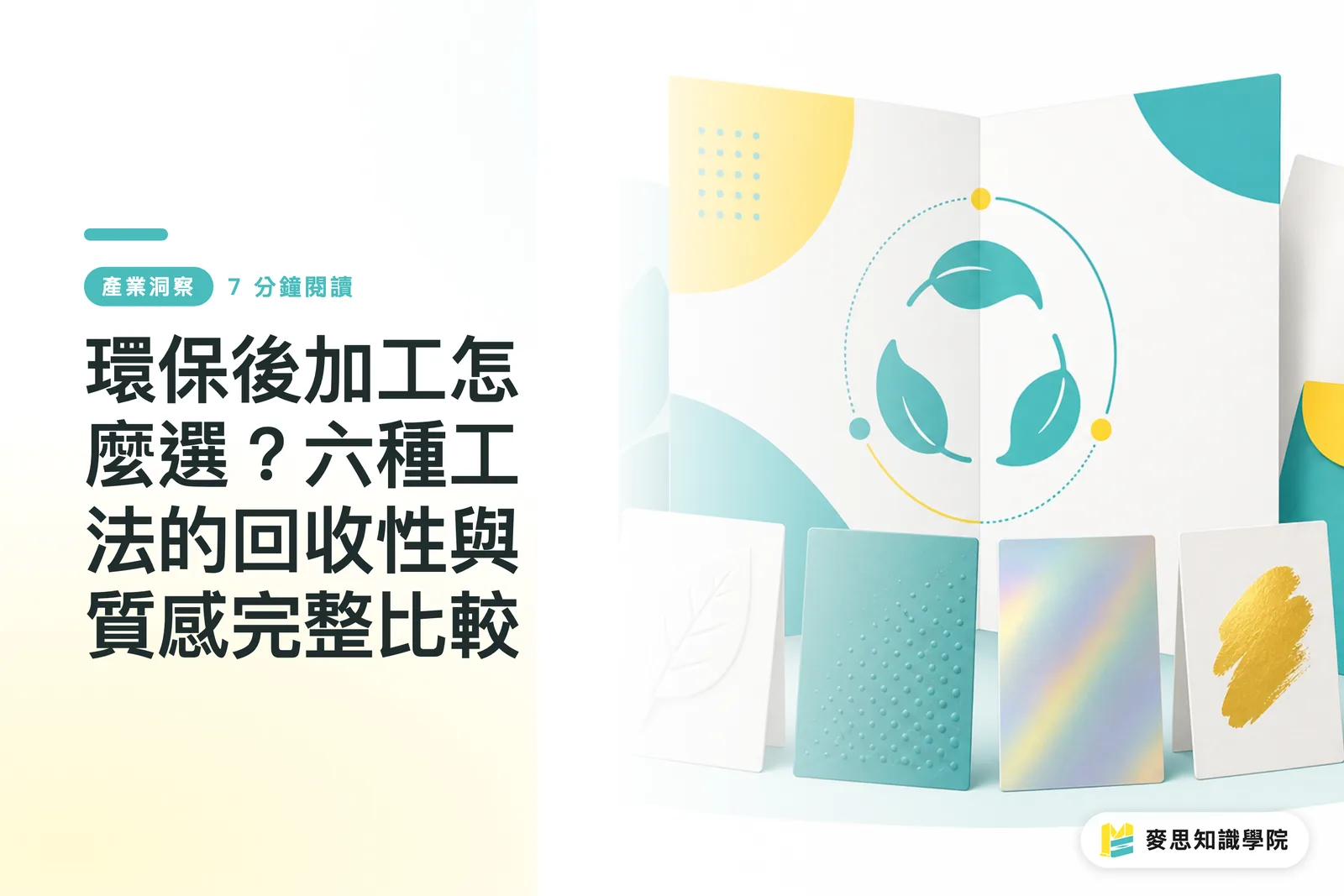
・Plastic-free embossing technique: High-pressure steel dies stamp leather, wood grain, or geometric micro-textures onto paperboard or cotton paper. It creates rich tactile experiences without adding a single chemical coating
・Plastic-free foil transfer combined with spot aqueous gloss: Cold foil stamping decorates fine metallic lines, topped with spot aqueous gloss. This preserves a luxurious metallic sheen without hurting flotation deinking efficiency at recycling facilities
・It's that simple
The Three Pre-Print Checkpoints at MINDS (MS): Preventing Packaging from Becoming a Recycling Hazard
・MINDS (MS, high-end custom commercial printing) checkpoint 1: Material and protection matching. Determine packaging use. Dry goods and luxury gift boxes should prioritize aqueous coating over plastic lamination, using aqueous barrier coatings only when grease and water resistance are needed
・MINDS (MS) checkpoint 2: Finishing area and deinking limits. Keep foil stamping and UV coverage under 30% on a single side to prevent large cross-linked coatings from clogging centrifugal deinking screens
・MINDS (MS) checkpoint 3: Structural disassemblability design. Multi-material packaging must feature tear lines or easy-disassembly latches, allowing consumers to separate paper from plastic in two seconds before disposal
・If you have questions about the recyclability rating of complex finishings, feel free to consult the Mai Strategy Knowledge Academy advisory team for pre-print material evaluations
Key Takeaways
・Plastic lamination is the biggest threat to paper packaging recycling. Failing to break down during pulping leads to rejected batches of pulp
・Aqueous coatings and aqueous barrier coatings provide protection while maintaining a repulpability pass rate of over 95%
・Cold foil stamping separates far more easily into flotation froth during deinking than hot foil, making it the best option for low-carbon metallic finishes
・Sustainable packaging decisions must account for paper stock, finishing, and disassembly altogether, avoiding half-hearted environmental efforts
Further Considerations
For brand buyers and graphic designers, sustainable packaging does not mean eliminating finishes altogether. It means choosing methods friendly to centrifugal deinking
In the future, printing mills and SaaS management platforms can use AI algorithms to calculate total box coating coverage ratios and repulpability risk scores right at the layout stage, letting designers adjust finishing combinations before hitting order
Further Reading
・How to Choose Eco-Friendly Post-Press Finishes? A Complete Comparison of Recyclability and Texture Across Six Methods
・Navigating Trade-Offs in Eco-Friendly Post-Press Finishing
・Labeled Recyclable but Sent to the Incinerator? A Senior Consultant Breakdown of Packaging Finishing Hazards
・Say No to Plastic Film Coating! Waterproof and Stain-Resistant Aqueous Coating and Eco-Friendly Finishing Explained
FAQ
- Can packaging boxes with aqueous varnish really be tossed straight into standard paper recycling bins?
- Yes. Aqueous varnish emulsifies and breaks down rapidly in hot water pulping environments at paper mills without clinging to paper fibers, fully meeting standard waste paper recycling benchmarks
- Does a large foil stamping area lower the recycling grade of a paper box?
- Yes. If foil stamping covers over 30% of a single side, the adhesive layer and foil increase flotation burdens in deinking tanks. Switching to cold foil stamping or reducing the foiled area is recommended
- Is aqueous barrier coating oil-resistant enough to fully replace plastic extrusion film on food packaging?
- Aqueous barrier coatings rated at Kit 7 or higher easily meet the demands of most dry goods, cookies, and greaseproof paper boxes, while achieving 100% full-paper repulpability
- If a high-gloss film finish is required, are there recyclable alternatives?
- High-gloss aqueous coating or aqueous UV varnish can be used. These deliver high-contrast gloss close to lamination without leaving behind large sheets of un-strippable plastic film residue
Related articles

The Print × AI weekly
The print and AI know-how designers, brands and enterprises can use before they commit — one email, every week
MINDS Free Tools
AI background removal, a LINE sticker maker, spine & imposition calculators — all free, right in your browser, no upload.
MINDS Group
Need actual printing or gifting services?
From premium printing to online ordering and festive gifts — the MINDS Group sister brands take it from here.