
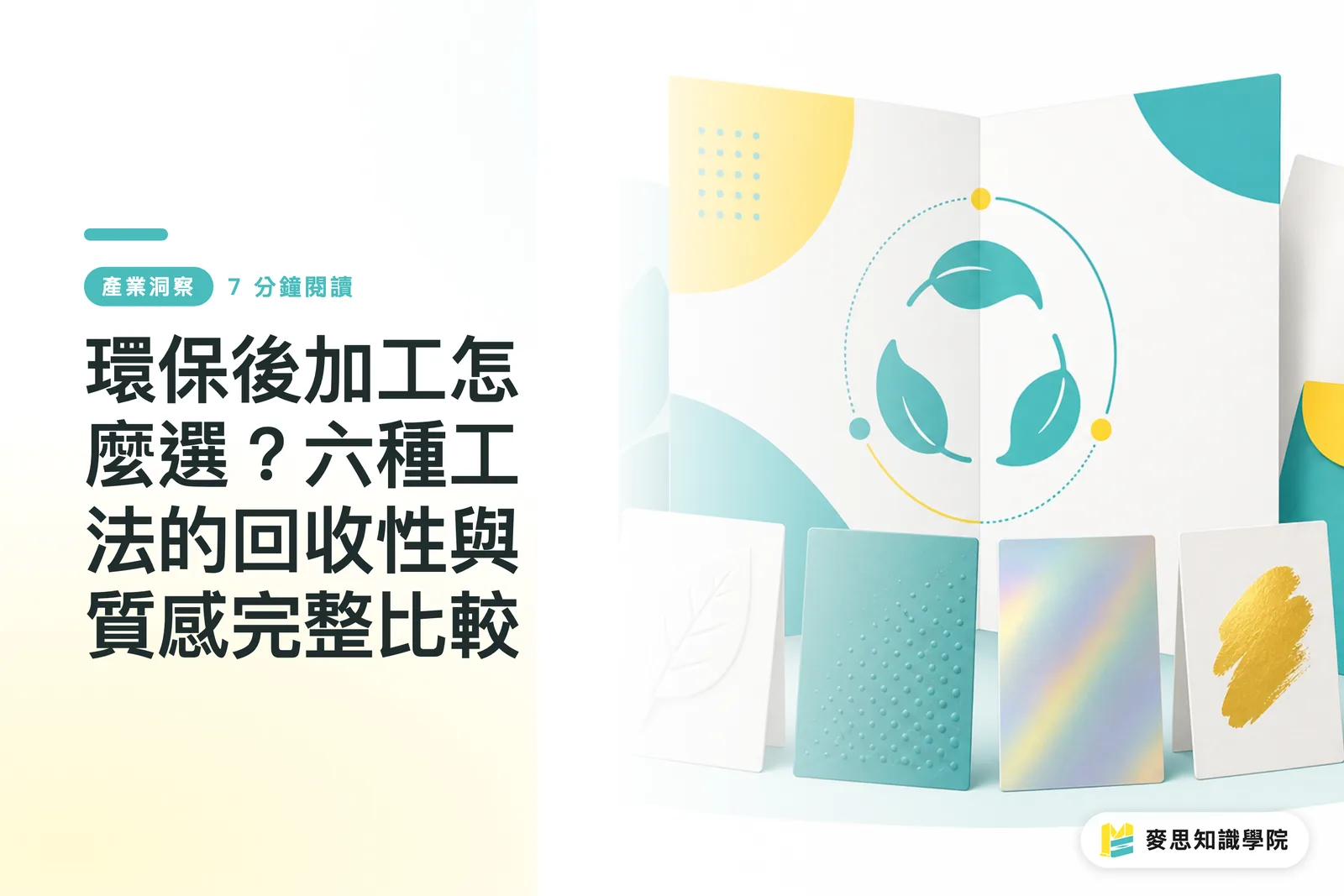
Why does the wrong finishing choice make that recycling logo worthless?
Here's the most common mistake: a paper box sports the recycling triangle on one side, with a full sheet of gloss laminate glued to the back. Designers usually have environmental intent, but they don't quite grasp the recycling reality of lamination. That thin BOPP film is exactly what stops this box from entering the recycling loop
Lamination works by thermally bonding BOPP (biaxially oriented polypropylene) film to the paper surface. Plastic and fiber fuse too tightly for most paper mills' flotation process to separate them before pulping. Once it contaminates the pulp, recycled paper strength drops, and collectors would rather reject the whole batch and send it to incineration. This is the widespread reality of Taiwan's current paper recycling facilities, not an isolated case
Finishing choices shape more than texture and sheen. They decide whether this printed piece can become paper again. MINDS consultants, when evaluating packaging specs, typically ask three questions first:
・How long does this print job need to last? Gift boxes and promotional flyers demand completely different durability
・Will it contact grease, moisture, or food during use?
・After disposal, which recycling stream does this packaging enter?
Once those three questions are answered, the finishing options narrow by more than half on their own
Can lamination be justified? The recycling reality of gloss and matte films
Gloss laminate is the most widely used finishing on the market: water-resistant, fingerprint-resistant, high color saturation, and relatively cheap. Matte laminate has a finer feel, almost suede-like, and nearly every premium brand's outer box uses it. Material cost between the two barely differs, but the perceived quality gap is huge
The catch: both films are BOPP, so their recycling paths are nearly identical and rough
Soft-touch laminate and scratch-resistant film are upgraded matte versions, costing roughly 30–50% more in finishing fees than standard matte. The feel is genuinely better, especially suited to hardcover book jackets or long-use gift boxes, but the material problem remains the same
There are still scenarios where lamination makes sense:
・Premium packaging with a service life over a year, where brand image takes priority. Lamination is reasonable here, but clients need to be told the item goes to general waste after disposal
・Packaging that genuinely needs water and moisture resistance, where aqueous coating can't meet the protection standard
・Small-batch samples of high-value products: use lamination to lock in the feel first, then switch processes for the production run
If the client has clear sustainability goals or carbon footprint commitments, lamination is almost always the first option to strike off
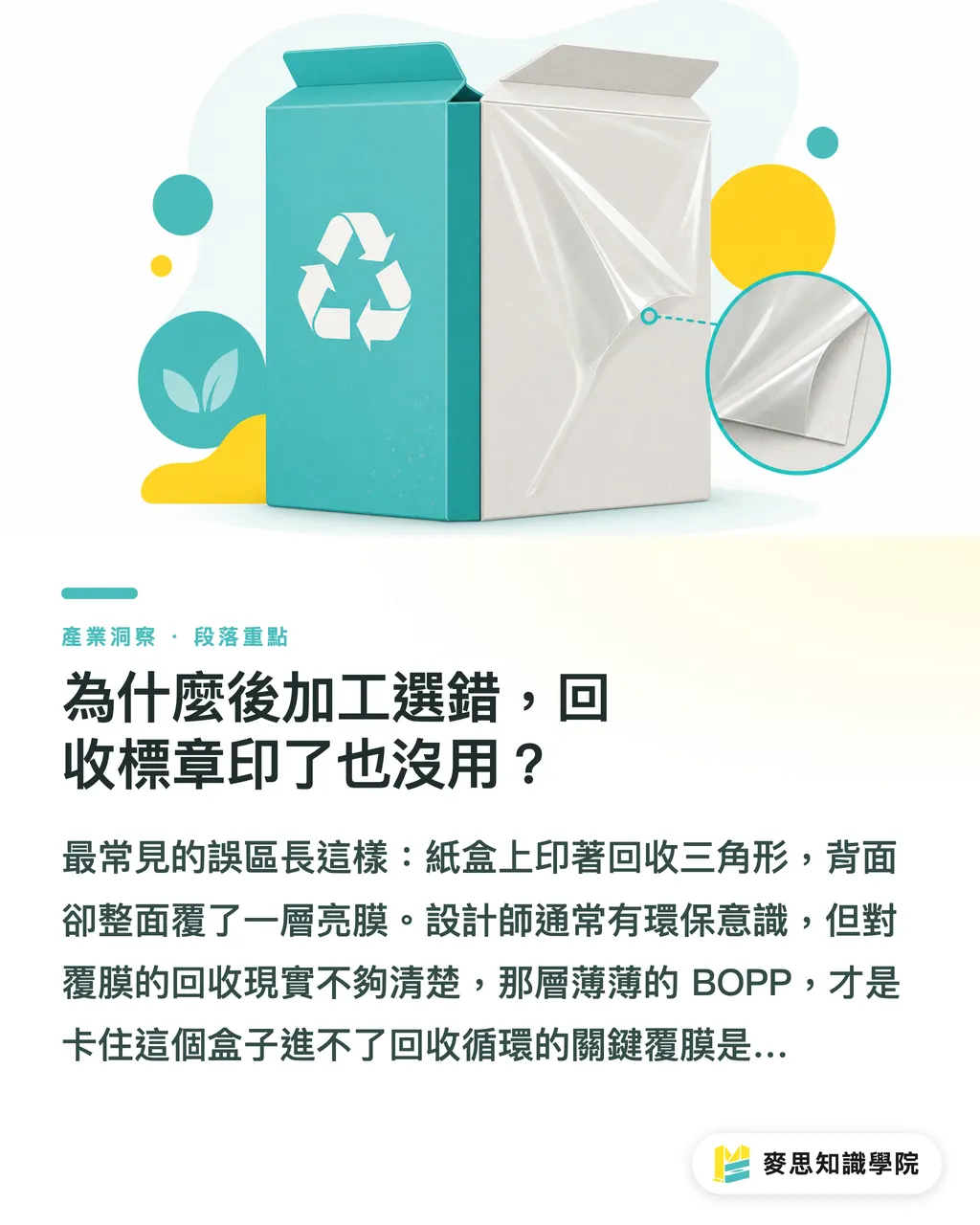
How much greener is aqueous coating than lamination? And where does spot UV fit?
Aqueous coating is the first substitute designers ask about when they want sheen but worry about lamination getting rejected at the recycler. The answer: greener than lamination, but not without limits
Aqueous coating uses water as the solvent, so VOC (volatile organic compound) emissions are far lower than solvent-based coatings. Once dry, the film is thin and brittle, and breaks down more easily than BOPP in the paper flotation process. Some Taiwan paper mills explicitly accept fully aqueous-coated cartons into their recycling stream, but standards vary. Before sending to print, it's worth confirming the intake rules of the target recycler, instead of assuming the green light
The downsides are straightforward: water resistance and abrasion resistance fall short of lamination. Long-term exposure to moisture or grease, or surfaces that get handled repeatedly, can overwhelm a pure aqueous coating. Food-contact packaging adds another hurdle: industrial aqueous coating materials don't necessarily pass food-contact safety standards. Confirm the material specs with the vendor before printing
Spot UV layers UV hard-coat locally on top of an aqueous base coat. The visual contrast is sharp, great for highlighting logos, headlines, or specific graphics. Overall recyclability sits between full lamination and aqueous coating, and the smaller the UV-cured area, the smaller the impact on recycling. Right now it's the most common compromise for balancing design appeal and environmental responsibility
Hot foil stamping feels premium, embossing is the greenest, how do you weigh them?
Put these two processes side by side and the gap is wide; the decision logic is completely different
Embossing is pure mechanical pressing. Male and female dies compress the paper to leave a raised pattern, with no coating or foreign material added. From a recycling standpoint, it's almost the cleanest finishing option: as long as the whole sheet is a single material, embossed pieces go straight into paper recycling. Die-making cost (zinc plates start at a few thousand NTD per set) is the only extra expense, and volume easily absorbs it. For brands on an eco path, embossing is a process worth actively using
Hot foil stamping is a different story. Traditional hot stamping transfers a layer of metallic aluminum foil that bonds to the paper surface, creating a composite material, with recycling problems similar to lamination. The market now offers "eco-friendly foil," with some vendors claiming recyclability certification, but foil quality varies wildly between brands. My advice: before adopting, request third-party verification documents from the supplier directly, don't rely on verbal assurances alone
There's a simple material-ratio logic: the larger the foil area, the harder the material problem is to control. Packaging that's foil-stamped across the entire surface basically becomes composite waste after disposal. If the brand insists on foil stamping, consider shrinking the area to just the logo or brand wordmark. The visual impact doesn't have to suffer, and the material burden drops sharply
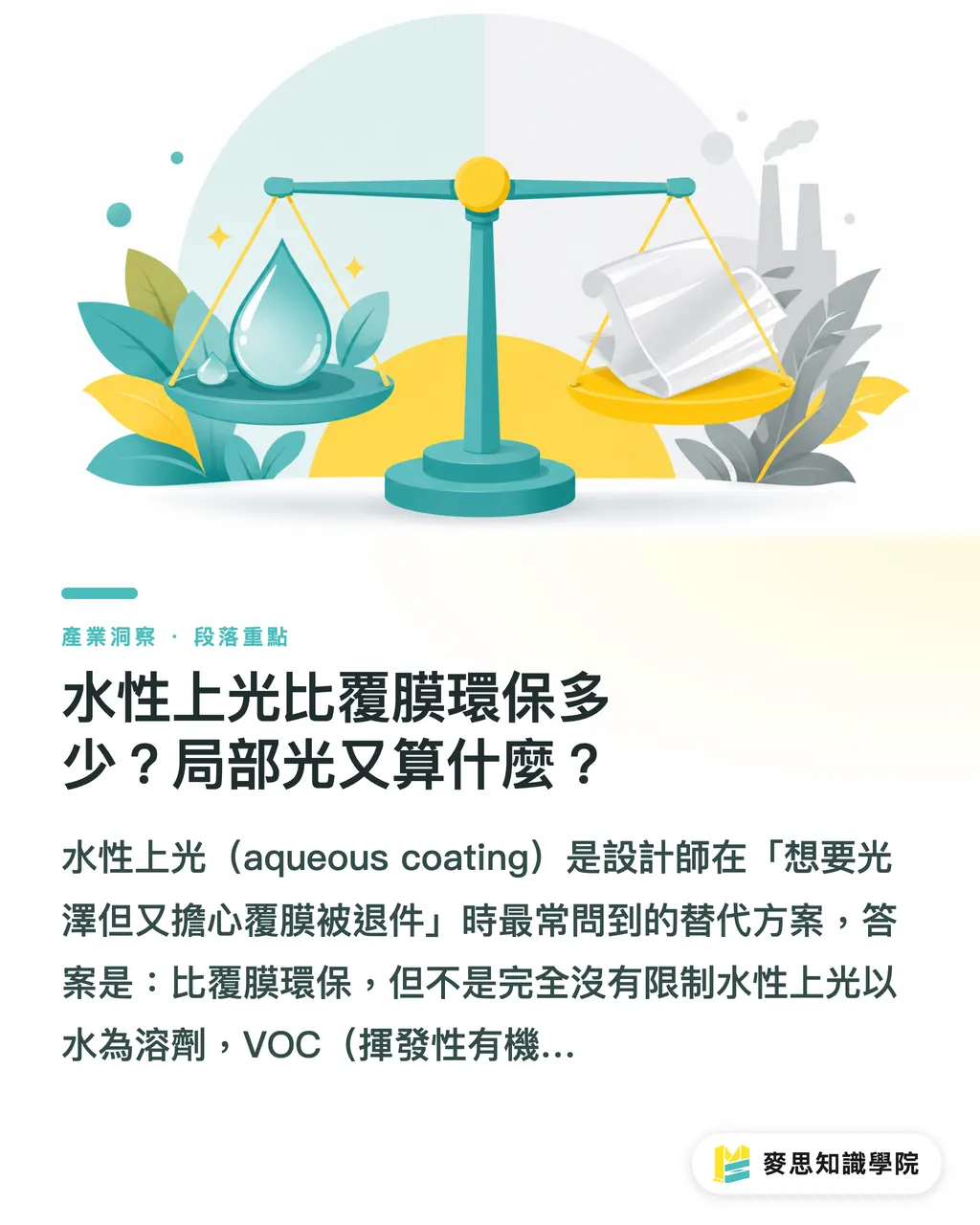
When does it make sense to skip film entirely? Four questions before deciding
An uncoated finish sounds like a compromise, but in the right context it's the cleanest answer
Uncoated natural paper has its own tactile language: a raw feel, deeper color once ink sinks in. Many brands going for an organic or artisanal aesthetic actively request this hand. Pick the right stock, skip all finishing, and the post-disposal recycling path is at its cleanest. But it raises the bar on design execution:
・Color design needs to budget for "darkening." Large dark fills on uncoated stock usually print darker than expected, so CMYK values need to bump up
・If the use environment involves grease or moisture, such as food outer boxes or manual covers, natural paper usually can't hold up. Switch the process or switch the stock
・Paper selection demands more care. The substrate's own grammage and texture directly determine the final feel, so you can't lean on finishing to cover flaws
Among the jobs MINDS handles, uncoated finishes tend to get picked for cultural-creative brand catalogs, event invitations, and gift-box liners deliberately going for a plain aesthetic. Short service life, no oil or water contact, the perfect fit for bare paper
Pulling all six processes together, finishing decisions can be narrowed down with the "MINDS Post-Print Four Questions," checked in order:
・① How long is the service life? Under three months, prioritize aqueous coating or no finish; over a year, then evaluate lamination
・② What's the contact environment? For grease, moisture, or food contact, confirm the coating's protection level and food-safety compliance
・③ Does the brand have sustainability commitments? If yes, rule out lamination, limit foil area, and prioritize embossing and aqueous coating
・④ What's the end-of-life recycling path? For high-volume jobs, clarify the target market recycler's intake rules before sending to print
Once those four questions are answered, finishing choices shift from gut feel to evidence-based judgment. If material combinations still raise doubts, consult a MINDS advisor before sampling. It saves far more time and money than fixing things after printing
Key Takeaways
・BOPP lamination (gloss and matte) delivers the best feel but the toughest recycling path. Confirm the disposal route before using it
・Aqueous coating is closer to recyclable than lamination, but its water resistance is limited, making it unsuitable for long-term use or grease-contact applications
・Embossing is the most recycling-friendly finishing process. Pure mechanical pressing with no foreign material, it goes straight into paper recycling
・The larger the foil area, the harder the material problem to manage. Shrinking it to just the logo keeps visual impact strong while cutting the material burden significantly
・Nail down finishing decisions with the four-question framework: service life, contact environment, brand commitments, and recycling path. More reliable than guessing
Further Considerations
Taiwanese brand clients' understanding of "eco-friendly packaging" mostly still lives at the level of switching to kraft paper tones and printing a recycling mark. Real eco-friendly finishing decisions require thinking about the end-of-life material path at the moment of choosing a process. This demands that designers and buyers have a baseline grasp of printing materials science. Visual reference images alone won't cut it
One change you can make right away: add a column for "end-of-life recycling path" in the packaging spec sheet. Force yourself and the vendor to nail down the back-end material questions before sending to print. For uncertain material combinations, consult the advisor team at Mai Strategy Knowledge Academy. From material selection to sample confirmation, sorting it out early is far cheaper than reworking after printing
FAQ
- Can laminated cartons be recycled?
- Mostly no. Once BOPP laminate is thermally bonded to paper fiber, most paper mills' flotation process can't separate them effectively, and the load typically goes to incineration. For recyclable packaging, switch to aqueous coating or choose an uncoated substrate
- What's the real difference between aqueous coating and lamination?
- Aqueous coating contains no BOPP plastic film, and once dry the layer breaks down more easily than laminate in the pulping flotation process, making recycling more feasible. The trade-off: lower water and abrasion resistance, so it won't hold up for long-term moisture or grease exposure. Food-contact boxes also need extra confirmation that the material meets food-contact safety standards
- Does embossing make packaging non-recyclable?
- No. Embossing is pure mechanical pressing, with no coating or foreign material added. After disposal it follows the same recycling path as regular paper, making it one of the most recycling-friendly finishing processes available
- Can foil-stamped packaging be made recyclable?
- Traditional aluminum foil stamping has limited recyclability. Some vendors offer "eco-friendly foil," but standards vary widely. Before adopting, require third-party verification documents from the supplier. Shrinking the foil area to just the logo is the most direct way to reduce material complications
- Are there special limits on finishing for food-contact packaging?
- For food-contact packaging, coating materials must meet food-contact safety standards. Standard industrial aqueous coating may not qualify. Before printing, confirm with the vendor whether the material specs are suitable for food outer packaging. In Taiwan, reference the Ministry of Health and Welfare regulations or require the vendor to provide materials meeting FDA standards
Related articles

The Print × AI weekly
The print and AI know-how designers, brands and enterprises can use before they commit — one email, every week
MINDS Free Tools
AI background removal, a LINE sticker maker, spine & imposition calculators — all free, right in your browser, no upload.
MINDS Group
Need actual printing or gifting services?
From premium printing to online ordering and festive gifts — the MINDS Group sister brands take it from here.