
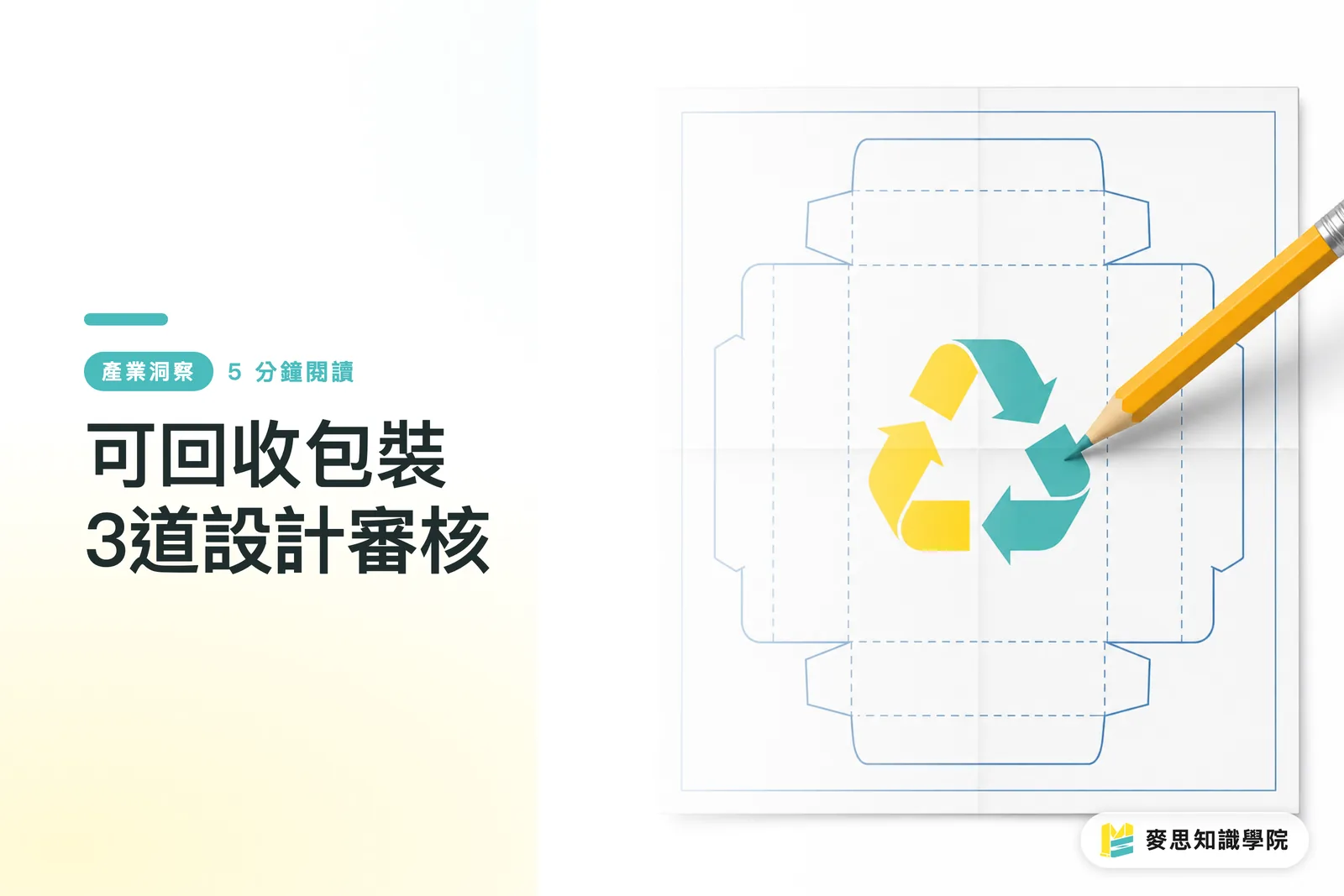
Why does recyclable packaging have to start at the design stage?
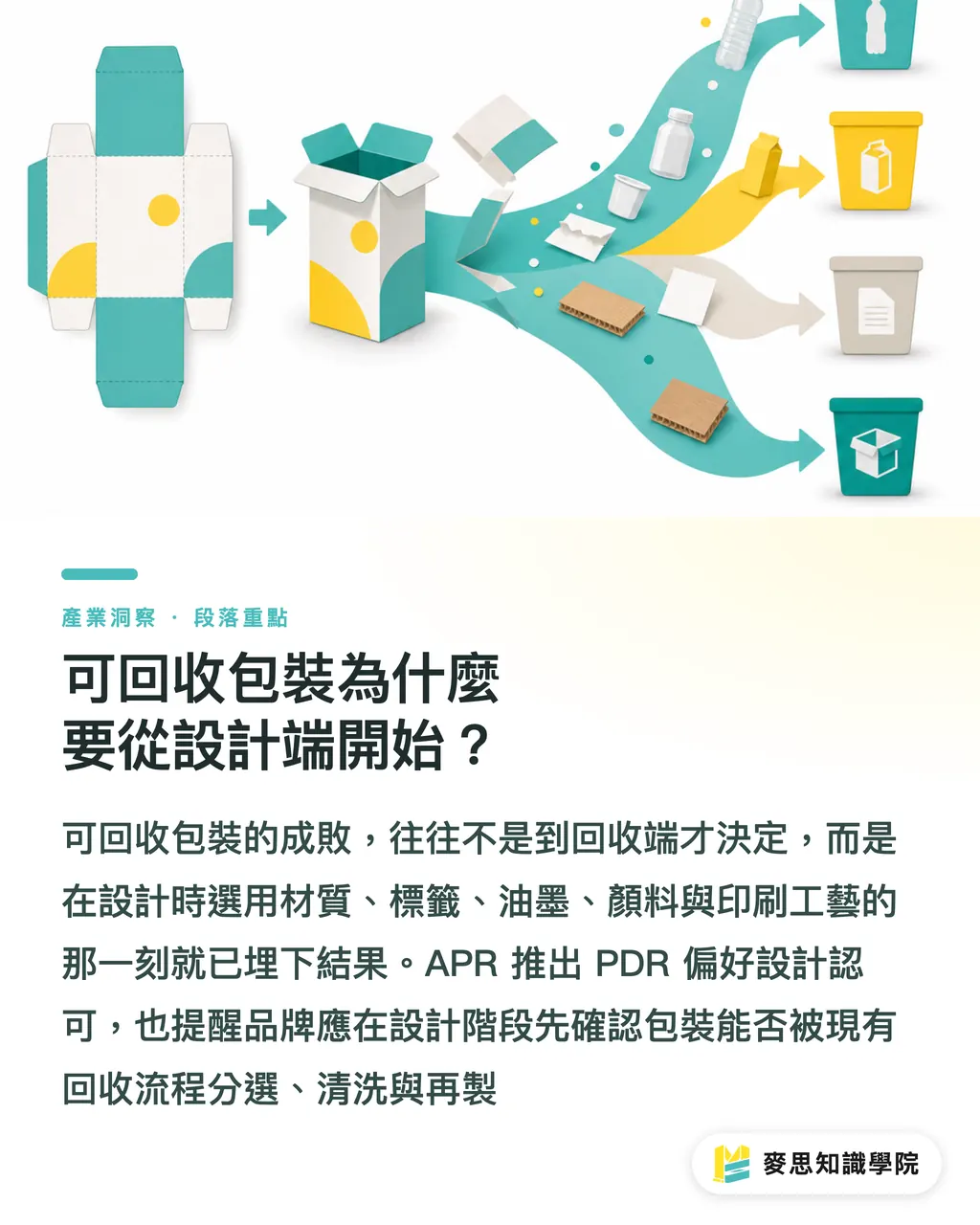
Recyclable packaging has to start at the design stage because most of the trouble recyclers run into is already baked in the moment material, ink, colorant, and printing process get picked
Recyclable packaging means the material, labels, ink, and structure can actually be sorted, washed, and reprocessed inside the recycling streams that exist today
APR (Association of Plastic Recyclers) rolled out Preferred Design Recognition (PDR), and the signal is pretty clear: packaging recyclability can't be rescued at the manufacturing end alone; materials, ink, colorant, and printing process need to be reviewed at design, Recyclable packaging has to start at the design stage
What are the 3 checkpoints brands should review?
Brands should review the material checkpoint, the processing checkpoint, and the claims checkpoint first; these three come earlier and cheaper than "slapping a recycling logo on at the end"
・① Material checkpoint: ask upfront where the main material, labels, adhesives, and inner liners will end up in the recycling stream; don't let paper, plastic, and composites get mixed up in the design file
・② Processing checkpoint: large-area lamination, foil stamping, special colorants, and full-coverage dark inks all need to be evaluated before going to print for their impact on sorting, washing, or reprocessing
・③ Claims checkpoint: when packaging says recyclable, eco-friendly, or less plastic, the brand has to be able to back it up with design rationale and supplier specs; ESG language can't lean on copywriting alone
I've seen plenty of brand projects where the problem wasn't that the designer didn't get sustainability; it was that the brief never spelled out the recyclability conditions. By the time the die-cut is locked and the material is ordered, all that's left to change is surface decoration
Which look-good finishes are most likely to break recycling?
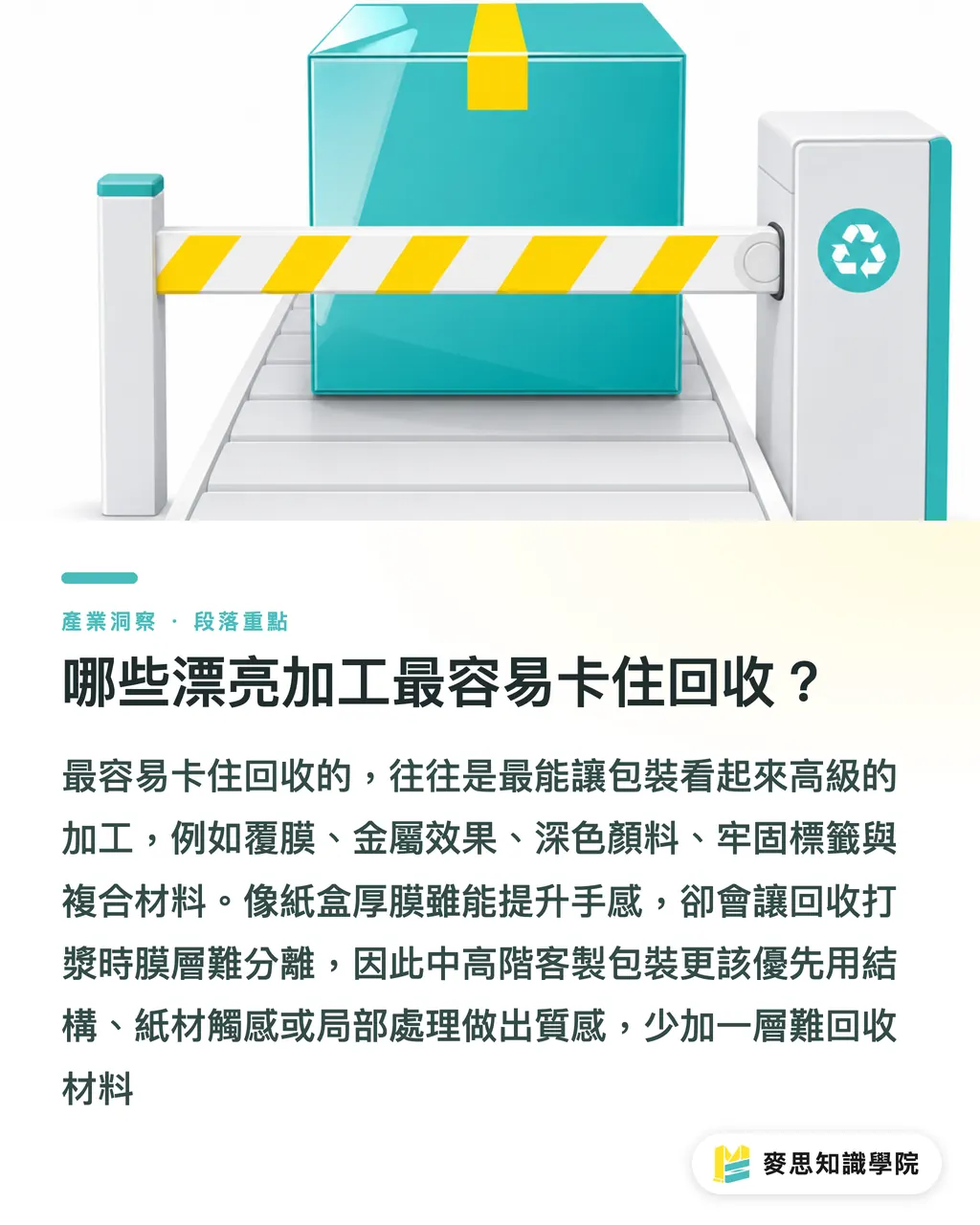
What tends to break recycling the most is usually the finishing that looks like the biggest upgrade: lamination, metallic effects, dark colorants, labels that bond too tight, and composite materials
If a paper box gets a thick laminate for that hand-feel, the fibers have to be repulped at recycling; the harder the film is to separate, the less the back end wants it. If a plastic package leans on special colorants for a premium look, sorting equipment may not read it at all, and no matter how good it looks on the shelf it may not enter the right recycling stream
Brands want a feel consumers can read; it doesn't have to come from the heaviest finishing. When MINDS looks at mid-to-high-end custom packaging, I ask first: can this effect be done with structure, paper stock feel, or spot treatment, and skip one hard-to-recycle layer
When should the compliance timeline go in?
The compliance timeline goes into week one of the packaging brief, split into at least three checkpoints: pre-sample, pre-tooling, and pre-launch
・Pre-sample: confirm target market, recycling stream, main material, and printing limits; specs like the APR Design Guide for Plastics Recyclability can serve as early-stage review language for plastic packaging
・Pre-tooling: confirm die-cut, label area, adhesive placement, and how the package comes apart; if this step is wrong, re-tooling and re-sampling tend to follow
・Pre-launch: confirm recyclability claims, material labeling, and supplier documents on the packaging; the brand side has to be ready to answer consumers and channel buyers
The worst thing ESG can do is overpromise. If the package only looks sustainable on the surface, channel buyers and consumers will eventually ask for proof
How can Taiwan's small and mid printers take on this kind of work?
If Taiwan's small and mid printers want to handle recyclable packaging well, they should shift from "taking files and printing" upstream into "design review"
A printer doesn't have to brand itself as a sustainability consultant, but before quoting it can hand over three extra things: material recommendations, processing risks, and recyclability-claim flags. These three documents show the brand where the money goes and save the designer from going in circles
When the design side, procurement side, and printing side need a shared language, the Mai Strategy Knowledge Academy consulting team can break a packaging project into four checkpoints: brief, design file, print specs, and launch copy. It's nothing flashy, but it's a solid way for Taiwan brands to make sustainable packaging real

Key Takeaways
・Recyclable packaging: design brief first, finished look second
・The recycling logo is just the entry point; material, ink, colorant, and finishing are what really get reviewed
・Brand ESG claims need evidence; packaging copy can't carry the whole show
・The earlier a printer joins design review, the more it saves the brand in re-sampling and rework
Further Thinking
Print manufacturers can turn material and processing risks into a pre-quote checklist; designers can write the recycling stream into the brief; AI adoption can start with print-spec checking, not just generating visuals. For SaaS teams serving the packaging industry, the most valuable feature isn't a pretty dashboard; it's getting brand, designer, and printer to confirm material, finishing, labeling, and evidence on one shared spec
Further Reading
FAQ
- Where should recyclable packaging start?
- Recyclable packaging starts at the design brief: lock down material, ink, colorant, and printing process before moving to sampling and quoting
- Why can't brands wait until after sampling to talk recyclability?
- After sampling the die-cut, material, and finishing are usually locked, with very little room left to change; the later a brand brings up recyclability, the more it racks up in re-sampling, rework, and compliance back-and-forth
- What is APR's Preferred Design Recognition?
- Preferred Design Recognition is APR's process for confirming that a package or component meets recyclability-by-design requirements and is compatible with North American recycling systems
- Which recyclability traps should designers avoid most?
- Designers need to watch out for lamination, metallic effects, dark colorants, hard-to-separate labels, and composite materials; these choices tend to make packaging difficult to handle at the recycling end
- How can Taiwan's small and mid printers break into sustainable packaging?
- Taiwan's small and mid printers can start with a pre-quote checklist, proactively offering material recommendations, processing risks, and recyclability-claim flags, so brands can land sustainability requirements in specs that are printable, verifiable, and explainable
Related articles



The Print × AI weekly
The print and AI know-how designers, brands and enterprises can use before they commit — one email, every week
MINDS Free Tools
AI background removal, a LINE sticker maker, spine & imposition calculators — all free, right in your browser, no upload.
MINDS Group
Need actual printing or gifting services?
From premium printing to online ordering and festive gifts — the MINDS Group sister brands take it from here.