
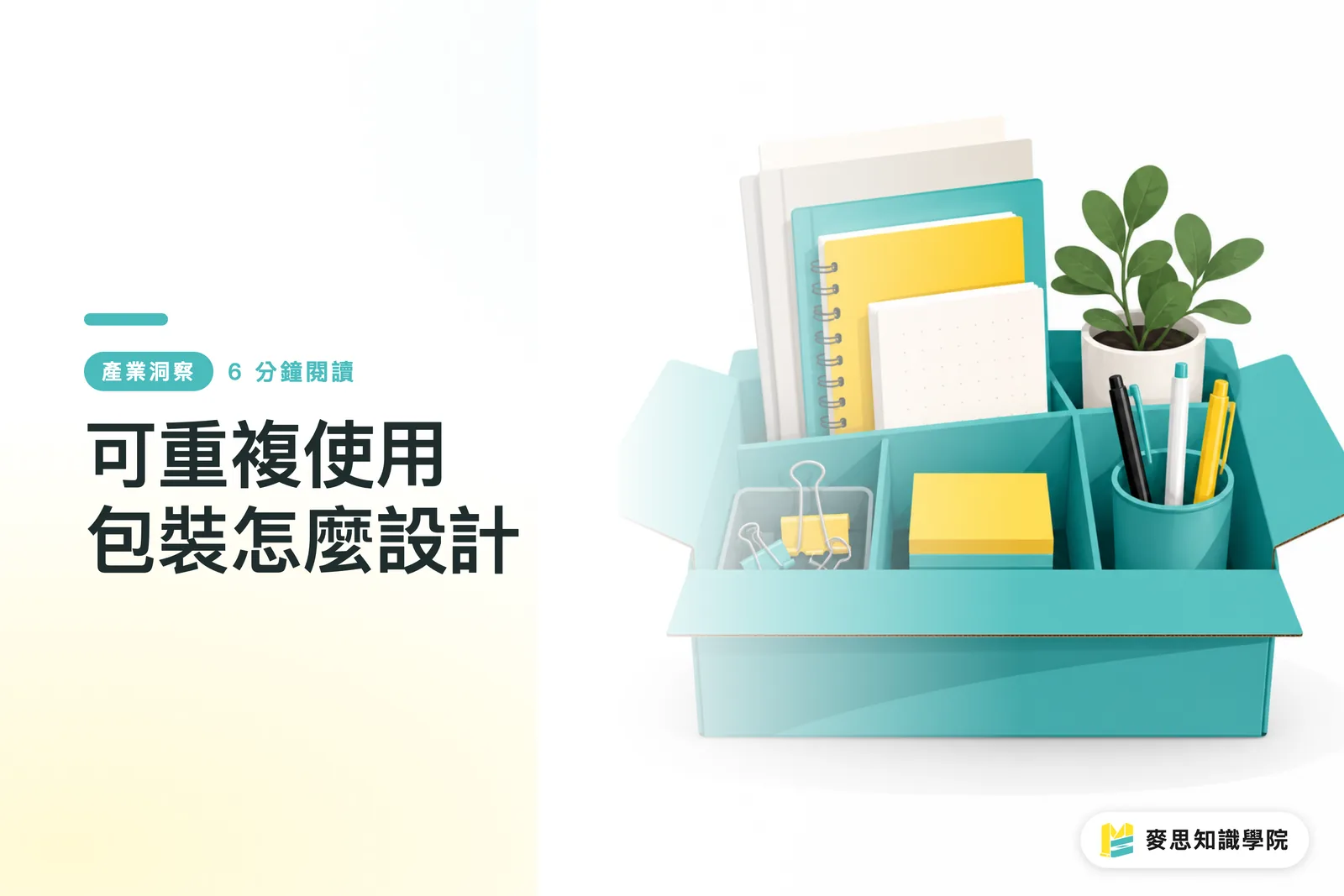
What should reusable packaging consider first?
Reusable packaging should start with a reason for the second use, then move on to paper stock, structure, printing, and finishing. In production discussions, I often use three prepress checkpoints for this type of project: 1. will consumers keep it, 2. can the structure hold up, and 3. can the brand value and cost be recovered?
Reusable packaging means that after the product is sold, the outer box, carrier box, tin, rigid box, or storage structure can still be used by consumers for keeping, refilling, carrying, or display. The design priority is to make sure the package still has a clear purpose, enough strength, and a reasonable way to clean it after the first opening
I have seen many projects that began with a sustainability goal, only to end up replacing 350gsm cardstock with thicker grey board, adding magnets, and then adding foil stamping. The box looked beautiful, but consumers had no real reason to keep it, while warehousing and shipping weight increased first
When designing reusable packaging, at least 5 things should be confirmed during the sketching stage
・Unboxing method: the first opening must not damage the main structure. Closures, tear lines, and stickers all need to avoid the areas needed for second use
・Storage convenience: if the empty box cannot be flattened, stacked, or placed in a drawer, it will quickly be eliminated from home use
・Brand visibility: the logo cannot be so large that the package feels like an advertising prop. Only when people keep using it does the brand gain later exposure
・Stain tolerance: food, skincare, and household products often involve oil, water, or powder, so the surface treatment must withstand everyday wiping
・Refill compatibility: without future refills, replacement cores, or bundled sets, second use can easily remain nothing more than a slogan
Here is a very direct on-site test: if you remove the product from the empty box and cannot name a second use within 3 seconds, the package is probably just more expensive disposable packaging
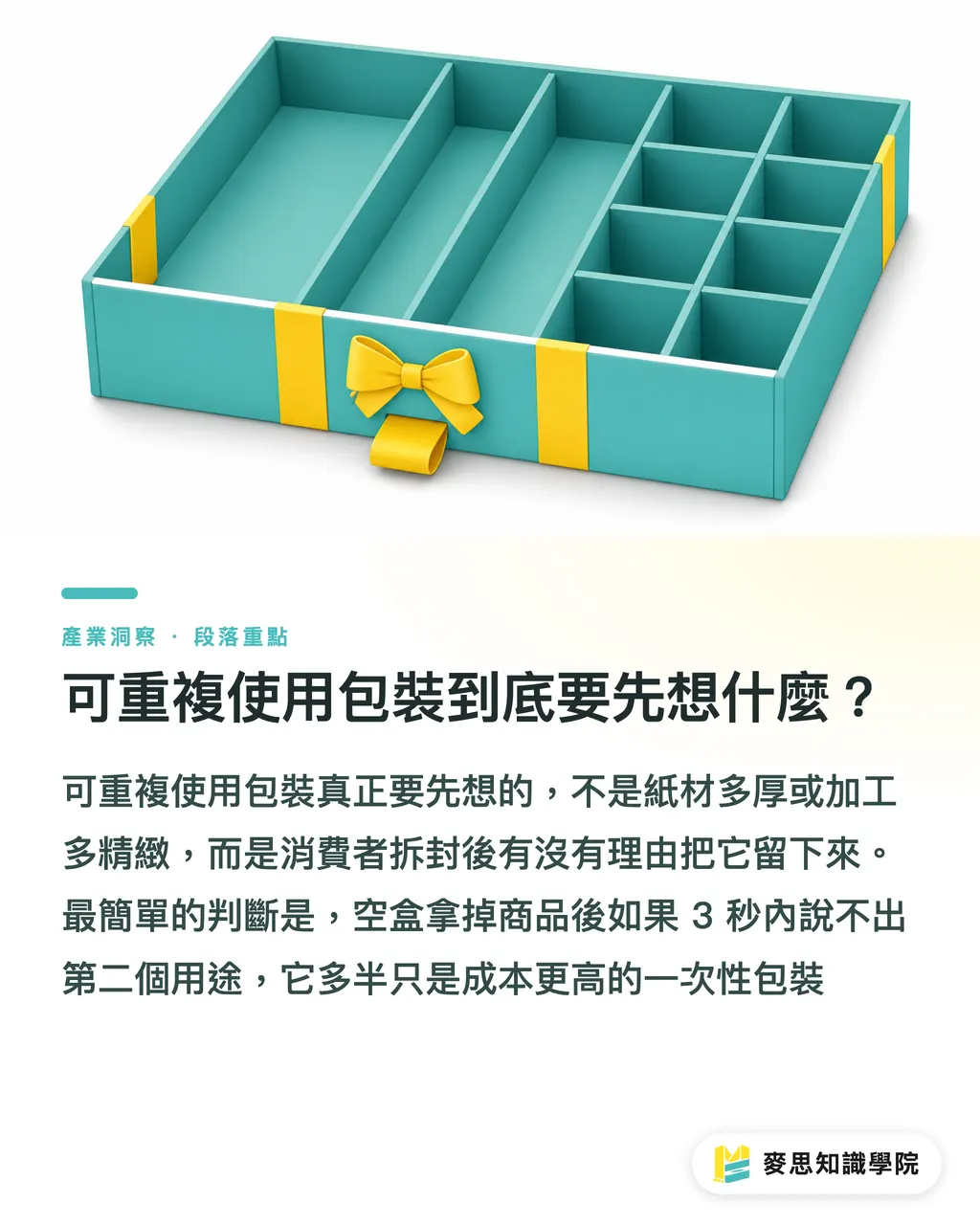
Which products are suitable for second-use packaging?
Products suitable for second-use packaging usually share 3 traits: they are not low-priced, they have a relatively long usage cycle, and consumers are willing to keep the brand on a desk or inside a cabinet
Gift boxes, fragrance products, tea, coffee, skincare products, stationery, 3C accessories, and member kits are all better suited to reusable packaging. The reason is practical: these products are already commonly stored, displayed, refilled, or used in batches, so the outer box has a natural place in everyday life
・Tea gift boxes: after the insert is removed, the outer box can become storage for tea bags or drip coffee packs
・Skincare sets: drawer boxes or flip-top boxes can hold refill packs, so the brand does not need to remake a full gift box every time a customer repurchases bottles
・Stationery sets: if the inner compartments match the sizes of pens, stickers, and cards, consumers will naturally keep the box
・3C accessories: cables, adapters, and warranty cards all need storage, so the internal structure can shift from product display to category sorting
The unsuitable situations should also be stated clearly. For low-priced, fast-consumption products, or items that easily pick up oil, water, or lingering odors after use, forcing second-use packaging often raises both environmental cost and manufacturing cost
For example, if disposable takeaway food is changed into a thick paper box with a handle, it may look premium, but oil stains, sauces, and odors will make consumers unwilling to keep it. For this kind of project, instead of making a thicker box, it is usually better to simplify the material, reduce lamination and mixed materials, and make the recycling path cleaner
How should unboxing, storage, and stain tolerance be designed?
The structure of reusable packaging should be designed backward from after opening, because consumers usually decide whether to keep a box within 10 seconds after unboxing
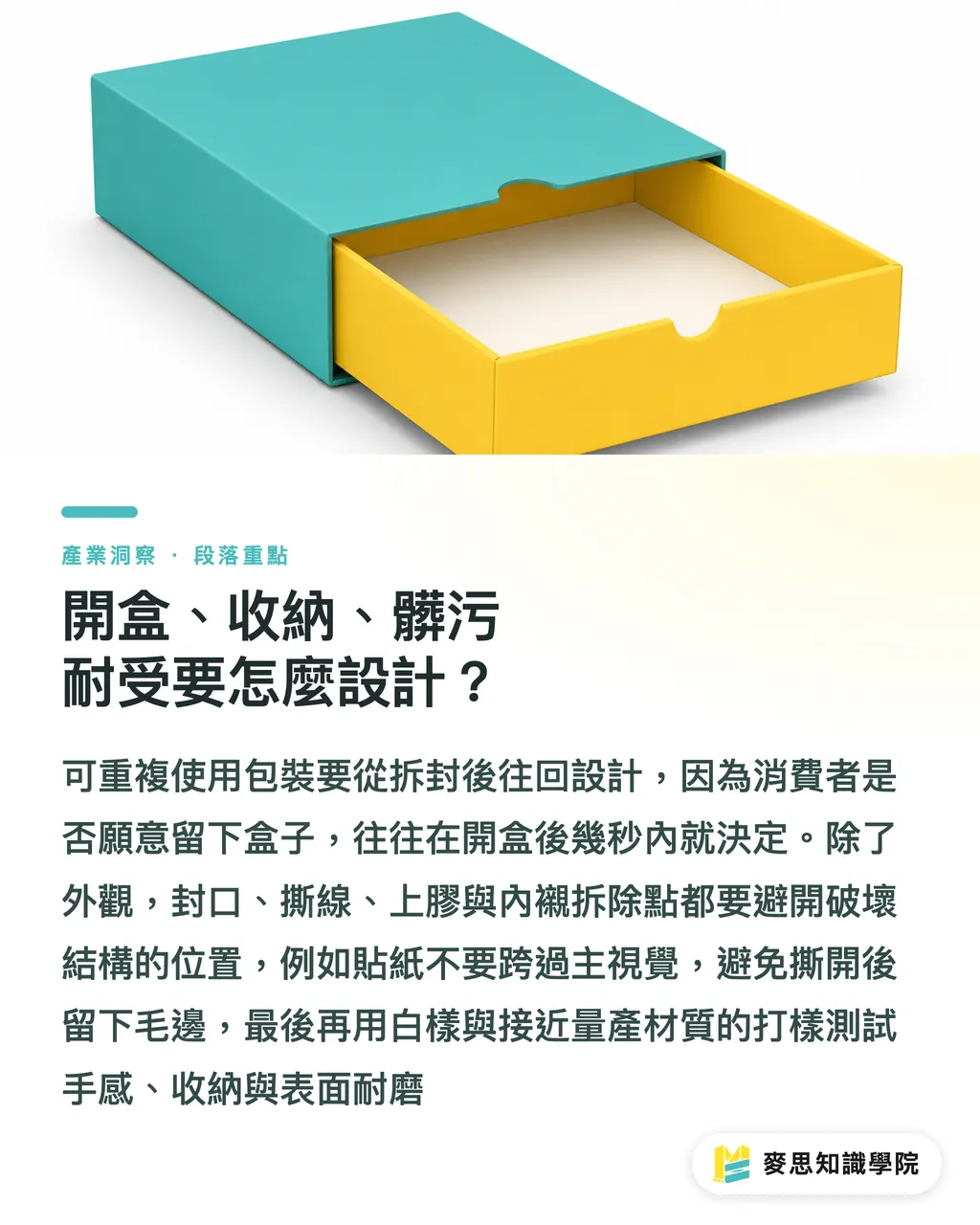
Start the unboxing design by checking the damage points. If a sticker seal crosses the main visual area, tearing it open will leave rough edges. If a tear line runs through the lid, the box will not close tightly the second time. If the glue position conflicts with where the insert is removed, consumers may tear out the bottom while taking out the insert
・Flip-top box: suitable for gift boxes and skincare products. The advantage is an intact opening experience; the risk is that magnets and wrapped cloth increase cost
・Drawer box: suitable for small items, tea bags, and stationery. The advantage is a clear storage feel; the risk is that sliding tolerance must be well controlled
・Lid-and-base box: suitable for premium gift boxes. The advantage is strong display value; the risk is that the empty box volume is not easy to compress
・Tuck-end box: suitable for mid- to low-priced products. The advantage is controllable cost; the risk is that the tuck flap can fatigue after repeated opening and closing
Storage convenience depends on dimensions, not just appearance. A4 documents, business cards, drip coffee packs, fragrance bottles, and charging cables all have common sizes. If the inner compartments only serve the first display, the box may become inconvenient once consumers take it home
Stain tolerance is tied to material and surface treatment. Matte film, gloss film, spot varnish, ink abrasion resistance, and paper absorbency all affect whether people want to keep the package. But the more finishing processes are added, the more recycling and cost need to be rechecked, especially with mixed materials such as paper-plastic composites, magnets, ribbons, and metal fasteners, which make downstream disassembly more troublesome
If a project enters MINDS' custom commercial printing workflow, I would recommend at least 1 structural white dummy test, followed by 1 prototype using materials close to mass production. First check the unboxing feel, sliding resistance, insert removal, and surface scratches. Do not wait until formal printing to discover that the box looks good but is not worth keeping
When does reusable packaging become wasteful instead?
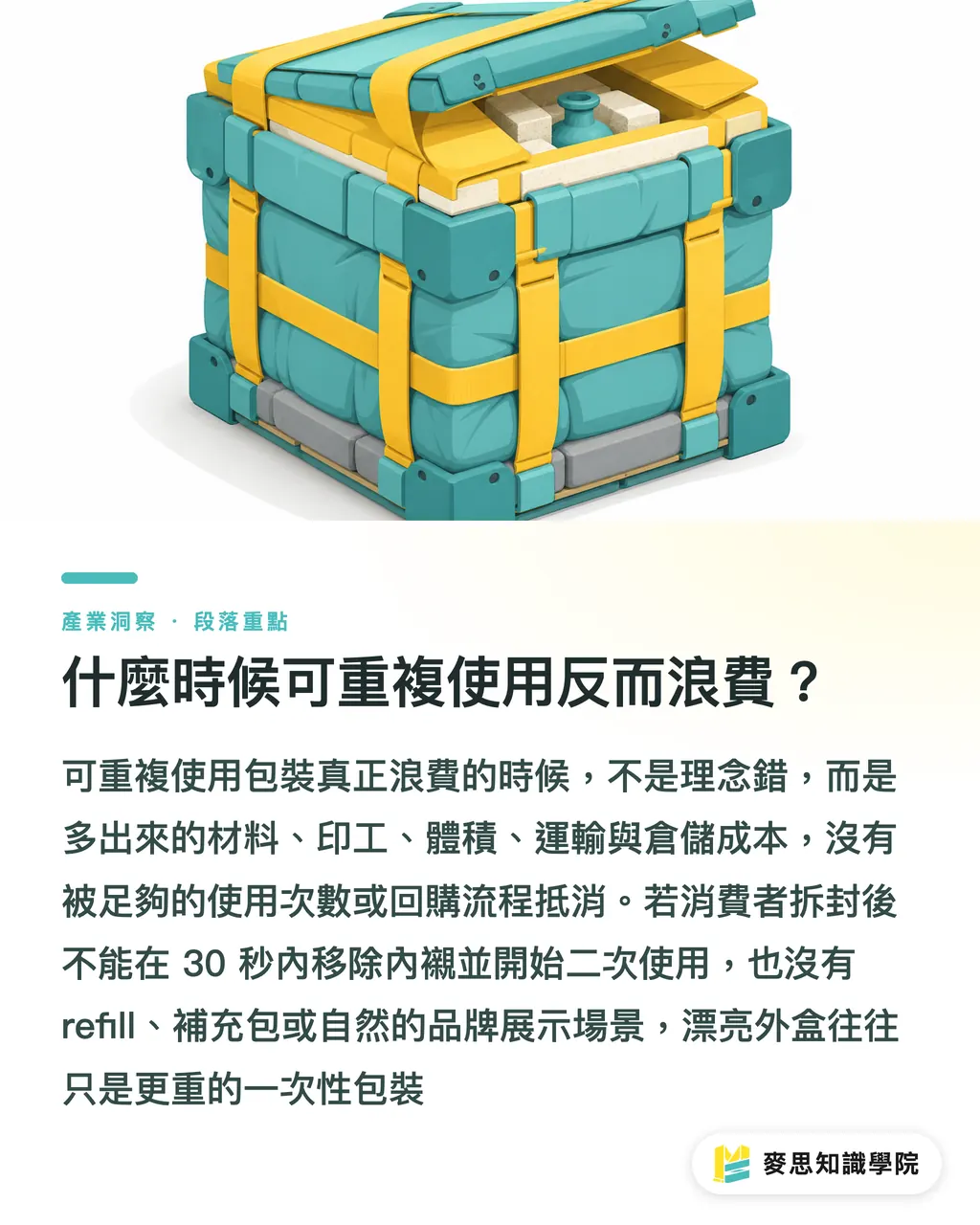
Reusable packaging becomes wasteful not because the idea is wrong, but because the number of uses cannot justify the added material, printing work, transportation, and warehousing
If a box adds thicker paperboard, magnets, wrapped cloth, inserts, and carrying cords just so it can be kept, several cost points will increase on the manufacturing side: more material, more handwork, larger volume, lower carton count, and more air shipped. If these costs do not lead to repurchase, refill packs, member retention, or brand display, the result is simply heavier disposable packaging
When presenting a proposal, I ask clients to answer 7 questions first. The more specific the answers, the more worthwhile it is to invest in second-use design
・After consumers receive the package, what will they use it to hold the second time?
・Does the product itself have a refill, replacement core, refill pack, or repurchase cycle?
・After the outer box is empty, can the insert be removed and the box start being used within 30 seconds?
・Does the brand exposure feel natural on a desk, or does it feel like putting a billboard inside the home?
・If the package gets dirty, can it be wiped clean? If it gets wet, will it warp, delaminate, or stain?
・During returns or exchanges, can the outer box withstand at least 1 return shipment or in-store inspection?
・If consumers do not keep it, can this package still follow a relatively simple recycling path?
Return and exchange workflows are often overlooked. If e-commerce packaging claims to be reusable, the seal sticker, shipping label, cushioning material, and outer carton all need to be considered together. If only the inner box is made beautiful, while the outer tape and logistics labels cannot be removed cleanly, consumers will find it hard to treat the package as something worth keeping
When the Mai Strategy Knowledge Academy consulting team reviews this type of proposal, we usually break the design into 3 visuals: the first display, the post-opening use case, and the return, exchange, or refill-pack workflow. If these 3 visuals cannot be explained clearly, even a polished quotation will struggle to convince purchasing teams and business owners
Key Takeaways
・For reusable packaging, ask about purpose before material. Without a second-use scenario, thick paperboard is just more expensive waste
・The unboxing method is the first test. If the first opening damages the main structure, second use has already failed
・Packaging that people keep is usually connected to storage, refill packs, display, or a repurchase cycle
・Sustainable design cannot look at a single box alone. Materials, finishing, transportation, returns, and exchanges all need to be calculated together
・Good second-use packaging needs the right amount of brand visibility. If it looks too much like an advertising item, people are less likely to keep it
Further Reflection
For print manufacturing, reusable packaging requires early involvement in structure and prototyping. It cannot wait until the design is finalized before fixing the die line. For designers, the proposal visuals should include at least one page showing how the package is used after opening. For digital quality inspection and SaaS teams, the greatest value is not generating a prettier box shape, but turning material, size, logistics, refill packs, and repurchase workflows into checkable design questions. Before the next proposal, use these 7 practical questions to help the client filter out packaging that is not worth making thicker, and keep the solutions that people will genuinely save
FAQ
- Does reusable packaging have to use very thick paper stock?
- No. Reusable packaging first needs a second-use scenario, then thickness, structure, and finishing can be decided. If consumers will not keep it, thick paper stock only increases material, warehousing, and transportation costs
- Which products are best suited to reusable packaging?
- Gift boxes, fragrance products, tea, coffee, skincare products, stationery, and 3C accessories are more suitable, because these products often involve storage, display, refill packs, or repurchase needs, making it more natural for consumers to keep the outer box
- What is most easily overlooked when designing reusable packaging?
- The most easily overlooked issues are unboxing damage points and how the insert is removed. If stickers, tear lines, glue, and inserts are not positioned correctly, consumers may damage the box the first time they open it
- Is reusable packaging really more eco-friendly?
- Not necessarily. If the package adds a lot of material and finishing but does not have enough usage frequency, a refill-pack workflow, or a repurchase design, both its environmental and commercial value may be lower than simple recyclable packaging
- What questions should be asked before making a proposal?
- At minimum, confirm the second use, refill-pack plan, insert removal time, level of brand exposure, stain tolerance, return and exchange workflow, and recycling path. These 7 questions quickly reveal whether the solution is usable design or just a high-cost outer box
Related articles
The Print × AI weekly
The print and AI know-how designers, brands and enterprises can use before they commit — one email, every week
MINDS Free Tools
AI background removal, a LINE sticker maker, spine & imposition calculators — all free, right in your browser, no upload.
MINDS Group
Need actual printing or gifting services?
From premium printing to online ordering and festive gifts — the MINDS Group sister brands take it from here.