
Overview
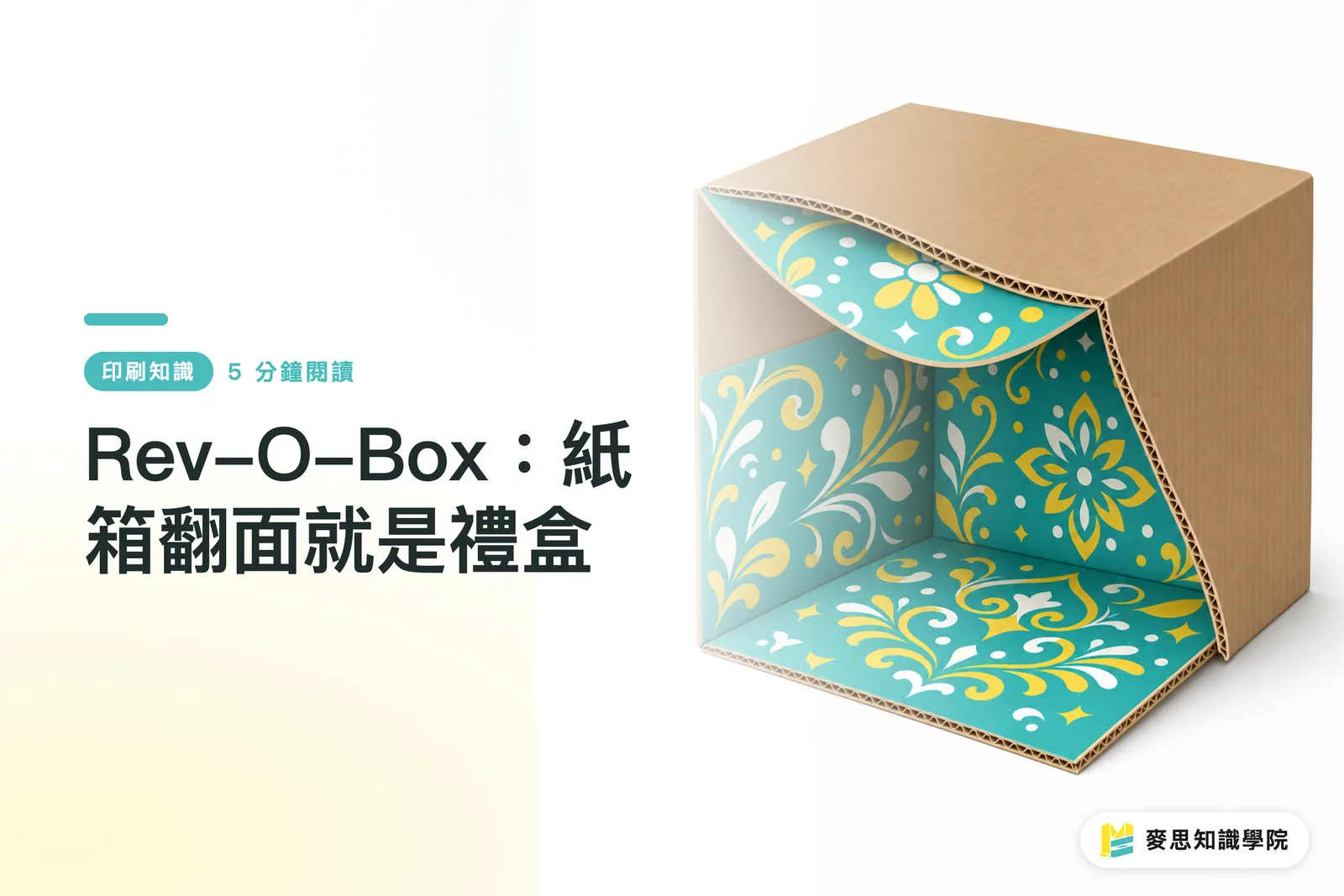
The point of Rev-O-Box is that 1 carton plays 2 roles. During shipping, it is a protective outer box. After it is flipped, it becomes a premium gift box. When MINDS Printing reviews this kind of project, it first runs the "MINDS Printing (MS, mid-to-high-end fully custom commercial printing) three print-submission checks" to see whether the structure, print surfaces, and packing workflow can all work at the same time
What Exactly Does Rev-O-Box Flip?
When I saw Packaging Insights' report on Rev-O-Box, the first thing I looked at was the dieline, not the appearance
Reversible carton: the same corrugated box uses crease lines, inside-and-outside printing, and fastening components so it works as an outer carton during transport, then becomes a gift box after being flipped, reducing secondary packaging
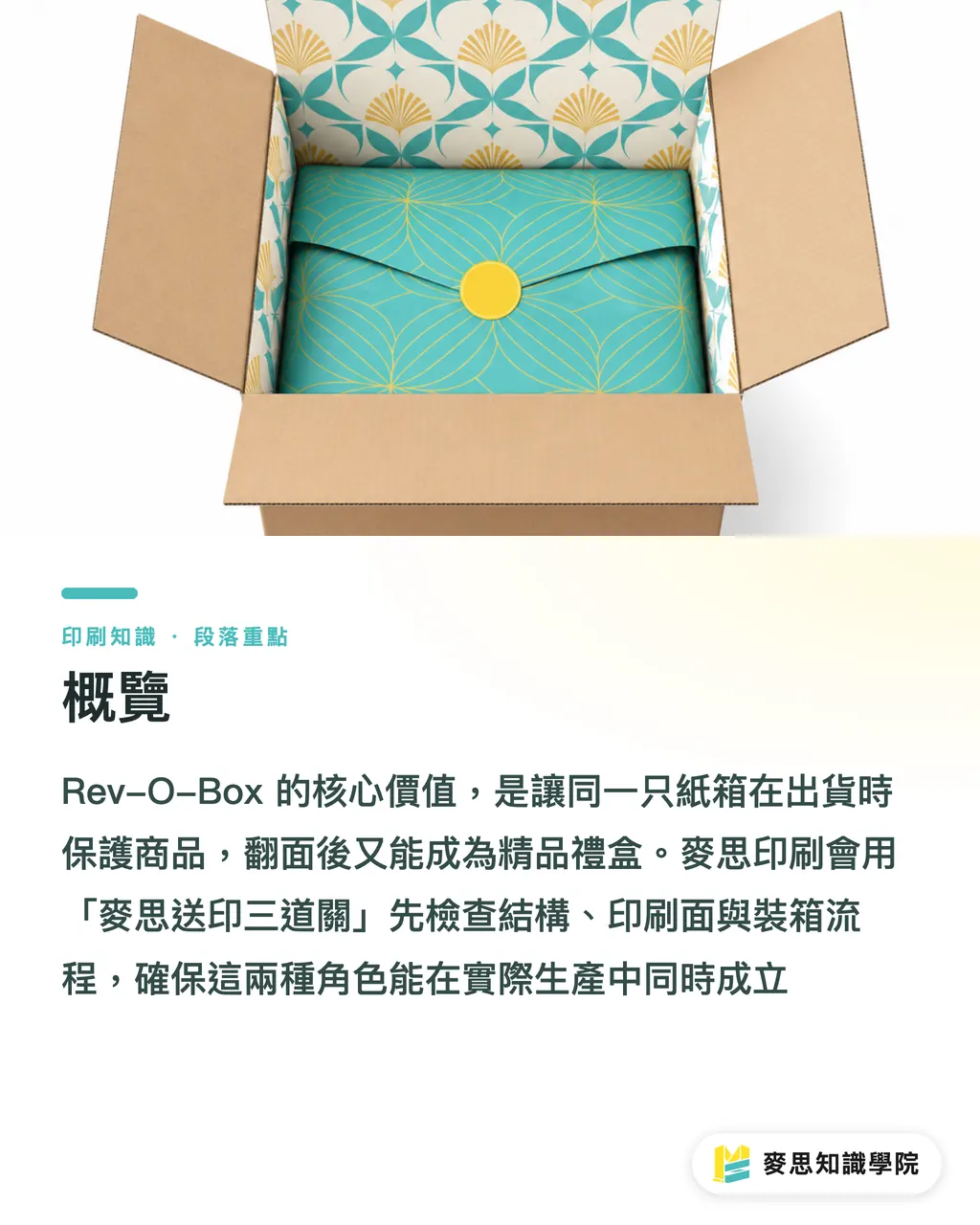
Rev-O-Box's approach is straightforward: after the shipping carton arrives, it can be flipped inside out. The decorative surface originally hidden on the inside becomes the outside of the gift box, while the insert is arranged to position products such as shirts or bottles
What makes this type of design so attractive is that it combines 2 things brands often buy separately into one physical object: the compression strength and cushioning needed for logistics, plus the visual finish and sense of occasion needed for gifting
Why Does This Box Style Hit a Procurement Pain Point for Brands?
Brand procurement teams hate when one more box style means one more SKU. The business value of Rev-O-Box is that brands can buy 1 fewer gift-box set, hold 1 less batch of inventory, and let the same item serve both shipping and retail display
In Taiwan's project market, premium gift boxes often get stuck in 3 places:
・Rigid boxes look good, but they take up warehouse space, and small test runs hurt
・Regular outer cartons are cheap, but they do not feel giftable when they reach the consumer
・Outer carton plus gift box plus carrier bag means more procurement, more material prep, and more packing labor
The lesson Rev-O-Box gives print shops is direct: brands do not necessarily lack special inks or foil stamping. What they lack is a packaging answer that cuts one procurement step, one assembly stage, and one storage slot
How Can Print Shops Turn Structure into a Sellable Service?
postpress: finishing work after printing, including die-cutting, creasing, folding and gluing, lamination, and assembly. It determines whether paper can move from a flat sheet into a box style ready for mass production
no-new-mold: in procurement language, this usually means using an existing box style or dieline library, then adjusting the size, print surfaces, and insert configuration to avoid the cost of a dedicated rigid-box mold at the start
I would suggest print shops sell Rev-O-Box-style projects as a postpress service, not just quote a unit price per carton, because the margin usually sits in structural judgment, insert fitting, and packing rhythm
The "MINDS Printing (MS) Three Print-Submission Checks" can be used like this:
・1. Structure check: first confirm the crease lines, tuck tabs, and corner stress after flipping. Make at least 1 blank mockup and fold it by hand
・2. Print check: both the outside and inside will become visible surfaces, so dirt, scuffing, and crease positions need to be marked clearly before final artwork
・3. Process check: whether warehouse staff can understand the packing direction within 30 seconds is more practical than how good the design looks on a layout
If the brand already has product dimensions, weight, and a shipping workflow, a mid-to-high-end fully custom print shop like MINDS Printing should make a blank mockup and run a small creasing test before discussing full-bleed printing and surface finishing
How Should Small and Midsize Print Shops in Taiwan Test Their First Order?
Small and midsize print shops in Taiwan do not need to chase a fully patented-style structure from the start. Break "standard outer carton becomes gift box" into 3 order-ready modules first. That is easier to sell
・Standard box-style library: start by choosing 2 to 3 common sizes for skincare, food gift boxes, apparel, and accessories
・Insert module: use paper inserts, corrugated inserts, or cardstock positioning to solve product movement and unboxing presentation first
・Double-sided visuals: keep a logistics information area on the outside, then put gift-box graphics, brand storytelling, or seasonal visuals on the inside
Do not rush
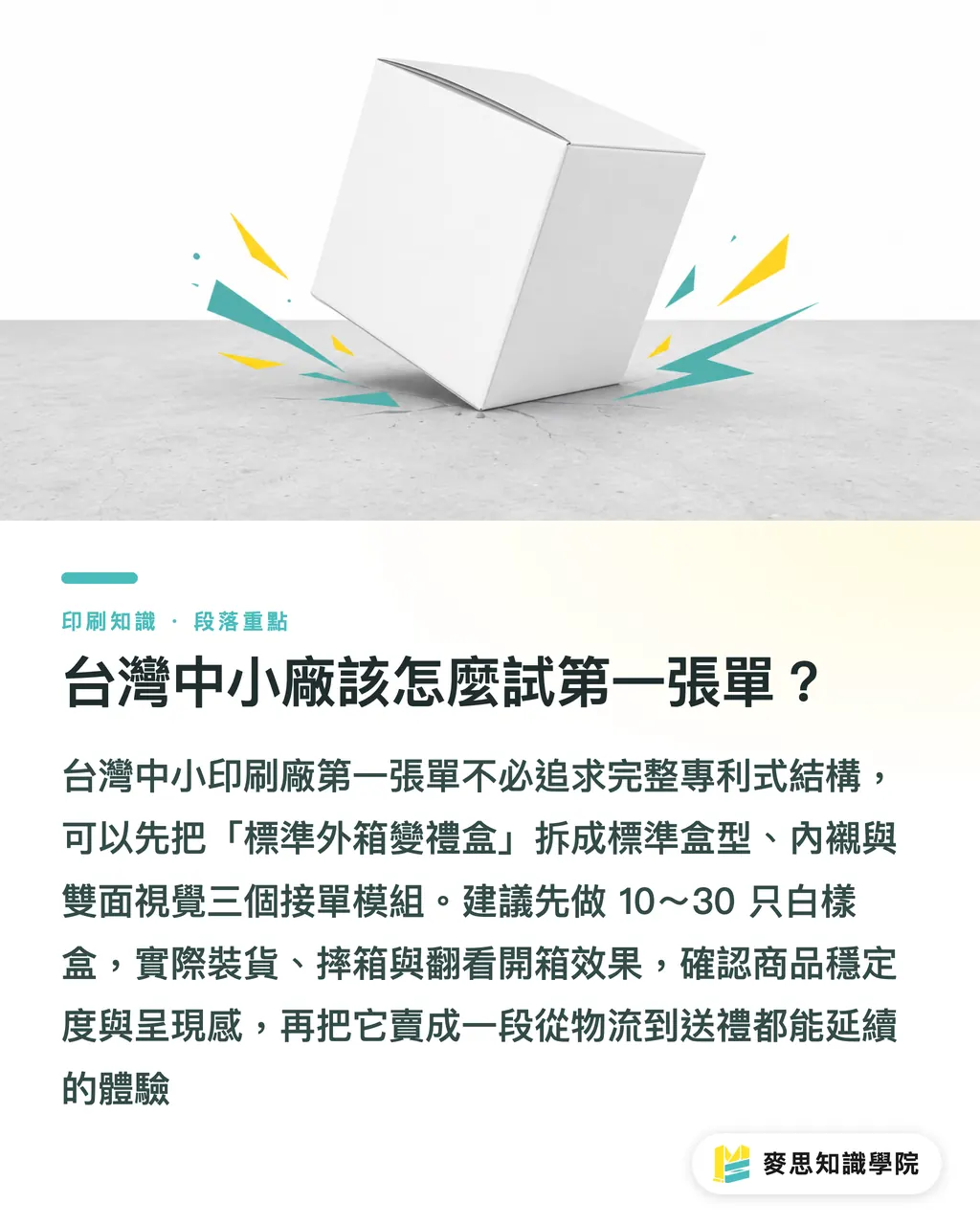
I usually do not recommend running 1,000 color samples for the first order. Start with 10-30 blank mockups. Take them to the warehouse and actually pack them, drop them, and flip them. Many problems will make themselves heard in your hands
For brand clients, a Rev-O-Box-style structure is not a cost-saving slogan. It changes "thrown away right after delivery" into "can still be gifted or displayed after receipt." That experience is exactly what eco-friendly materials struggle to achieve on their own
Key Takeaways
・1 carton can handle both shipping and gifting. When procurement has 1 fewer SKU to manage, that is value you can price
・The challenge with a reversible carton is not covering it with graphics. It is whether the corners, crease lines, and inserts still hold up after the flip
・Print shops should price postpress as an advisory service. Structural judgment gives more room to negotiate than adding one more print color
・If a brand wants sustainable packaging, first ask whether the box has a second use after unboxing. That is closer to the consumer than only changing the paper stock
Further Thinking
On the print manufacturing side, teams can first build 2 to 3 blank mockups of reversible box styles. On the design side, the logistics surface and gift-box surface need to be managed separately. AI can first help organize data for dieline versions, item dimensions, and final-artwork checks. SaaS is better suited for turning box styles, materials, inserts, and quoting conditions into a searchable specification library. If a team needs to turn this workflow into procurement rules, the Mai Strategy Knowledge Academy consulting team can help organize structural testing, quote fields, and print-submission checklists into internal standards
Further Reading
FAQ
- What kind of packaging is Rev-O-Box?
- Rev-O-Box is a reversible carton. After the same shipping carton is delivered, it can be flipped inside out so the original decorated inner surface becomes the outside of a premium gift box
- Can a reversible carton really be made without a new mold?
- No-new-mold usually means using an existing box style or dieline library instead of making a dedicated rigid-box mold. The print shop still needs to check the crease lines, scoring, inserts, and actual packing workflow
- What benefits does Rev-O-Box give brand procurement?
- Rev-O-Box lets a brand buy 1 fewer gift-box set and manage 1 fewer inventory item. The same packaging can be used for shipping, gifting, and retail display
- Which customer types should Taiwan print shops start with?
- Print shops in Taiwan can start with skincare, wine and spirits, food gift boxes, apparel accessories, and corporate gifting clients. These categories all have gifting scenarios and often face cost pressure from buying outer cartons and gift boxes separately
- What should be done first for the first reversible carton order?
- For the first order, make 10-30 blank mockups first. Test flipping, packing, product positioning, and visible fold marks before moving into formal printing and surface finishing
Related articles
The Print × AI weekly
The print and AI know-how designers, brands and enterprises can use before they commit — one email, every week
MINDS Free Tools
Imposition calculator and preflight file check — free prepress tools, right in your browser.
MINDS Group
Need actual printing or gifting services?
From premium printing to online ordering and festive gifts — the MINDS Group sister brands take it from here.