

If pouch material is recyclable, does that mean consumers can recycle it?
No. Brands first need to confirm that the target market has collection, sorting, and reprocessing in place. Recyclability is a package's ability to become reusable material after passing through those local steps. The material name or package design alone cannot prove that a recycling route exists
That distinction affects both procurement and packaging copy. A brand may have a material spec in hand, but consumers still need to use the recycling options available where they live. If collection and processing arrangements are missing, the claim gets ahead of where the package actually goes. When I look at this kind of material proposal, I first ask where it ends up, then what material evidence the supplier can provide
The Flexible Packaging Association (FPA) says in its report on California flexible-film recycling pilots that California's Plastic Pollution Prevention and Packaging Producer Responsibility Act (SB 54) is scheduled to take full effect in 2027, and that legal challenges have been filed. Extended Producer Responsibility (EPR) is a system that makes producers responsible for managing packaging. Brands need to make the recycling side part of their procurement requirements

What can the California pilots prove so far?
The California pilots aim to generate operational data on commercial film collection and identify approaches that can be replicated and scaled. The Flexible Film Recycling Alliance (FFRA) launched two commercial recycling pilots in summer 2026 and described them as the first of their kind. FPA reports that the pilot data will inform the development of future recycling programs
Brands should ask what collection scenarios the pilots cover and whether the operating conditions can carry over to their own sales markets. That is different from testing a material and getting a result. The launch of a pilot alone does not prove that every pouch can be recycled successfully. FPA's report gives no recovery rates or production-scale figures, so the start of the program cannot yet be presented as proof of recycling performance
At procurement meetings, ask suppliers to explain the pilot's scope, what data it covers, and what still needs validation. Start with the destination. The answers help brands distinguish material feasibility, operational data from commercial collection, and evidence strong enough to support a production commitment
Can equipment investment show that a recycling system is mature?
No. Production growth and post-use recycling processes need to be verified separately. The source material says Masterpress invested in Karlville and expanded production of recyclable pouches, showing that investment is underway on the capacity side. But it gives no production-line scale, material structure, or recycling-side data
Research on bioplastic packaging also focuses on recycling and reuse challenges across different industries. That is a reminder that an alternative material is not automatically a recycling solution. Production equipment can make pouches, but brands still need to confirm who collects them after use, which processing route they enter, and whether the pilot conditions apply to the sales market
I would check supplier investment and recycling-side evidence in two separate columns, so a capacity announcement does not stand in for proof of the full recycling route. A sample pouch is not the finish line. If production plans and recycling pilots cover different packaging or markets, the procurement budget cannot support the brand's public sustainability claims
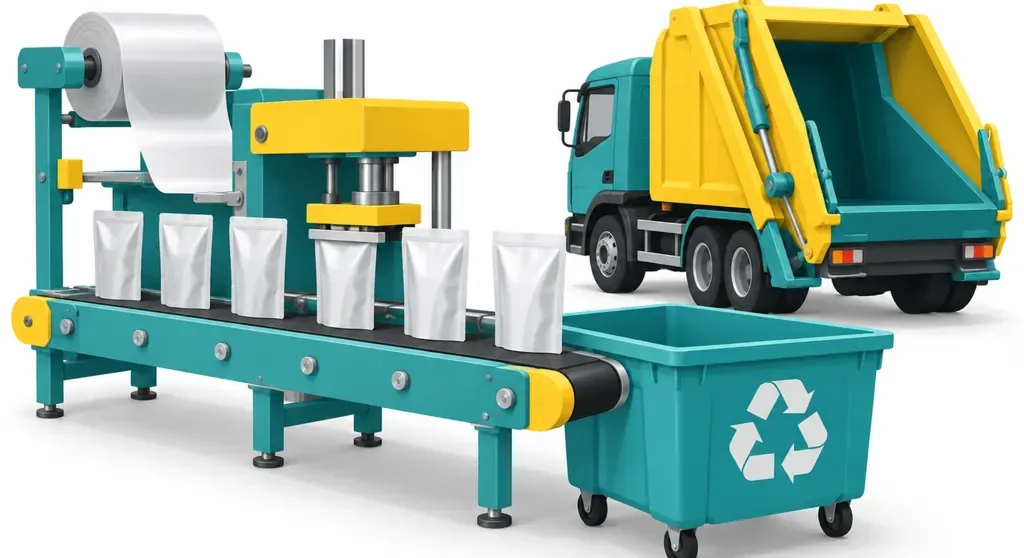
What three checks should brands clear before scaling up?
Before scaling up, brands should verify the recycling destination, whether pilot results can be replicated, and whether investment matches the recycling arrangements. If any check lacks evidence, leave the commitment marked as pending
・1) Recycling destination: Confirm that collection, sorting, and reprocessing are in place in the target market, and find out who takes over once the package is handed in
・2) Replicability of the pilots: Check the scope, operating conditions, and data from commercial collection pilots. Confirm whether they support the market where the brand plans to sell
・3) Investment fit: Ask suppliers to explain their pouch production plans, then compare them with the arrangements for processing used packaging. Do not treat production expansion as proof of recycling capacity
The goal is to make procurement specs verifiable, not to produce another sustainability deck. Brands can ask suppliers to spell out the target market, collection method, pilot conditions, and production plans. If recovery rates or scale figures are not available, mark them as pending confirmation. Do not let estimates turn into claimed results as they pass from one presentation to the next
What should brands tell consumers?
Brands should say only what the evidence supports so far. FPA describes the California program as a way to generate operational data on commercial film collection, but it does not provide recovery rates. Brands can say the collection approach is being tested. They cannot recast the pilot launch as proof that pouches are already widely recycled
Procurement, design, and compliance teams should share a materials-and-claims reference sheet and check the sales market, recycling method, and evidence source before the packaging layout is finalized. What consumers read should match the actual processing route. Brands reviewing packaging communications and commercial print materials can bring their procurement needs to MINDS. For help organizing material, recycling, and public-facing claims, contact the Mai Strategy Knowledge Academy consulting team

Key takeaways
・Material specs describe what a package is made of. Its recycling destination tells you where it can actually go
・The California pilots aim to generate collection data. Current reporting gives no recovery rates or production-scale figures
・Pouch production expansion signals investment on the supply side. It cannot replace verification of the recycling process
・Brand claims should match the sales market, pilot evidence, and actual processing method
Further thoughts
Print manufacturers can keep packaging specs and recycling destinations in the same proofing and procurement record. Design teams can check packaging claims before the layout is finalized. When AI and SaaS teams organize packaging data, they can add fields for source, applicable market, and validation status. If no recovery rate is available, mark it as not provided instead of automatically treating it as a pass. Brands' next step is to request the pilot scope, collection process, and production plans from suppliers, then review the packaging copy against the markets where it will be sold
Further reading
FAQ
- Have the California flexible-film recycling pilots published recovery rates?
- FPA's September 2026 report gives no recovery rates or production-scale figures. It says the pilots aim to generate operational data on commercial film collection
- Has California SB 54 taken full effect?
- FPA's report says SB 54 is scheduled to take full effect in 2027 and notes that legal challenges have been filed. That is a planned timeline, not confirmation that implementation is complete
- What should brands verify before scaling up recyclable pouches?
- Brands should confirm where packaging goes in each target market, whether pilot conditions can be replicated, and whether supplier investment is matched by recycling arrangements
- Does bioplastic packaging mean it is recyclable?
- No. Material choice is separate from the local collection, sorting, and reprocessing systems. Brands need to verify both
Related articles
The Print × AI weekly
The print and AI know-how designers, brands and enterprises can use before they commit — one email, every week
MINDS Free Tools
AI background removal, a LINE sticker maker, spine & imposition calculators — all free, right in your browser, no upload.
MINDS Group
Need actual printing or gifting services?
From premium printing to online ordering and festive gifts — the MINDS Group sister brands take it from here.