
What does the PE packaging study actually show?
Industry outlet Packaging Insights reports that a study by ExxonMobil and U.S. scientists found PE packaging can reduce environmental impacts over its life cycle
This is a clear reminder for brands: a material's name alone cannot determine its environmental performance. The assessment needs to cover the packaging's full life cycle. But the materials provided include no study figures, comparison baseline, or conditions of applicability, so they don't tell us how much impact is reduced, compared with which packaging material, or for which types of products
Don't rush to rewrite the headline as "PE is more sustainable than other materials." External communications should stay within the scope of the original study, and brands should ask suppliers for comparison data they can verify

How can life cycle assessment help procurement teams decide?
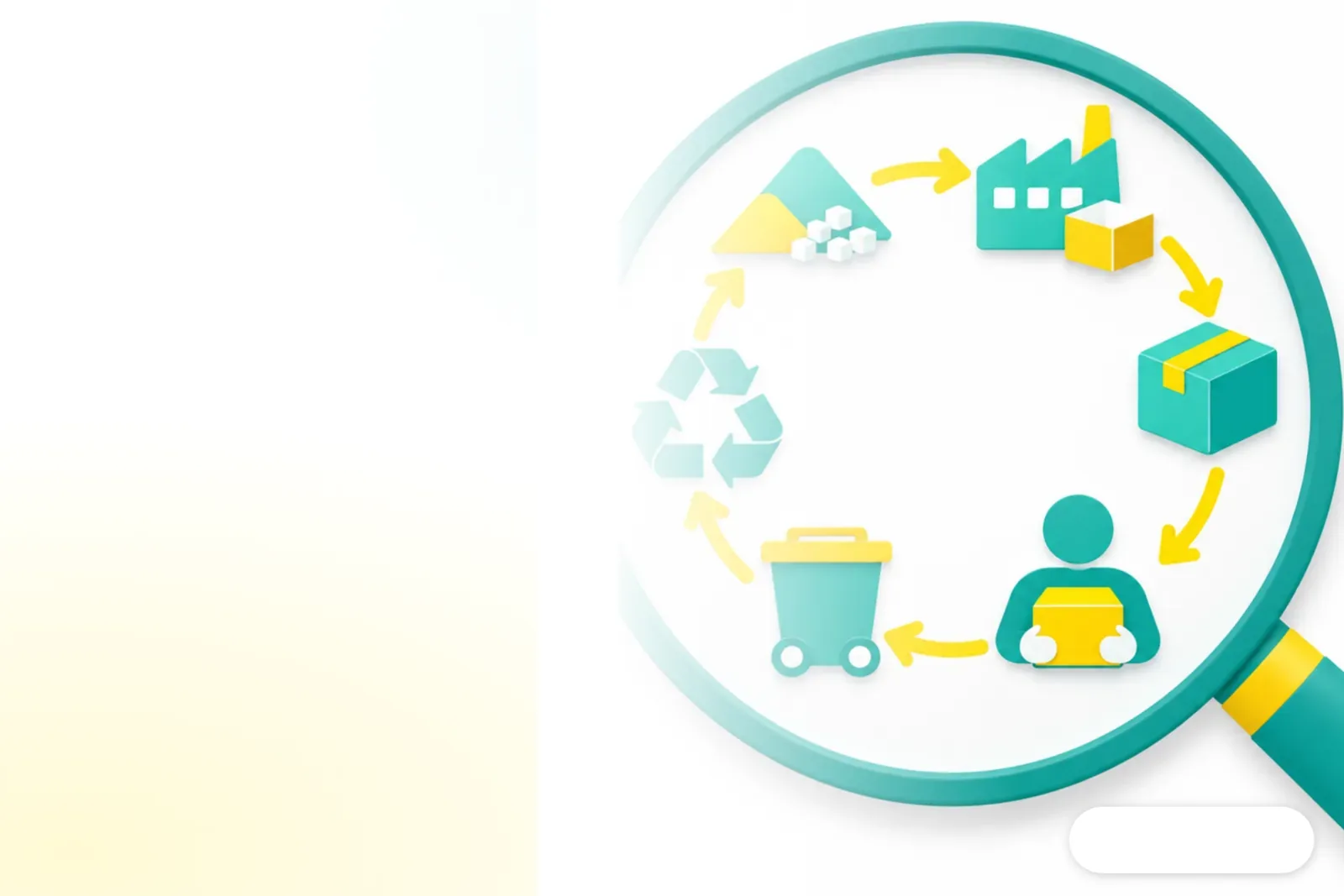
Life cycle assessment (LCA) examines environmental burdens across packaging's full journey, from raw materials through end-of-life treatment
Brands need to confirm that PE and the alternative material serve the same packaging function, and check the study boundaries and end-of-life pathways. If the packaging use, amount of material, or treatment conditions differ, the study results cannot be applied directly
In a procurement meeting, I would boil it down to three pieces of information:
・Function and material use: What product does the packaging protect, and how much material does it actually use?
・Comparison baseline: What is the alternative material, and what are the assessment scope and conditions of applicability?
・End-of-life options: After the packaging reaches the market, what practical recycling or treatment options are available?
How can brands use the study in procurement?
To bring the PE study into procurement, brands should first check the alternative material and use case, then ask suppliers for the comparison data they need, and finally confirm that the new packaging can meet actual printing, sealing, and filling requirements
・Document the current packaging's purpose, material use, and end-of-life treatment as the comparison baseline
・Ask suppliers to explain the study scope, comparison material, and conditions of applicability. Mark any missing information as pending
・Check print appearance, sealing, and filling requirements using actual packaging, and record any process conditions that need adjustment
Environmental comparison data should come from the materials supply chain. If a packaging redesign also affects catalogs, point-of-sale materials, and other commercial print pieces, brands can talk to MINDS about mid- to high-end fully customized commercial printing and coordinate updates across related print materials
Why look beyond carbon reduction to manufacturing and use?
Carbon reduction results don't automatically offset process waste or defective products. Brands also need to check packaging function, production-line compatibility, and end-of-life options
PE film containing recycled material may bring contaminants, gel defects, and heat-seal variability that affect printing, bag making, or filling. If a material change leads to downtime, scrapped products, or returns, procurement teams need to factor those real-world costs back into the assessment
That's why I include material specifications and production-line compatibility in the same procurement requirements. First confirm that the packaging can be used reliably, then check environmental-claim rules and customer requirements in the markets where it will be sold. This study gives no regulatory deadlines, so brands can't infer a compliance timeline from its headline

Key takeaways
・The study report says PE packaging can reduce environmental impacts over its life cycle, but the materials provided include no figures, comparison baseline, or conditions of applicability
・Align packaging function, material use, and assessment scope before comparing options
・Quality variation in PE containing recycled material also needs to be assessed for printing, sealing, and filling
・Keep external claims within the limits of what the evidence supports
Further thoughts
Printing manufacturers can keep records of PE structures, printability, seal tests, and filling feedback during proofing, giving them a before-and-after comparison whenever materials change. Design teams should state the basis for environmental claims and flag information that still needs confirmation. AI and SaaS tools can help check whether the study baseline, comparison material, assessment scope, and end-of-life treatment data are all present. If information is missing, they should flag the gap, not estimate carbon reductions the source never provides. For their next procurement round, brands should first ask suppliers for comparison data based on packaging with the same function as the current material
Further reading
FAQ
- Is PE packaging always more environmentally friendly than other packaging?
- There is no one-size-fits-all answer. The study report says PE packaging can reduce environmental impacts over its life cycle, but the materials available provide no comparison baseline or conditions of applicability. That doesn't mean the finding applies to every product
- What should brands look at when assessing PE packaging sustainability?
- First align packaging function, material use, and study scope. Then confirm that the information on manufacturing, use, and end-of-life treatment applies to the actual product
- Can carbon reduction results represent packaging sustainability?
- No. Brands also need to assess whether the packaging can protect and contain the product, whether the material suits the production line, and how the packaging will be handled after use
- What can brands do when a study gives no comparison baseline?
- Ask suppliers for the comparison material, assessment scope, and conditions of applicability. If information is missing, cite only the findings that can currently be confirmed, without expanding them into a general product claim
Related articles
The Print × AI weekly
The print and AI know-how designers, brands and enterprises can use before they commit — one email, every week
MINDS Free Tools
AI background removal, a LINE sticker maker, spine & imposition calculators — all free, right in your browser, no upload.
MINDS Group
Need actual printing or gifting services?
From premium printing to online ordering and festive gifts — the MINDS Group sister brands take it from here.