
Why Paper Packaging Isn't Necessarily Lower Carbon Than Plastic
Recently, export clients have been rushing to find alternative materials in response to new environmental regulations in the EU and California
In meetings, eight out of ten people immediately ask, 'Should we switch all our plastic to paper?'
This is actually the most common intuitive trap in procurement material selection
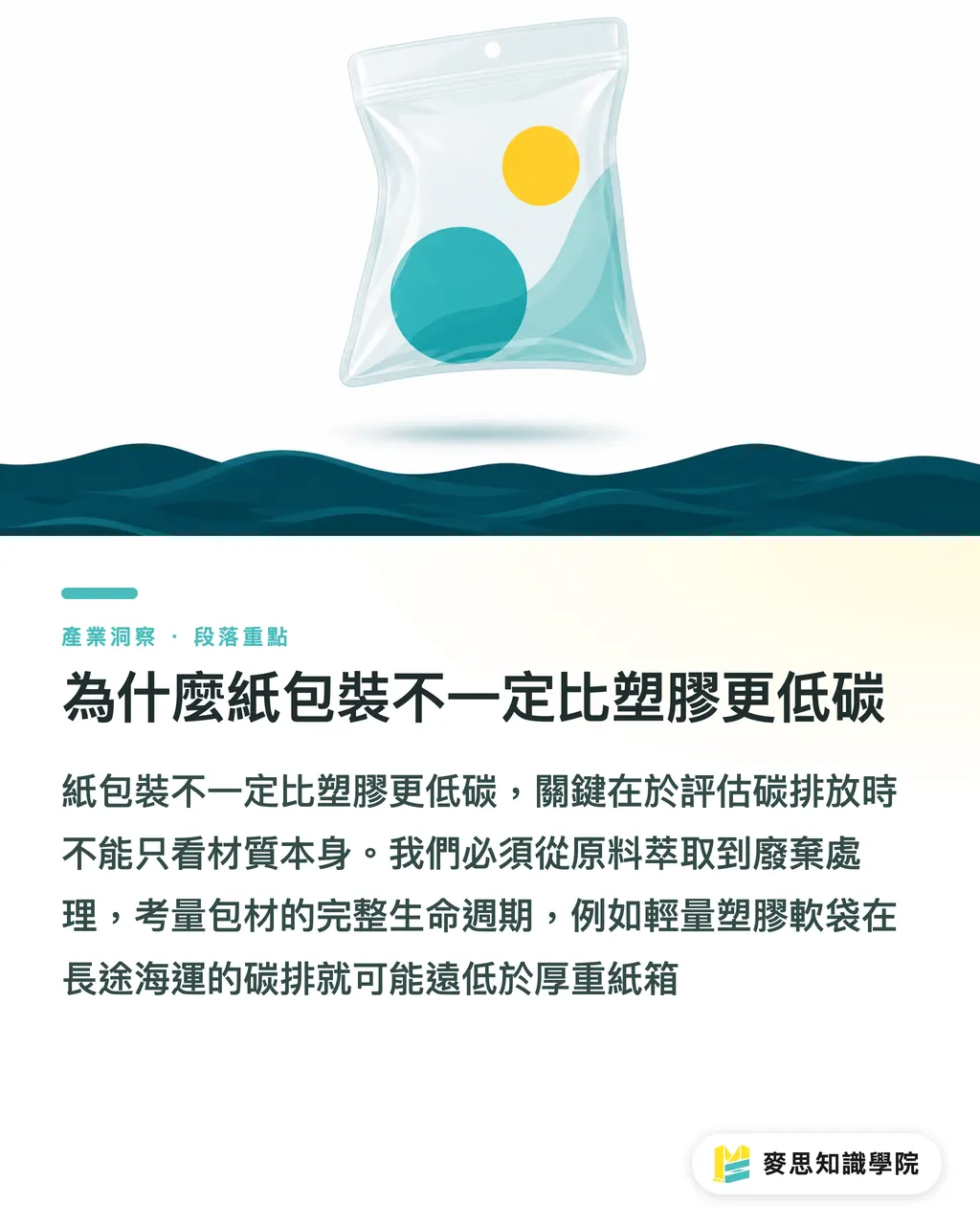
Taking recent export packaging cases as an example, ultra-lightweight plastic pouches, due to their minimal weight and volume, often have far lower carbon emissions in long-distance international maritime transport than heavy cardboard boxes
The key is that the perspective for assessing carbon emissions shouldn't just focus on the 'material itself.'
We must broaden our view to the entire 'life cycle,' which is exactly what Life Cycle Assessment (LCA) does
It precisely measures the environmental impact of a packaging material throughout its journey, from raw material extraction and manufacturing to long-distance transport, consumer use, and final disposal
Understanding the Three Key Indicators of Packaging LCA
Faced with a thick stack of LCA reports, you don't need to know complex formulas; you just need to grasp three core concepts to spot the 'fluff' in supplier quotes
・Functional Unit: Compare like with like. For example, the baseline should be 'a container filled with 500ml of liquid,' rather than directly comparing one kilogram of glass to one kilogram of plastic
・System Boundary: This is where numbers are most easily manipulated. Whether the scope is 'Cradle-to-Gate' (up to the factory exit) or 'Cradle-to-Grave' (including consumer disposal and recycling) makes a world of difference
・Carbon Hotspots: Many high-emission segments aren't actually within the printing and manufacturing plant; they fall under upstream raw material extraction or downstream international transport
When you find a significant discrepancy in LCA figures provided by two packaging suppliers, the first step is absolutely to compare whether their 'System Boundaries' are consistent. If the baselines differ, the conclusion is effectively invalid
How SMEs Without the Budget for a Full LCA Can Respond
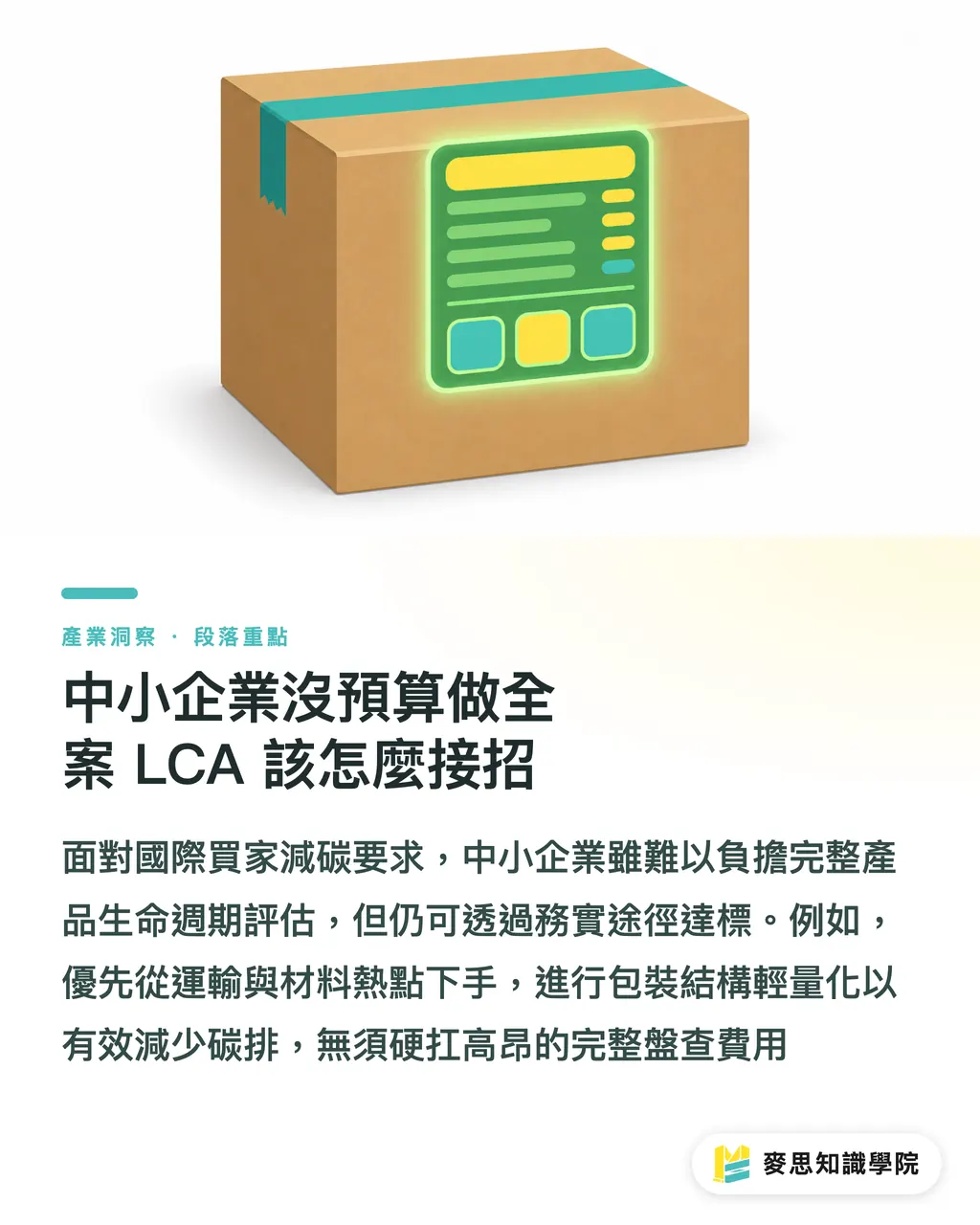
Conducting a full product LCA assessment often costs hundreds of thousands and requires over half a year of auditing
This is completely unrealistic for most Taiwanese small-to-medium printing houses and brand clients
However, with international buyers already waving the decarbonization flag, there are pragmatic alternative paths we can take
・Request EPDs (Environmental Product Declarations) from upstream suppliers: Think of this as a carbon emission nutrition label for packaging. Since the data is verified by third parties, it can serve as a direct proxy indicator for procurement
・Stick to Internationally Recognized Certifications: Control quality at the source by specifying the use of FSC (Forest Stewardship Council) certified paper materials or Cradle to Cradle certified consumables
・Target Hotspots for Structural Reduction: Since transport and materials are the major carbon contributors, directly lightweighting existing packaging structures and reducing ineffective air filling is a faster way to pass than blindly developing new materials
By providing these internationally recognized proofs or reduction achievements, you can successfully meet standards in most export procurement cases without having to bear the high costs of a full audit
Key Takeaways
・Abandon the myth that paper is always superior to plastic; international transport weight and disposal methods are often the true battlegrounds for carbon emissions
・When comparing carbon data from two suppliers, the first step must be to confirm whether their system boundaries are set on the same baseline
・SMEs can use EPD declarations and international certifications like FSC as proxy indicators to cross the green procurement threshold for buyers at a low cost
Further Reflection
Sustainable packaging has never been an arms race of who spends the most money; it is an opportunity to re-evaluate production line efficiency and supplier health
As we face increasingly strict EPR (Extended Producer Responsibility) regulations, every gram of weight on your packaging will translate into your actual regulatory fee costs
Instead of anxiously searching for new materials everywhere, start with the structural design you know best. Using the least material to achieve equivalent protection is the most low-carbon and direct cost-saving business solution
FAQ
- Is paper packaging always more eco-friendly and lower carbon than plastic?
- Not necessarily. If long-distance transport is included, the total carbon emissions of ultra-lightweight plastic pouches are often lower than heavy cardboard boxes in specific scenarios
- If the carbon emission figures in two LCA reports differ significantly, how can I tell which one is real?
- Check directly if the system boundaries of both are consistent. If one only calculates up to the factory gate while the other includes end-of-life recycling, the baselines for comparison are different, rendering the comparison meaningless
- What should we do if our company doesn't have the budget for a full LCA assessment?
- Request EPDs (Environmental Product Declarations) from upstream suppliers as carbon proxy indicators, or adopt materials with international certifications such as FSC. This effectively helps pass the green procurement thresholds of most brands
Related articles

The Print × AI weekly
The print and AI know-how designers, brands and enterprises can use before they commit — one email, every week
MINDS Free Tools
AI background removal, a LINE sticker maker, spine & imposition calculators — all free, right in your browser, no upload.
MINDS Group
Need actual printing or gifting services?
From premium printing to online ordering and festive gifts — the MINDS Group sister brands take it from here.