
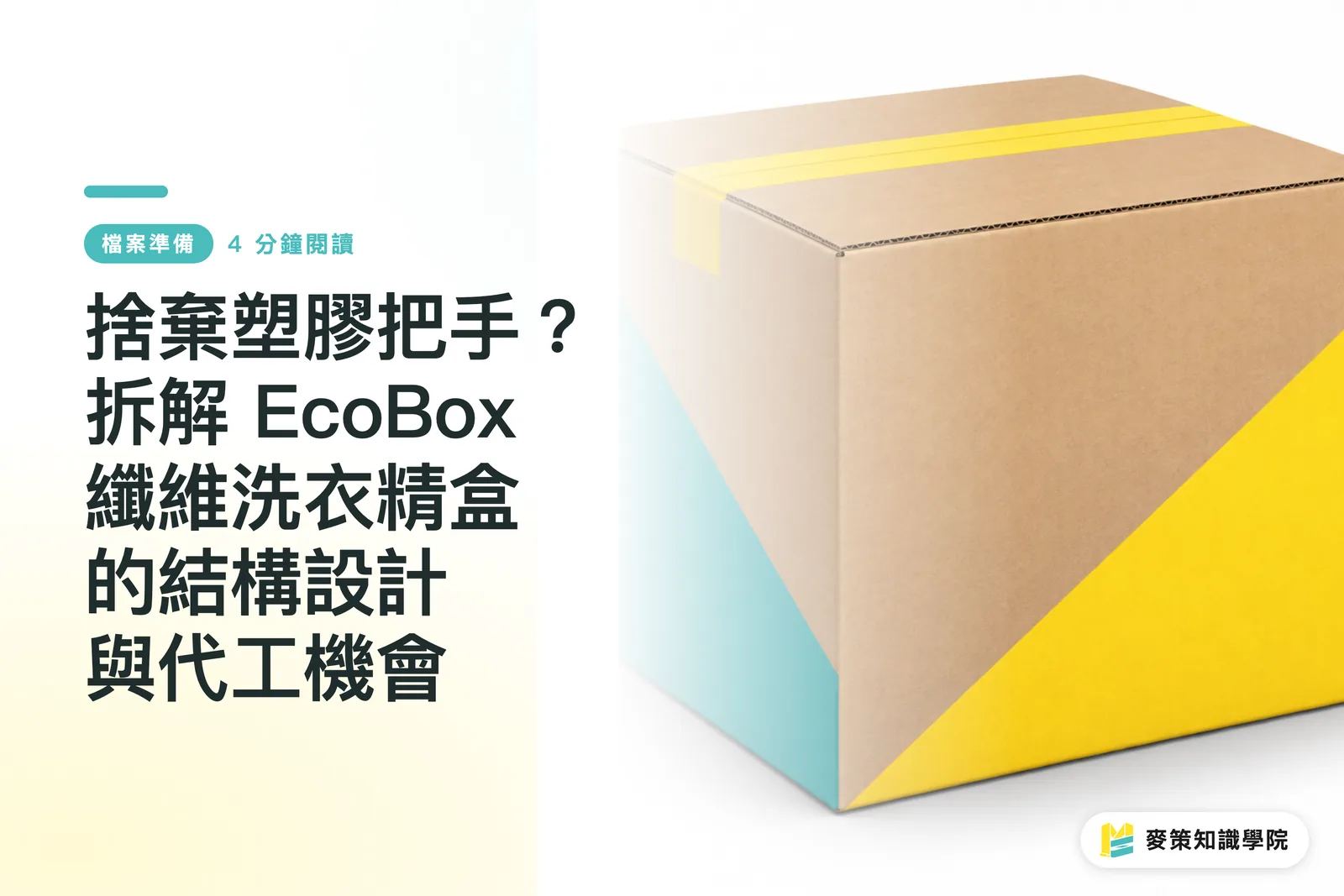
Why a 7 kg Detergent Pack Can Hold Its Weight Purely on Paperboard
It comes down to precise one-piece structural mechanics rather than relying on traditional plastic rivets and external handles
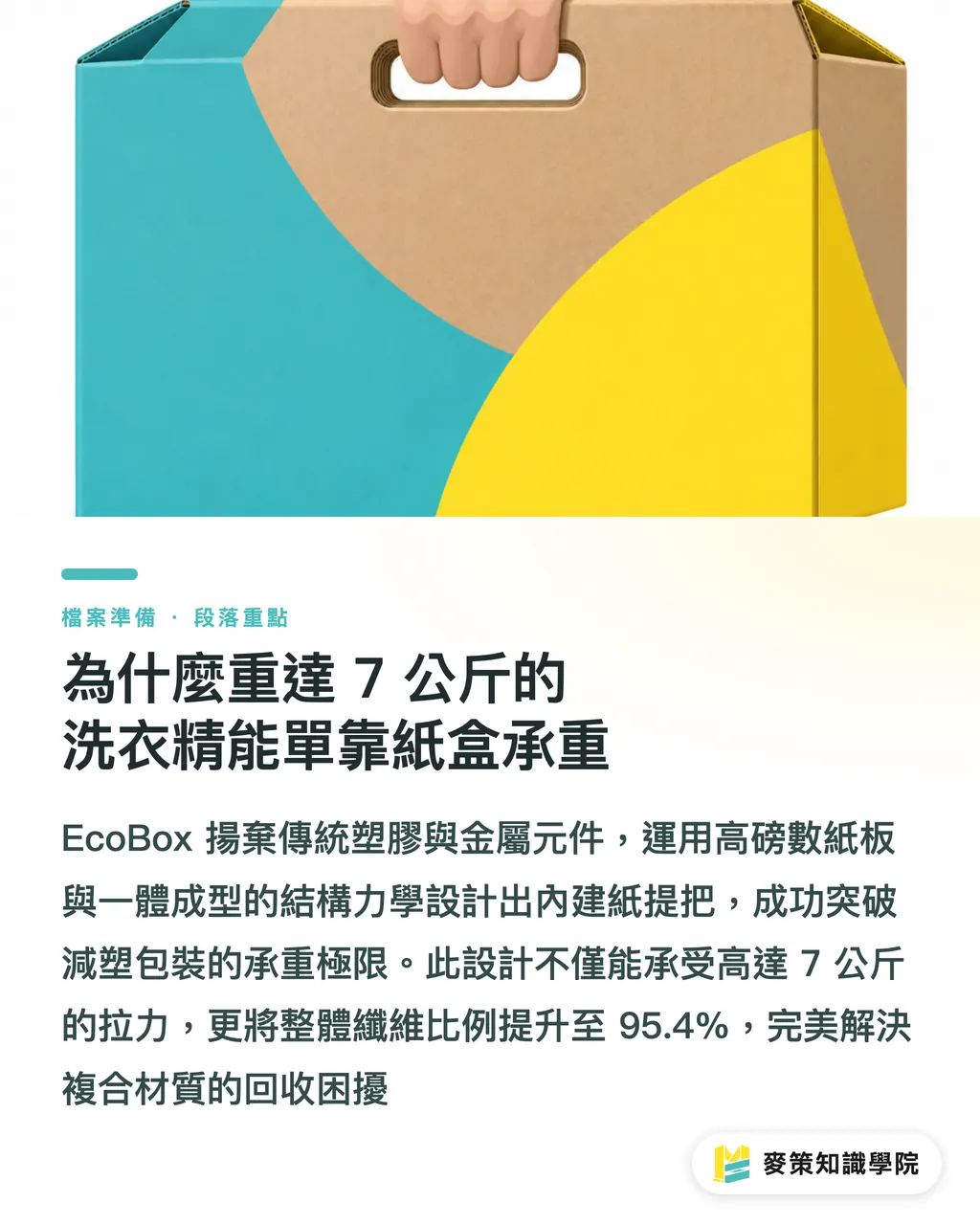
MM Packaging's EcoBox eliminates the separate plastic handles and metal fasteners commonly found on powdered detergent packs
By taking advantage of the physical stiffness of heavy cartonboard, they designed an integrated fibre handle directly into the box body
This design sidesteps the recycling headaches of mixed materials, and actual testing shows it holds up to 7 kg of pulling force
As I noted when reviewing Mars expanding its stand-up pouch line for cat food, the hardest part of cutting plastic in packaging is rarely the eco-credentials of the material itself. It is the physical limits of load-bearing strength and barrier properties
EcoBox pushed its overall fibre content to 95.4% precisely to meet Europe's increasingly tight packaging recycling regulations
Without a Plastic Measuring Cup, How Do Consumers Dose Detergent?
By placing pre-cut perforations on the front of the box, consumers can fold a designated section of the cartonboard into a scoop
This takes clever structural design to the extreme
In meetings with European and American clients over the past few months, brands kept bouncing back and forth between 100% recyclable mono-materials and the exact tactile feel of a dispensing pump. That is usually a nightmare for prepress designers
EcoBox integrates the scoop directly into the carton's existing 3D structure, paired with a hinged opening that recloses cleanly to keep the detergent powder from absorbing moisture and caking
For designers handling final artwork and structural packaging, this demands razor-thin tolerances when setting the die-lines
How many nicks should be left along the pre-cut lines so it won't pop open during shipping, while still tearing and folding easily for the end consumer? Getting that balance right takes repeated blank mockups and tensile tests between prepress staff and die-cutting pressmen
Why Avoiding New Machinery Matters for OEM Converters and Brands
Running directly on existing filling and packaging lines at scale wipes out the brand's biggest cost headache when switching materials
According to a 2026 European consumer packaging perception survey released by Pro Carton (the European Association of Carton and Cartonboard Manufacturers), 64% of over 5,000 respondents cited ease of recycling as the most important packaging requirement, and 84% explicitly confirmed they prefer cartonboard over plastic
Brands clearly have every incentive to switch when seeing numbers like that, but procurement teams and plant managers dread having to rework downstream packaging lines
Joaquin Alcarazo, Managing Director for the Iberian Peninsula at MM Packaging, highlighted that EcoBox can go straight into production with minimal upfront investment
This gives small and mid-sized packaging printers in Taiwan a clear roadmap for pitching orders: when pitching plastic-free structures to clients, you have to factor in feeder speeds and gluing compatibility on the client's automated lines from day one
If you are evaluating the sampling feasibility of complex structural designs like this, you can turn to the prepress team at MINDS for line compatibility evaluations
A Practical Checklist for Designers and Print Buyers Before Sign-Off
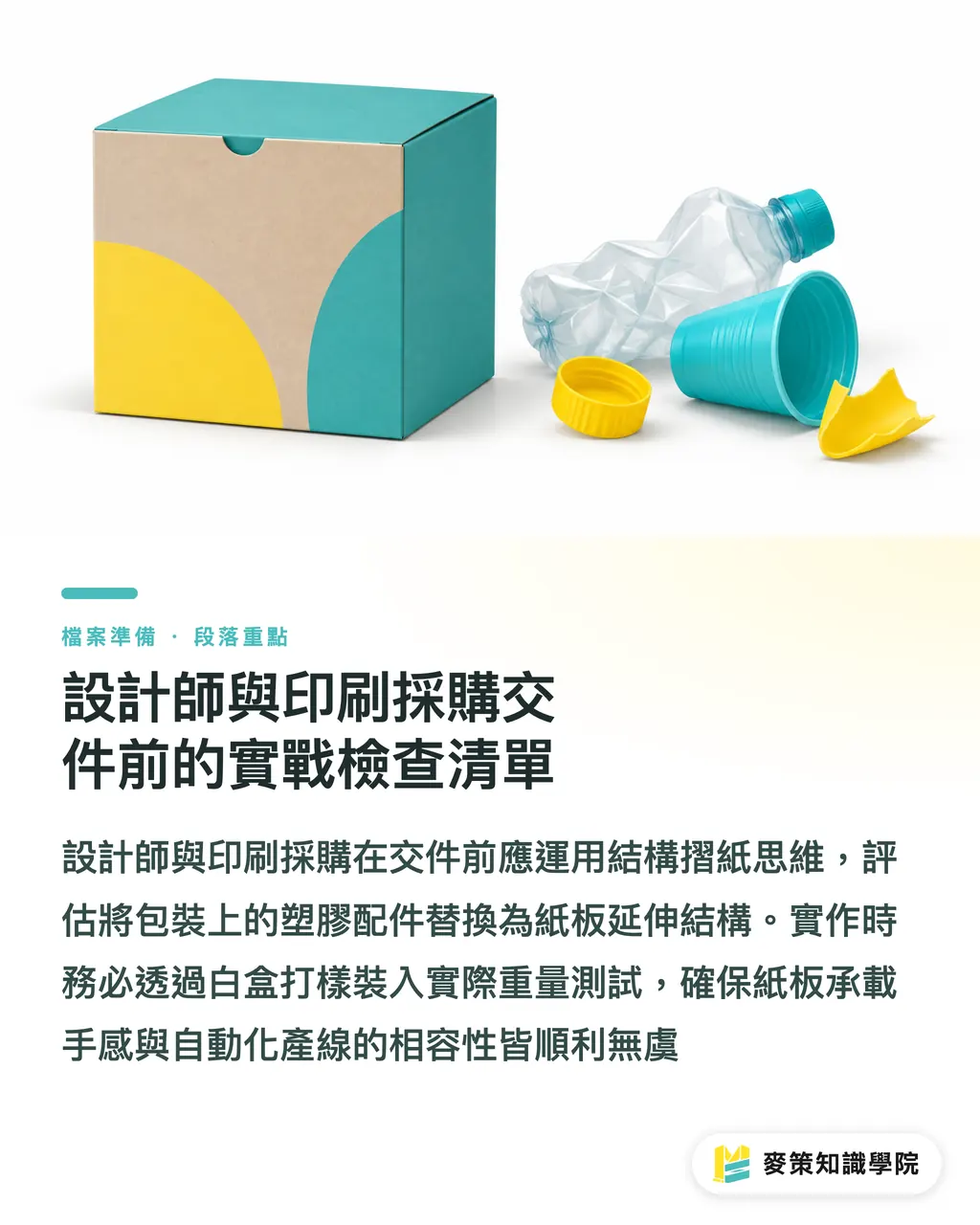
Start by reviewing every extra plastic add-on on current products, using origami-style structural thinking to replace injection-molded plastic parts
To pull off high-fibre packaging like this, there are a few practical steps you have to watch closely:
・Audit mixed materials you can drop: Check the packaging for unnecessary plastic handles, hanger tabs, sealing stickers, or standalone tools, and evaluate whether extended cartonboard flaps can replace them
・Test stress on pre-cut sections: When replacing plastic cups with folded cartonboard, run unprinted blank mockups first, fill them with actual weight, and test how the tearing and folding feels in hand
・Run live trials on packaging lines: Take the new die-cut blank to the filling plant for a live run to confirm that feeding and carton sealing do not jam automated machinery
・Evaluate barrier coatings and adhesives: Check whether moisture-resistant treatments applied to the board affect glue bonding strength during folder-gluer operations
Key Takeaways
EcoBox proves that with precise die-line engineering, paperboard alone can support 7 kg without compromising on plastic handles
Hiding a measuring scoop inside a pre-cut die-line is a stellar example of resolving the tension between sustainability and consumer convenience
Running on existing filling lines without heavy capital expenditure is the single most persuasive factor in convincing brand buyers to switch packaging materials
Looking Ahead
Looking at recent packaging transition projects I have handled, European regulations demanding high fibre content and mono-materials have long spilled over from flexible packaging into rigid folding cartons for household chemicals
If Taiwanese packaging printers stick strictly to basic box printing, margins in global supply chains will only get thinner
Future competitiveness comes down to whether your prepress designers can think like structural engineers, using the physical properties of paperboard to solve the client's real-world demands for load bearing and moisture resistance
Further Reading
FAQ
- What material is EcoBox made of?
- It is a carton packaging made of 95.4% fibre-based material, designed primarily to replace the plastic tubs and multi-material packaging traditionally used for powdered detergent
- With a carton holding such heavy powder, won't the handle snap?
- It uses heavy cartonboard and precise structural mechanics to create an integrated fibre handle, tested to hold up to 7 kg of weight without traditional metal rivets or plastic handles
- Without a plastic scoop included, how do consumers measure the detergent?
- The designers incorporated pre-cut perforation lines on the front panel, allowing consumers to tear off a designated piece and fold it into a practical paper scoop along the creases
Related articles
The Print × AI weekly
The print and AI know-how designers, brands and enterprises can use before they commit — one email, every week
MINDS Free Tools
AI background removal, a LINE sticker maker, spine & imposition calculators — all free, right in your browser, no upload.
MINDS Group
Need actual printing or gifting services?
From premium printing to online ordering and festive gifts — the MINDS Group sister brands take it from here.