
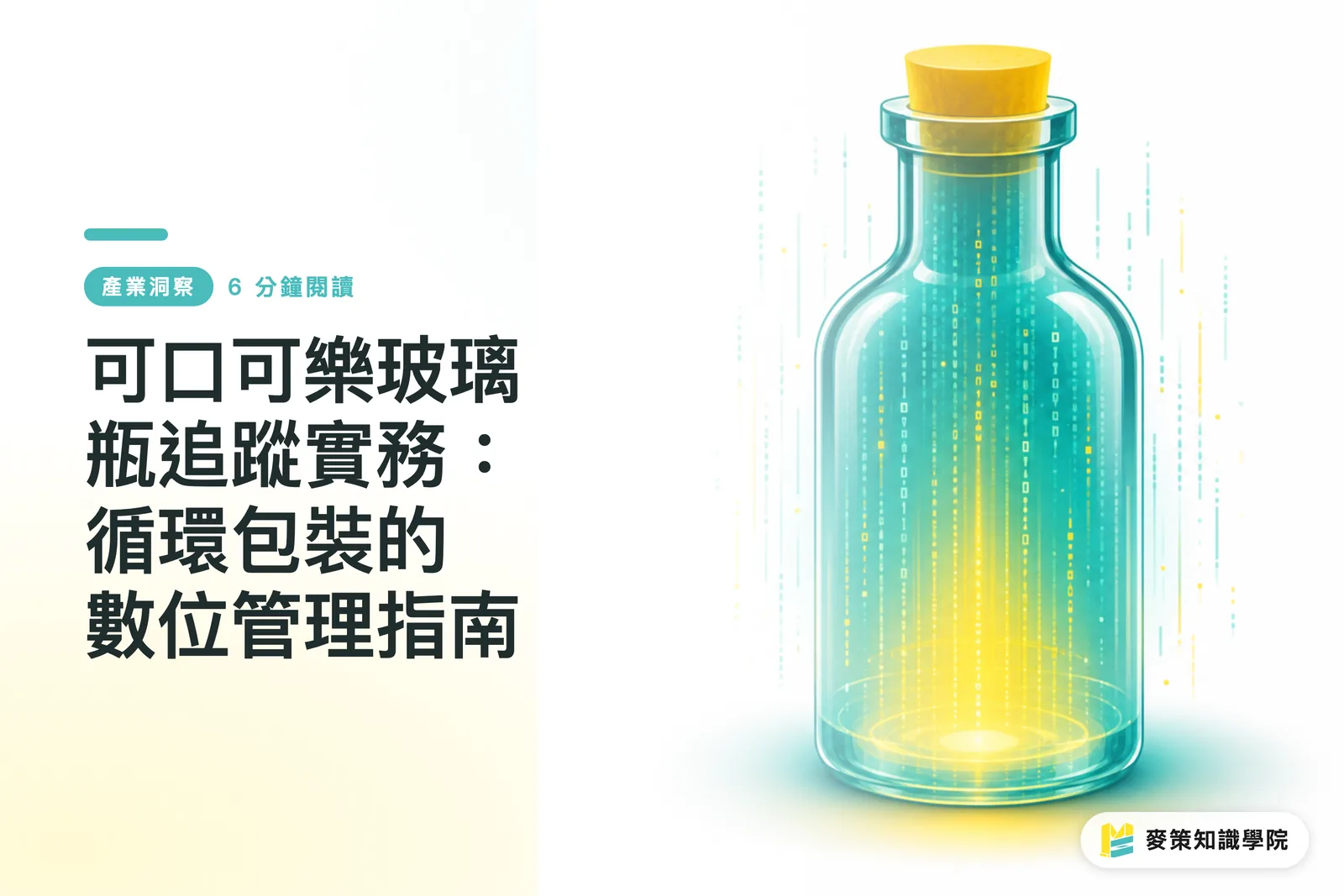
Why Do Reusable Glass Bottles Need a Unique Digital ID?
Without precise tracking, brands carrying reusable packaging cannot monitor container rotation counts or loss rates. That leads to chaotic deposit management and skyrocketing asset costs
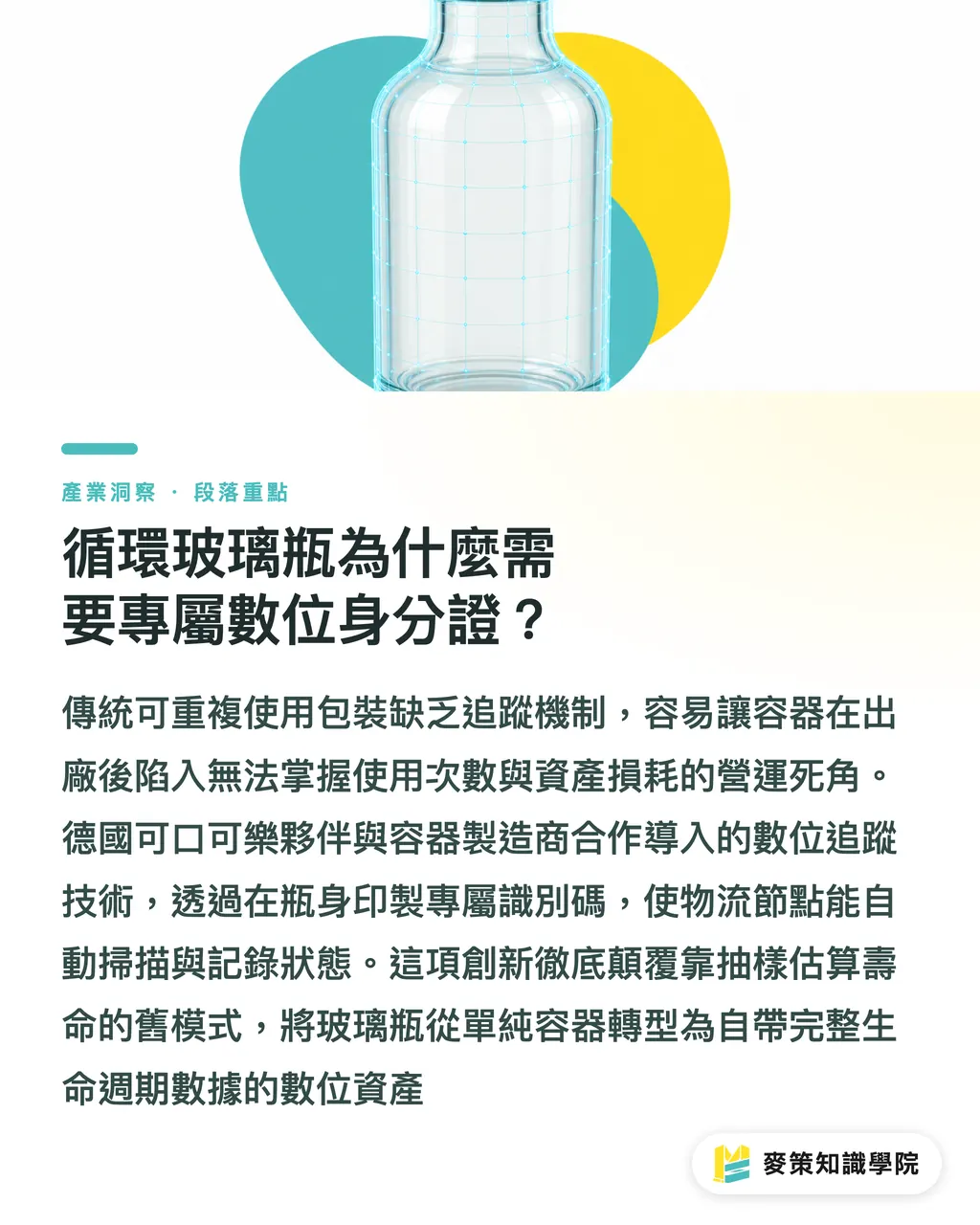
Reusable Packaging Tracking involves printing or implanting unique identifiers (such as Data Matrix codes) onto reusable containers. Paired with supply chain scanning software, it logs complete lifecycle data from filling and shipping to recovery, washing, and reuse
In my experience consulting on factory lines and for brand clients, the biggest bottleneck in glass bottle recovery has always been asset blind spots. Once containers leave the plant, they vanish into a black hole. When they return, no one knows if a bottle has been washed ten times or thirty times, or if fatigue cracks are forming inside its structure
The digital tracking tech adopted by Coca-Cola's German bottling partner and container maker Vetropack directly targets this long-standing operational pain point. As reported in Coca-Cola German bottler partners with Vetropack on reusable glass pack traceability, this collaboration prints a unique code on every glass bottle, enabling automated scanning and status logging at every logistics node in the supply chain
This approach completely changes the old pattern of relying on statistical sampling to guess lifespan. It turns packaging from a simple container into a data-carrying digital asset
How Do Coca-Cola and Vetropack Achieve High-Efficiency Tracking?
They combined wear- and wash-resistant bottle printing with optical scanning across the supply chain, giving every glass bottle a dynamically updated digital history
Glass bottles are not like standard paper cartons or outer boxes. They endure high-temperature washing, caustic alkaline rinses, and violent impacts on conveyor belts. Traditional paper stickers wash right off on the cleaning line, making long-term tracking impossible
The key for Vetropack and the Coca-Cola bottler lies in print durability and scan speed. This practical system relies on three core steps:
・ On-line coding: Scratch-resistant and alkali-proof codes are printed directly onto glass bottles during manufacturing or filling
・ Node scanning: Optical equipment automatically captures and reads codes on high-speed conveyor belts at collection depots and bottling plants
・ Lifespan assessment: The system automatically determines whether to refill or recycle a container based on total cycle count and bottle condition
I once visited an older glass bottle recycling line where workers relied purely on visual checks for surface scratches to decide on scrapping. They handled barely a few hundred bottles an hour, often missing defects that led to breakage later. Coca-Cola's integrated data setup swaps manual guesswork for an automated ledger, leaving a clear record for every cycle
How Does Digital Tracking Support Brand ESG Compliance?
Digital tracking provides audited container rotation counts and carbon reduction metrics, aligning directly with new packaging reduction rules in the EU and worldwide
In the past two years, regulations like the EU's PPWR (Packaging and Packaging Waste Regulation) and California's SB 54 have set strict targets for packaging waste and recycling rates. Brands without verifiable data risk compliance penalties or consumer backlash over greenwashing
The digital history built by Coca-Cola and Vetropack delivers three core advantages for brands:
・ Verifiable carbon metrics: Accurately calculates virgin raw material savings and smelting energy saved per cycle, giving ESG reports audit-grade authority
・ Automated deposit reconciliation: Eliminates return count discrepancies between retailers and bottlers, cutting deposit disputes and manual audit costs
・ Quality and safety control: Bottles reaching structural fatigue limits are intercepted before hitting the filling line, significantly lowering explosion risks for high-pressure carbonated drinks
For companies expanding internationally or strengthening their sustainability profile, feel free to reach out to the Mai Strategy Knowledge Academy Consulting Team for advice on building frameworks from prepress artwork to green supply chain histories
How Should Taiwanese Brands Evaluate Smart Tracking Packaging?
Brands need to evaluate ROI across three dimensions: packaging print technology, collection network coverage, and data system integration
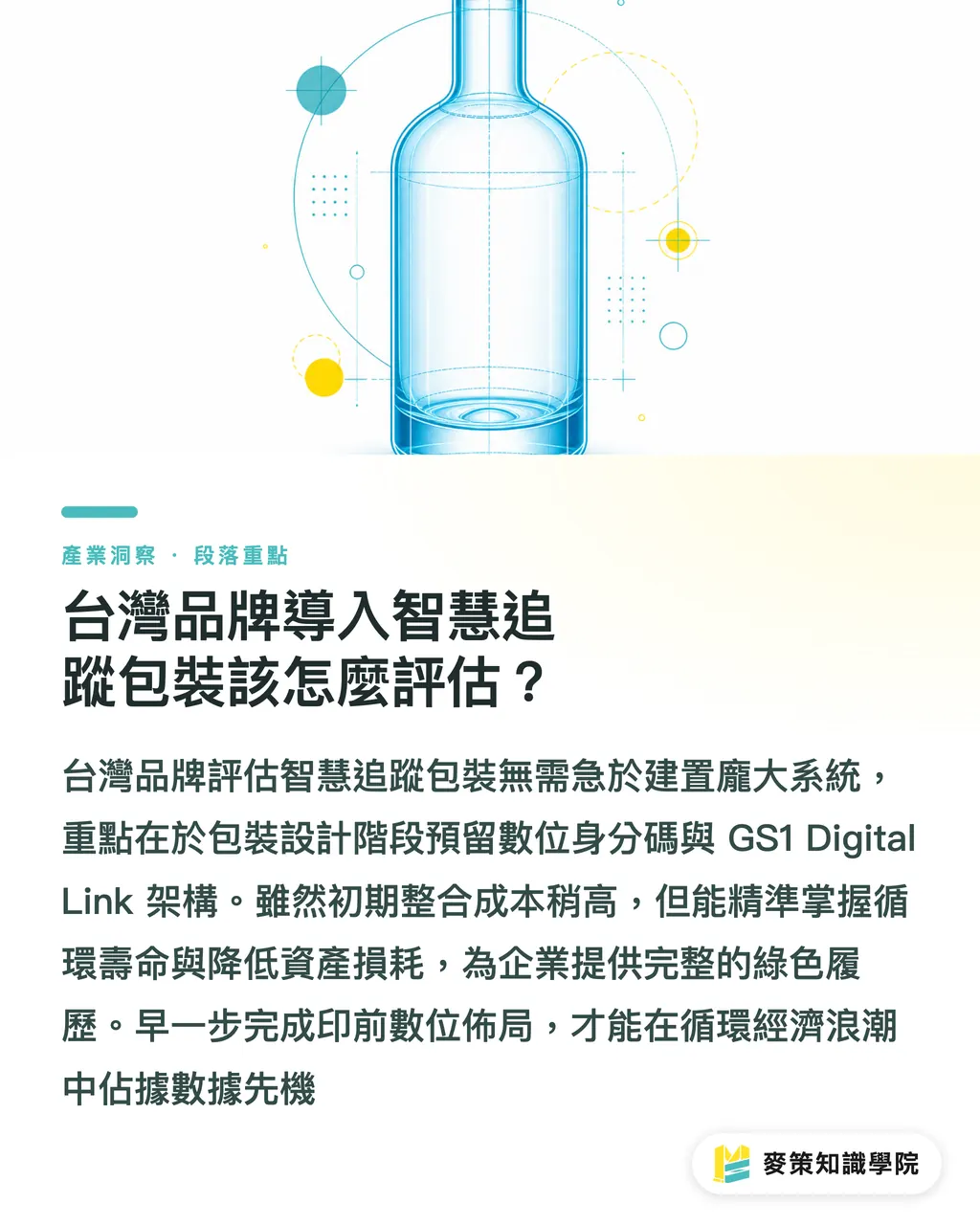
Many Taiwanese business owners ask me if tracking is worthwhile for smaller brands lacking Coca-Cola's scale. My advice is simple: you don't need a massive system on day one, but your packaging design should build in space for digital ID codes and the GS1 Digital Link structure from the start
Let's compare traditional packaging and smart tracking packaging in real-world execution:
・ Traditional glass packaging: Lower initial procurement cost, no data tracking capability, high return loss rate, unable to supply compliance-grade ESG data
・ Smart tracking packaging: Higher initial coding and integration costs, precise monitoring of lifespan and loss rates, significantly reduced asset loss, provides complete green track records
The trend in the printing industry is clear. Future packaging must deliver both visual appeal and supply chain data. Preparing digital code layouts early at the prepress stage is key to leading in the circular economy
Key Takeaways
・ The core of reusable packaging management isn't the container itself, but data transparency throughout its rotation cycle
・ Unique on-bottle identifiers solve long-standing pain points around unknown lifespan and lost assets in traditional recovery systems
・ Digital tracking provides verifiable carbon reduction data, serving as a solid line of defense against global ESG regulations
・ Taiwanese brands should embed GS1 Digital Link concepts during the print design phase to keep digital transformation flexible
Further Reflections
Based on my experience consulting brands on packaging transitions over recent years, the printing industry is no longer just processing paper and ink, it's manufacturing data carriers. The collaboration between Coca-Cola and Vetropack sends a clear message to Taiwan's packaging supply chain: future packaging that can't be scanned or tracked will struggle to join global circular supply chains. Brands and printers need to work together now to embed digital ID codes and circular logic into standard prepress workflows
Further Reading
FAQ
- Will on-bottle codes become unscannable after multiple washes?
- Vetropack and the bottler use specialized high-temperature and alkali-resistant inkjet printing tech, ensuring codes remain highly readable through dozens of washing cycles
- Is implementing a glass bottle tracking system too expensive for smaller brands?
- Smaller brands don't need to build massive systems right away. They can start by setting aside space for GS1 Digital Link barcode standards during prepress, then roll out tracking in phases using third-party cloud scanning platforms
- How does smart tracking packaging directly help a brand's ESG reporting?
- The tracking system records exact rotation counts for every bottle, generating verifiable raw material savings and carbon footprint data to protect against greenwashing risks
Related articles

The Print × AI weekly
The print and AI know-how designers, brands and enterprises can use before they commit — one email, every week
MINDS Free Tools
AI background removal, a LINE sticker maker, spine & imposition calculators — all free, right in your browser, no upload.
MINDS Group
Need actual printing or gifting services?
From premium printing to online ordering and festive gifts — the MINDS Group sister brands take it from here.