
Why Completing EPR Filings Might Lead to a Higher Risk of Rejection
Over the past few months, I have visited several OEMs scrambling to comply with California's SB 54. Many believe that submitting compliance reports and switching to eco-friendly materials grants them an "immunity card" for Western markets
However, according to the harsh reality revealed in EPR requires lifetime track & trace. Are you ready?, buyers now demand more than just material certifications
Regulations have pushed the frontline to "track & trace" throughout the entire product lifecycle
This means you cannot simply claim a package is recyclable; you must prove with data that it is actually flowing within the circular system
The battlefield has shifted from paperwork audits in the office back to the source: the physical production lines and printing OEMs
The Hidden Blind Spots of Sustainable Traceability Systems
To track a plastic pallet or a reusable eco-bin, the industry typically relies on three types of digital IDs:
・Optical Systems: Relying on traditional barcodes or QR Codes to remain clear and readable
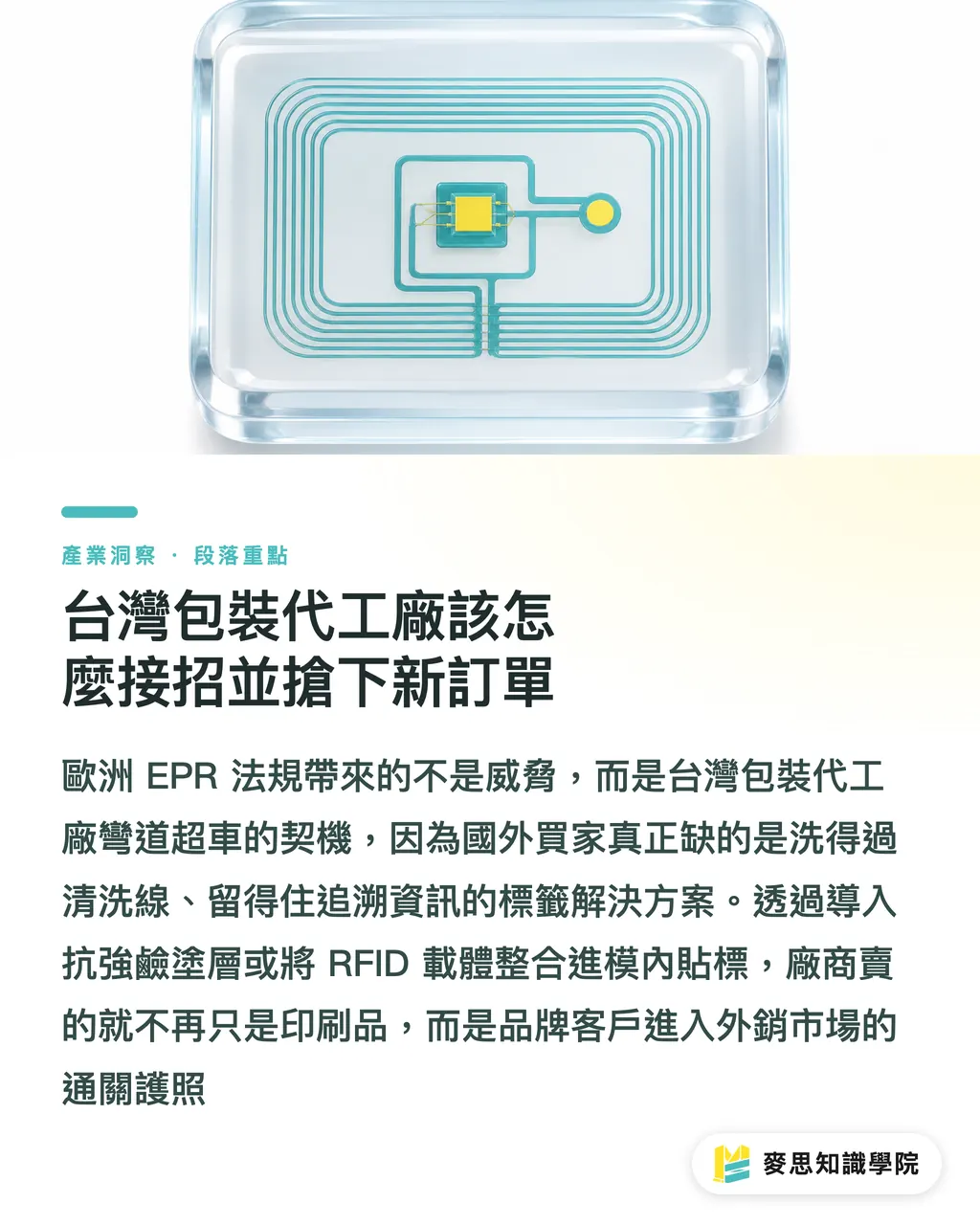
・RFID Systems: Assuming tags can withstand high temperatures and friction without peeling off
・Bluetooth Low Energy (BLE): Presuming active signaling devices remain powered and functional
These technologies work perfectly in clean, air-conditioned rooms and automated warehouses
However, Polyfuze Graphics points out a core blind spot overlooked by many brands
Reusable packaging systems are never controlled greenhouses; once they hit the road, they face constant devastation
How Recycling Wash Lines Destroy Million-Dollar Tracking Systems
We have seen too many high-budget circular packaging projects fail on the ground
Assets made of HDPE or polypropylene face the most violent physical tests every day
This includes high-pressure industrial wash cycles, potent chemical cleaners, intense UV exposure from outdoor storage, and even direct scraping from forklifts
When surface labels start to peel or RFID tags are knocked off, the "physical identity" of the package dies completely
Crucially, once physical tags are damaged, the expensive cloud-based tracking software in the background immediately loses synchronization
This not only makes it impossible for companies to prove recycling rates to regulators but also turns a batch of high-value circular assets into unidentifiable plastic waste
How Taiwanese Packaging OEMs Should Respond and Secure New Orders
For our export-oriented printing and packaging OEMs in Taiwan, this is actually a prime opportunity for a "corner-turning overtake."
What foreign buyers find most troublesome now isn't finding recycled plastic, but finding "unwashable resumes" (traceability)
・Upgrade Surface Protection: Implement special coatings during the printing and labeling stages that resist UV and strong alkaline chemical corrosion
・Integrate Hardware Design: Combine RFID tags or tracking carriers directly with In-Mold Labeling (IML) technology to avoid direct external friction
・Change Proposal Logic: Upgrade "Eco-friendly Ink" on your quotes to "Weather-resistant EPR Traceability Carrier Solutions."
When you can solve the pain point of labels washing off on the cleaning line, you are no longer just selling printed materials, you are selling a passport to export markets
Key Takeaways
・The EPR compliance battlefield has shifted from simple material substitution to seamless physical tracking throughout the product lifecycle
・Barcodes and RFID are perfect in "greenhouses" but easily succumb to the real-world logistics of industrial washing and UV exposure
・Once the physical identity of the packaging is damaged, the backend digital tracking software and circularity data will collapse entirely
・Suppliers should treat weather-resistant, scratch-proof traceability carrier printing as a key weapon to secure orders from Western brands
Further Reflections
From the perspective of MINDS (MINDS Printing), brand clients' expectations for packaging have completely flipped
Designers and printers can no longer focus solely on visual aesthetics or individual costs from behind their computer screens
When planning one-stop packaging projects, we must include logistics wear and washing scenarios as frontline design considerations
We recommend introducing weather and abrasion resistance testing during the sampling stage to ensure tracking codes stay with the packaging until the final mile, this is the true value in protecting international orders for clients
Further Reading
FAQ
- Why doesn't switching to recyclable materials satisfy EPR regulations?
- Because the latest regulations require more than just recyclable materials; they require proof that the product can be accurately traced throughout its lifecycle, which relies heavily on non-detachable tracking carriers on the packaging
- What problems do RFID or barcodes on packaging face during the recycling process?
- Logistics and recycling sites are filled with forklift scrapes, chemical cleaners, high-temperature washing, and intense sunlight. This causes traditional labels to peel or chips to be damaged, causing the packaging to lose its digital identity instantly
- How should SMEs respond to such strict packaging traceability requirements?
- During the printing and manufacturing stages, SMEs should implement abrasion-resistant and UV-resistant surface treatments or In-Mold Labeling (IML) technology. Ensuring traceability barcodes remain readable in harsh environments directly solves compliance pain points for brands
References
Related articles
The Print × AI weekly
The print and AI know-how designers, brands and enterprises can use before they commit — one email, every week
MINDS Free Tools
AI background removal, a LINE sticker maker, spine & imposition calculators — all free, right in your browser, no upload.
MINDS Group
Need actual printing or gifting services?
From premium printing to online ordering and festive gifts — the MINDS Group sister brands take it from here.