
Why 10mL Fragrance Bottles Drive Print Shops Crazy
Shrinking the printable area mercilessly magnifies every registration error and glass tolerance variance
The 10mL on-the-go mini fragrance bottle recently rolled out by Bormioli Luigi looks simple, but printing a luxury logo onto curved micro-glass is brutal engineering work
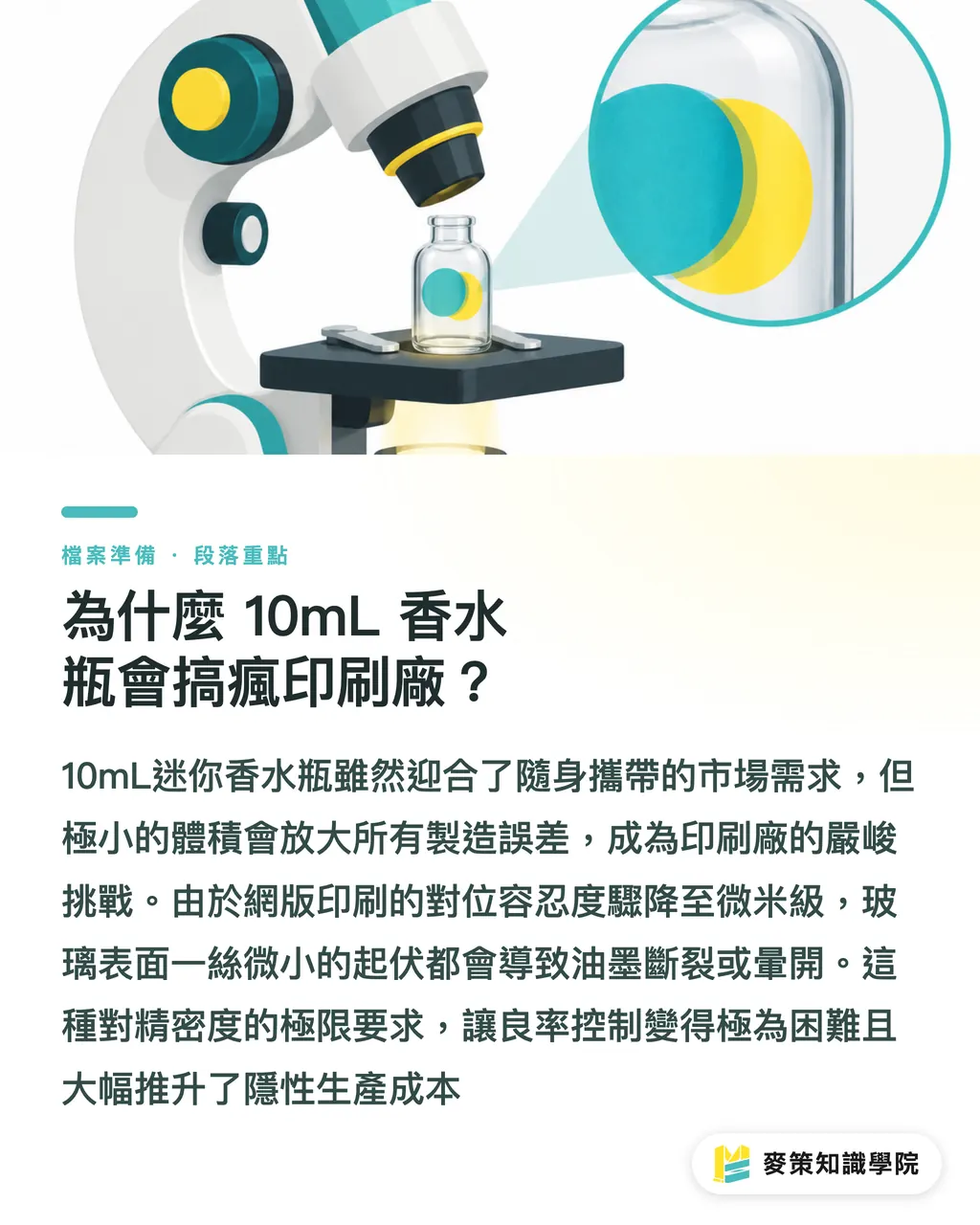
Lately I have talked with several cosmetic packaging plants, and they all share one headache: when a bottle shrinks by 90%, alignment tolerances for screen printing and hot stamping drop from millimeters straight down to microns
A tiny shift barely registers on a 100mL bottle. On a 10mL bottle, it is a visual disaster
The other hidden killer with tiny glass bottles is surface flatness straight out of the mold
The smaller the bottle volume, the higher the ratio of wall thickness to total size. That complicates optical refraction and makes micro-irregularities along the curved surface much harder to tame
When the squeegee passes over screen-printing ink, even the faintest ripple on the glass surface makes the ink film snap or bleed
Pros:
・Meets non-negotiable consumer demand for lightweight, on-the-go convenience
・Cuts raw material use per unit, aligning directly with plastic reduction rules worldwide
・Lowers the price barrier, helping luxury fragrances reach younger shoppers
Cons:
・Precision standards for glass molds multiply, making yield control punishingly strict
・Screen and hot foil registration easily drifts, driving testing and scrap costs quietly through the roof
・Filling and capping lines must also shrink, creating unexpected capital expenses
How Designers Need to Defend Their Artwork
Stroke weights and knockouts need to be twice as strict as usual, and you must abandon four-color process printing entirely
Many designers build their artwork on 1:1 digital artboards, overlooking physical distortion and ink surface tension on tiny curved surfaces
When bottle diameter drops below 20mm, squeegee pressure forces ink to spread in ways plainly visible to the naked eye
When dealing with print runs on bottles this tiny, we tell prepress teams to follow this checklist:
1. Ditch process colors for spot colors: Printing CMYK halftones on a 10mL bottle is an outright train wreck. Every fine graphic and letterform must be set to a Pantone spot color to guarantee crisp edges
2. Check fine-line thresholds: Solid screen-printed strokes should never go below 0.15mm. For metallic hot stamping or specialty coatings, pump lines up to at least 0.2mm, or the foil will break under pressure
3. Widen knockouts and trapping gaps: If typography reverses out, leave at least 0.25mm between strokes. High-precision screen printing ink still bleeds outward, and tight gaps will choke shut on the press
4. Apply software compensation for curved distortion: If graphics wrap around more than a third of the bottle, build in fan-shaped distortion compensation beforehand. Before handing files over, print a 1:1 SLA resin 3D mockup to verify proportions with your own eyes
Doing the Math on Small-Batch, High-End Lines
The profit model shifts completely from volume output to process precision
Conventional glass packaging plants are built for runs of 100,000 units and up, but pilot orders for luxury mini bottles might only be a few thousand
Back when everything was 100mL bottles, printers cranked machine speeds to max and leaned on economies of scale to make money
With a 10mL mini bottle, dialing in that first flawless registered print might burn through two hundred scrap bottles right out of the gate
The hard truth is that changeover, wash-up, screen alignment, and high-temperature curing take almost just as long as they do for full-sized bottles
That flips the entire math of press run-time on its head
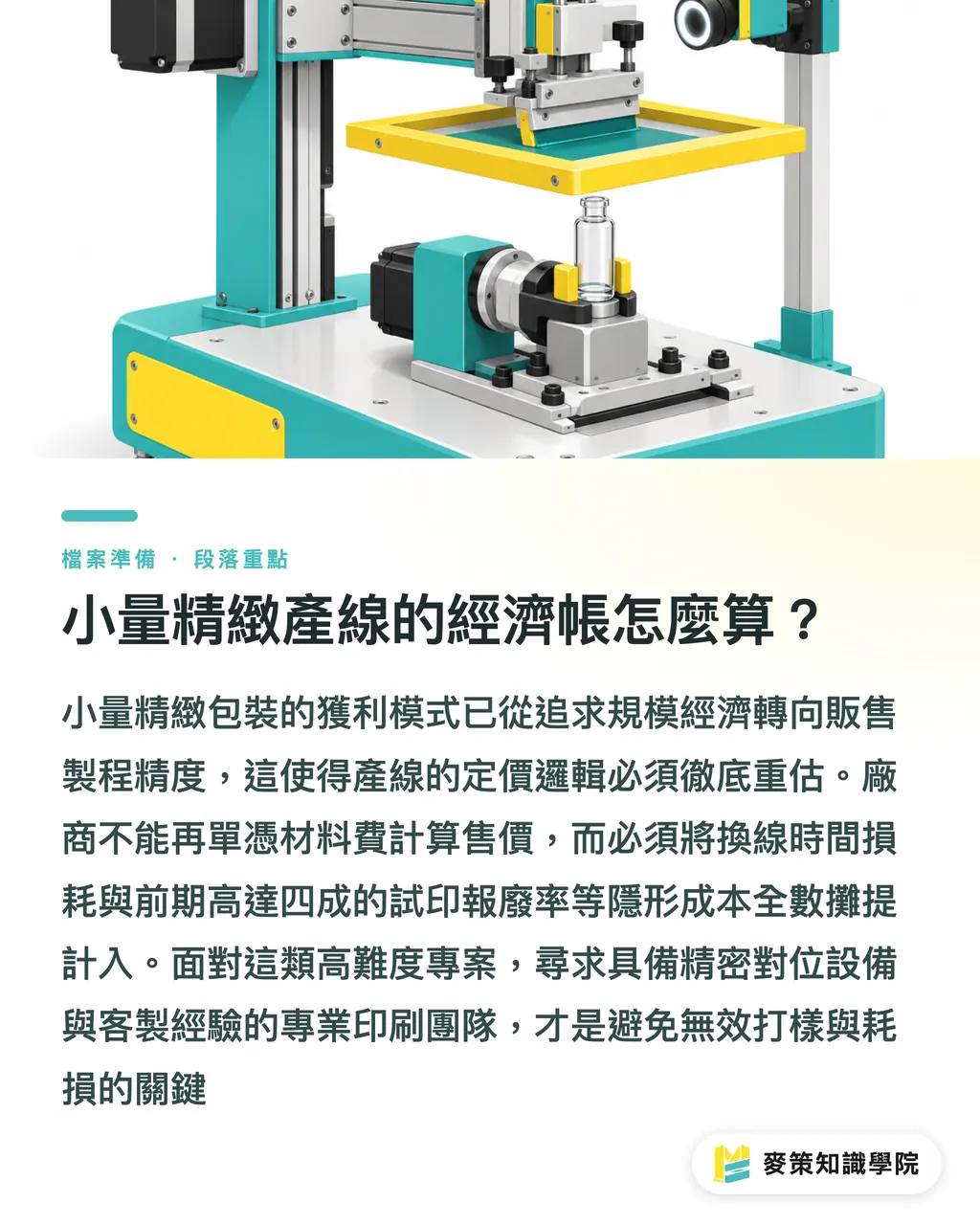
You can no longer price jobs off raw material cost per bottle. You have to bake in high-precision equipment depreciation, lost time from frequent changeovers, and upfront scrap rates that can hit 30% to 40%
To tackle jobs like this, small and mid-sized print shops need to upgrade to all-servo precision screen printers that rely on optical vision systems to hit registration marks, ditching outdated mechanical stops
When brand clients need demanding micro-packaging like this, I usually recommend bringing in a team with mid-to-high-end bespoke commercial printing experience like MINDS for upfront process evaluations. Do not just gamble on a budget shop, or proofing alone will burn out everyone involved
Will This Lightweighting Trend Last?
Yes, and tighter sustainable packaging laws will only lock it in harder
From what I have seen on factory floors over the past few months, everything from Bormioli Luigi shrinking its glass footprints to Rissmann introducing paper-based perfume boxes answers the same firm market signal
Shoppers want effortless luxury and pocket-sized portability, while regulations demand smaller waste volumes
The EU PPWR (Packaging and Packaging Waste Regulation), a strict directive mandating smaller package footprints and higher recycling rates, has already tightened the vise on excessive packaging and empty headspace
Small-format packaging is no longer just a promotional gimmick. It is how brands survive packaging material inflation and regulatory caps
That means high-precision micro-runs will show up on print shop schedules far more often
Key Takeaways
・A smaller bottle never means a cheaper job. Extreme registration tolerances and press setup times are the real hidden costs
・Screen printing and hot stamping leave zero margin for error on tiny curves. Prepress must double-check stroke widths and insist on spot colors
・Production mindsets have to pivot from cranking mass volume to safeguarding short-run yields, turning technical precision into pricing power
Food for Thought
The biggest takeaway for designers is that 2D artwork must anticipate 3D physical limits and ink behavior long before files hit the press
For manufacturers and brand owners, investing in quick-changeover precision machinery or adding optical registration systems is now baseline table stakes for winning luxury packaging business
Further Reading
FAQ
- Why do print defect rates spike when fragrance bottles shrink?
- Because micro-curved surfaces magnify visible alignment errors. A 0.5mm registration tolerance that passes quality checks on a 100mL bottle looks noticeably crooked or smeared on a 10mL bottle
- What is the most common mistake designers make before submitting files for micro-bottles?
- Copying specs from large packaging and using CMYK halftones. This leaves knockout type too tight, so ink or hot stamping foil floods the gaps during printing and turns text into an illegible smudge
- How should print shops price short-run, high-mix mini bottle jobs?
- Never price off raw material costs alone. You have to factor in machine setup time and steep upfront scrap rates, setting prices based on process difficulty rather than simple unit costs
Related articles



The Print × AI weekly
The print and AI know-how designers, brands and enterprises can use before they commit — one email, every week
MINDS Free Tools
Imposition calculator and preflight file check — free prepress tools, right in your browser.
MINDS Group
Need actual printing or gifting services?
From premium printing to online ordering and festive gifts — the MINDS Group sister brands take it from here.