

Overview
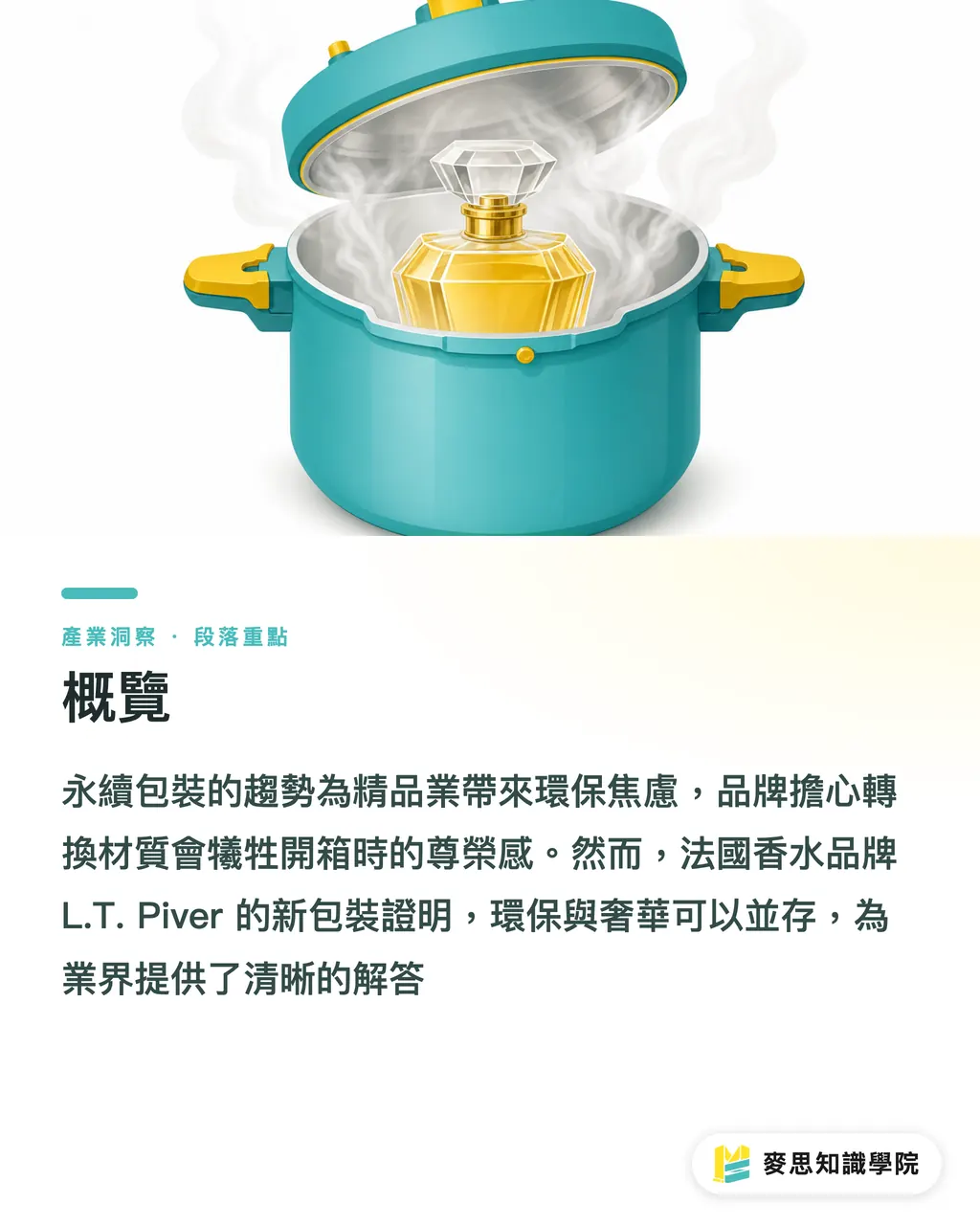
In recent months, the pressure cooker of sustainable packaging has clearly been simmering over, from cases with European and American clients to discussions on the production line. Especially in export markets, the mandatory enforcement of Extended Producer Responsibility (EPR) laws like California's SB 54, coupled with the supply chain's scrutiny of carbon footprints, has plunged brand owners, particularly in the quality-conscious luxury sector, into a state of 'eco-anxiety.'
What they fear isn't switching to eco-friendly materials, but the 'devaluation' of their brand. Can that sense of ritual and prestige, established the moment a box is opened, still exist after changing the paper stock?
The new packaging recently unveiled by the centenary French perfume brand L.T. Piver has sent shockwaves through the industry. It provides a crystal-clear answer: environmental protection and luxury have never been a mutually exclusive choice
How Does L.T. Piver Make Eco-Friendly Paper 'Look Expensive'?
This brand, founded over two centuries ago, chose to return to its 19th-century classical aesthetics, but with a very modern approach at its core. They replaced the heavy, multi-layered composite materials traditionally used for perfume boxes with a fully recyclable single-layer paperboard
This step sounds basic, but the devil is in the details, and it's where all printing peers and designers should be looking with a magnifying glass
・ Recreating the language of luxury with printing craftsmanship: To maintain the substantial feel expected of a luxury product, Piver didn't abandon post-press finishing after switching materials. Instead, they leaned into it even more, incorporating delicate hot foil stamping, logo embossing, and a texture impression that mimics the feel of wood
・ Experience design from 'visual' to 'tactile': They smartly realized that the value of a luxury item isn't just in 'looking expensive' but also in 'feeling expensive.' The wood grain embossing is key; it creates a warm, natural texture on the eco-friendly paper, compensating for any sense of flimsiness that a single material might convey
・ Continuation of aesthetic heritage: The entire design style harks back to the brand's most glorious era. This 'retro-futurism' makes the act of sustainability seem not like a compromise for regulations, but rather something the brand was always meant to do, a part of its aesthetic narrative
The most brilliant aspect of this case is that it didn't treat sustainability as a weakness to be concealed. On the contrary, it used exquisite printing craftsmanship to turn it into a new chapter of the brand's story
What Does This Mean for the Taiwanese Supply Chain?
For Taiwan's printing houses and brand clients, who excel at OEM/ODM, Piver's case is a huge inspiration
In the past, we equated 'eco-friendly materials' with 'lower cost and simpler texture.' But the rules of the game have changed. When sustainability becomes the entry ticket to the market, whoever can use craftsmanship to add a 'sense of value' to green materials wins the orders
For printing houses, this means we can no longer just passively wait for clients to send files. We must become 'material and craft consultants,' proactively proposing to clients which recycled paper is best for deep embossing, which eco-friendly ink has the best adhesion after foil stamping, or even how to use laser engraving or digital foiling to achieve Piver-level quality on small-batch orders
This also means investing in automated quality control (like online proofing systems integrated directly into the prepress workflow) becomes even more critical. With these complex post-press processes, a single flaw can destroy the entire product's perceived value. The arms race in yield rate and quality stability is just beginning
How Can Designers and Printers Collaborate to Create the Next Classic?
Piver's success was definitely not achieved by a designer drawing up a plan alone. It was born from close collaboration between the design team and the printing house, from paper selection and prototyping to final testing
I often tell my designer clients not to just look at their designs on a screen. You have to go to the printing factory, feel the paper with your hands, see the sheen of the ink after it dries, and experience how different pressure settings in embossing can create a 0.1mm depth difference that results in a vastly different tactile sensation
And as a printing house, we must open our doors and let designers come in to 'play' with materials. Our experience is the final mile that brings their creative ideas to life. For instance, we can remind them that recycled paper has shorter fibers and is more prone to cracking with deep embossing, suggesting a change in orientation or pressure adjustment. Or, applying a primer before foil stamping to ensure a smooth, metallic sheen
When a designer's creativity is grafted onto a printing house's deep understanding of material physics, the next sustainable packaging success story like Piver's, acclaimed by critics and consumers alike, can be born in Taiwan

Key Takeaways
・ The transition to sustainability is not a brand downgrade, but a recreation and upgrade of aesthetics
・ Post-press finishing is the core key to adding value to eco-friendly materials
・ The future of luxury packaging lies in the deep integration of design and printing
・ Environmental compliance is not just a cost, but a ticket to enter high-end markets
Further Thoughts
For the entire industry chain, this is an opportunity for value redistribution
・ For the print manufacturing side: Stop talking about price wars and start talking about 'craftsmanship value.' Proactively build your own 'sustainable material library' and create sample books for different materials, showcasing the effects of various techniques like foil stamping, embossing, and screen printing to become a solution partner for brand clients
・ For the brand and design side: Treat sustainability as a design challenge, not a PR issue. Involve the printing house in discussions from the project's outset. Enrich your design language from the perspective of material science. The depth of your understanding of printing craftsmanship will determine the height of your work's quality
・ The role of MINDS: The value of a one-stop integrated service platform like ours lies in connecting the broken points from design and material selection to production. We can match clients with master craftsmen who specialize in post-press finishing and introduce the latest digital printing technologies, helping brands find the optimal balance between budget, timeline, and sustainability goals
Further Reading
FAQ
- Do luxury brands inevitably sacrifice their high-end feel when switching to eco-friendly materials?
- Not at all. The case of French perfume house L.T. Piver proves that by skillfully using post-press finishes like foil stamping, embossing, and texturing, recyclable paperboard can present a luxurious quality that is no less impressive than traditional composite materials
- When a brand starts to promote sustainable packaging, what should be the first step?
- Start with material simplification. Replacing hard-to-recycle materials like plastic-laminated paper or composites with single-material, recyclable paperboard or glass is the most mainstream and direct approach currently
- How should printing houses transform themselves amidst the trend of sustainable packaging?
- Transform from being passive producers to proactive 'material and craft consultants.' They should actively research the compatibility of various eco-friendly materials and printing processes to help brand clients find packaging solutions that balance aesthetics and cost-effectiveness while complying with environmental regulations
References
- 百年香水品牌 Maison Piver 的包裝哲學:傳承美學與環保材質如何在設計中共存 · packaginginsights.com
Related articles



The Print × AI weekly
The print and AI know-how designers, brands and enterprises can use before they commit — one email, every week
MINDS Free Tools
AI background removal, a LINE sticker maker, spine & imposition calculators — all free, right in your browser, no upload.
MINDS Group
Need actual printing or gifting services?
From premium printing to online ordering and festive gifts — the MINDS Group sister brands take it from here.