
Why Do Corrugated Boxes Split and Burst During Transit?
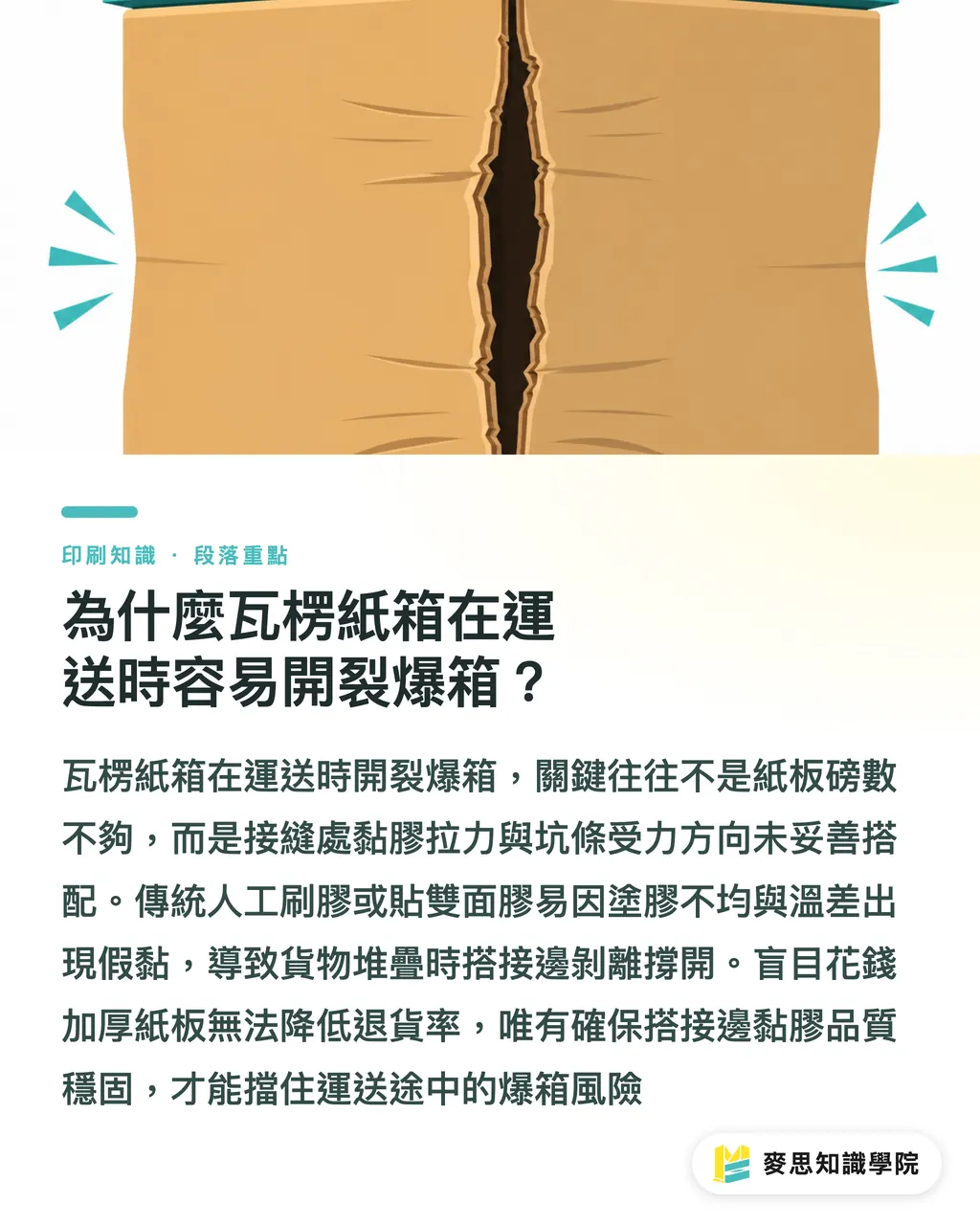
When corrugated boxes split during shipping, the culprit is rarely paperboard weight. Most of the time, the adhesive's pull strength at the seams simply doesn't align with the direction of the fluting stress
Working on the front lines, we see it all the time. When boxes collapse or side seams peel apart, a brand's first instinct is dropping big money to upgrade from 3-ply to 5-ply board. Yet their return rates stay painfully high
Recently, fluid handling giant Graco made moves by completing its acquisition of glue dispensing leader Valco Melton. In the packaging and converting industry, that sends a clear signal: automated high-pressure glue spraying equipment is spreading fast
Manual brushing or double-sided tape used to cause uneven glue thickness. When seasons change or temperatures swing during transport, hot-melt adhesive easily suffers from false bonding. Once boxes stack up, the pressure pops the overlap seams right open
Don't blindly thicken your paperboard
Box structural strength depends on four things together: material choice, flute direction, die-cutting accuracy, and seam adhesive. If the adhesive link gives way, no amount of extra cardboard thickness will stop a burst
Auto Spraying vs. Traditional Manual Gluing: What's the Difference?
The biggest gap between automated glue spraying and traditional manual gluing comes down to precision in glue application and bond strength at the molecular level
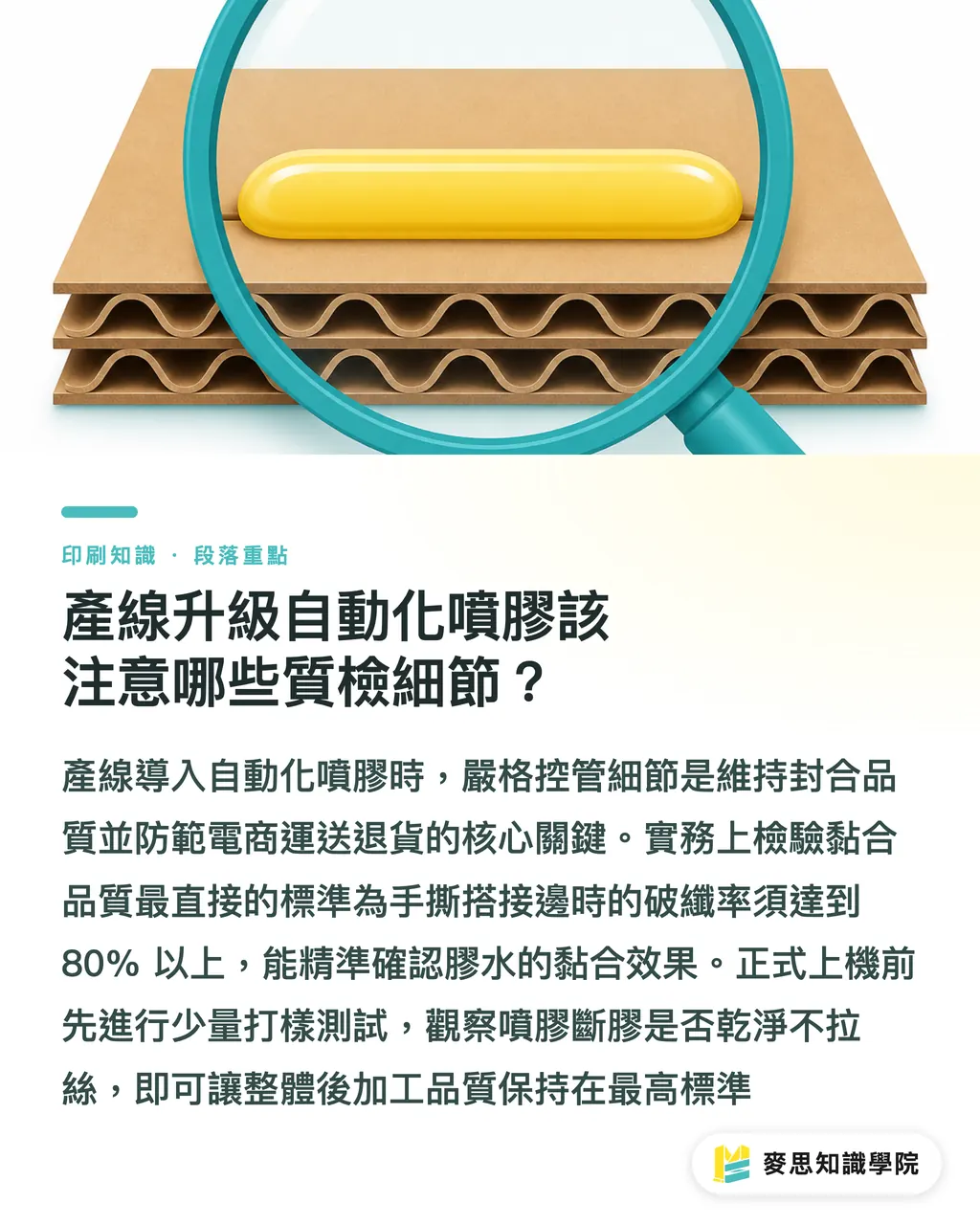
Automated hot-melt glue spraying process: A post-press technique using photoelectric sensors and high-pressure spray guns to apply temperature-controlled hot-melt glue directly onto box flaps or bottom seams. It replaces hand-applied double-sided tape or manual brushing, delivering uniform coverage and instant curing strength
When running automated box sealing lines, manual tape application wastes labor hours and risks weak spots caused by backing residue or oils from worker fingers
Here is a direct comparison of common bonding methods and their practical traits on the production line:
・Manual double-sided tape bonding: Slowest operation speed, labor-intensive tape application, poor weather resistance that softens easily in high heat, costs tied directly to labor hours, best for small-batch sample boxes
・Traditional water-based wheel/brush gluing: Moderate operation speed, requires 15 to 30 minutes of compression curing, paperboard easily absorbs moisture and warps, low cost, best for mass production of standard corrugated boxes
・Automated hot-melt glue spraying: Extremely fast operation speed, compression curing takes just 1 to 3 seconds, glue volume and position precisely controlled by photoelectric sensors, strong film weather resistance, best for mid-to-high-end automated folding cartons and burst-proof corrugated boxes
Looking at line efficiency, adopting automated glue sprayers clears up box sealing as a bottleneck, cuts compression wait times, and delivers much tighter consistency across finished goods
How Buyers and Designers Should Evaluate Box Structural Strength
Evaluating corrugated box structural strength demands a strict order: define intended weight first, choose material structure second, and draw dielines and final artwork last
Too many designers treat box design like poster design. Dieline calculations fall off, glue flaps stay too narrow, and the adhesive ends up with far too little contact area
To avoid ruined packaging runs and costly reprints, follow these actionable steps tested by MINDS during evaluation and production handoff:
・1. Calculate payload weight and stacking layers: Determine single-box weight requirements first to choose between 3-ply B-flute, E-flute, or 5-ply AB-flute paperboard, making sure vertical flute orientation aligns with stacking force
・2. Specify glue flap width and spray trajectory: Reserve at least 25 to 30 mm for glue flap width on folding cartons and corrugated boxes, allowing room for continuous line or dot spray paths
・3. Perform paper tear and weatherability tests: Conduct a Paper Tear Test after sealing sample boxes to ensure paper fibers tear apart rather than the glue layer peeling, then test tensile strength in cold storage or high-temperature environments
If you feel unsure about compressive strength or glue spray details, consult the technical team at MINDS anytime to lock in structural load parameters and auto-gluing settings right at the sampling stage, saving expensive rework later
What Quality Control Details Matter When Upgrading to Auto Spraying?
When introducing automated glue spraying to the line, key QC checks focus on glue temperature stability and paper tear rate metrics
Optimal working temperature for hot-melt adhesive stays between 160°C and 180°C. Lower temperatures reduce fluidity and cause false bonding, while higher temperatures oxidize and degrade the glue
In practice, the most direct benchmark for bonding quality is a paper tear rate over 80%. When tearing the glue flap apart by hand, over 80% of the surface area must show torn linerboard fibers
Don't rush it
Before running a full batch on an automated folder-gluer, test a small sample run to confirm clean glue cutoff and check for webbed strings contaminating box surfaces
Mastering these practical details keeps post-press sealing quality high, removing return risks during e-commerce shipping
Key Takeaways
Corrugated box bursts happen mainly when glue tension and structure are miscalculated. Don't blindly add cardboard thickness
Automated hot-melt glue sprayers cure in 1 to 3 seconds, wiping out post-press bottlenecks
Keep box glue flap width to at least 25 mm to provide ample contact area for glue spraying
Target an 80% paper tear rate as your bonding threshold, proving that paper fibers break before the glue peels
Design box shapes by setting weight demands first, then selecting material structures second
Further Thoughts
For packaging manufacturers and corporate buyers, post-press automation is no longer optional. It is a baseline requirement to safeguard lead times and quality. As dispensing equipment technologies from companies like Valco Melton mature, small and mid-sized print shops upgrading to automated spraying can cut down quality fluctuations from hand-applied glue. For SaaS and AI packaging software developers, incorporating automated spray path simulation and stress analysis into dieline design tools will help designers spot bonding traps before finalizing artwork. To learn more about premium custom printing and packaging structural optimization, visit the Mai Strategy Knowledge Academy Advisory Team for professional guidance
Further Reading
FAQ
- If a corrugated box splits at the side seam during shipping, is poor glue quality always to blame?
- Not necessarily. Narrow glue flaps, surface coatings like foil stamping or lamination release layers, and low glue temperatures leading to false bonding are all common culprits. A paper tear test will pinpoint the root cause
- What advantages does automated hot-melt glue spraying offer over traditional water-based glue?
- Automated spraying cures under compression in just 1 to 3 seconds with precise placement. Plus, it eliminates moisture softening and warping caused by water-based glues, speeding up box sealing efficiency on the line
- How wide should designers leave the glue flap on a corrugated box for automated spraying?
- Aim for a glue flap width of at least 25 to 30 mm. Keep inks and varnish coatings out of the glue area so the hot-melt adhesive penetrates paper fibers directly for maximum bond strength
Related articles


The Print × AI weekly
The print and AI know-how designers, brands and enterprises can use before they commit — one email, every week
MINDS Free Tools
AI background removal, brand stamping, and a LINE sticker maker — free design tools, right in your browser, no upload.
MINDS Group
Need actual printing or gifting services?
From premium printing to online ordering and festive gifts — the MINDS Group sister brands take it from here.