
Why You Can't Achieve Your Desired Saturation on Corrugated Board
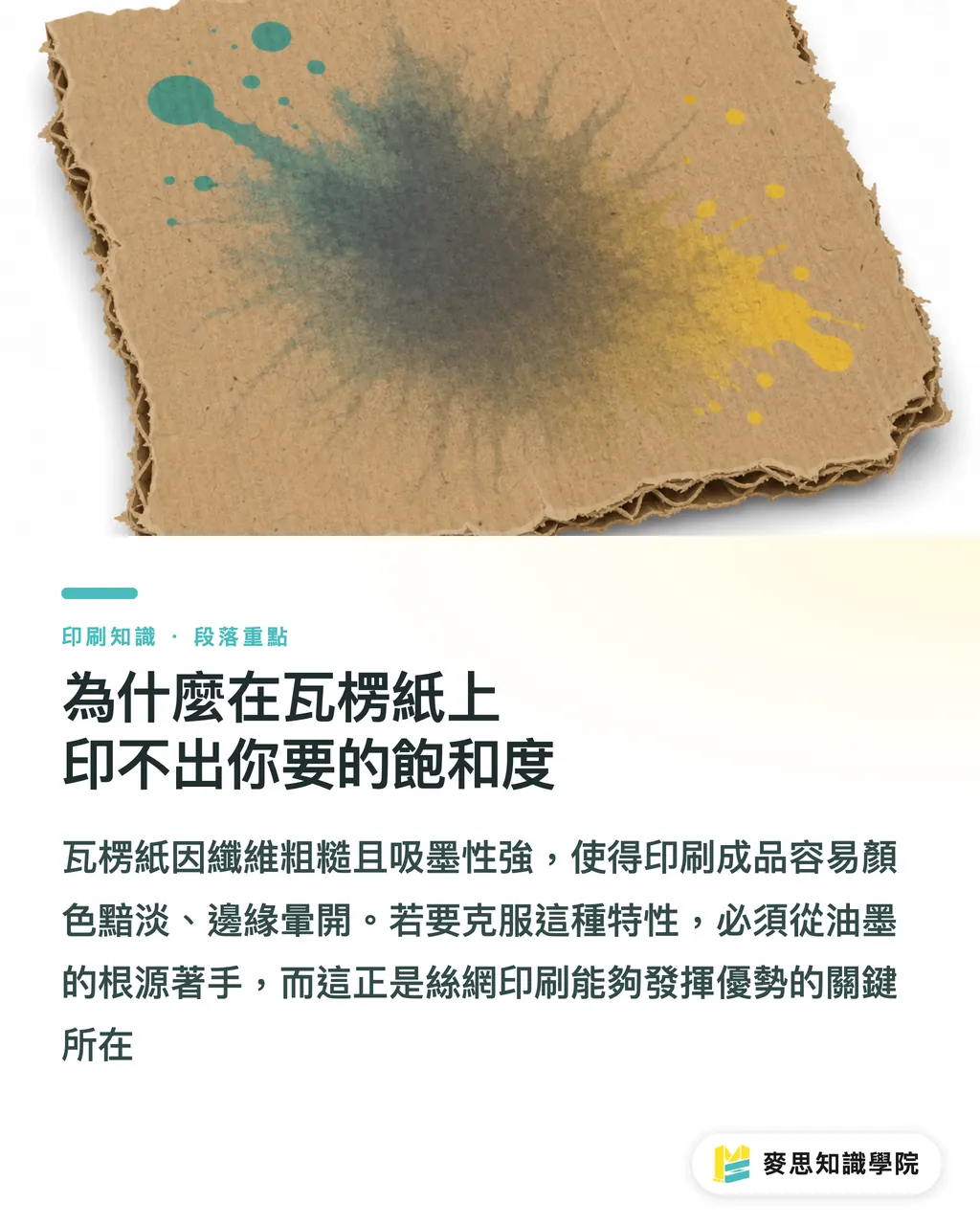
Over the years on the production line, we have seen many brand clients bring in exquisite design files, specifying them for corrugated boxes, only for the finished product to result in dull colors or even bleeding edges
The problem lies in the corrugated board itself, as its fibers are rough and have extremely high ink absorbency
If you directly apply the mindset used for coated paper when choosing ink, you are usually heading for a disaster
To overcome the temperamental nature of this substrate, we must address it from the root of the ink, which is the absolute advantage where screen printing comes into play
What Exactly Does Plastisol Ink Solve?
For screen printing on corrugated boxes, choosing the right ink is the absolute key to determining product quality
From a technical analysis perspective, Plastisol ink is the unsung hero behind many high-quality packaging pieces
・It does not penetrate directly into the paper fibers: This means it can sit firmly on the surface of the corrugated board, maintaining excellent visual saturation and a substantial, thick feel
・It possesses unique heat-curing properties: It will not dry before being baked at high temperatures, giving technicians ample operating time to fine-tune the screens
Compared to water-based inks, which are often cited but tend to perform inconsistently on rough paper surfaces, Plastisol offers superior coverage and adhesion
How to Resolve the Tension Between Drying Speed and Visual Quality
When designers adjust color values on a screen, it is difficult to imagine the physical changes that occur when ink is on paper
Drying conditions directly affect the final visual quality and durability of the packaging
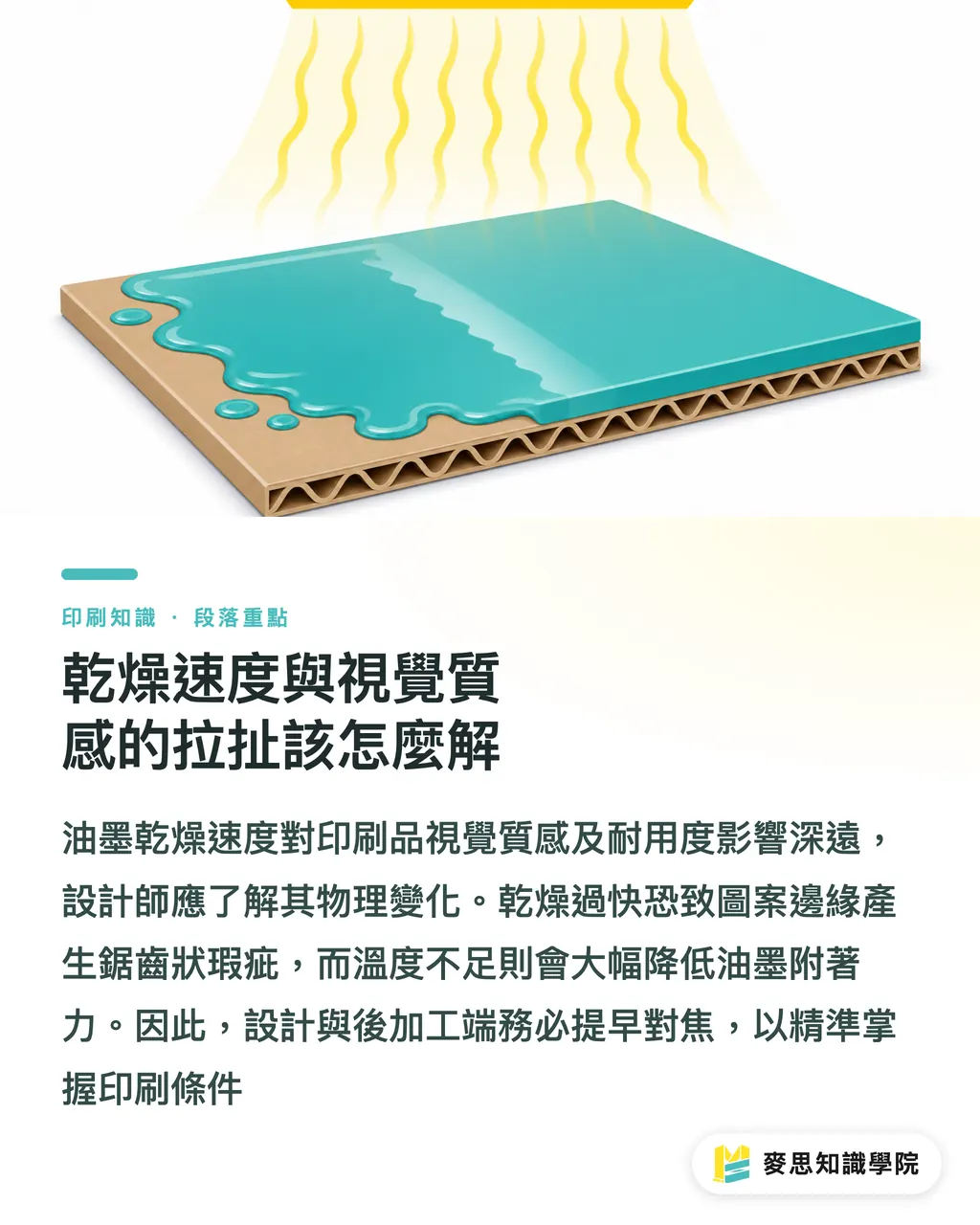
・Drying too quickly: Tends to cause screen clogging, which creates jagged edge flaws in the printed pattern
・Insufficient temperature: The ink cannot fully cross-link and cure, causing adhesion to drop significantly; the ink will scrape off easily during transport
In practice, technicians must precisely control temperature and conveyor belt speed based on the factory's drying equipment. This is why design and post-processing departments must align on physical limitations early
Key Takeaways
・To pursue high saturation on corrugated board, ink must stay on the surface rather than being absorbed into the fibers
・Plastisol ink, with its heat-curing properties, is a powerful tool for enhancing the printing quality of rough substrates
・Perfect screen printing quality depends on the precise control of drying temperature, which directly relates to adhesion and scratch resistance
・Designers should confirm the ink specifications used in the factory with post-processing technicians early to avoid large discrepancies between on-screen color and the physical product
Extended Reflections
For small and medium-sized printing companies in Taiwan, mastering the compatibility between specific substrates and inks is the key to escaping price-cutting competition
Facing the trend of brand clients increasingly valuing packaging quality, factories need to go beyond just printing; they must convert this technical know-how into front-end customized advice
For printing teams adopting systems, it is strongly recommended to incorporate 'ink and substrate incompatibility or suggested combinations' into quotation and order-taking logic. This allows incorrect pairings to be intercepted at the front end, greatly reducing communication and trial-and-error costs
Further Reading
FAQ
- Why is screen printing often specified for corrugated packaging instead of lithographic printing?
- The surface of corrugated board has a fluted structure and is easily deformed under pressure. Screen printing is a light-touch printing method, and combined with the ability to use thicker ink layers, it is best suited for handling such rough and uneven substrates
- Will Plastisol ink dry if it is not baked at high temperatures?
- No, that is precisely its physical characteristic. It must reach a specific cross-linking temperature (usually over 140 degrees) to fully cure; it will not dry naturally just by sitting at room temperature
- What should designers pay attention to when outsourcing corrugated screen printing?
- Be sure to avoid text that is too small or extremely fine gradient dots, and confirm the ink color performance with the printing plant in advance. Bold designs with large color blocks best use the strengths of this craft
References
- 瓦楞紙上的印刷工藝:絲網印刷油墨選用實務指南 · youtube.com
Related articles
The Print × AI weekly
The print and AI know-how designers, brands and enterprises can use before they commit — one email, every week
MINDS Free Tools
Spine width and imposition calculators — skip the manual math, free in your browser.
MINDS Group
Need actual printing or gifting services?
From premium printing to online ordering and festive gifts — the MINDS Group sister brands take it from here.