
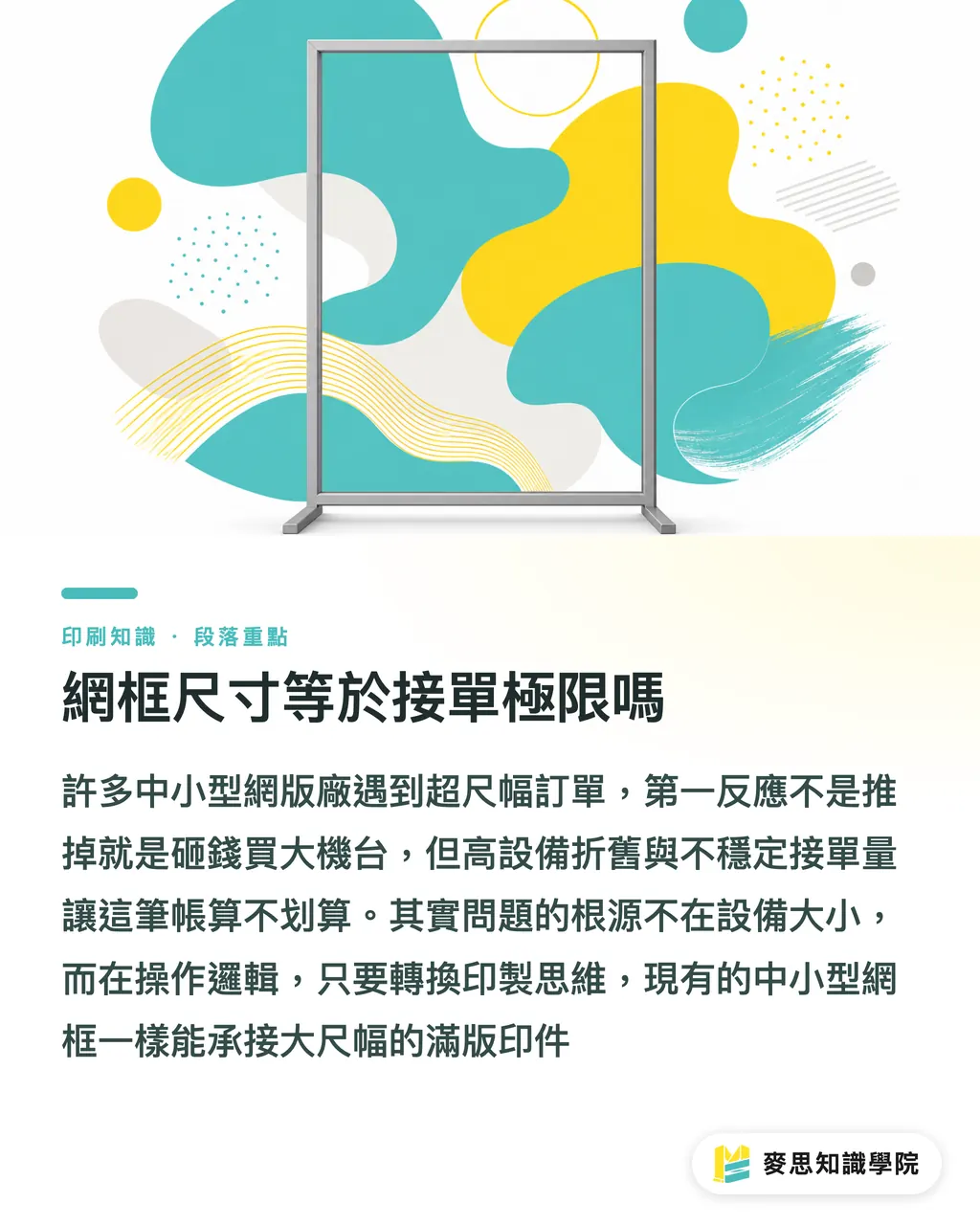
Is Screen Frame Size Really Your Order Limit?
In visiting several small-to-medium-sized screen printing shops across central and southern Taiwan recently, the most common frustration I heard was a lack of sufficient equipment size
When faced with large-format posters or display graphics brought in by designers, the shop's standard screen frames were simply a few centimeters too small
In traditional thinking, encountering full-bleed prints that exceed frame dimensions meant either turning down the order or spending a fortune on large-format machines and custom-made frames
However, given high equipment depreciation costs and inconsistent order frequency, this is rarely a cost-effective investment
In fact, by shifting your operational logic, existing small-to-medium equipment can just as easily handle large-format full-bleed prints
How Does Oversized Full-Bleed Printing Actually Work?
I recently saw a brilliant operational technique in an international printing demonstration video that perfectly exemplifies flexibility on the production line
To break through hardware constraints, the core key lies in precisely breaking down a single large-area print into multiple 'sectional registrations'
The operational logic in practice must focus on three levels:
・Precise sectional registration: Break the large image into multiple sections, using registration marks or targets to ensure the screen can be accurately aligned each time it is moved
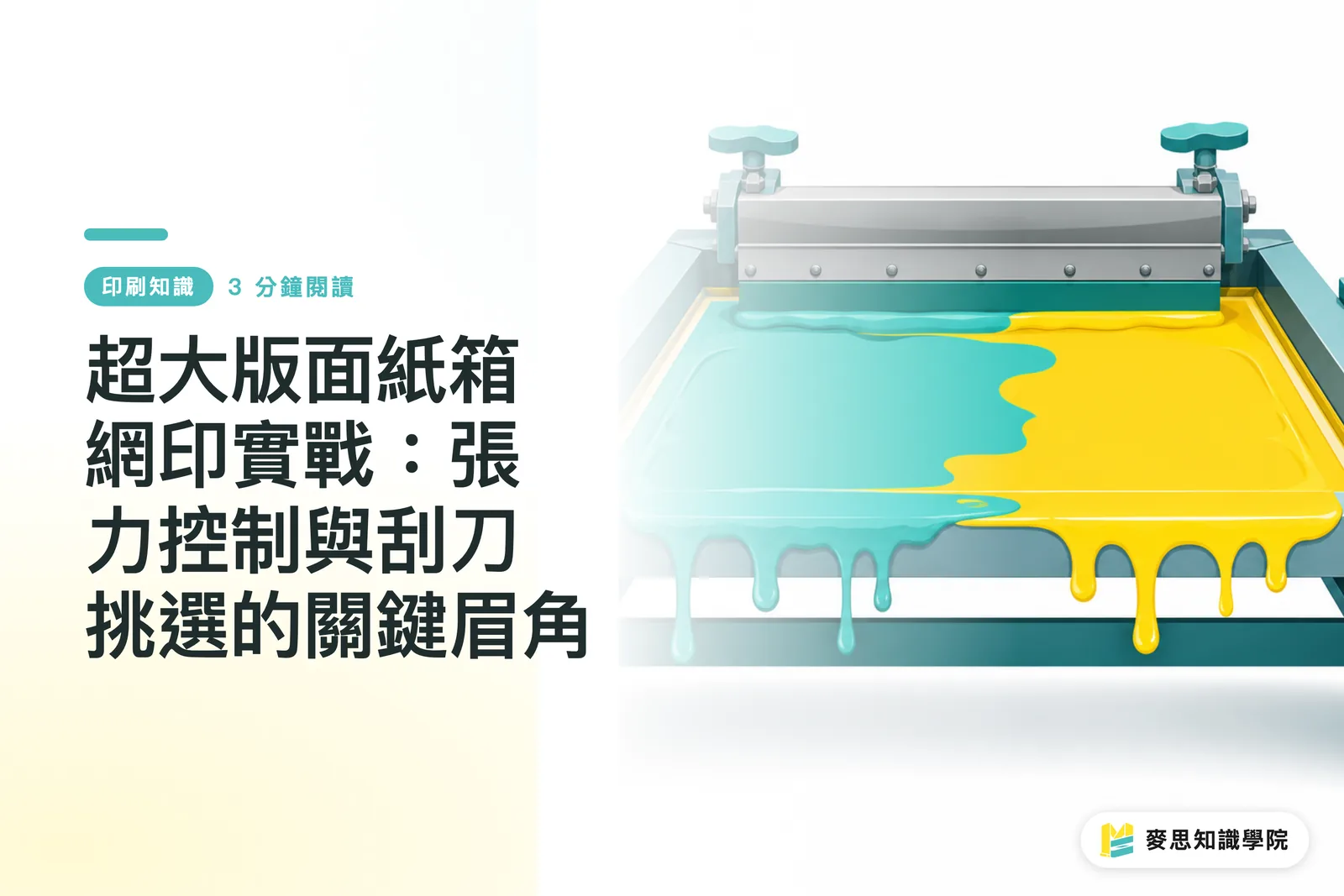
・Stable tension control: Screen fabric deforms under the heavy pressure of a squeegee; if the mesh tension is uneven during sectional printing, obvious gaps or overlaps will inevitably appear at the seams
・Absolute substrate fixation: This is the easiest step to fail. If the substrate slides even a millimeter during the repositioning process, the entire print is ruined
Drawing from my past experience closely monitoring QR code printing, if the registration is off by even a tiny bit, not only does the pattern become a blurry mess, but the basic scanning functionality fails as well, this is even more critical when working on sectional large-format prints
Why Substrate Fixation and Material Selection are Keys to Success
Many craftsmen trying sectional printing often fail due to the physical properties of the substrate
Just as designers often overlook material elasticity when producing large-format prints, paper or fabric in screen printing can also undergo slight deformation after receiving ink and squeegee pressure
・Use of vacuum platforms: If your machine has a vacuum function, be sure to turn it to maximum to ensure the paper is firmly stuck to the table
・Auxiliary positioning stops: If no vacuum platform is available, you must set up physical registration pins or heavy-duty stops around the substrate
・Gauging ink drying time: Ink film thickness at the overlap is prone to stacking. If the previous section hasn't reached surface dryness before printing the next, it is very likely to cause screen blocking or pull/smear the ink
This is identical to the logic we use when demanding accurate CMYK registration for high-end portfolios; a difference of a hair's breadth means a failed print
How Small Printing Shops Can Turn This Technique into a Competitive Advantage
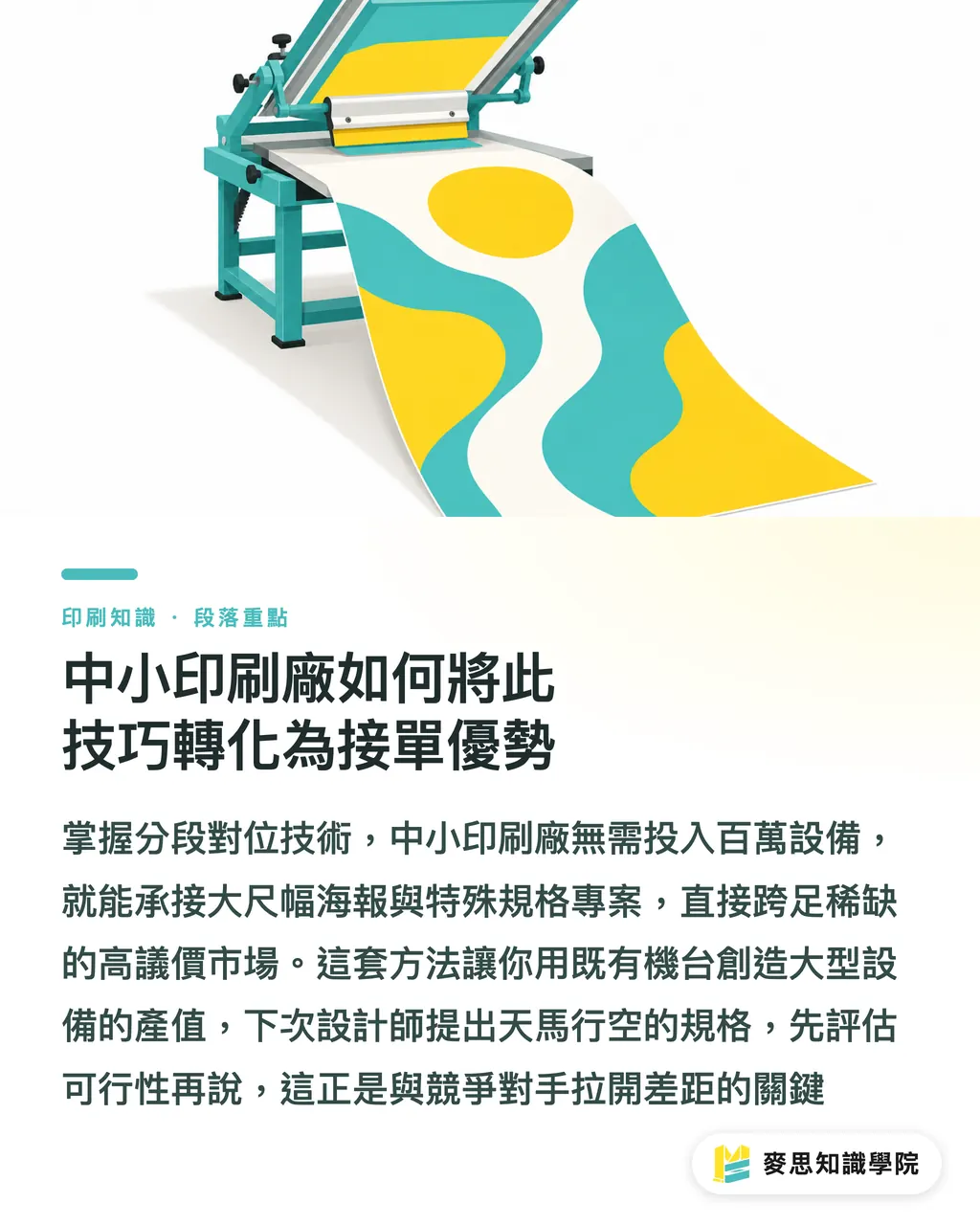
For small and medium-sized printing shops in Taiwan, the greatest significance of mastering this 'beyond-the-frame' method is reclaiming the flexibility and confidence to accept orders
You don't need to take on million-dollar equipment loans to prove to brand clients that you have the capability to handle special-spec projects
・Expand your service spectrum: From standard business cards and small packaging to full-scale artistic posters and limited-edition displays
・Increase pricing power: Full-bleed screen printing for special sizes is a rare service in the market. By overcoming the technical threshold of registration, you naturally avoid the typical price wars
・Optimize shop floor efficiency: Use existing small machines and frame space to create the output value that only large equipment would otherwise bring
Next time you face a designer's wild special specifications, don't rush to shake your head. First, evaluate the feasibility of sectional registration; this is the key to creating a gap between you and your competitors
Summary
・The core of breaking through frame limitations lies in precise sectional registration and solid substrate fixation, not in blindly expanding with large-scale equipment
・Tension control is the key to seamless joints in sectional printing; tiny deformations of the mesh under squeegee pressure can lead to pattern misalignment
・By introducing this technology to the production line, small and medium printing shops can expand their order scope with zero hardware costs, directly increasing profit margins
Extended Thinking
This breakthrough method for large-format screen printing is not just a clever technical trick, but an excellent strategy template for small and medium-sized enterprises dealing with equipment limitations
For potential clients of MINDS, mastering flexible operations on the production line can significantly increase your use when communicating with the design side
While SaaS systems and AI tools help us handle front-end file proofing and color management, if the production line can possess this ability to break through physical limitations, you can truly realize a seamless transition from digital to physical
I suggest that before production managers evaluate buying new equipment next time, they first take stock of whether the current equipment's limits have been pushed to the extreme. This is the fundamental path to lean operations
Further Reading
FAQ
- How can I solve the issue of overlapping marks appearing at the seams of sectional prints?
- The key lies in screen tension control and ink drying time. The screen tension at the seam must be perfectly consistent, and the previous section's ink film must reach surface dryness before printing the next, preventing the squeegee from pulling the wet ink
- Can I still do large-format sectional printing without a large vacuum platform?
- Yes. You must install precise physical registration pins and heavy-duty stops on the machine, combined with appropriate temporary spray adhesive, to ensure the substrate does not slide during the sectional squeegee process
- Is this 'beyond-the-frame' printing method suitable for all patterns?
- It is recommended to prioritize patterns with distinct color blocks or high border fault tolerance. If the pattern involves extremely fine gradients or blocks with strict registration requirements like QR codes, you should still evaluate strategies for avoiding the seams
References
- 網版印刷大尺幅突破實戰:超出框架的滿版印刷怎麼做? · youtube.com
Related articles



The Print × AI weekly
The print and AI know-how designers, brands and enterprises can use before they commit — one email, every week
MINDS Free Tools
Spine width and imposition calculators — skip the manual math, free in your browser.
MINDS Group
Need actual printing or gifting services?
From premium printing to online ordering and festive gifts — the MINDS Group sister brands take it from here.