
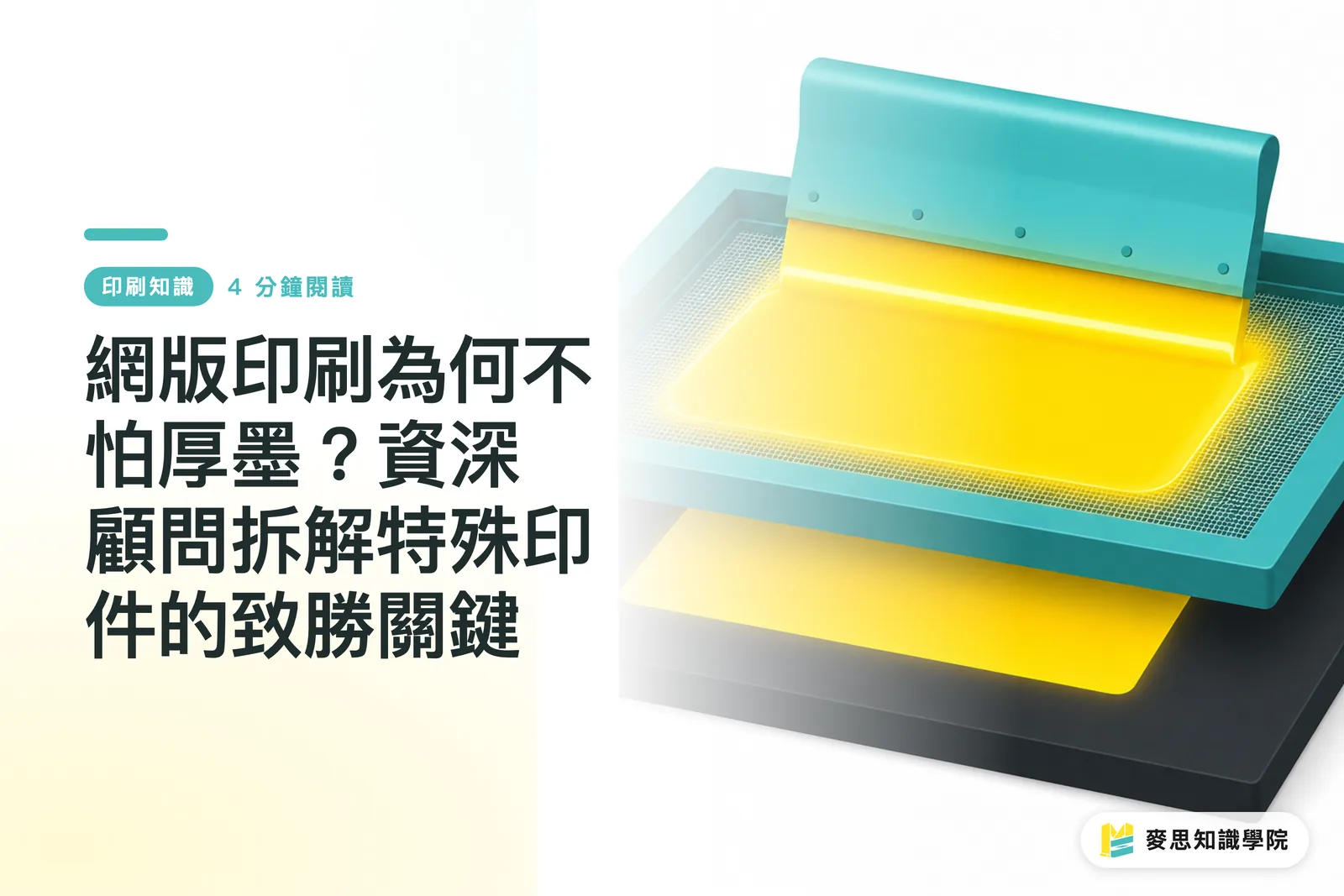
Why Screen Printing Breezes Through Dark Cardstock Where Offset Printing Fails
Over the past decade or so, I have seen too many designers specify dark fine art paper for their exquisite final artwork, only to experience absolute heartbreak upon receiving the finished product
Many designers are used to relying on the same set of CMYK values for everything, but the ink used in traditional offset or digital printing is inherently translucent
When you print translucent ink onto dark paper, the colors are usually absorbed by the dark substrate, turning dull and lifeless
In these situations, I usually advise clients to switch to screen printing
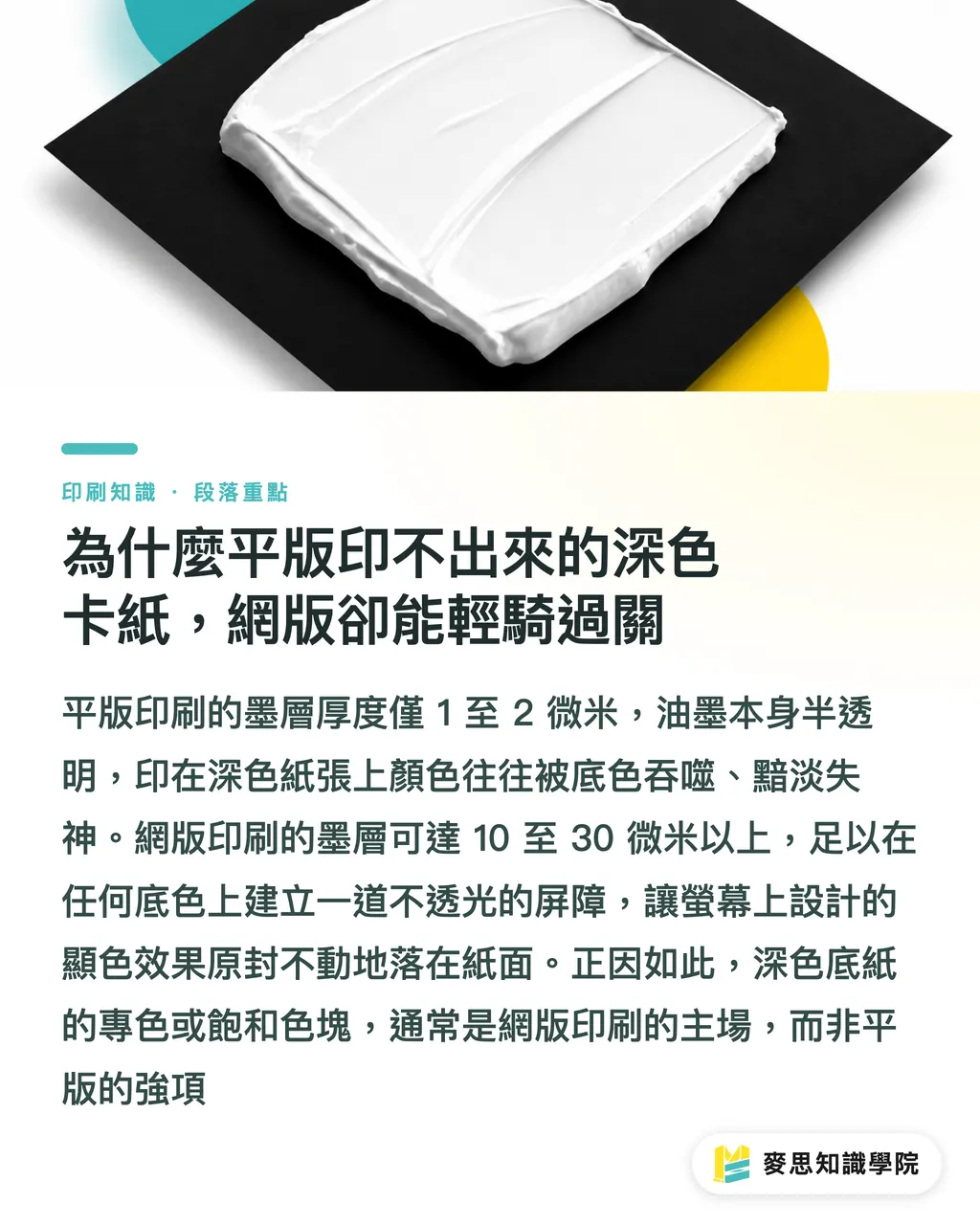
While the ink layer thickness of offset printing is only about 1 to 2 microns, screen printing can easily achieve 10 to over 30 microns
This substantial physical ink layer builds an opaque barrier over any background color, materializing the colors on your screen with absolute precision
How Screen Printing "Squeezes" Ink Onto the Substrate
To understand the absolute advantage of screen printing, you must first understand the physical mechanics of its production line
Imagine a tightly stretched fine mesh screen coated with a photosensitive emulsion. After exposure, the emulsion in the image area is washed away, exposing the mesh openings underneath
During printing, we pour ink onto the mesh and scrape it firmly using a specialized rubber squeegee
Under pressure, the ink passes through those openings, accurately transferring to the substrate below
The key variables on the production line are the "mesh count" and the "squeegee."
When printing large solid color blocks or inks containing large-particle metallic powders, we choose a 100-mesh screen with larger openings
If we need to print finer lines, we switch to a 300-mesh screen or even finer to control the ink volume and edge sharpness
Why It Is Deemed the King of Special Inks and Non-Flat Materials
Precisely because ink is forced through mesh openings, screen printing has an extremely high tolerance for different types of ink
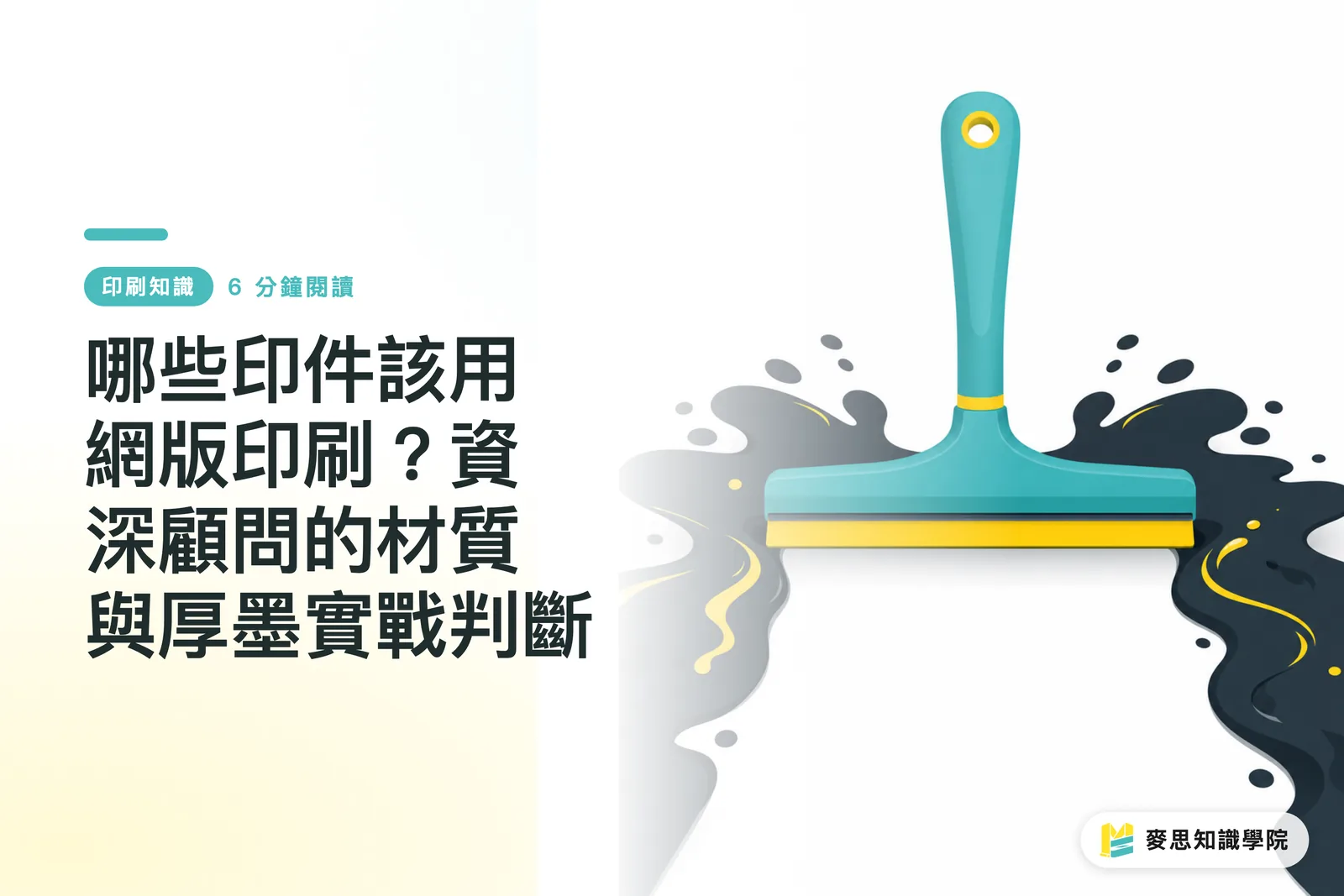
Special coatings that offset and digital machines dare not touch, such as luminescent inks with large particles, glow-in-the-dark paint, scratch-off silver ink, or tactile spot UV, can all be handled
Only the mesh openings of screen printing can accommodate these high-viscosity or large-particle pigments
In addition to handling thick ink, the screen mesh possesses excellent elasticity, freeing it from the constraints of absolutely flat paper surfaces
From glass bottles and jars, acrylic signs, and metal panels to wooden structures, as long as the substrate can be secured, passing the squeegee over the screen yields beautiful printed patterns
Want to Print Fine Text and Gradients? You Must Understand These Inherent Limitations
While screen printing is highly forgiving with materials and inks, it faces physical limitations when it comes to fine design details
Screen printing relies on mesh openings to pass ink. If your design includes extremely small text or ultra-thin lines, the ink can easily bleed between holes or clog them entirely, preventing it from printing
My golden rule for clients is: text must never be smaller than 6pt (with knockout text sized up even more), and line weights must be at least 0.2mm
Also, screen printing struggles to produce the extremely smooth color gradients achievable by digital printers; forcing it often results in obvious moiré patterns or spotting
When handling multi-color registration, a separate screen must be made for each color, and each color must be printed individually, either manually or mechanically
Mechanical movement and repeated manual alignment inevitably introduce physical tolerances
Therefore, you must avoid designs with demanding edge-to-edge registration of ultra-thin lines. Adding a slight trapping or leaving a gap will prevent major headaches on the production line
Production Outsourcing: How Platemaking Fees and MOQ Are Calculated to Keep It Profitable
Many small and medium-sized enterprise (SME) clients are taken aback by the initial pricing structure when they first encounter screen printing
Because each individual color in screen printing requires the technicians to create a dedicated screen, a non-negotiable platemaking fee is incurred
If you only want to print 50 stickers with a four-color design, the platemaking cost for four screens spread across such a small run will make the unit cost outrageously high
However, if you scale the minimum order quantity (MOQ) up to 5,000 or tens of thousands of prints, the overall average price becomes more advantageous than digital printing, thanks to the high durability of the screen and the low cost of ink per print
Based on current market logic, leave low-volume, highly varied, standard print runs to digital presses. Meanwhile, for industrial-grade labels and panels that require maximum opacity, tactile finishes, or high-volume production,
screen printing remains the most cost-effective and even irreplaceable practical choice
Key Takeaways
・The physical nature of screen printing involves squeezing ink through mesh openings, creating irreplaceable thick coverage and texture
・For dark cardstock prone to absorbing ink, non-flat metal parts, or special coatings like glow-in-the-dark and scratch-off inks, screen printing is almost the only solution
・To accommodate physical tolerances on the production line, designs should avoid ultra-small fonts and smooth gradients, and leave adequate margins for multi-color registration
・Every added color in screen printing requires a fixed platemaking fee. Using its high durability to increase the print run is the best way to minimize unit cost
Further Thoughts
In transitioning from physical production lines to digital workflows, we often ponder how to translate the veteran printing masters' intuition of "mesh selection" and "tolerance allocation" into precise system parameters
This is exactly what the MINDS printing team is currently focused on: integrating complex pre-press evaluation expertise into digital workflows
When a system can instantly warn clients about potential screen printing risks for gradients and fine text the moment they upload a file, while suggesting alternative solutions,
we are no longer selling just printed products, but a knowledge-based service that helps SMEs sidestep real-world pitfalls
FAQ
- Why do colors look dull when my design is printed on dark fine art paper?
- Because the ink in traditional offset printing is translucent, allowing the dark background to show through and wash out the colors. Switching to screen printing, which features a thick ink layer, easily resolves this issue
- I want to print delicate color gradients. Is screen printing suitable for this?
- No. Screen printing transfers ink through a mesh, making it highly prone to noticeable moiré patterns when printing smooth gradients. We recommend using digital or offset printing for such designs
- What are the specific constraints for text and lines when outsourcing screen printing?
- We recommend keeping text sizes at 6pt or larger (even bolder for knockout text) and line widths no less than 0.2mm to prevent ink bleeding or clogged mesh openings
- Can I specify screen printing if I only want to print a small batch of 50 metallic stickers?
- Yes, but the unit price will be extremely high. Because screen printing requires a fixed platemaking fee for each color, a larger print run is necessary to make the setup costs economical
Related articles
The Print × AI weekly
The print and AI know-how designers, brands and enterprises can use before they commit — one email, every week
MINDS Free Tools
Spine width and imposition calculators — skip the manual math, free in your browser.
MINDS Group
Need actual printing or gifting services?
From premium printing to online ordering and festive gifts — the MINDS Group sister brands take it from here.