
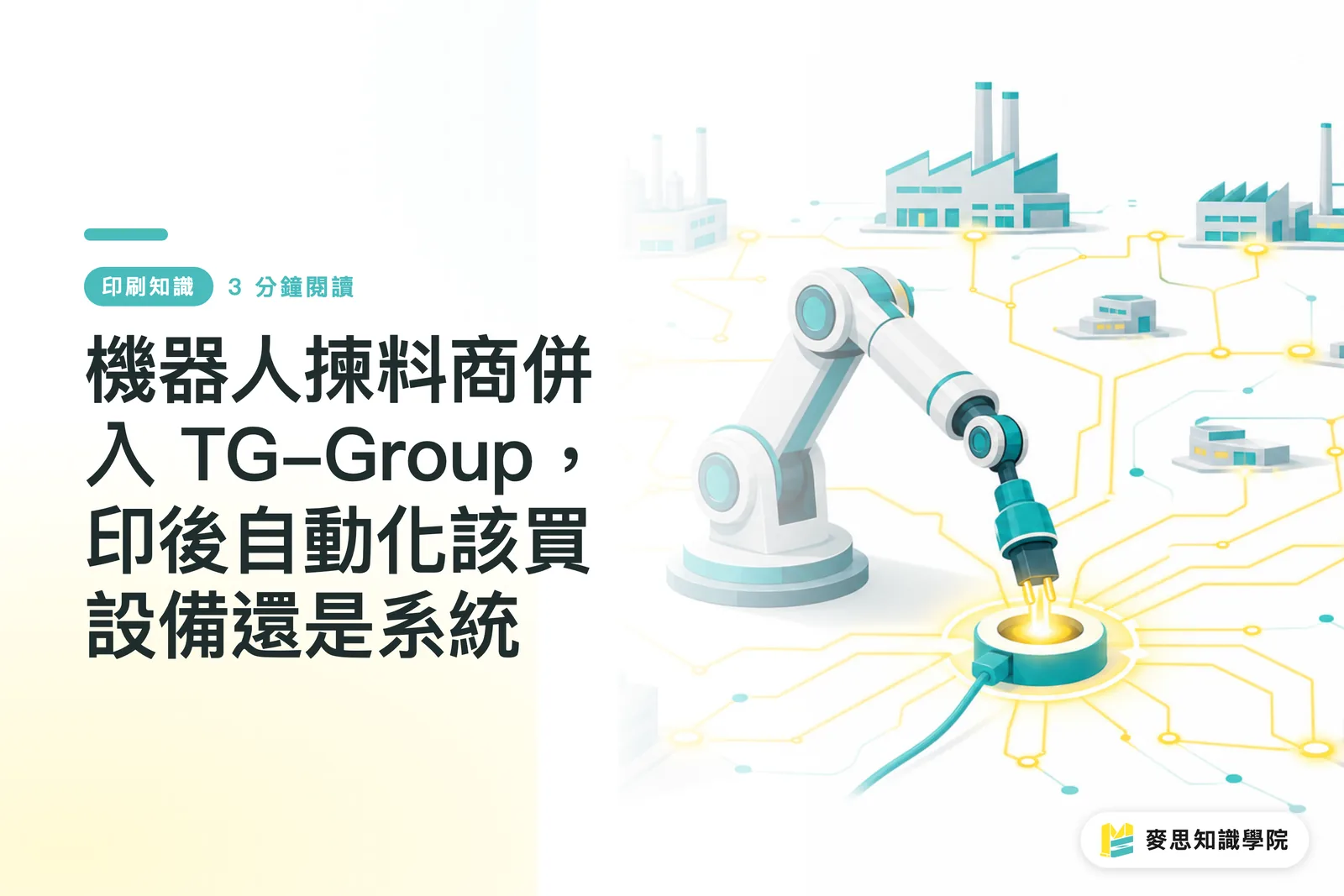
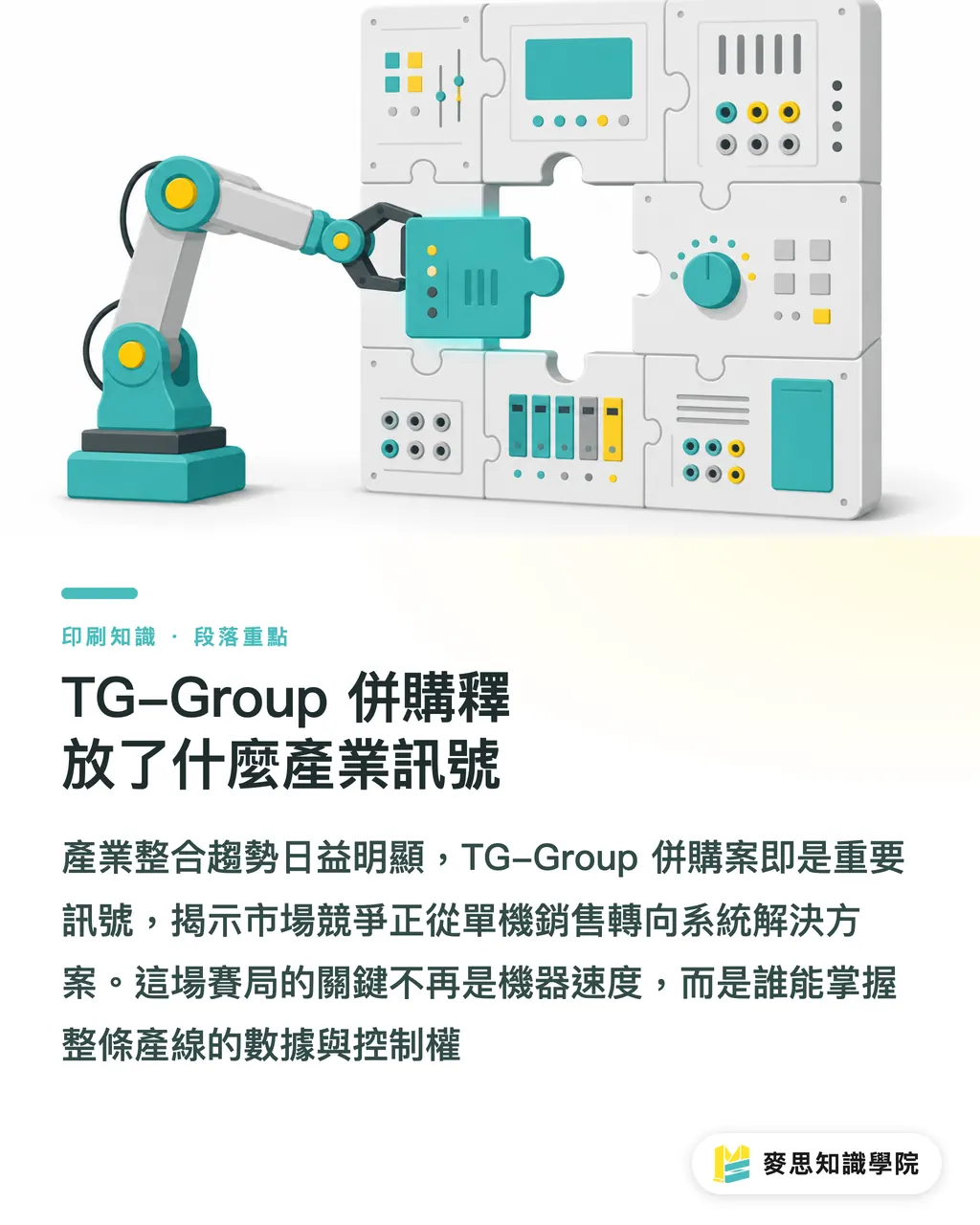
What Signal Does the TG-Group Acquisition Send to the Industry
Industry consolidation has been picking up lately, and Pick & Place's announcement that it's joining TG-Group is one very clear signal
With this move, TG-Group pulled robotic pick-and-place solutions directly into its own automation portfolio, a sign that the packaging automation market is shifting from single-machine sales to system-solution competition
I've been noticing more systematic pre-press quality checks on production lines recently. EyeC, for instance, is integrating Proofiler Graphic Connect directly into the design-and-final-artwork stage
What pre-press is doing, post-press finishing is now doing too
The rules of the equipment market have changed: it's no longer just about selling you a fast machine, it's about selling control and data over the entire line
Why a Single Robot Arm Won't Fix Your Packaging Line's Bottleneck
Packaging regulations have been tightening globally over the past few years. California's SB 54, for example, is forcing supply chains to switch to flexible films or biodegradable materials
Take Mother Dairy, the Indian brand that just launched a biodegradable milk pouch. These new materials tend to be physically harder to handle than conventional plastics
When upstream materials change, a standalone robot arm with no connection to upstream equipment can't adjust its gripping force on the fly, leading to jams or skyrocketing rejection rates
That's why patching lines together with one-off machine purchases is getting harder and harder
What you actually need is a system where everything talks to each other: when front-end sensors detect a change in material tension, the backend robot can automatically fine-tune its parameters
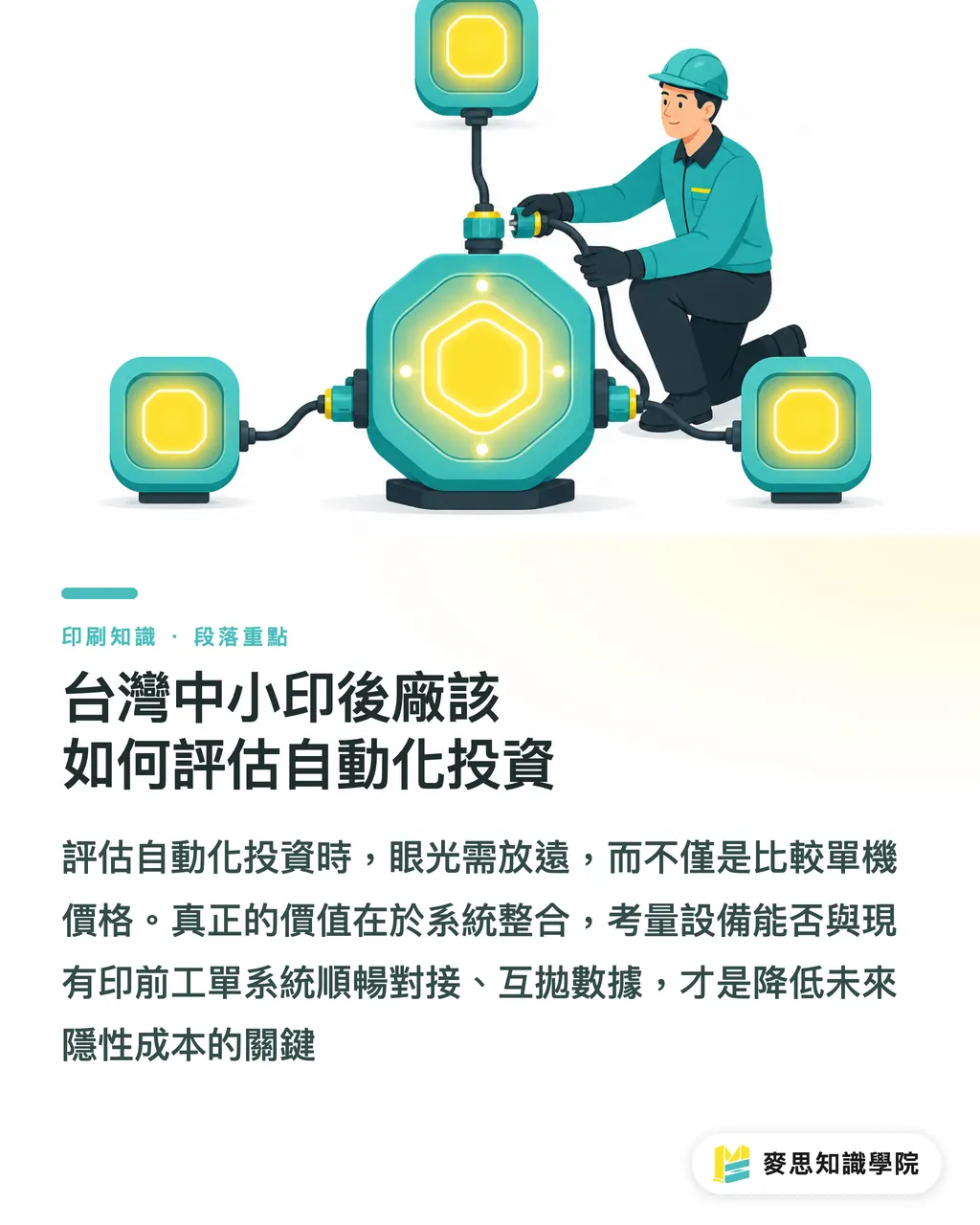
How Small and Mid-Sized Taiwanese Post-Press Converters Should Evaluate Automation Investment
For the many small and mid-sized post-press converters in Taiwan dealing with labor shortages and looking to automate, this is a turning point that demands attention
Going with a system integrator might come with a higher initial quote than buying a single robot arm, but when you factor in future job-changeover frequency, the hidden costs of disconnected equipment are actually higher
When advising converting shop owners on automation procurement, I usually tell them to look at these dimensions:
・System compatibility: Can the equipment exchange data with your existing ERP or pre-press job ticketing system, cutting down on manual re-entry?
・Changeover flexibility: For today's short-run, high-mix orders, how long does it take to reprogram parameters and swap out grippers?
・Data sharing: Can defect data caught at quality inspection feed back in real time to the pick-and-place station for automatic rejection?
Key Takeaways
・Standalone automation can no longer handle increasingly complex eco-friendly packaging materials and end-to-end quality control requirements
・Equipment makers are shifting their competitive ground to integrated hardware-software systems spanning upstream and downstream
・Post-press converters' investment evaluation should move from pure equipment specs toward data connectivity and changeover flexibility
Further Thoughts
As this shift from standalone machines to integrated systems picks up speed, line upgrade planning can't stop at pick-and-place throughput
Brand clients' packaging requirements now extend to source plastic reduction and process traceability
Choosing a system partner that can link pre-press artwork, print data, and post-press finishing smoothly, and getting job data flowing cleanly, is what keeps margins healthy long-term
Further Reading
FAQ
- What is end-to-end packaging automation integration?
- It means every piece of equipment, from material in-feed, printing, and post-press finishing through to final pick-and-place and boxing, can communicate through a unified system and adjust parameters automatically
- Why shouldn't Taiwanese post-press converters buy just a single robot arm?
- A standalone machine can't bridge the information gaps between upstream and downstream, and when new eco-friendly materials come into play, it lacks the ability to adapt dynamically across the whole line
- What's the starting point for SMEs with limited budgets?
- Start by identifying the most labor-intensive bottleneck stations in your facility, then look for regional system integrators who offer modular upgrades and have real software integration experience
References
- 機器人揀料整合包裝產線:Pick & Place 加入 TG-Group 的自動化佈局意涵 · packaginginsights.com
Related articles
The Print × AI weekly
The print and AI know-how designers, brands and enterprises can use before they commit — one email, every week
MINDS Free Tools
AI background removal, brand stamping, and a LINE sticker maker — free design tools, right in your browser, no upload.
MINDS Group
Need actual printing or gifting services?
From premium printing to online ordering and festive gifts — the MINDS Group sister brands take it from here.