
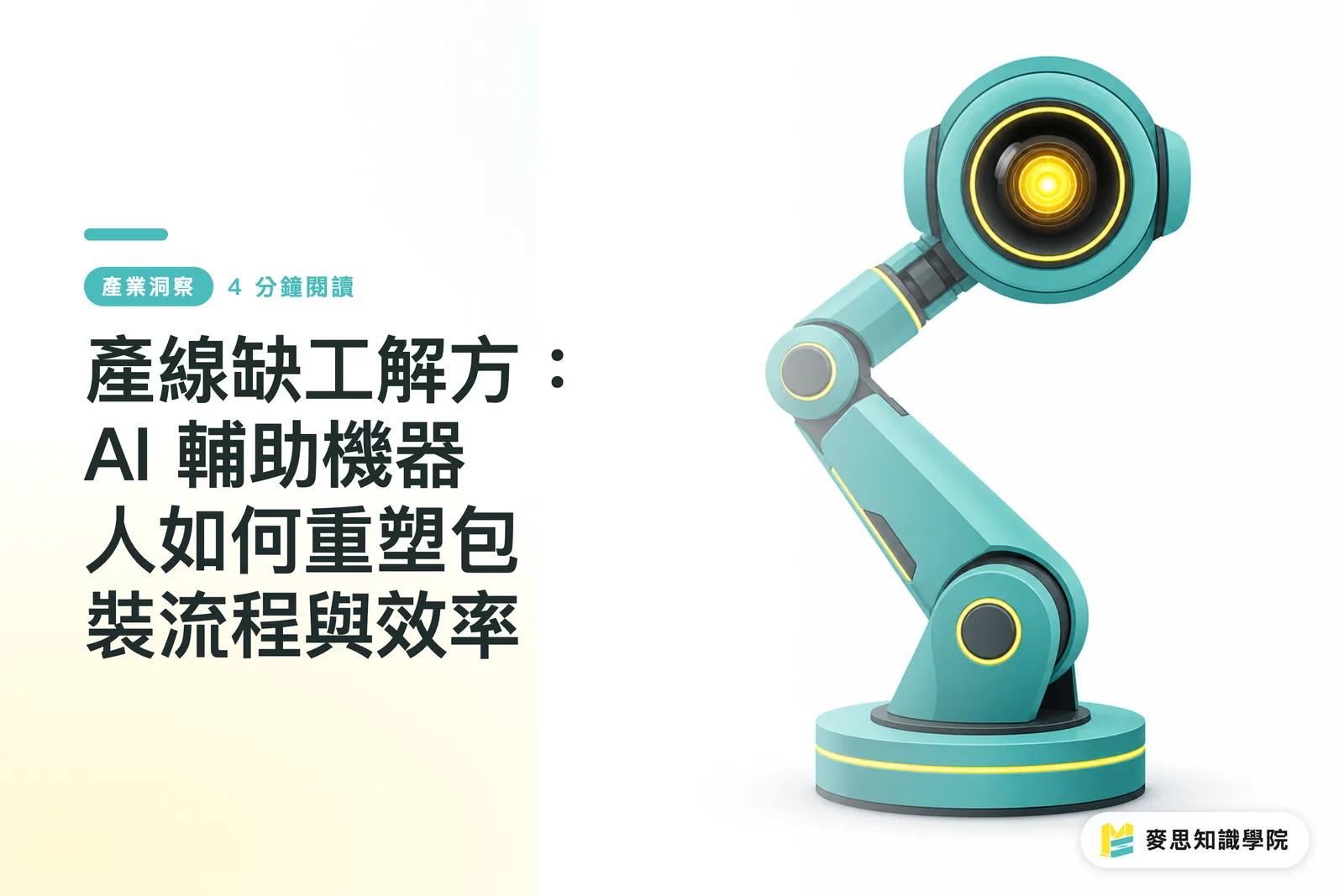
Why Small and Mid-Sized Factories Can No Longer Ignore AI-Assisted Robots
AI-assisted robots are automated systems that combine machine vision with deep learning algorithms. They recognize object shapes and defects in real time, independently handling precise picking, placement, and quality inspection tasks on the packaging line
Over the past few years, I've visited dozens of long-established print shops in central and southern Taiwan. The top complaint from owners isn't price wars anymore, it's having orders but no one to pack them
With the working-age population shrinking, the packaging and inspection steps that have always depended on manual labor are being pushed past their breaking point
When the consulting team at Mai Strategy Knowledge Academy works with traditional factories on transformation, one thing keeps coming up: bringing in AI-driven equipment is the fastest way to break through capacity bottlenecks
These systems adapt quickly to diverse, small-batch packaging needs and free floor workers from the grind of repetitive manual tasks
When we used to talk about production line automation, we mostly meant rigid robotic arms running pre-programmed fixed paths
Systems paired with AI now have eyes that see and a brain that analyzes variation, letting them handle the small inconsistencies that constantly pop up on a live line
That's exactly what gives small and mid-sized factories the yield rates and order flexibility they need to stay competitive
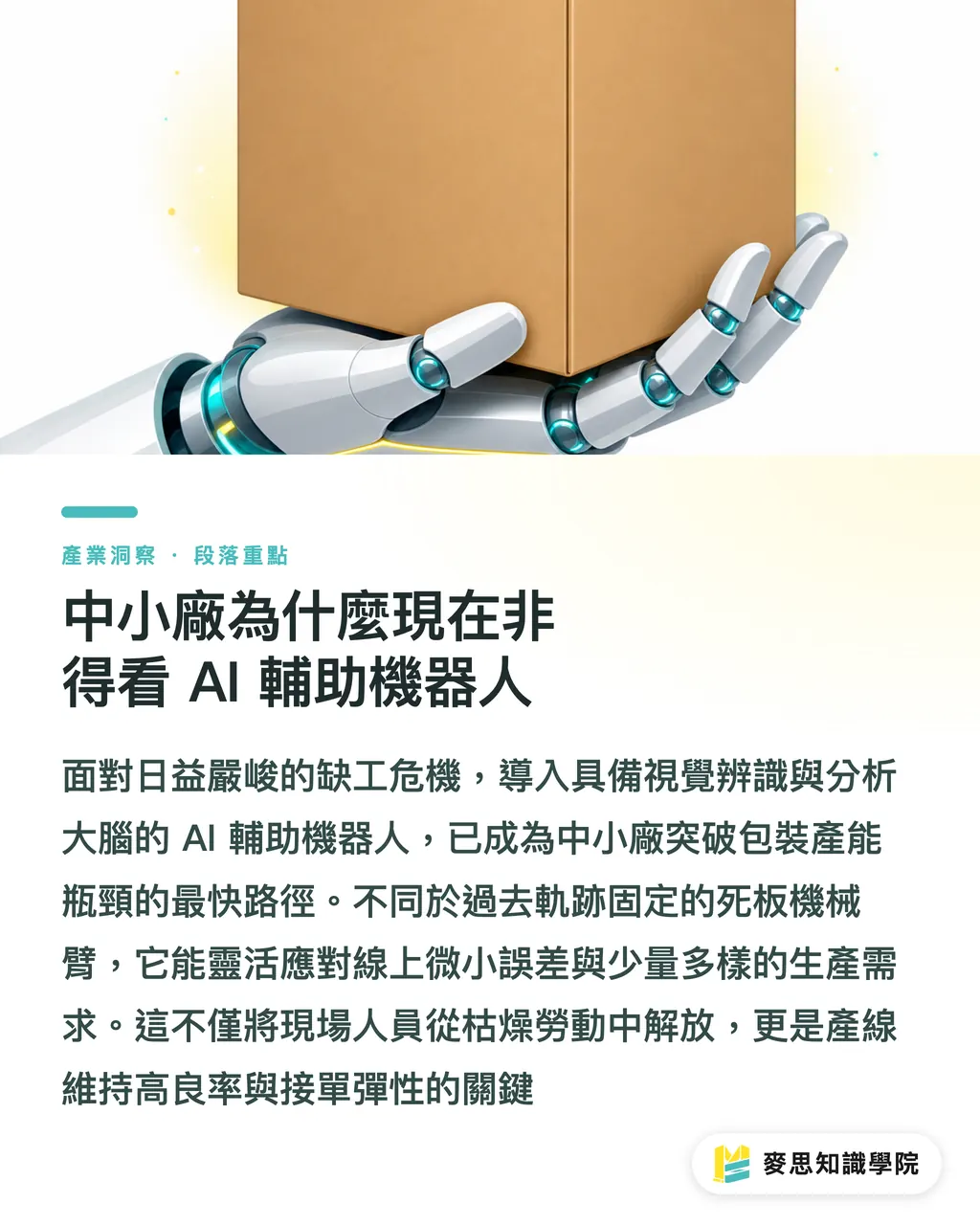
How Machine Vision and Deep Learning Actually Work Together
Traditional optical inspection is extremely sensitive to parameter settings. A slight die-cut shift on a box or a bit of surface glare from the paper and the system starts throwing red alerts nonstop
I've seen QC staff forced to kill the automatic inspection and fall back to full manual visual checks, which means shipments stall at the very last checkpoint
Today's systems integrate deep learning models. Instead of judging by rigid pixel-level thresholds, they actually distinguish between acceptable paper texture and genuine print defects
Once the machine vision camera captures a live image, it cross-references the training database in milliseconds and immediately directs the robotic arm to pick and place with precision
For MINDS print clients who regularly handle specialty material packaging, the ability to switch recognition standards quickly cuts down the pain of changeovers significantly
You don't need a team of engineers on the floor writing code
Most new systems support an intuitive teaching mode. A line supervisor just needs to feed a few good and bad samples through a couple of runs, and the machine figures out the rest
That brings the technical barrier down to something small and mid-sized factories can actually work with. Automation isn't just a big-company showcase anymore
How to Avoid the Landmines When Bringing AI onto the Production Line
I've seen too many factories rush to throw money at hardware, only to end up with machines gathering dust in the corner
Getting automated equipment to actually work starts with auditing your own standard operating procedures, not calling up a vendor to place an order
In practice, we often use the "MINDS (MS, mid-to-high-end fully customized commercial printing) Three Gates for Production Line Upgrade" framework to clarify where things stand:
・Process standardization: First confirm whether the stacking of paper, packaging materials, and semi-finished products follows a consistent pattern. Machines hate unprincipled chaos
・Targeted pain point attack: Identify the single step on the line that consumes the most labor and has the highest error rate, and use it as your first pilot, boxing, for example, or a specific defect inspection
・Human-machine responsibility split: Define clearly where the machine handles initial screening and where humans do the recheck. Don't expect a new system to be 100% airtight from day one
If you're not yet confident about your own floor processes, talk to the consulting team at Mai Strategy Knowledge Academy first. An outside perspective can help you diagnose the gaps and find the best opening for an automation investment
Buying equipment is easy. Getting your existing scheduling to mesh smoothly with machine vision, that's the hard part, and it's what actually determines your return on investment
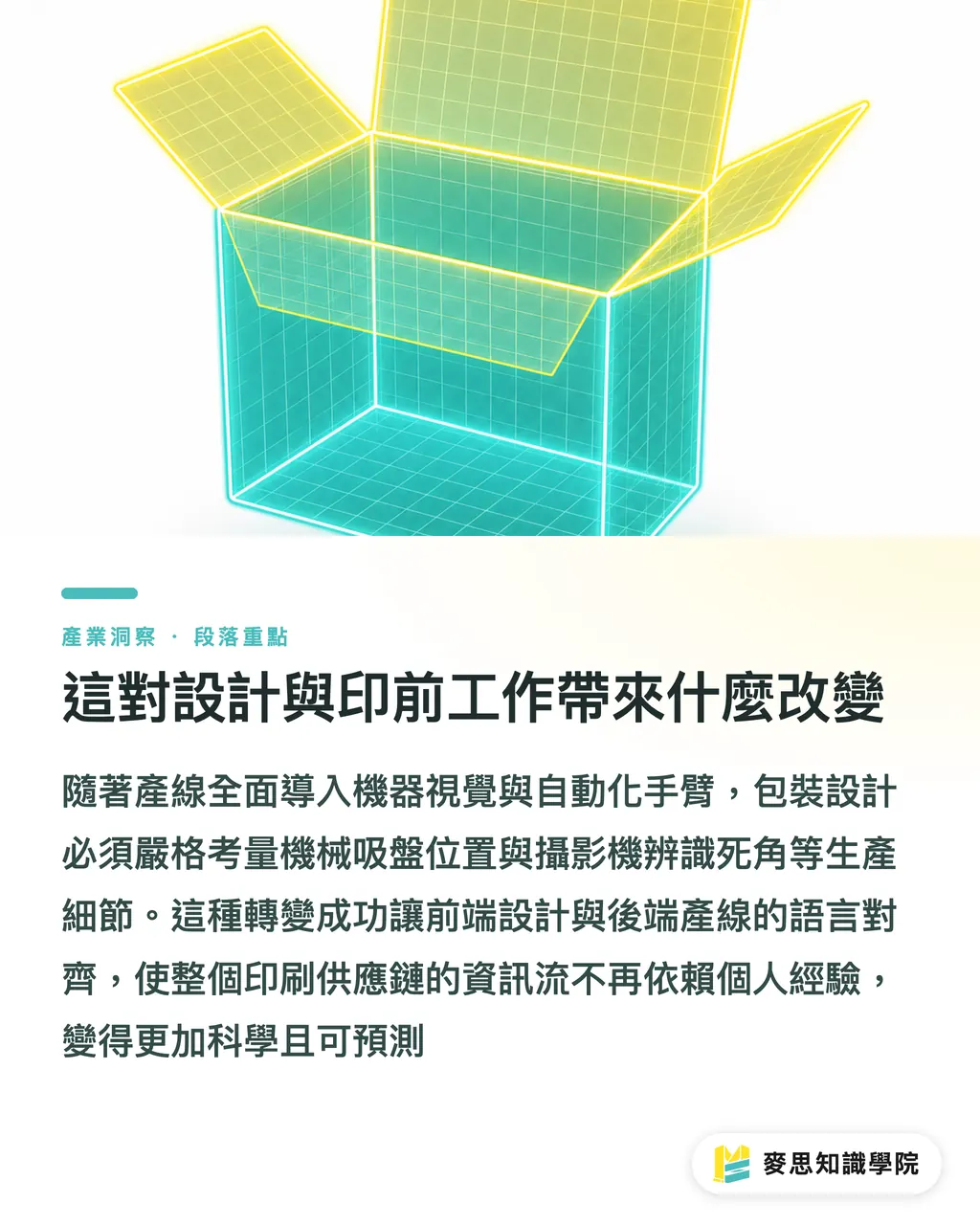
What This Means for Design and Prepress Work
Over the past few months, I've noticed clearly that hardware upgrades aren't just changing what happens inside the factory, they're also reshaping the work of designers at the very front end
In the past, the unconventional die-cut packaging designs that designers dreamed up would often become a nightmare for the line workers doing hand-folding
Now that production lines are relying on machine vision and robotic arms, the logic behind die-cut design has to evolve with them
Packaging structures need to account for where the robotic arm's suction cups will land, the camera's blind spots, and even the contrast on barcodes and labels, everything has to be readable by the machine in under a second
Prepress file standards will get stricter than ever. Any design clutter that could interfere with deep learning judgment will get flagged
That's actually a good thing
When the language of front-end design and back-end production aligns, scheduling becomes genuinely scientific and predictable
From quoting and prepress compliance checks to final boxing and shipping, information won't get stuck in anyone's head anymore, it'll flow cleanly through the entire print supply chain
Key Takeaways
・AI-assisted robots combine vision and deep learning to make independent judgments and adapt to diverse packaging requirements
・The key to adoption isn't how powerful the hardware is, it's identifying the most labor-intensive step on the line and targeting it directly
・Front-end packaging design must factor in production realities like robotic arm suction cup placement and machine vision blind spots
・With a clear split of responsibilities between human and machine, small and mid-sized factories can build automated lines that are both fault-tolerant and flexible
Further Thoughts
For print and packaging factories sitting right in the middle of the labor shortage tsunami, stop treating AI-assisted robots as some distant black-box technology. The teaching barrier today is roughly on par with training a new hire
Designers should also be thinking about how machines read and grip, building better yield rates in from the source
If you're evaluating an equipment upgrade, start by reviewing your existing standard operating procedures and pinpointing which steps need machine precision the most
Further Reading
FAQ
- What's the difference between AI-assisted robots and traditional robotic arms?
- Traditional robotic arms can only run hardcoded fixed paths. AI systems paired with machine vision recognize object variation in real time, independently adjusting grip angle and placement, which means a much higher tolerance for error
- Is the barrier to adoption high for small and mid-sized factories?
- Most systems now support an intuitive teaching mode. Floor staff just provide good and bad samples for the machine to scan, no coding needed, and a recognition model gets up and running fast
- Do packaging designers need to change how they work for automated production lines?
- Yes. Structural design needs to avoid machine vision blind spots and leave enough flat surface area for robotic arm suction cups, so the handoff from design to production stays smooth
Related articles



The Print × AI weekly
The print and AI know-how designers, brands and enterprises can use before they commit — one email, every week
MINDS Free Tools
AI background removal, brand stamping, and a LINE sticker maker — free design tools, right in your browser, no upload.
MINDS Group
Need actual printing or gifting services?
From premium printing to online ordering and festive gifts — the MINDS Group sister brands take it from here.