
What exactly does AI visual inspection manage?
I often watch operators perform spot checks by the press. Conventional methods of pulling samples every few hundred sheets are simply insufficient for high-end packaging or major brand requirements
Even a minor incident, such as a tiny paper fiber landing on the layout or the ink-control system falling behind causing subtle color shifts, can result in an entire roll of printed material being scrapped
This is where AI visual inspection systems come into play
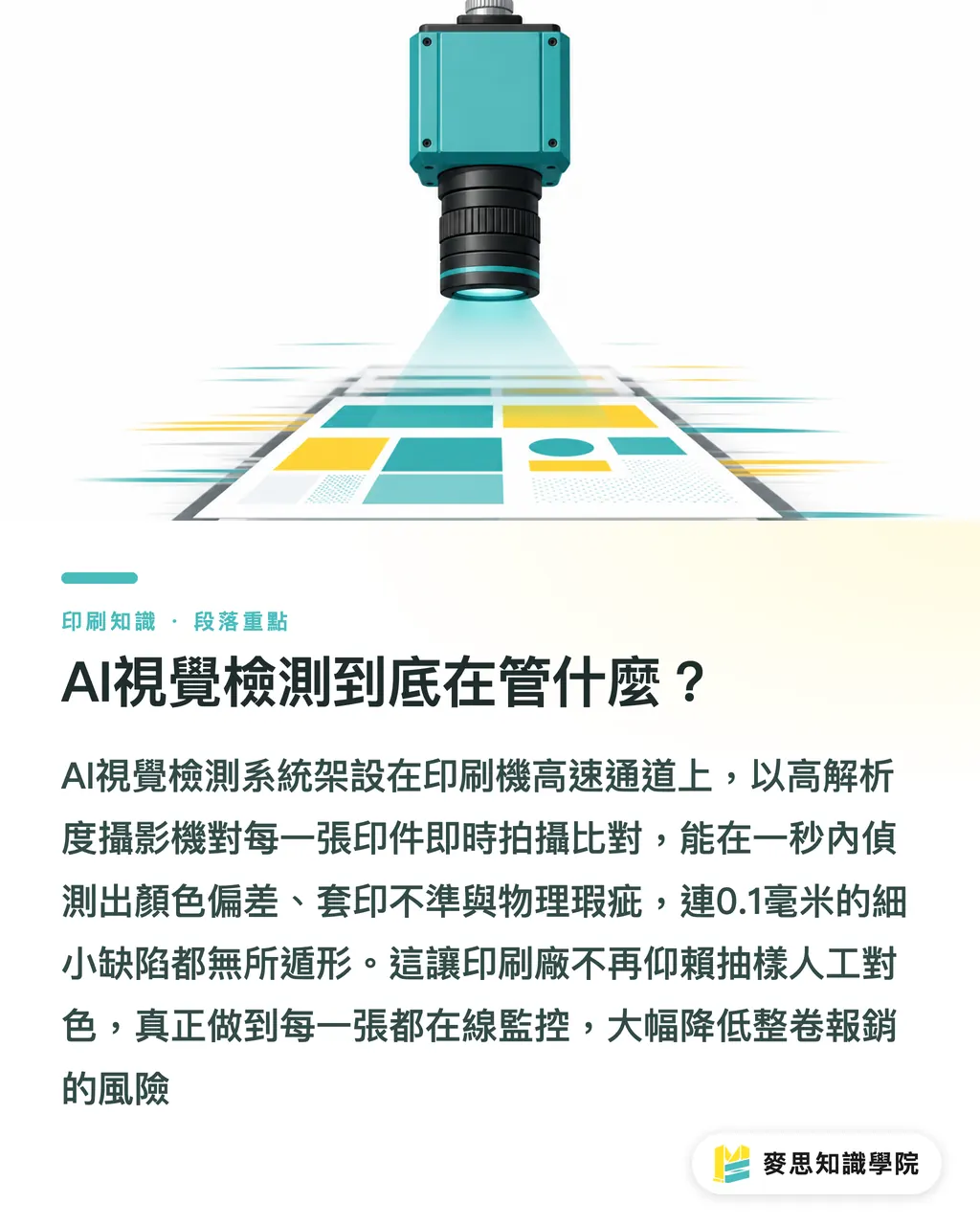
They are mounted directly on the high-speed tracks of the printing press, using high-resolution cameras to capture every single sheet
Beyond image capture, the core of the system is a comparison mechanism that detects discrepancies between the digital master and the physical print within a fraction of a second
・Color Deviation: Continuously monitors ink density and dot gain to ensure your brand color doesn't shift from true red to dark red
・Registration Errors: Quickly identifies edges of register marks and fine text, triggering alerts at the slightest sign of ghosting
・Ink Spots and Physical Defects: Whether it's uneven anti-set-off powder, white spots, or scratches, defects as small as 0.1mm are immediately highlighted
Why is manual spot-checking becoming inadequate?
When press speeds hit tens of thousands of impressions per hour, the human eye simply cannot cope with the volume of information
I once encountered a painful case where a box for a famous skincare brand had a broken barcode caused by a tiny foreign object during printing
The operator missed that small section during a spot check, resulting in tens of thousands of boxes being shipped and subsequently unusable, leading to a total recall and reprint
This meant a loss of hundreds of thousands of dollars and a severe blow to client trust
The value of this system lies in 100% inspection, not spot-checking
It doesn't fatigue, doesn't blink, and won't miss anything due to mental exhaustion during the night shift
Compared to relying on experienced master printers to stare at prints, introducing machine vision is like buying an absolute insurance policy
The efficiency gains in reducing rejection rates and labor costs for manual inspection are staggering
How does the system handle defects once they are caught?
This is a common question from clients, they want to know if the machine stops automatically when an error is found
Current designs generally fall into two categories: alert-based and real-time linked correction
Basic configurations provide real-time alerts, highlighting defective areas on the screen with red frames, or even using different levels of warning lights based on severity
Once operators see the lights, they can immediately decide whether to slow down production or manually adjust ink keys
More advanced architectures are capable of integrated control with the press
・If low color density is detected in an ink zone, the system automatically sends a signal to fine-tune the ink volume for that area
・If registration starts to drift, it automatically communicates with servo motors to correct the plate position
・When continuous major irreversible defects occur, the system can command a machine stop or mark the batch, ensuring the rejected items are automatically culled during post-press cutting
This real-time feedback loop minimizes the time gap between defect discovery and resolution
What are the pitfalls when introducing AI inspection to the production line?
Don't assume you can sit back and relax just because you bought the equipment. Just like my advocacy for AI tools in prepress, human-machine collaboration is key
The most common issue encountered early on is an overly high false-alarm rate
Because cameras are so sensitive, even the normal fiber texture of the paper can be flagged as a defect. The result? Constant alerts that frustrate operators into eventually shutting the system off
To make this process effective, substantial manual calibration of parameters is required during the initial phase
You must clearly define what constitutes an acceptable tolerance range and what counts as a fatal error that cannot be overlooked
This stage requires personnel who understand both printing standards and quality control logic to set the baseline
Once you survive the first few months of fine-tuning the system to match internal quality standards, its stability will provide you with the most critical line of defense
Key Takeaways
・AI visual inspection upgrades traditional spot-checking to 100% full inspection, effectively eliminating the risk of missed errors
・The system can detect defects as fine as a hair; high-end applications can directly communicate with the press to correct color and registration
・The key to successful implementation lies not in the cost of hardware, but in how humans calibrate reasonable tolerance levels to reduce false positives
・This system significantly lowers rejection rates, turning saved reprinting costs into tangible profit
Extended Reflections
For printing house owners, this is an investment that hurts in the short term but is absolutely worthwhile in the long run, as brand quality requirements are becoming increasingly stringent
For designers and print buyers, you can confidently use more intricate designs in the future, knowing that there is a gatekeeper on the production line with vision sharper than an eagle's
Our MINDS team has been closely monitoring these upgrades in production technology. It gives us the confidence, when providing integrated services, to guarantee the perfect presentation of every finished piece to our clients
FAQ
- Can AI visual inspection systems replace quality control personnel?
- They replace the repetitive and fatiguing grunt work of visual inspection. However, professional staff with printing expertise are still required to define defect standards, set tolerance ranges, and make final decisions on complaints
- Can this system only be used for flat paper printing?
- It can be used for a wide variety of materials. From flexible packaging and labels to metal printing, as long as the production line can accommodate high-speed cameras, real-time defect detection can be achieved by adjusting parameters
- Does introducing AI inspection really help lower costs?
- Absolutely. It shifts the detection point forward, preventing errors from being discovered only after thousands of copies have been printed, significantly saving on paper, ink, and labor costs associated with reprinting
Related articles

The Print × AI weekly
The print and AI know-how designers, brands and enterprises can use before they commit — one email, every week
MINDS Free Tools
AI background removal, brand stamping, and a LINE sticker maker — free design tools, right in your browser, no upload.
MINDS Group
Need actual printing or gifting services?
From premium printing to online ordering and festive gifts — the MINDS Group sister brands take it from here.