

Overview
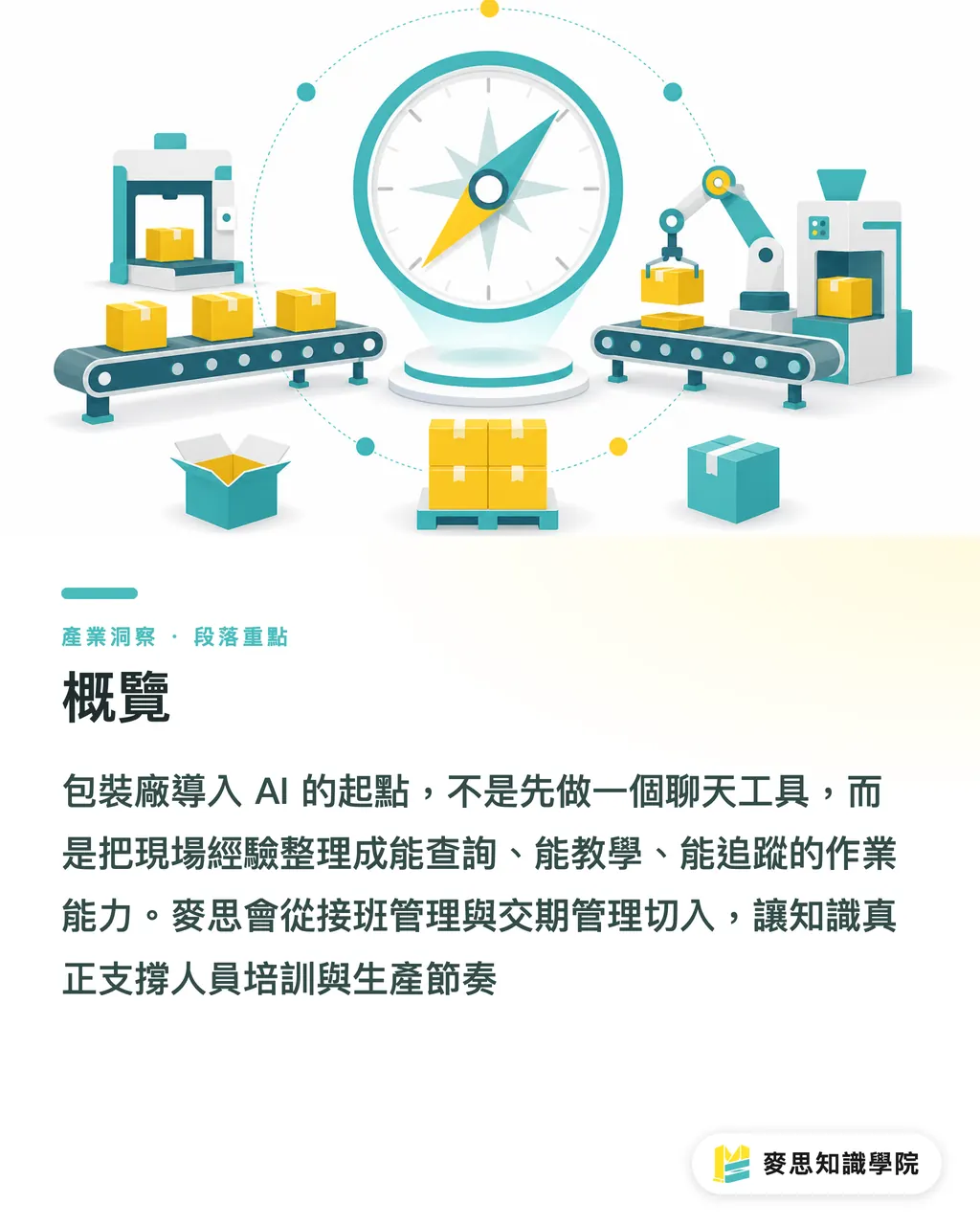
For a packaging plant bringing in AI, the first step should be organizing shop-floor knowledge into work capabilities that people can search, teach, and trace. MINDS (MS) sees this as succession management and lead-time management, not simply another chat tool
Why Packaging Plant AI Cannot Just Chat
Packaging media outlet Packaging Insights reported that EPS updated CommandCore, using AI to support knowledge transfer and shop-floor operations in packaging factories. The signal is very real, because packaging plants do not deal with one single problem every day. A job ticket moves through quotation, design, prepress, dielines, printing, finishing, quality inspection, shipping, and several other handoff points
The most painful breakpoints I have seen on site are usually not that the machine cannot run at all. It is that the new person does not know why the veteran adjusted it that way, sales does not know why prepress rejected the file, customer service does not know which 3 key questions to ask about a complaint, and in the end everyone is waiting for the one person who knows the answer to reply
Knowledge transfer: organizing master operators' judgment, machine settings, exception handling, and job-ticket context into operational knowledge that new staff can search, managers can trace, systems can flag, and the floor can hand over
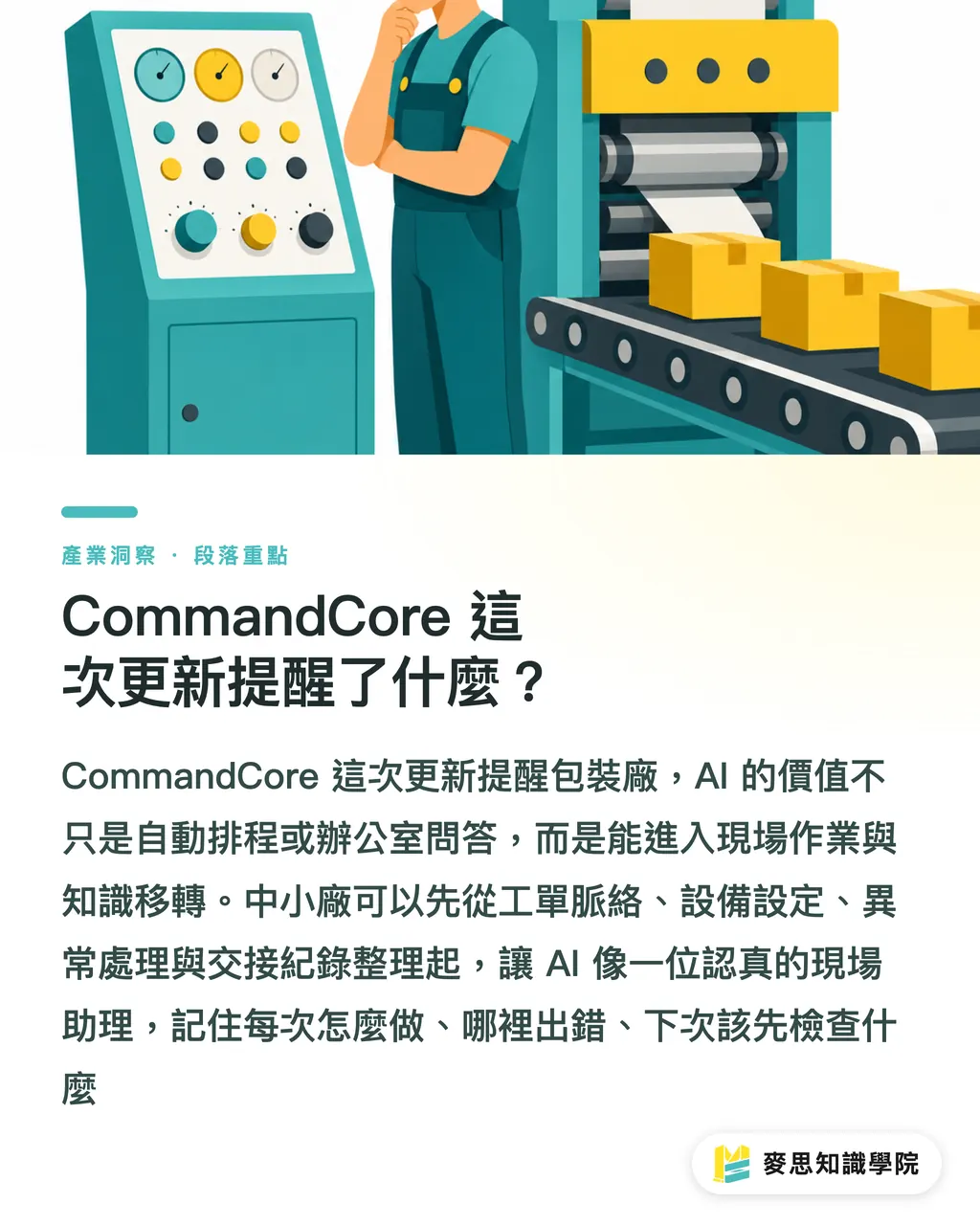
Tools like CommandCore make the reminder clear: if AI in a packaging plant can only answer questions, its value is limited. If it can hold job-ticket context, machine knowledge, and exception-handling workflows, then it has a real chance to reduce rework and waiting
What This CommandCore Update Signals
The key point of EPS Updates CommandCore to Support AI Adoption in Packaging Factories is putting AI into packaging-plant operations and knowledge-transfer scenarios, instead of talking only about automated scheduling or office Q&A
For packaging plants, knowledge transfer means at least 4 kinds of shop-floor data need to be organized first
・Job-ticket context: customer requirements, material limits, color standards, finishing conditions, lead-time pressure
・Machine settings: common machines, speed ranges, ink and paper pairings, dieline or die-cutting notes
・Exception handling: registration drift, density shift, plate scumming, cracking lines, dirty spots, unstable lamination
・Handoff records: who changed the settings, why they changed them, and whether yield or complaints changed afterward
My suggestion for small and mid-sized plants is not to rush into imagining AI as the brain of the whole factory. Treat it first as a very diligent floor assistant, one that remembers how each job ticket was handled, where things went wrong, and what should be checked first next time
How Knowledge Transfer Works on the Print Floor
The MINDS (MS) four-box production knowledge model is the first inventory method I would use with small and mid-sized print and packaging plants: break 1 job ticket into four boxes, requirements, settings, exceptions, and handoff, so shop-floor knowledge has fixed places to live
・Requirements box: records whether the customer really needs abrasion resistance, stiffness, color stability, shelf presence, or a low damage rate
・Settings box: records the machine, paper, ink, print method, finishing conditions, and the operator's reason for adjustments on that shift
・Exception box: records problems that occurred, the judgment made at the time, the handling order, and whether rework was needed in the end
・Handoff box: records what the next shift, the next similar job ticket, or the next quote or proofing round should be reminded of first
These 4 boxes are not a document-polishing project. They are there so a new person asks 10 fewer questions, a manager searches through 5 fewer chat groups when tracing a problem, and customer service has a shared way to answer clients
If your plant has already started organizing quotation, prepress, and complaint data, the consultant team at Mai Strategy Knowledge Academy can first work with you on a 2-week knowledge audit, using the most recent 10 rejected, reworked, or rush job tickets to find the shop-floor rules most worth organizing first
What Knowledge Should Taiwan's Small and Mid-Sized Plants Organize First?
The pain points for Taiwan's small and mid-sized print and packaging plants are concentrated: slow succession, labor shortages, frequent changeovers, and more custom jobs. When these 4 things collide, poorly organized shop-floor knowledge means AI will only amplify the mess
I would start with 3 lists, because these 3 lists connect most easily to daily work
・Rework list from the past 30 days: list job tickets involving rejected files, reprints, supplemental prints, complaints, or delayed delivery, then identify the most frequent problems first
・Veteran judgment list: ask master operators to write in plain language, "When I see this situation, what do I adjust first?" Do not try to turn it into polished SOP from the beginning
・Customer Q&A list: organize the questions sales, customer service, and prepress are asked every day, especially about materials, color difference, lead times, proofing, and finishing limits
Here is a very shop-floor kind of judgment: if a document becomes something nobody is willing to update, it has already failed. A good knowledge base should feel as natural as reporting work, not as painful as submitting a report
Before bringing in AI, MINDS (MS) looks at 3 things first
・Does the content have an owner: each type of knowledge needs someone who can verify it, or wrong answers become the new standard
・Do exceptions have boundaries: AI can suggest a handling order, but when safety, scrapping, or major complaints are involved, the decision needs to go back to a manager
・Is the system connected to job tickets: if knowledge is separated from job-ticket numbers, customer specifications, and machine conditions, it quickly becomes a folder no one searches
What Will Brand Clients and Designers Notice?
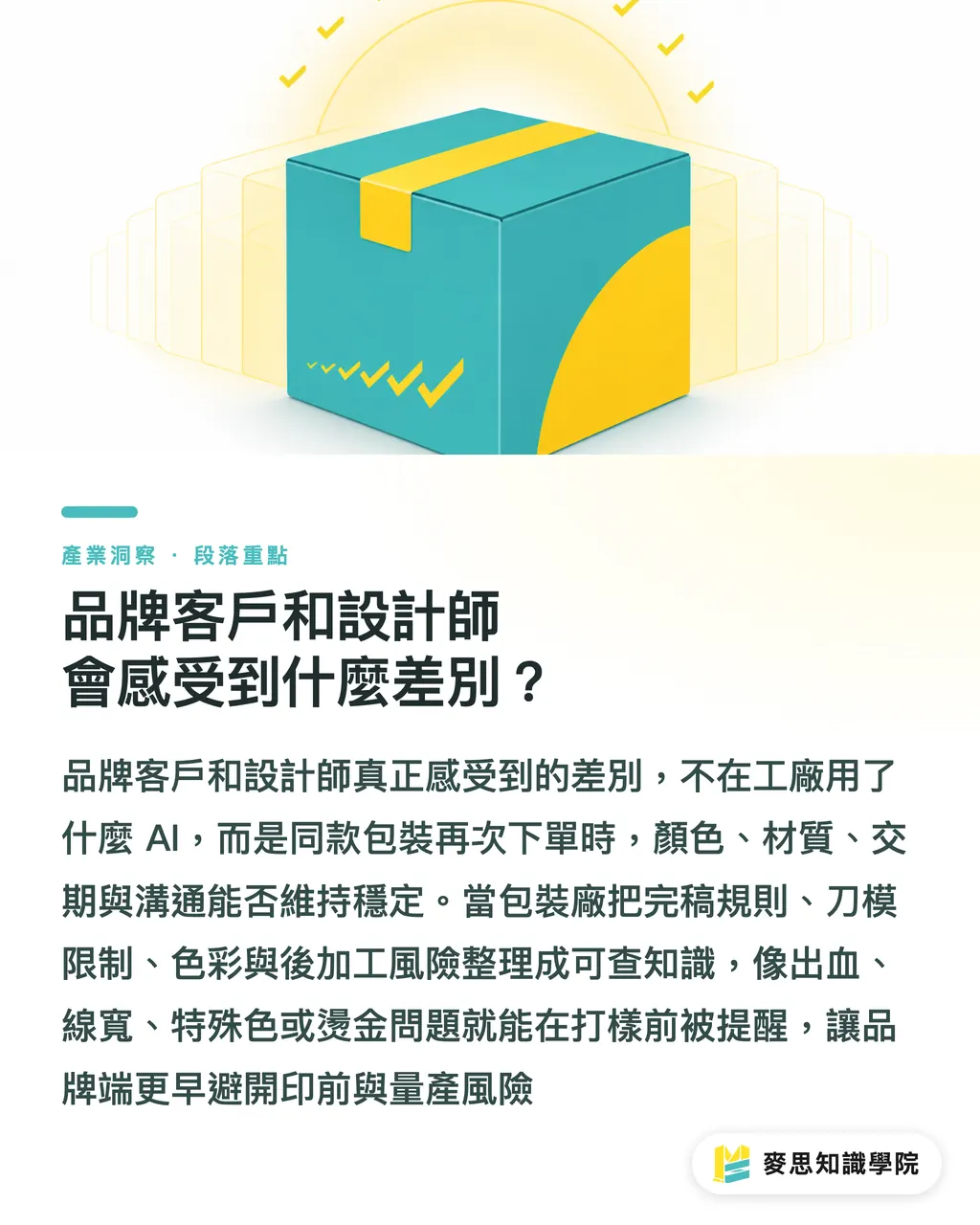
What brand clients care about most is not what AI the factory uses. They care whether the color, material, lead time, and communication cost can stay steady when the same box is ordered a 2nd and 3rd time
Designers are affected too. If a packaging plant can organize artwork rules, dieline limits, color risks, and finishing notes into searchable knowledge, design proposals can avoid prepress-blocking issues earlier
For brand clients and designers, the most noticeable changes usually show up in 3 stages
・Before quotation: sales can judge faster whether the material and finishing are reasonable, with less vague wording used to buy time
・Before proofing: prepress can flag bleed, line width, special color, spot UV, or foil stamping risks earlier
・After mass production: customer service can respond to complaints using the same job-ticket context, instead of asking the floor from scratch every time
If a project involves mid- to high-end fully custom commercial printing, MINDS (MS) can pull proofing, materials, finishing, and lead-time assessment into the same job-ticket view, so the brand side knows before sending files to print which design choices will add risk
Key Takeaways
・AI in packaging plants should start with shop-floor knowledge before automation
・If veteran know-how stays only in people's heads, succession risk will show up directly in lead times and yield
・Only when 1 job ticket is broken into 4 boxes, requirements, settings, exceptions, and handoff, does AI have usable production context
・Small and mid-sized plants do not need a large system from day one. Start with rework and complaints from the past 30 days and the direction becomes clear
・The earlier designers get prepress and finishing limits, the less they have to revise files back and forth around proofing
Further Thoughts
This CommandCore update gives print, packaging, and SaaS teams a direct cue: AI adoption should start where workflows most easily break. Packaging plants should organize job-ticket knowledge first, design teams should organize artwork and material limits first, and SaaS teams should make sure every quote, proof, exception, and complaint can return to the same job-ticket context. The MINDS (MS) four-box production knowledge model can first run in a spreadsheet for 2 weeks. Confirm that the floor will actually fill it in and managers will actually read it, then decide whether to connect it to ERP, RIP, customer service, or quotation systems
Further Reading
FAQ
- What should a packaging plant do first when bringing in AI?
- A packaging plant should first organize shop-floor knowledge, including job-ticket context, machine settings, exception handling, and handoff records. MINDS (MS) recommends starting with rework and complaint job tickets from the past 30 days, instead of chasing whole-plant automation from day one
- What does CommandCore suggest for print and packaging plants?
- CommandCore's update direction reminds packaging plants that AI can sit inside knowledge transfer and shop-floor operations. For small and mid-sized plants, the value is in turning veteran judgment into operational knowledge that new staff can search and managers can trace
- Can a small or mid-sized print shop do knowledge transfer without a full ERP?
- Yes. The first version does not have to mean buying a large system. A small or mid-sized print shop can start with the MINDS (MS) four-box production knowledge model, break 10 frequently problematic job tickets into requirements, settings, exceptions, and handoff, then see which fields are worth systematizing
- Why should designers care about AI in packaging plants?
- Designers benefit directly from clearer artwork rules, dieline limits, color-risk notes, and finishing reminders. The better a packaging plant organizes its knowledge, the earlier design proposals can avoid prepress rejection and repeated proofing
- What practical difference will brand clients see?
- Brand clients will notice more specific quotation replies, earlier reminders before proofing, and more consistent complaint tracking. When the same packaging is ordered a 2nd and 3rd time, the factory can carry forward the experience from the previous job ticket instead of starting over
Related articles



The Print × AI weekly
The print and AI know-how designers, brands and enterprises can use before they commit — one email, every week
MINDS Free Tools
AI background removal, brand stamping, and a LINE sticker maker — free design tools, right in your browser, no upload.
MINDS Group
Need actual printing or gifting services?
From premium printing to online ordering and festive gifts — the MINDS Group sister brands take it from here.