
How can ESG tableware gifts avoid material and process traps?
For a company to give a set of eco-friendly tableware that truly carries ESG value while still feeling refined, the key is choosing materials that can be reused over the long term, such as 304/316 stainless steel or solid wood, and pairing them with precise laser engraving
At MINDS Printing, we usually help clients review the budget and the audience's usage habits upfront, making sure the final product does not turn into a PR disaster that gets tossed after two uses
Eco-friendly tableware: eating utensils that can be washed and reused many times, or that can naturally break down more easily after disposal. Compared with single-use plastic, its core value is reducing carbon footprint and waste. Common materials include food-grade stainless steel, natural bamboo and wood, and recycled plastics, making it a preferred carrier for companies to show their commitment to sustainability
From my long-term observations on production lines and at client sites, many companies, in response to climate disclosure and the spirit of EPR (extended producer responsibility) rules, are increasingly inclined to purchase full reusable tableware sets
But in reality, writing "eco-friendly tableware" in the spec sheet alone does not guarantee a good-looking final product. You first need to understand the temperament of each material
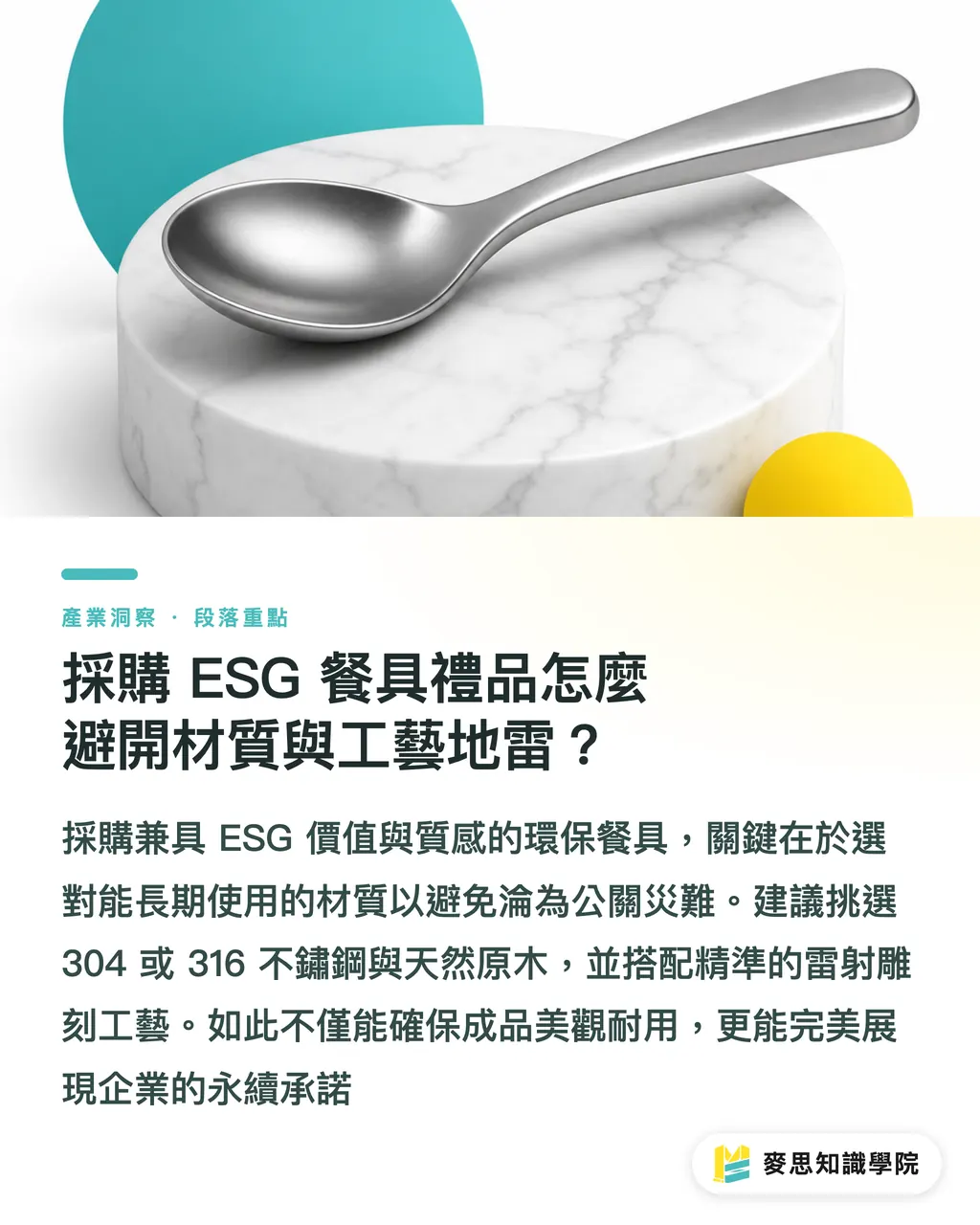
What material should eco-friendly tableware actually use?
When clients make corporate gifts, the question they ask most often is which material is least likely to go wrong
If you are targeting high-end business clients or employees at tech companies, metal is absolutely the first choice
Food-grade 304 or 316 stainless steel is scratch-resistant and feels premium, and laser engraving on metal surfaces comes out the cleanest, with no risk of the artwork blurring together
・Food-grade stainless steel: Extremely durable, non-toxic, and easy to clean. After laser engraving, it shows a high-contrast matte metallic tone, giving the most stable finish
・Natural bamboo and wood: Warm to the touch, with unique grain patterns. It can naturally degrade after disposal, which fits a purer ESG concept very well
・Recycled polyester (rPET): Mostly used for outer storage bags. It is made by spinning fibers from recycled PET bottles, with water-repellent and stain-resistant properties
If you prefer a warmer hand feel, natural bamboo and wood are indeed popular with cultural and creative brands
But wood has pores. If it is not kept dry after use, it can mold easily. This has to be aligned with the recipient's daily habits before you choose it
The consulting team at Mai Strategy Knowledge Academy often reminds clients that there is no perfectly flawless material, only the choice that best fits your brand's personality
Why do bamboo and wood get charred edges during laser engraving?
When outsourcing laser-engraved nameplates or wooden tableware for the first time, the biggest fear is charred edges or fine text blurring together
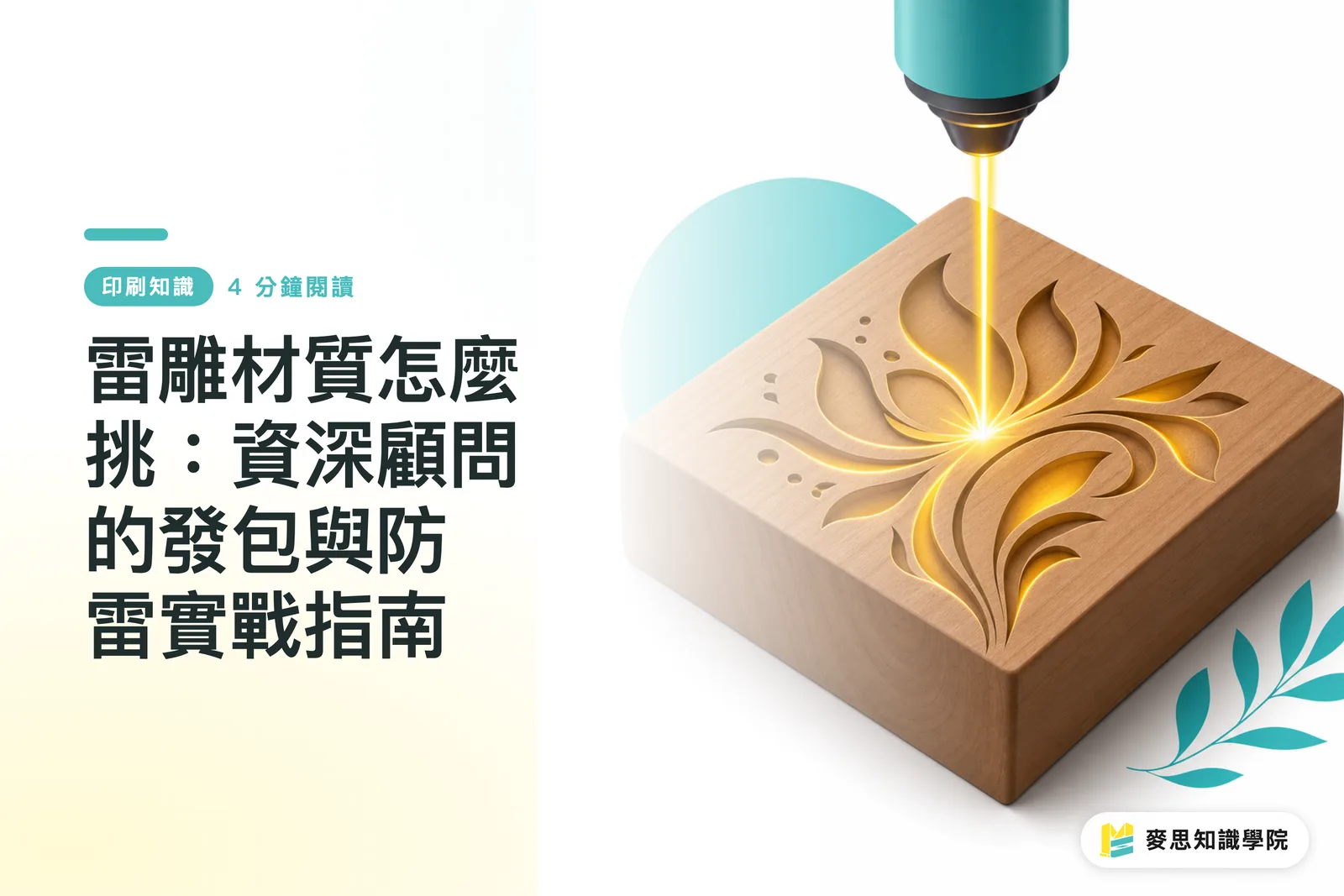
Because bamboo and wood contain moisture and resin, the instant a high-temperature laser beam hits the surface, carbonized bleeding can happen very easily
That is why the same brand Logo can look sharp on a stainless steel spoon, yet turn into a dark blot on bamboo chopsticks
To solve this pain point, we have a standard internal process called the "MINDS Printing (MS, mid-to-high-end fully customized commercial printing) three prepress gates":
① Stroke spacing check: Make sure there is enough space between fine text and graphic lines, so they do not merge into one block after high-temperature carbonization
② Material moisture and power test: Use bamboo or wood from the same batch for sampling first, then fine-tune laser power and movement speed to find the cleanest burn ratio
③ Surface post-treatment assessment: Confirm whether a layer of natural wood oil is needed after laser engraving to stop moisture from seeping into the engraved pores
This process can greatly reduce the scrap rate during mass production and ensure that every gift delivered to the client has clear lettering
If your graphic design uses a lot of extremely fine serif type, I strongly suggest switching directly to stainless steel, or simplifying the Logo before running it on the machine
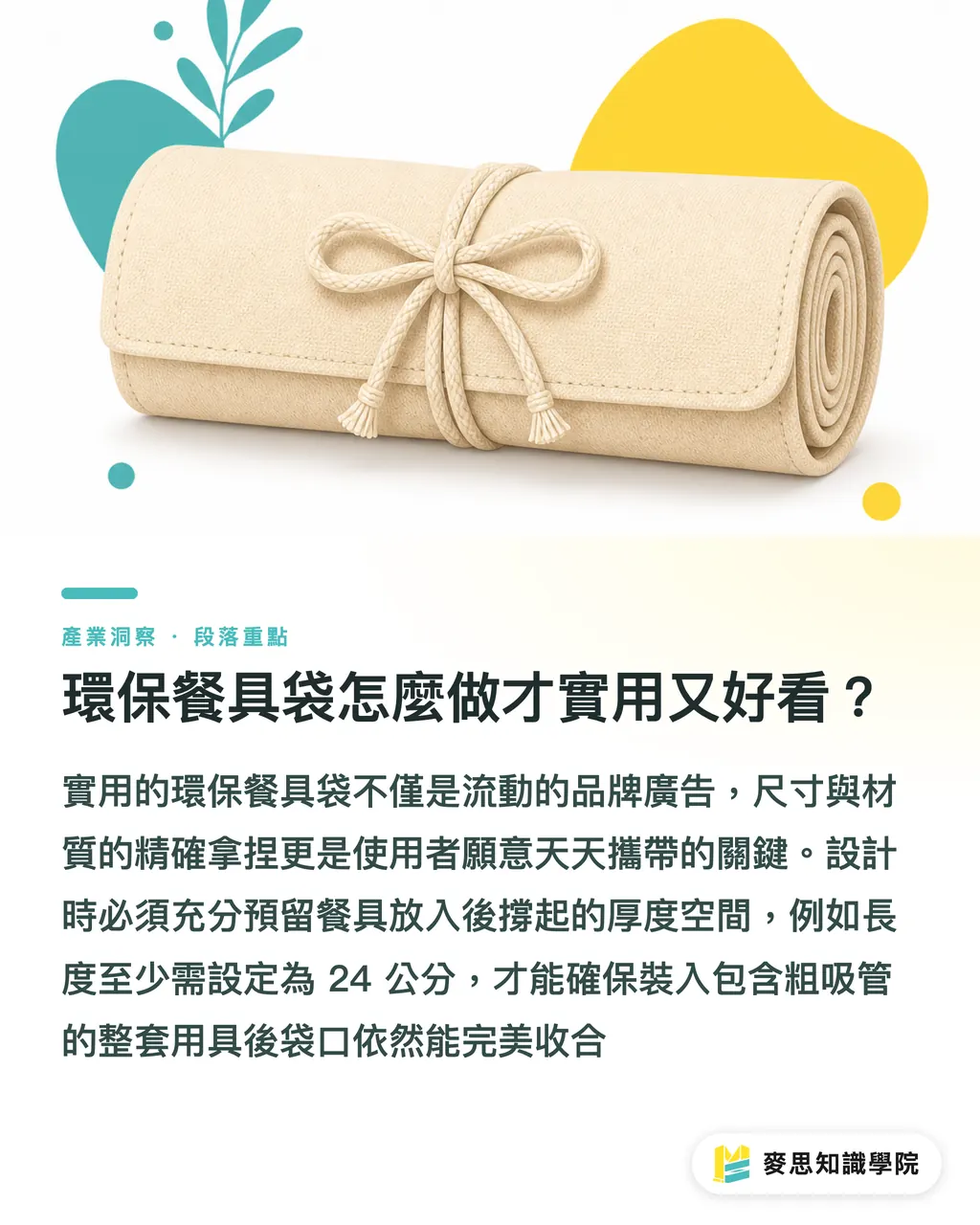
How can an eco-friendly tableware bag be practical and good-looking?
Making a bag that can hold a full eco-friendly tableware set and still carry the brand usually gets stuck on two things: the wrong material and inaccurate sizing
Many designers create beautiful artwork, but overlook the extra thickness once the utensils are placed inside. In the end, the opening cannot be rolled up or fastened at all
For the bag body, if it is for daily commuting and needs to be washed and dried often, go with canvas or pure cotton-linen. If the goal is a stricter environmental statement, choose rPET yarn made from recycled PET bottles
・Capacity allowance: With chopsticks, spoon, fork, and one thick straw, the length should be at least 24 cm, and the width must leave room for folding
・Printing process match: Coarse canvas works well with single-color screen-printed Logos. If the artwork has gradients, digital direct printing is needed
・Ties and hardware: Avoid low-grade metal parts that rust easily. Natural cotton cord ties better echo the overall eco-friendly tone
One topic that has clearly been heating up lately is that brands care more and more about whether packaging meets compliance and sustainability requirements
A good tableware bag is not just a storage tool. It is also a moving billboard every time someone eats. The sizing and material choice determine whether users are willing to carry it every day
Key Takeaways
・Corporate ESG gifts should prioritize long-lasting 304/316 stainless steel or natural bamboo and wood, and reject surface-level sustainability that gets thrown away after a few uses
・Laser engraving on bamboo and wood is highly prone to carbonized bleeding. Before outsourcing, always check artwork stroke spacing and run a real-machine sample
・Tableware bag design must reserve three-dimensional storage space, and the material should be chosen based on washing frequency, such as canvas or recycled rPET
・Applying the "MINDS Printing (MS) three prepress gates" can effectively control laser engraving quality, keeping ultra-fine text and brand Logos clear
Further Thoughts
Judging from the clients and projects we have worked with recently, ESG has already moved from a slogan to a real purchasing standard. When brands plan corporate gifts, they should not spend all their energy chasing unusual new eco-friendly materials. They should return to the basics: whether the product is actually easy to use, and where the craft limits are. Future design and print purchasing must find the balance between regulatory compliance, material sustainability, and visual appeal. That is exactly where professional consultants can create the most value by helping companies avoid costly mistakes
Further Reading
・How do you say eco-friendly tableware in English? A complete glossary for export packaging and ESG copy
・How should you make an eco-friendly tableware bag? Materials, capacity, and customization explained clearly in one place
・How do you choose materials for laser-engraved nameplates? A senior consultant's practical guide to avoiding mistakes and preparing production files
・2026-06-18 Global Design and Printing Industry Intelligence
FAQ
- Which is more suitable as a corporate gift, stainless steel tableware or bamboo and wood tableware?
- If durability, crisp laser-engraved details, and practical use matter most to the audience, food-grade stainless steel is the first choice. If the brand tone emphasizes nature and purity, and the audience accepts hand-washing and air-drying maintenance, bamboo and wood feel warmer
- Why does our Logo blur when laser-engraved on bamboo chopsticks?
- Bamboo and wood contain moisture and resin. The high heat from the laser causes carbonized bleeding along the edges. If the original Logo has tight stroke spacing or extremely fine serif type, it will blur into a clump. Simplifying the artwork or adjusting laser power is recommended
- How should we choose the material for an eco-friendly tableware bag?
- For wash resistance, sun resistance, and a natural hand feel, choose cotton-linen canvas. If you want to fully follow the idea of environmental recycling while keeping water-repellent properties, rPET made from recycled PET bottle fibers is currently the hottest choice
Related articles

The Print × AI weekly
The print and AI know-how designers, brands and enterprises can use before they commit — one email, every week
MINDS Free Tools
AI background removal, a LINE sticker maker, spine & imposition calculators — all free, right in your browser, no upload.
MINDS Group
Need actual printing or gifting services?
From premium printing to online ordering and festive gifts — the MINDS Group sister brands take it from here.