
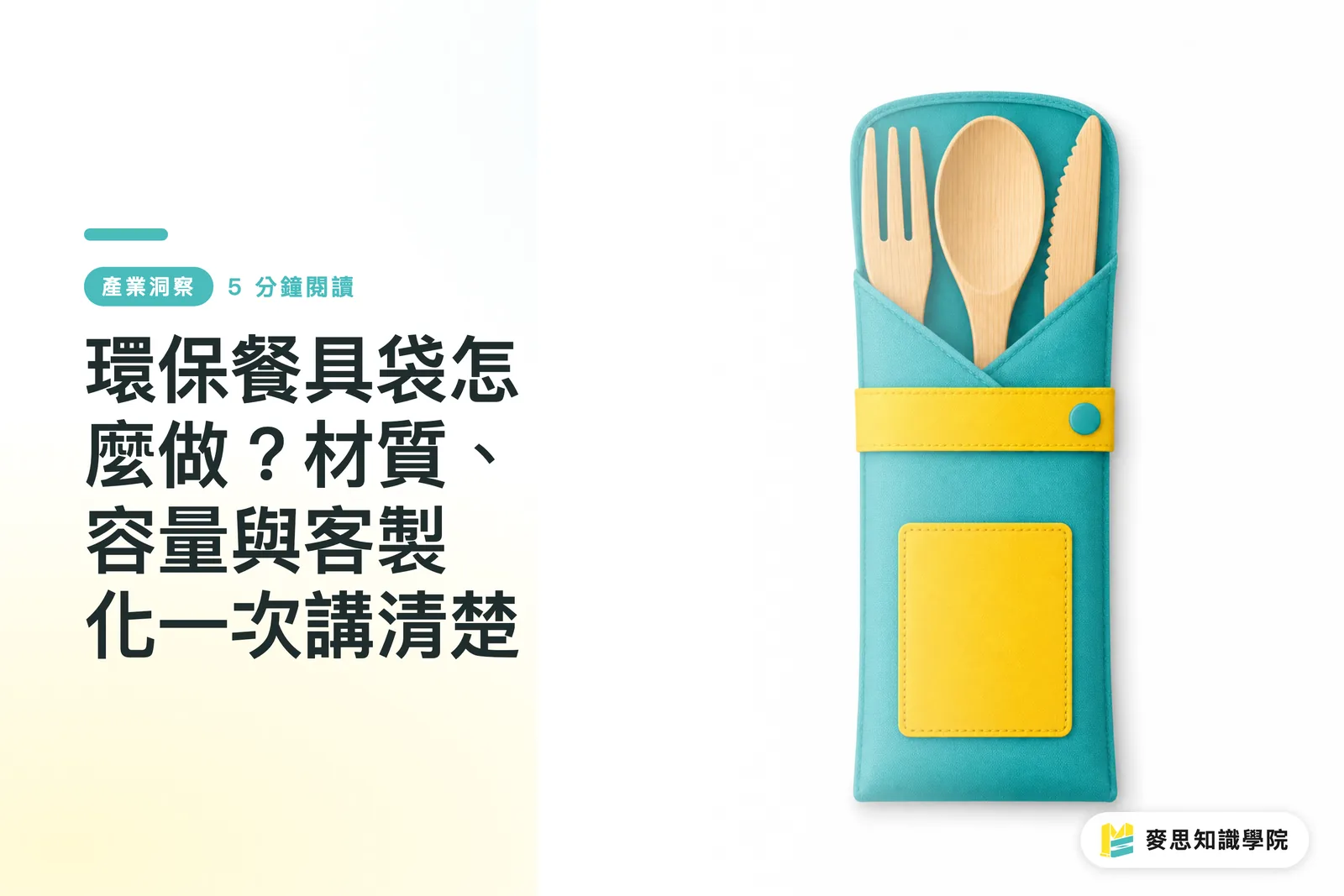
What Material Should You Choose for an Eco-Friendly Cutlery Pouch?
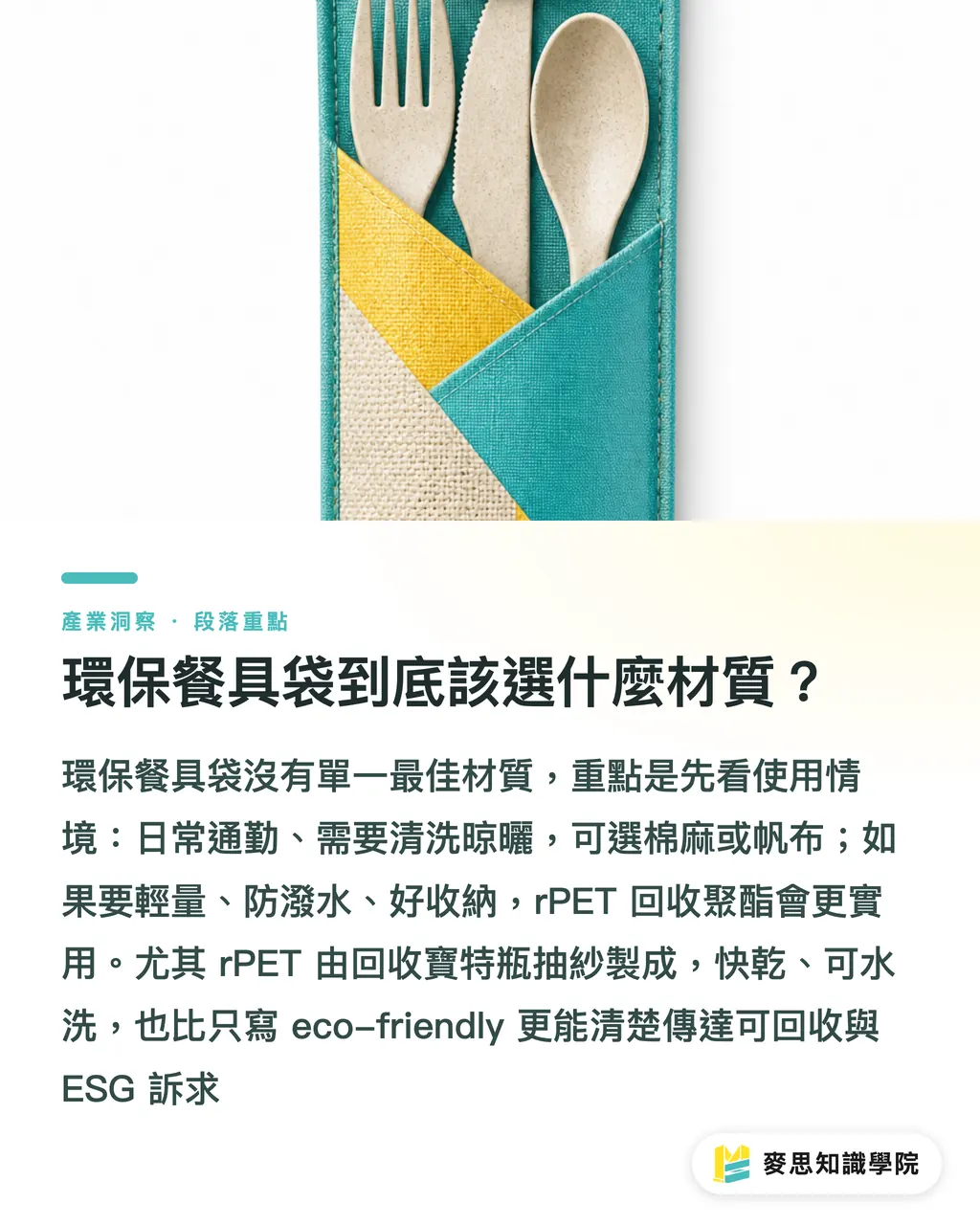
Here is the short answer: for daily commuting and a pouch that needs to be washed and dried in the sun, go with cotton-linen or canvas; if you need water resistance, light weight, and easy storage, choose recycled polyester (rPET). These two routes solve different use cases
Many clients start by saying, "I want an eco-friendly fabric," but fabrics vary a lot from one to another
・Pure cotton canvas: substantial hand feel and strong print color performance. The downside is that it dries slowly after absorbing water and costs more. Canvas above 10 oz feels premium, but it is also heavy
・Cotton-linen blend: breathable with a natural texture, suitable for a literary, organic brand tone. However, linen fibers are coarse, so small text can blur easily when printed
・rPET recycled polyester: made by spinning recycled PET bottles into yarn, then weaving it into fabric. It is light, quick-drying, washable, and gives you a clear ESG story. One 600ml PET bottle can roughly provide enough material for one small pouch
A material is not automatically better just because it is more "natural"; it depends on how your customers will use it
Over the past month or two, I have clearly noticed more brands asking about rPET because it satisfies both "lightweight" and "recyclable" requirements. It is especially easy to justify for export customers. In English copy, this type of material is usually labeled recycled polyester or rPET, which is much more precise than a vague term like eco-friendly
How Large Should the Capacity Be So the Cutlery Actually Fits?
A standard reusable cutlery set includes chopsticks, a fork, a spoon, and sometimes a straw and cleaning brush. The recommended inner length of the pouch is 22 to 25 cm, which fits most stainless steel cutlery on the market
This is the trap people overlook most often
I have seen too many cases where the artwork looked great and the branding was polished, but the chopsticks were 1 cm longer than the pouch and got stuck at the opening, causing the entire batch to be returned and remade
When specifying the pouch, focus on a few key dimensions
・Inner length: use the longest chopsticks as the baseline, then add 2 to 3 cm of clearance
・Width and compartments: do you need an inner divider? One extra compartment means one more sewing process, so the cost goes up, but it can prevent utensils from rubbing against each other and getting scratched
・Closure method: choose from drawstring, hook-and-loop fastener, or snap button. Drawstrings are the cheapest and most common; snap buttons feel more refined but require an additional hardware mold
If the product is a full "eco-friendly cutlery set" bundled with a lunch box or thermos, the pouch must be enlarged to fit the main container. Once the material usage increases, the unit cost may directly double. This is just like making lunch boxes: the container size should always be worked backward from what will actually go inside, not from a nice-looking drawing made first
How Should You Choose the Printing Method for Brand Customization?
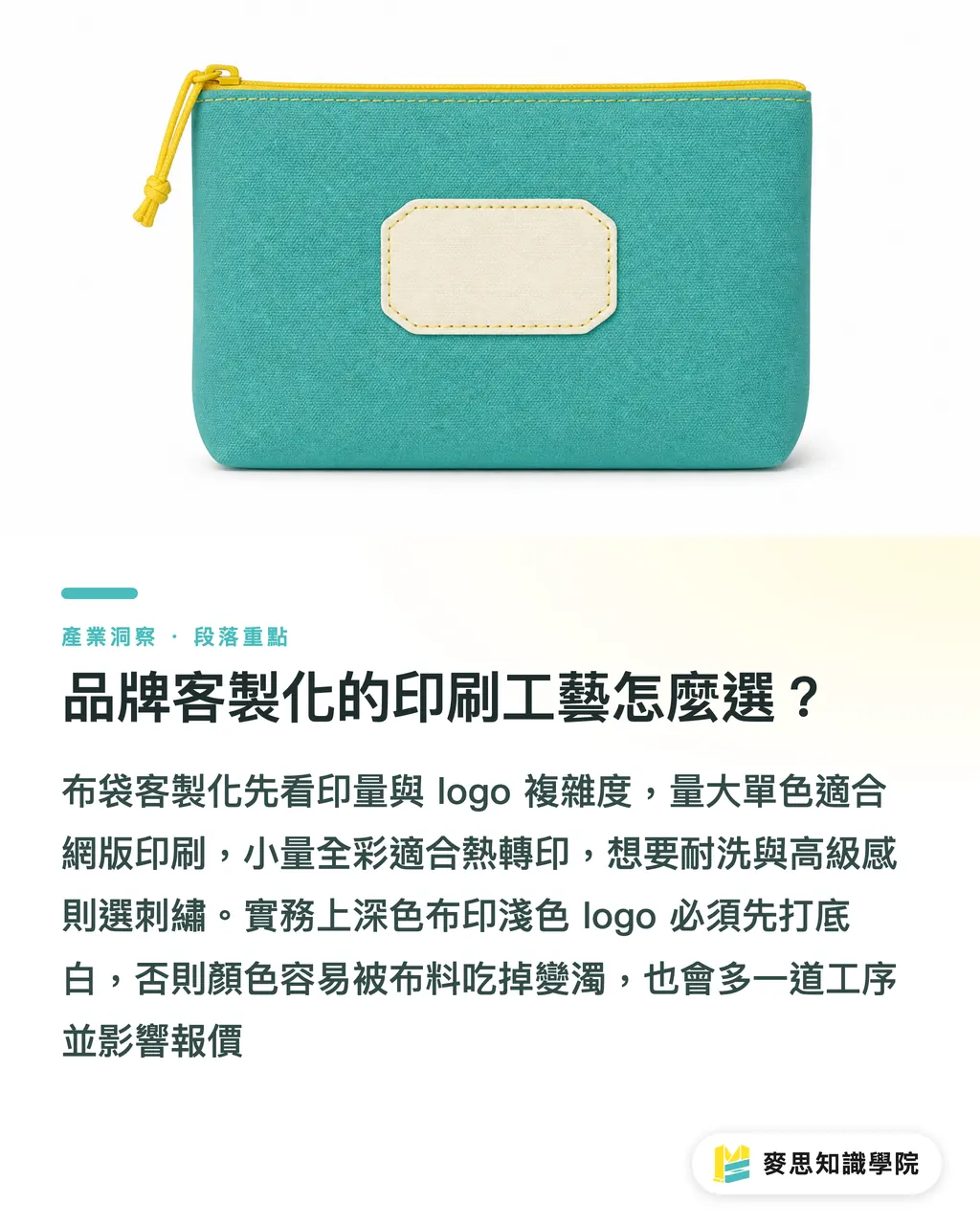
Branding on fabric pouches mainly uses three methods: silk screen printing, heat transfer, and embroidery. For large volumes, use silk screen printing; for small runs with multiple colors, use heat transfer; for a premium feel, use embroidery
To put the difference plainly:
・Silk screen printing: one screen is made for each color. The larger the quantity, the more cost-effective it becomes. For single-color logos above 500 pieces, this is usually the best choice. The downside is that screen setup fees are hard to amortize on small orders
・Heat transfer: suitable for full-color, gradient, or photo-quality graphics. It also works for small quantities, but it adds a film layer to the fabric surface, reducing breathability and hand feel
・Computer embroidery: the most premium-looking and most wash-resistant option, but it only suits simple line-based logos. Designs that are too detailed or text that is too small cannot be embroidered well, and the larger the embroidery area, the higher the stitching cost
Before choosing a process, clarify two things: order quantity and logo complexity
Natural fibers such as canvas and cotton-linen absorb screen-printing ink well, producing saturated colors. rPET has a smoother surface and needs the right coating-based ink to avoid fading. This is why the same logo needs to be sampled again when the material changes
One production-floor lesson is worth remembering: when printing a light-colored logo on dark fabric, you must first lay down a white underbase; otherwise, the fabric will absorb the color and make it look muddy. This adds one more printing pass, so the quote naturally changes. If this is not clarified in advance, it is one of the easiest issues to argue about at delivery
How Can the Eco-Friendly Claim of a Cutlery Pouch Hold Up?
The key is "traceable materials + claims that are not exaggerated." Do not package an ordinary cotton pouch as if it were saving the planet
In recent years, brands have become increasingly worried about being accused of greenwashing, so when making eco-friendly cutlery pouches, the necessary evidence should be kept on file
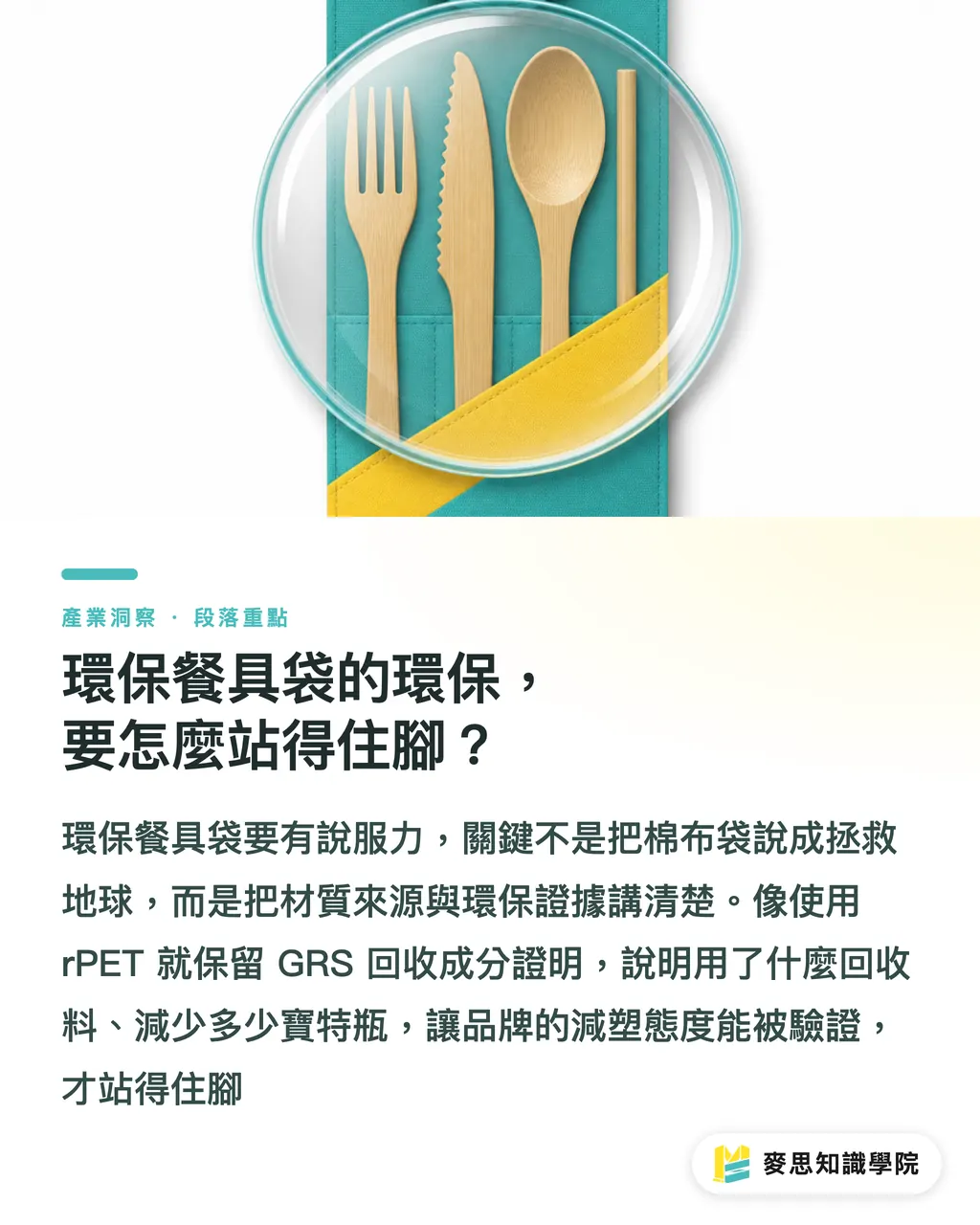
・If you use rPET, keep recycled-content certificates such as GRS (Global Recycled Standard). Export customers are very likely to ask for them
・If you use organic cotton, label it as organic cotton. Do not mix it up with regular cotton
・Be especially careful with terms like degradable or compostable. Most fabric pouches themselves are not compostable materials, and careless labeling can cross compliance lines
Based on the clients I have worked with recently, the brands that actually reorder are the ones that describe sustainability in very specific terms: what recycled material was used, how many PET bottles were saved, and so on, instead of merely shouting slogans about sustainability
At the end of the day, an eco-friendly cutlery pouch is a carrier. What it sells is not only the function of holding cutlery, but also the brand's willingness to take a small action toward reducing plastic. That attitude has to be verifiable to be convincing
Key Takeaways
・There is no single most eco-friendly material, only the most suitable one: choose cotton-linen or canvas if the pouch needs washing and sun drying; choose rPET if you need something lightweight and water-resistant
・Set the inner length at 22 to 25 cm. Work backward from the longest utensil plus 2 to 3 cm of clearance, and do not let chopsticks get stuck at the opening
・Choose the printing method based on quantity and logo complexity: silk screen printing for large quantities, heat transfer for small full-color runs, and embroidery for a premium feel
・Light-colored graphics on dark fabric need a white underbase first. This process affects the quote and should be clarified in advance
・Eco-friendly claims need evidence: keep GRS certificates for rPET, label organic cotton as organic cotton, and do not casually claim compostability
Further Thinking
With eco-friendly cutlery pouches, the easiest profit is often not in the pouch itself, but in the extension of selling a complete set. Bundle the pouch, lunch box, thermos, and cutlery set into a branded gift box, and the average order value rises immediately. Every component can also carry the same brand identity, multiplying the marketing effect. The next step is very concrete: first clarify how your target customers will use it. Are they commuters? Restaurant-brand giveaway recipients? Corporate CSR gift recipients? Then decide the material and capacity, and only after that discuss printing. If you already have a design file but are unsure which process is most cost-effective, take the actual order quantity directly to the printer for sampling. Lock down material, size, and process during the sampling stage, and mass production will be far less likely to run into problems. Handing this workflow to an integrated printing partner that can handle design, material selection, and post-processing under one roof will save far more back-and-forth communication time than piecing everything together yourself
FAQ
- What is the best material for an eco-friendly cutlery pouch?
- There is no single best material; it depends on the use case. For daily use that requires washing and sun drying, choose pure cotton canvas or a cotton-linen blend for strong color performance and a substantial hand feel. For something lightweight, quick-drying, and water-resistant, choose rPET recycled polyester, which also supports lightweight and recyclable ESG positioning
- What size should an eco-friendly cutlery pouch be?
- The recommended inner length is 22 to 25 cm. Use the longest utensil you plan to include, usually the chopsticks, as the baseline, then add 2 to 3 cm of clearance. If it is a full set paired with a lunch box or thermos, the pouch should be enlarged to fit the main container
- Should I use silk screen printing or heat transfer for a logo on a fabric pouch?
- It depends on the order quantity and design complexity. For single-color logos above 500 pieces, silk screen printing is the most cost-effective. For full-color, gradient, or photo-quality graphics in smaller quantities, choose heat transfer. If you want a premium, wash-resistant result and the logo is made of simple lines, use computer embroidery
- Is a cutlery pouch made with rPET recycled polyester really eco-friendly?
- rPET is made by spinning recycled PET bottles into yarn and weaving it into fabric, so it can reduce the use of virgin plastic. Roughly one 600ml PET bottle can provide enough material for one small pouch. To make the eco-friendly claim credible, keep recycled-content certificates such as GRS (Global Recycled Standard) and avoid greenwashing concerns
- What should I watch out for when printing a light-colored logo on a dark eco-friendly cutlery pouch?
- When printing light-colored or white graphics on dark fabric, you must first apply a white underbase; otherwise, the fabric will absorb the color and make it look muddy. This underbase process adds one more printing pass and directly affects the quote, so confirm it clearly with the printer before placing the order to avoid color-expectation gaps at delivery
Related articles
The Print × AI weekly
The print and AI know-how designers, brands and enterprises can use before they commit — one email, every week
MINDS Free Tools
AI background removal, a LINE sticker maker, spine & imposition calculators — all free, right in your browser, no upload.
MINDS Group
Need actual printing or gifting services?
From premium printing to online ordering and festive gifts — the MINDS Group sister brands take it from here.