
Why is 'De-plasticizing' High-Value Goods So Difficult?
In meetings with many brand clients lately, ESG and plastic reduction are the main topics of conversation
I usually suggest they start with small components like lids or labels, as these offer the best ROI and yield the quickest visible results
However, as soon as the discussion shifts to products requiring high-spec protection, the room often falls silent
For high-value collectibles, precision electronics, or medical devices, packaging requirements are extremely rigorous: moisture resistance, light shielding, and anti-static properties are all non-negotiable
In the past, these functions were almost exclusively the domain of plastic films and aluminum foil laminates; standard paper simply could not block the penetration of moisture and UV rays
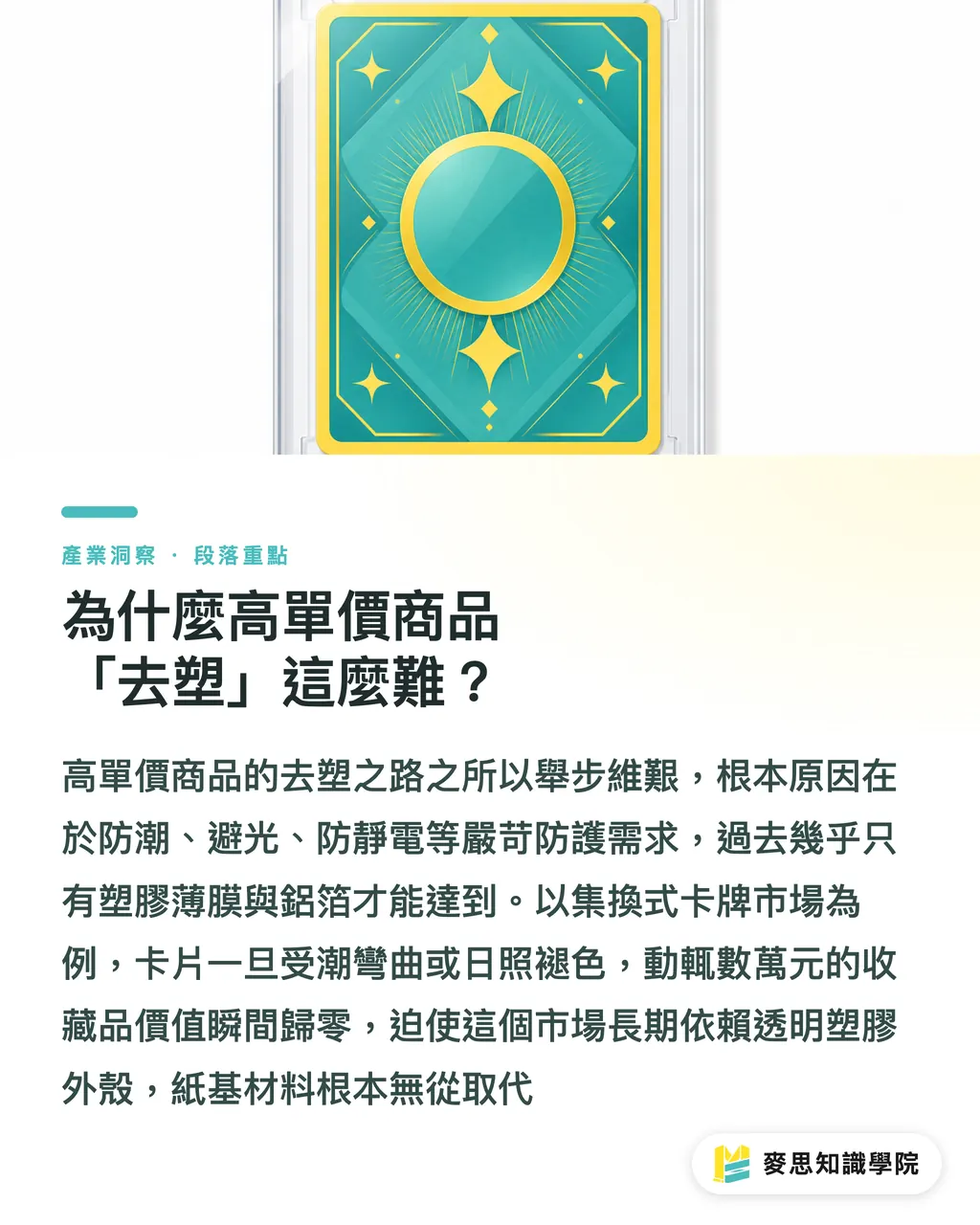
Take the recent surge in trading cards (Pokémon, limited-edition sports cards) as an example; collectors demand 'mint condition' for their cards
If a card gets slightly warped by moisture or fades from light exposure, its value can instantly drop to zero
This is why such markets have tenaciously stuck with transparent plastic shells, and why paper-based materials haven't even been on the table until now
What Pain Points Does Toppan's Multi-Layer Coating Technology Actually Solve?
It is in such hardcore, 'plastic-or-nothing' scenarios that Toppan's new technology has shattered industry stereotypes
They have successfully developed paper-based packaging specifically for trading cards, pushing the ceiling for paper materials to a new height
According to data from Packaging Insights, this packaging achieves a stunning light shielding rate of over 99%
The core of this technology isn't the paper pulp itself, but the precise control of the 'multi-layer coating structure'
・First line of defense: Uses a special coating to block external light, solving the classic issue of paper fibers being translucent
・Second line of defense: Enhances the moisture-proof barrier to prevent environmental humidity from causing the cards to warp
・Third line of detail: Addresses anti-static issues, ensuring that the packaging does not attract dust or jam the machines during high-speed production runs
This proves one thing: as long as the coating and structural design are done right, paper is fully capable of taking on the tasks previously belonging to high-barrier plastics
How Can Small and Medium-Sized Printing Plants in Taiwan Monetize This Technology?
Seeing this case, I immediately thought of Taiwan's gift box, boutique packaging, and cultural/creative product markets
Many of our printing plants, when faced with 'all-paper' procurement specifications from brands, often shy away from bidding because they are worried about insufficient protection
Toppan's technological breakthrough actually provides a clear roadmap for material transition
Don't just view this as packaging for trading cards; consider it a standard solution for the 'de-plasticization' of high-value products
・Inventory high-margin clients: Start by identifying boutique or cultural clients who face pain points regarding light and moisture; these clients typically have a higher tolerance for packaging costs
・Find alternative coating solutions: The market is seeing an increasing variety of options, such as superhydrophobic coatings and aqueous barrier coatings; plants can start by testing barrier effectiveness with small-batch prototyping
・Redefine packaging value: Proactively pitch this type of high-spec paper packaging to clients, showing them that we can achieve the same level of protection as plastic in an ESG-compliant manner
This is the key entry point to differentiate yourself from competitors and escape the 'race to the bottom' in the plain paper box price war
Key Takeaways
・High-spec protection requirements (light-shielding, moisture-resistance, anti-static) are no longer exclusive to plastic
・Toppan uses a multi-layer coating structure to push the light shielding rate of paper-based packaging to over 99%
・Taiwanese printing plants can adapt this concept for 'de-plasticization' proposals in boutique, cultural/creative, and high-value gift box markets
・Mastering special barrier coating technology is a core weapon for printers to secure high-margin ESG orders
Extended Reflections
For the printing and packaging manufacturing industry, the ESG transition has moved from 'slogans' to 'hard-nosed technology'
We have become accustomed to the convenience brought by plastic films, but we must now turn our attention to researching the suitability of various functional coatings and paper materials
At MINDS Printing, we strongly advise brand owners to introduce such high-spec paper-based testing early when we assist them in evaluating materials
Spending the budget on enhancing sustainable packaging for high-value products not only makes decarbonization efforts immediately visible to consumers but also effectively reduces the risk of material replacement brought about by future tightening of regulations
Further Reading
FAQ
- Can paper packaging truly fully replace the barrier properties of plastic?
- Through multi-layer coating and specialized surface treatments, paper is already capable of meeting high-spec product requirements for light shielding (like Toppan's 99%+), moisture resistance, and anti-static properties; the key is choosing the corresponding coating formula based on the specific product pain points
- Will the cost of such high-spec paper packaging be prohibitively expensive?
- Initial development and material costs are indeed higher, so it is recommended to first introduce this into markets with higher profit margins, such as boutiques, cultural goods, or collectibles, where the premium of the product itself can absorb the costs of the packaging upgrade
- What should small and medium-sized printing plants in Taiwan do if they lack the R&D resources of large manufacturers?
- There is no need to develop from scratch; there are already many mature suppliers of aqueous barrier coatings or eco-friendly films in the market. The focus for printing plants should be on finding suitable coatings to conduct paper material testing and prototyping, and then translating these results into proposals for brand clients
References
Related articles
The Print × AI weekly
The print and AI know-how designers, brands and enterprises can use before they commit — one email, every week
MINDS Free Tools
AI background removal, a LINE sticker maker, spine & imposition calculators — all free, right in your browser, no upload.
MINDS Group
Need actual printing or gifting services?
From premium printing to online ordering and festive gifts — the MINDS Group sister brands take it from here.