
Overview
Looking over the scrap invoices at the end of each month is probably the most numbing and frustrating moment for a print shop owner. Trimming scrap, ruined press sheets, and undelivered marketing materials get hauled off truckload by truckload, weighed, settled, and closed. In recent years, ESG narratives have given this a nicer spin by calling it the 'recycling rate,' but the underlying reality has not changed: waste paper is a cost, not an asset
Beyond traditional paper recycling, there are other ways to handle paper waste
A research path in materials science takes landfill-bound paper waste and converts it into carbon-rich, functional hydrochar using hydrothermal carbonization (HTC), lignin incorporation, and low-temperature activation [1]. This is not about repulping paper to make sheets again, but directly breaking down and reorganizing cellulose structures into carbon materials
So how far is this from practical industry adoption, and is it worth paying attention to right now?
What Does Hydrothermal Carbonization Actually Do, and How Does It Differ from Paper Recycling?
The fundamental difference is simple: paper recycling preserves fiber, while hydrothermal carbonization preserves carbon
Conventional paper recycling focuses on protecting fiber length and strength so it can be pulped and remade into paper. Because of this, it inherently rejects contamination. Inks, varnishes, laminations, and composite materials all devalue the stock. This explains why the most stubborn scrap in a print shop usually comes from jobs with the finest finishing
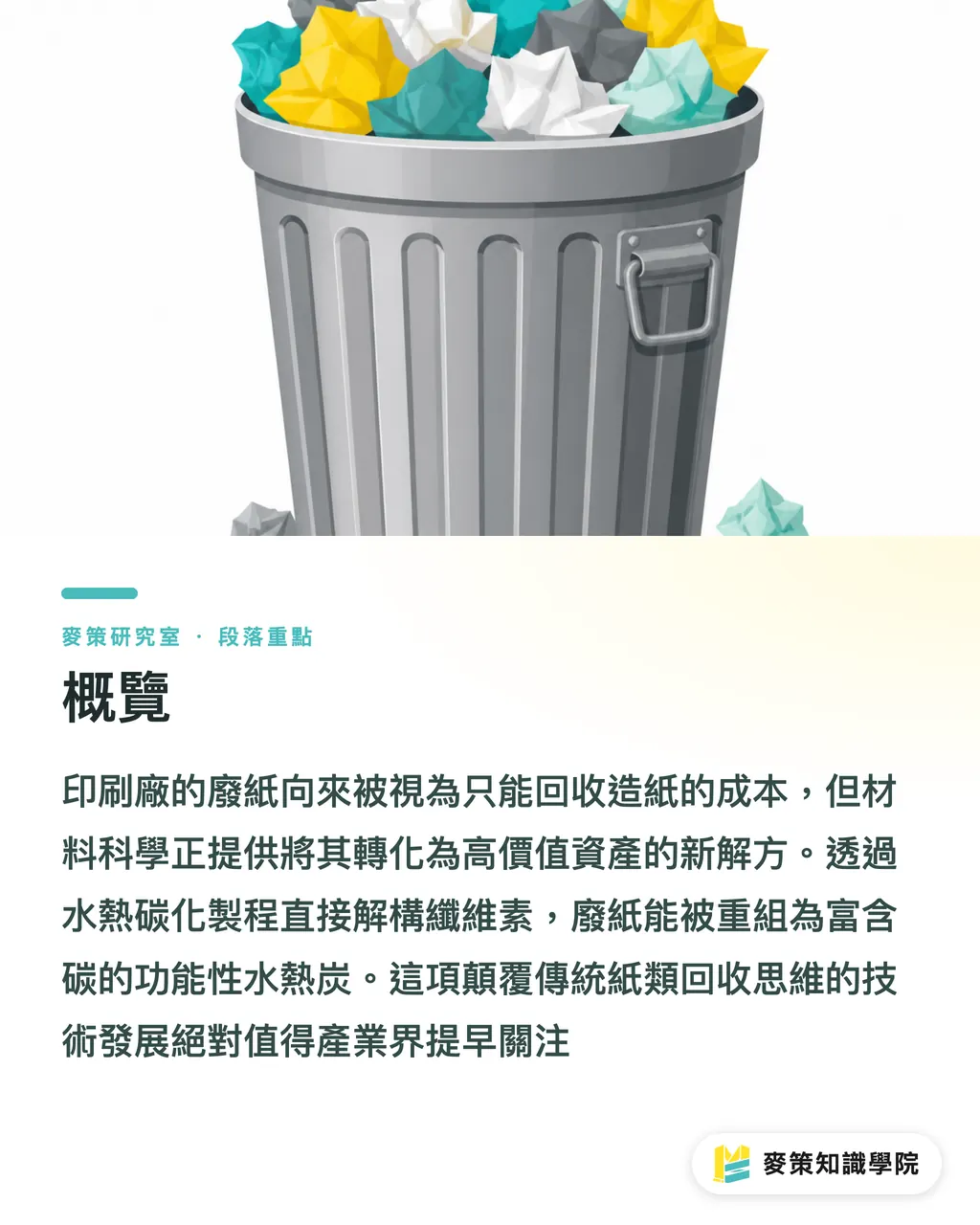
Hydrothermal carbonization flips that logic. In a high-temperature, high-pressure aqueous environment, it breaks down and rearranges the organic structures of biomass, producing hydrochar, a solid with high carbon content. Researchers applied this process to landfill-bound paper waste, testing lignin addition and low-temperature activation to boost functionality [1]. In other words, its target input is not good paper that can still be recycled, but the scrap nobody else wants
From an industry standpoint, these two pathways complement each other. Clean, high-grade scrap continues along the traditional paper recycling route, while paper so heavily contaminated by inks and post-press finishing that mills reject it becomes the sweet spot for carbon materials
What Can Hydrochar Be Used For, and Why Add Lignin?
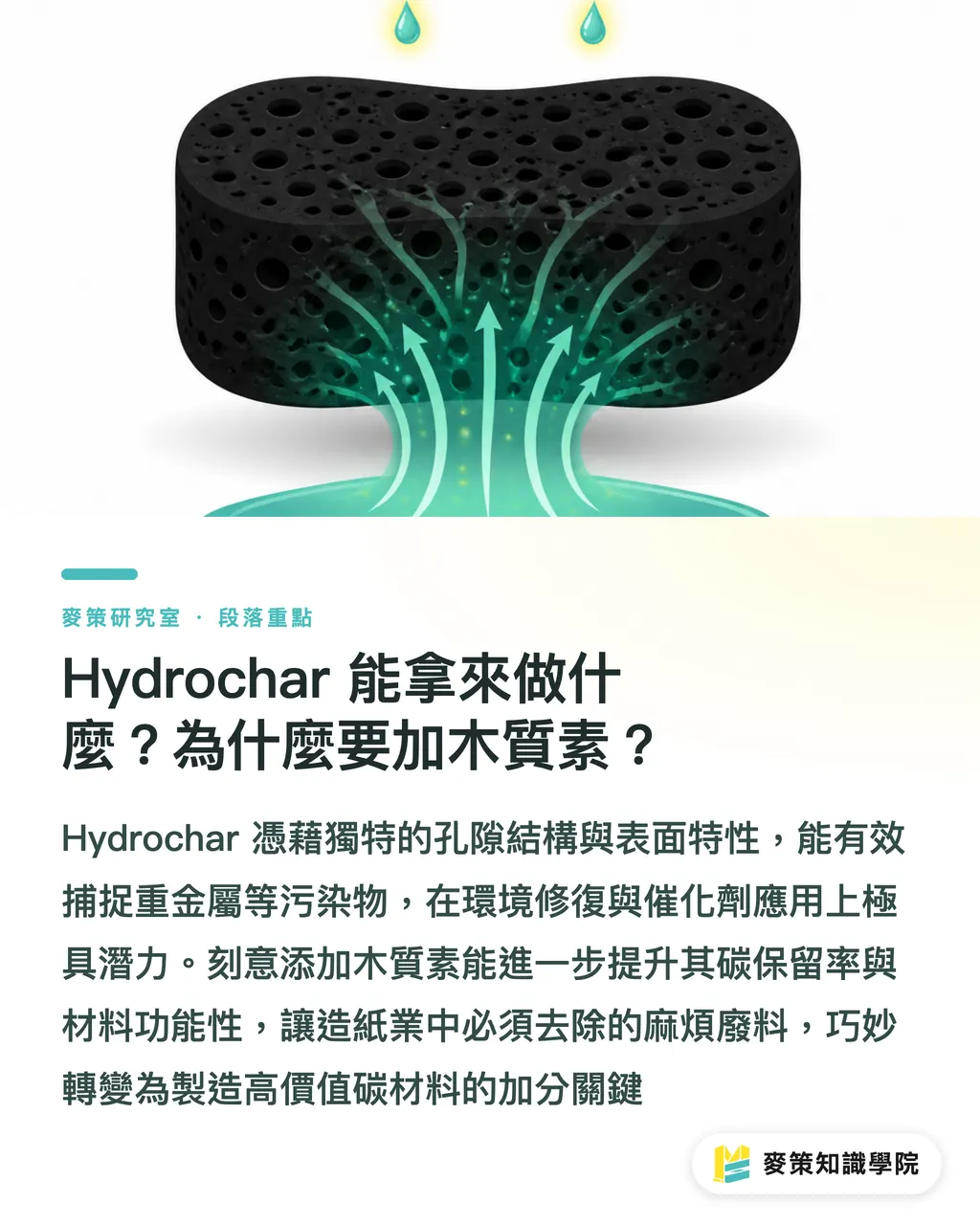
The practical value of hydrochar comes from its porous structure and surface chemistry. Put simply, it binds well to other substances
Studies have already investigated the redox properties of hydrochar, comparing how products derived from different precursors like lignin, cellulose, and d-xylose perform against heavy metals such as zinc [3]. This points to applications in adsorbents, water treatment, and environmental remediation, scenarios where the material surface needs to interact directly with contaminants
Other research pushes hydrochar toward higher-value uses. By using deep eutectic solvents to process lignocellulosic waste, researchers created pyrolyzed hydrochar microflowers for peroxymonosulfate activation, while converting lignin into carbon dots for Fe³⁺ detection [5][6]. Moving from adsorbents to catalysts to sensing materials shows a clear value ladder
The reason lignin is deliberately added comes down to structure. Its aromatic framework is naturally closer to the end state of carbon than cellulose, which helps improve carbon retention and product functionality. Print scrap already contains varying amounts of lignin, especially in paper grades with high mechanical pulp content. For paper industry veterans, this sounds counterintuitive: lignin is an unwanted nuisance in papermaking because it causes yellowing and hurts brightness, but in carbon materials, it can be an asset. The exact same compound plays opposite roles in different processes
To be clear, these findings explore material mechanisms in existing literature. They do not mean commercial production capacity exists for print waste today. Current published work remains focused on laboratory and process parameter studies [1][3][5]
When Will This Become a Reality for Print Shops?
This technology might not scale in the near term, but print shops can already start changing how they track paper waste
A viable technical pathway is only part of the equation. What truly decides whether technologies like this gain traction is the redirection of policies and infrastructure, a familiar topic in sustainability transitions. Studies discuss how infrasystems can be steered toward sustainable goals [4], while others analyze how policy instruments reshape industrial practices for sustainability [2]. These frameworks point to the same reality: for new technology to become commercially viable, existing collection, sorting, pricing, and regulatory systems must shift in tandem
In the printing sector, current scrap collection systems were built exclusively for traditional paper recycling. Everything is weighed, mixed together, and priced by broad paper grades. That logic disregards how much lignin the paper holds, what ink is on it, or whether it was laminated. Yet if a carbon materials route is to succeed, those exact details determine the value of the raw feedstock
The key leading indicator to watch is not who buys HTC equipment, but whether waste paper pricing begins to differentiate based on material composition. Once scrap prices reflect fiber origin or contamination type, it means downstream buyers who care about exact ingredients have entered the market
What Can You Do Now? Three Low-Cost Steps
From a practical perspective, I suggest three simple, low-cost steps:
・Digitize waste stream data. At a minimum, record weights and proportions separately for trimming scrap, misprints, and laminated or varnished waste. Most facilities weigh everything together right now. Without historical data, you will have no basis for bargaining when new recycling routes emerge
・Track pulp types across paper stocks. Mechanical pulp (high in lignin) and chemical pulp may carry different values in carbon material production. Purchasing teams already have this information, but it rarely travels downstream to production records
・Set up a dedicated cost category for hard-to-recycle waste. Scrap with film lamination, composite layers, or UV coating is currently a pure expense. If carbon material buyers appear, this specific batch has the highest potential to turn into a revenue generator
Even if carbon material pathways take time to scale, this data remains useful for current waste reduction and carbon accounting
Conclusion: Assessment and Scope of Applicability
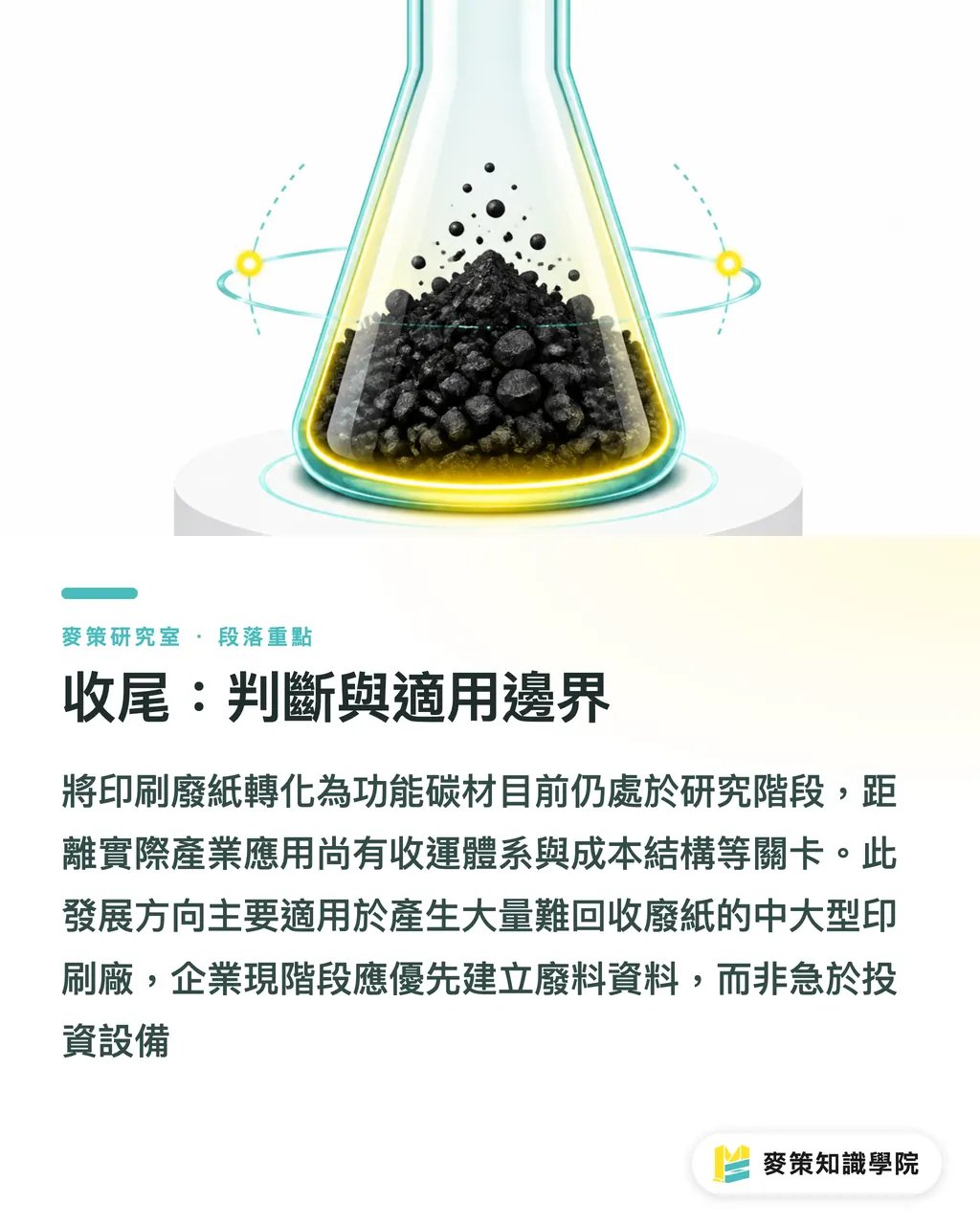
In my assessment, converting print waste into functional carbon materials is currently in the stage of material mechanism research rather than industry adoption. The literature shows the technical pathway is real and under active study [1][3][5], but moving from lab parameters to a stable supply chain still faces three hurdles: collection infrastructure, cost structure, and policy alignment [2][4]. What print businesses should do today is build up their waste data rather than invest in machinery
This evaluation mainly applies to mid-to-large print and packaging plants with steady scrap volumes and a high proportion of hard-to-recycle materials. If your waste volume is small or simple enough that paper mills gladly take all of it (such as uncoated woodfree paper with light ink coverage), traditional recycling is already your best option, and no changes are needed. In addition, if future research shows that energy consumed by HTC offsets its waste reduction benefits, the whole calculation will need recalibrating. Current public literature has not provided a complete life-cycle assessment specifically for print waste, which remains a clear knowledge gap
Key Takeaways
Hydrothermal carbonization (HTC) and paper recycling have opposing goals: HTC seeks carbon, while paper recycling seeks fiber. That makes waste paper too contaminated for paper mills the ideal feedstock for carbon materials
Research has applied HTC with lignin addition and low-temperature activation to landfill-bound paper to produce functional hydrochar, though work remains at the lab process stage without commercial production capacity
The application ladder for hydrochar spans from adsorbents to catalysts and sensing materials, drawing its value from porous structures and surface chemistry
Lignin is a troublesome impurity in papermaking but can be an advantage in carbon materials. The same component carries opposite value signs across the two processes
The true leading indicator is not who buys equipment, but whether waste paper pricing starts paying tiered rates based on material composition
Further Considerations
For print manufacturing, the real strategic advantage on this pathway lies in data rather than process equipment. Scrap paper is currently traded as a commodity priced purely by weight. Once downstream buyers care about composition, pricing will shift from single-dimensional weight to multi-dimensional criteria like fiber source, ink type, and finishing contaminants. Handling multi-dimensional pricing requires corresponding fields and logging routines in ERP or MES systems, which is something shops can implement today without waiting for external technology to mature. On the design side, this raises an overlooked question: if scrap processing routes split based on chemical makeup, how a finishing technique determines which waste stream a piece ends up in becomes a design factor. Current sustainable design discourse rarely moves past a binary recyclable-or-not judgment, lacking nuance around divergent processing paths. For AI and SaaS, the opening is clear: assessing scrap composition today relies heavily on experienced press operators, yet print job tickets already contain paper grades, ink coverage, and finishing sequences. Mapping job tickets automatically to waste composition characteristics is a modeling opportunity where the data already exists, just waiting to be connected. Three questions remain unresolved: the lack of a full life-cycle assessment for HTC on print waste, unstudied behavior of inks and coatings during HTC regarding unwanted byproducts, and whether waste hauling systems have sufficient economic incentives to support sorted collection, which is more of a policy issue than a technical one
References
[1] Bera, Rao, Sarker (2027). Hydrothermal carbonization of landfill-bound paper waste with lignin incorporation and low-temperature activation for carbon-rich functional hydrochars. Biomass and Bioenergy. DOI: 10.1016/j.biombioe.2026.109944
[2] Redirecting Government Policies for Agricultural Sustainability. Crisis and Opportunity. DOI: 10.2307/j.ctt1dgn4cr.22
[3] Effect of Heavy Metal (Zn) on Redox Property of Hydrochar Produced from Lignin, Cellulose, and d-Xylose. DOI: 10.1021/acssuschemeng.7b00204.s001
[4] Kaijser A. (2017). Redirecting Infrasystems Towards Sustainability. Individual and Structural Determinants of Environmental Practice. DOI: 10.4324/9781315252377-7
[5] Review for "Deep eutectic solvent-assisted dual valorization of waste distillers' grains-derived lignocellulose: pyrolyzed hydrochar microflowers-supported peroxymonosulfate activation and lignin carbon dots-aided Fe3+ detection". DOI: 10.1039/d4en00407h/v2/review1
[6] Review for "Deep eutectic solvent-assisted dual valorization of waste distillers' grains-derived lignocellulose: pyrolyzed hydrochar microflowers-supported peroxymonosulfate activation and lignin carbon dots-aided Fe3+ detection". DOI: 10.1039/d4en00407h/v1/review1
FAQ
- Can print shop waste paper be converted into carbon materials?
- Research shows a viable technical pathway exists. Studies have applied hydrothermal carbonization (HTC) to landfill-bound paper waste alongside lignin addition and low-temperature activation, yielding carbon-rich functional hydrochar. However, this is still in the lab and process parameter stage, with no commercial capacity yet dedicated to print waste
- How does hydrothermal carbonization (HTC) differ from conventional paper recycling?
- Paper recycling protects the length and strength of paper fibers and is sensitive to contamination from inks and laminations. Hydrothermal carbonization preserves carbon content, breaking down and rearranging organic structures into hydrochar. Their raw material needs are opposite: contaminated waste that paper mills reject is actually better suited for the carbon material pathway
- What are the practical applications of hydrochar?
- Existing research points to adsorbents, water treatment, and environmental remediation by using its porous structure and surface chemistry to capture heavy metals and other pollutants. It also reaches into higher-tier applications like catalysts and sensors, including peroxymonosulfate activation and carbon dots for metal ion detection
- What preparations should print shops make right now for this pathway?
- Three low-cost steps: track weights separately for trimming scrap, misprints, and laminated waste; record pulp types in purchasing records; and categorize hard-to-recycle waste as a separate cost line item. This data also supports current waste reduction and carbon accounting, making it a low-risk move
- Under what circumstances can a print shop skip considering this pathway?
- If your scrap volume is small or its makeup is simple enough that paper mills eagerly take all of it (like uncoated offset paper with low ink coverage), current recycling is already the optimal solution. This pathway is mainly relevant for mid-to-large print and packaging facilities with steady scrap volumes and hard-to-recycle waste compositions
Related articles
The Print × AI weekly
The print and AI know-how designers, brands and enterprises can use before they commit — one email, every week
MINDS Free Tools
AI background removal, a LINE sticker maker, spine & imposition calculators — all free, right in your browser, no upload.
MINDS Group
Need actual printing or gifting services?
From premium printing to online ordering and festive gifts — the MINDS Group sister brands take it from here.