
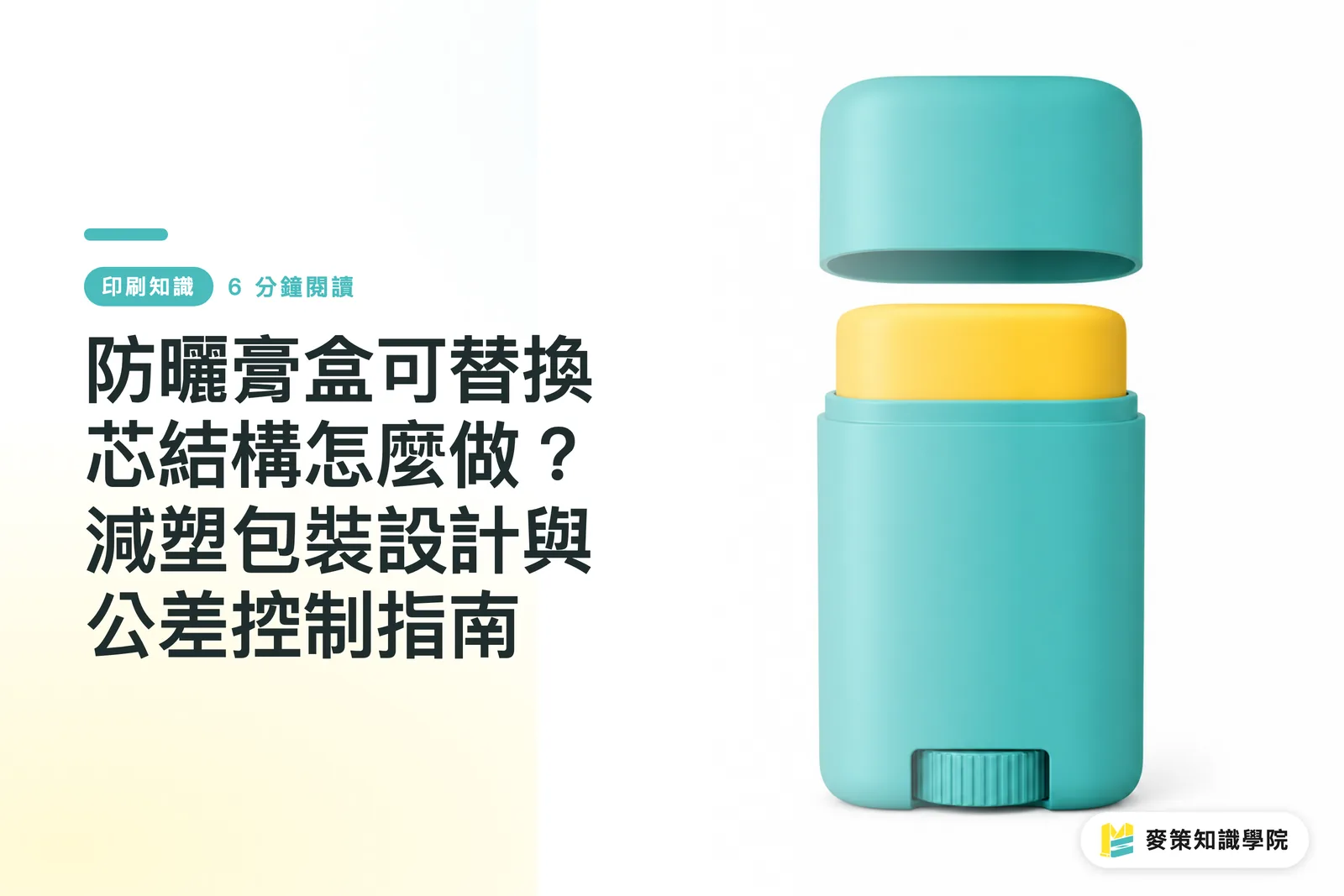
Why Should Beauty Sunscreen Stick Cases Switch to a Replaceable-Refill Structure?
Biomedical cosmetics brands are moving to replaceable-refill structures mainly to meet the EU PPWR requirements for plastic reduction while preserving the feel and brand value of premium packaging
Based on recent experience on production lines and with brand clients, the push for sustainable packaging has grown much stronger in European and U.S. markets. The EU PPWR, the Packaging and Packaging Waste Regulation, clearly sets repeat-fill ratio requirements for beauty containers. California's SB 54 also sets strict reduction targets for single-use plastic waste and EPR, Extended Producer Responsibility regulations
In the past, beauty brands often got stuck when developing green packaging. Switch fully to thin-wall paper boxes or tubes, and the product immediately loses its hand feel and premium presence. Keep heavy injection-molded plastic, and the brand faces regulatory penalties plus criticism over an excessive carbon footprint. The replaceable-refill structure hits that pain point directly
Refillable Packaging means a mechanism design that separates the product container into a durable, high-quality outer case and a consumable inner refill. After the product is used up, the user only replaces the inner refill, while the outer case can be reused dozens of times, balancing plastic reduction with visual quality
Not so fast. This is not as simple as splitting a container into two parts
Once the outer case is expected to last more than a year, the abrasion resistance of post-print finishing, the tightness of the snap-fit, and color difference control on refill printing will all directly affect whether consumers buy refills again
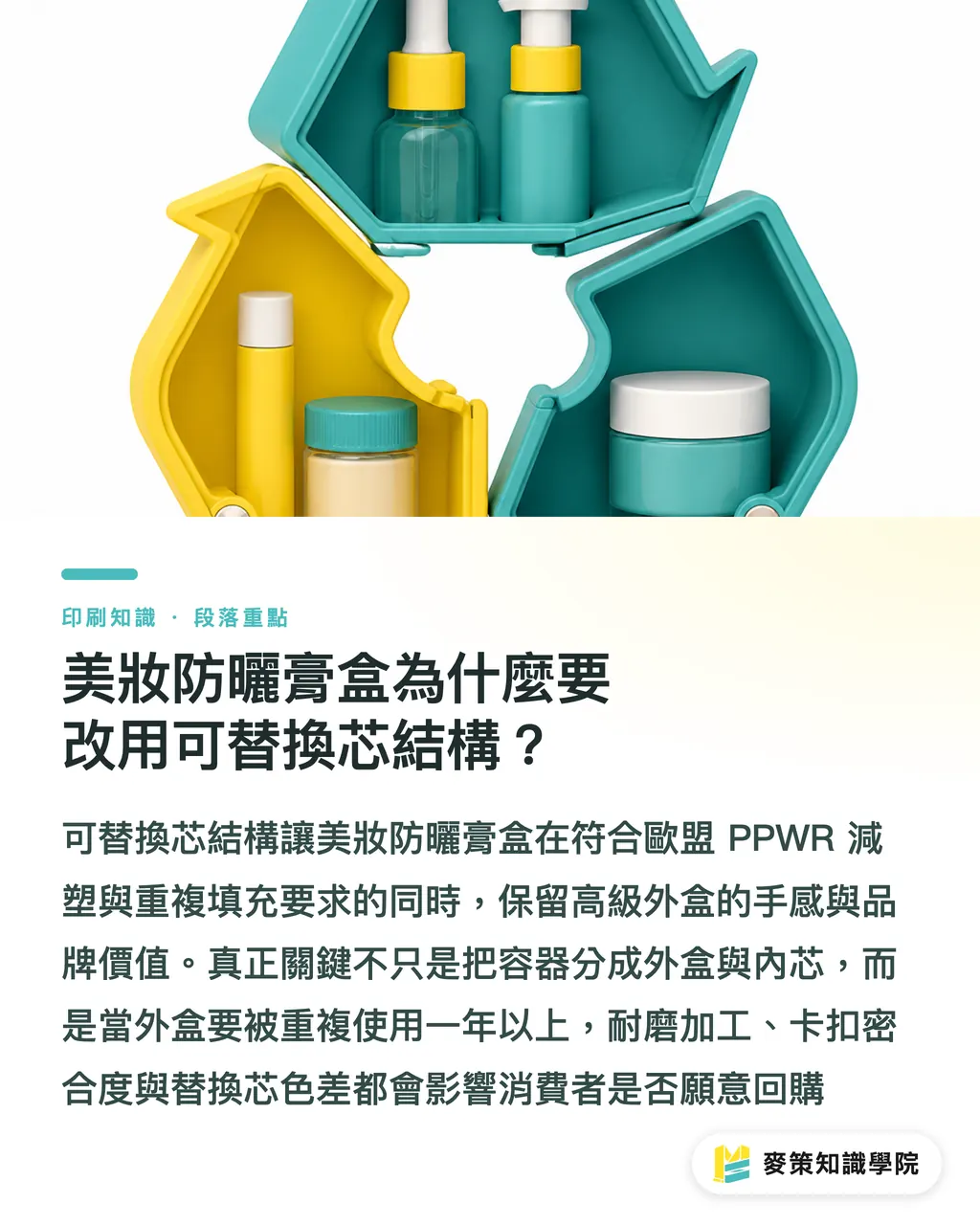
How Does the Two-Layer Separated Structure of a Replaceable-Refill Sunscreen Stick Case Work?
A replaceable-refill sunscreen stick case uses an inner and outer two-layer mechanism with precise snap-fit design, allowing consumers to lock in and remove the refill easily
In packaging structural engineering, two key technologies support the whole product experience: the twist-up mechanism of the inner refill and the geometric stability of the outer case
The refillable sunscreen stick design by Cosmogen and Asquan is a strong representative case. The design uses a sturdy outer protective case paired with an independently sealed inner refill. After the stick is used up, the consumer only needs to twist open the base and replace the refill
For this mechanism to run smoothly, three technical points must be controlled with precision during prepress artwork preparation and mold manufacturing:
・Geometric tolerance control: the clearance between the inner diameter of the outer case and the outer diameter of the refill should stay around 0.15mm. It must prevent looseness and wobbling during twisting while still making replacement feel easy
・Airtightness and protection design: sunscreen sticks contain volatile ingredients, so the snap force of the inner refill's sealing cap must reach at least 1.5kgf to keep the stick from drying out or degrading during storage
・Positioning track guidance: the base twist thread needs a foolproof guide groove to prevent blind insertion from breaking the latch
It is simple. If the mechanism feels smooth, customers are willing to keep buying refills
From my long-term observations on production floors, many brands trying replaceable refills for the first time run into refills that fit too tightly or come loose because they overlook plastic injection shrinkage and paperboard thickness tolerance. This is also the core detail that needs repeated testing at the prepress proofing stage
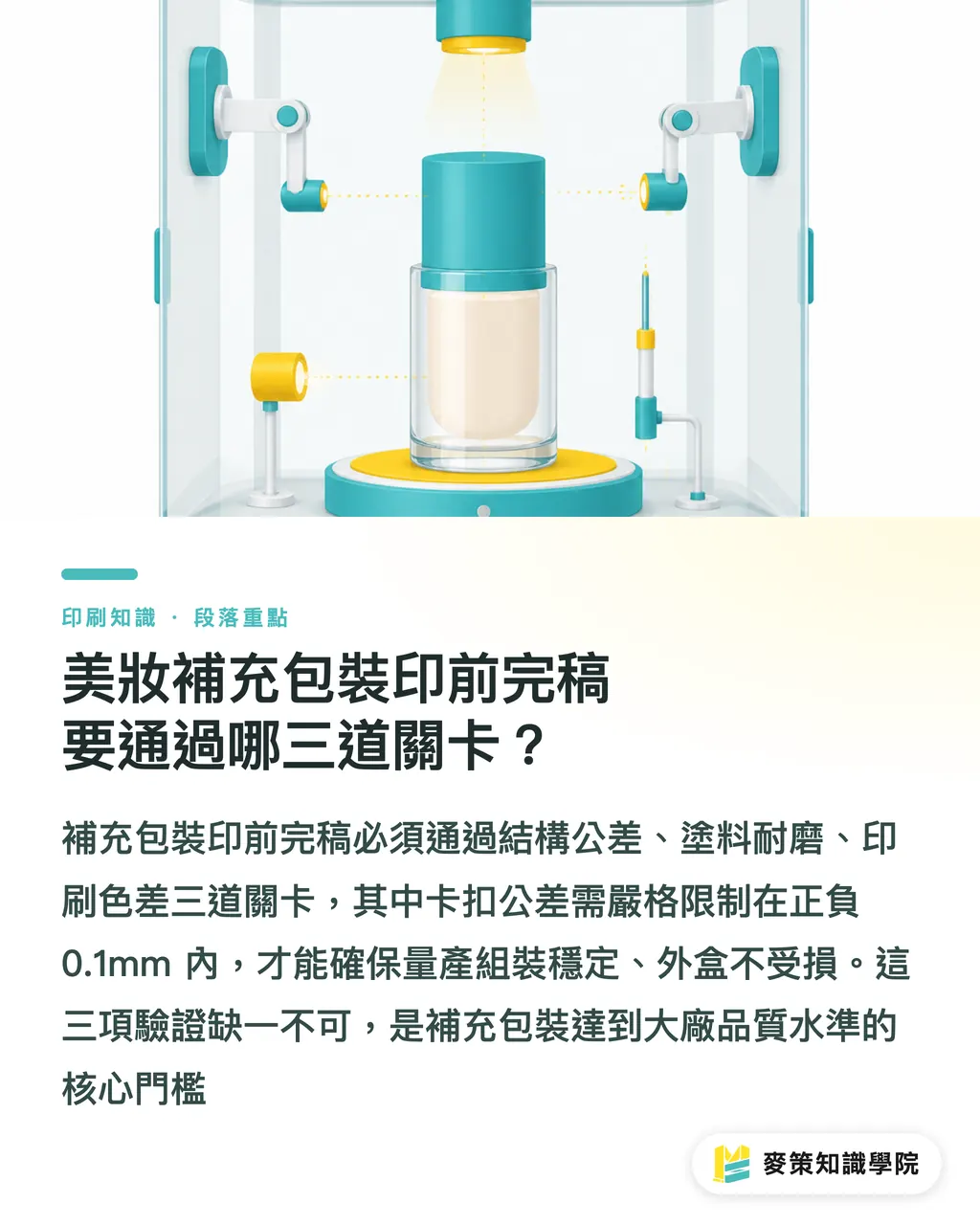
What Three Gates Must Beauty Refill Packaging Pass at the Prepress Artwork Stage?
At the prepress artwork stage, refill packaging must pass three gates: structural tolerance, coating abrasion resistance, and snap-fit testing. Only then can brands avoid loose assembly or damage to the outer case
When print shops take orders for refillable packaging and move into production, they must not treat it with the same artwork logic used for traditional single-use box structures. To keep mass-production quality stable, we recommend applying the Mai Strategy Three-Gate Prepress Check standard inspection process:
① Structural tolerance calibration: use 3D simulation module alignment for injection-molded parts and paper packaging materials, strictly limiting snap-fit tolerance error to within plus or minus 0.1mm to prevent assembly thread slippage
② Coating abrasion verification: the protective layer on the outer case must reach at least Grade 4B in the ISO 2409 cross-cut test and pass 500 abrasion-resistance cycles, ensuring the finish does not peel after long-term handling
③ Print color difference comparison: the refill outer packaging and main box printing must comply with the ISO 12647 international color standard. Spectrophotometer-measured Delta E should be controlled within 2.0 to prevent visible color differences between refill batches
Brands that want to reduce mold trial-and-error costs can work with the MINDS team on prepress snap-fit samples and proofing verification, from paper selection and coating combinations to quantified color difference control, so the design lands cleanly in production
That is enough. Once these three checks are done properly, refill packaging quality can reach major-brand standards
How Should Surface Finishing and Structural Materials Be Chosen for Plastic-Reduction Packaging?
Plastic-reduction packaging materials should prioritize PCR recycled plastic paired with FSC certified paper, along with highly abrasion-resistant coating processes
Material choice directly determines a product's sustainability indicators and visual hand feel. When planning a replaceable-refill sunscreen stick case, different material combinations each come with their own physical properties and processing limits:
・PCR recycled plastic outer case: the upside is a warm, refined feel and strong impact resistance. The downside is greater color variation in recycled plastic resin. Best suited for the main shell of a long-term reusable outer case
・Aluminum alloy metal outer case: the upside is a solid hand feel with a top-tier luxury presence. The downside is higher mold and processing cost. Best suited for high-end biomedical cosmetics lines
・FSC certified paper tube refill: the upside is maximum plastic reduction and full recyclability after disposal. The downside is that moisture resistance needs to be reinforced through surface coatings. Best suited for single-use consumable refill packaging
・Tactile UV abrasion-resistant coating: the upside is a major improvement in scratch and abrasion resistance for the outer case. The downside is the need to check whether the coating affects later plastic recycling. Best suited for protective print finishing on the outer case surface
For post-print surface finishing, we recommend using a water-based matte coating paired with localized high-build UV varnish. This creates a clean, professional biomedical cosmetics look without damaging the overall recyclability of the packaging
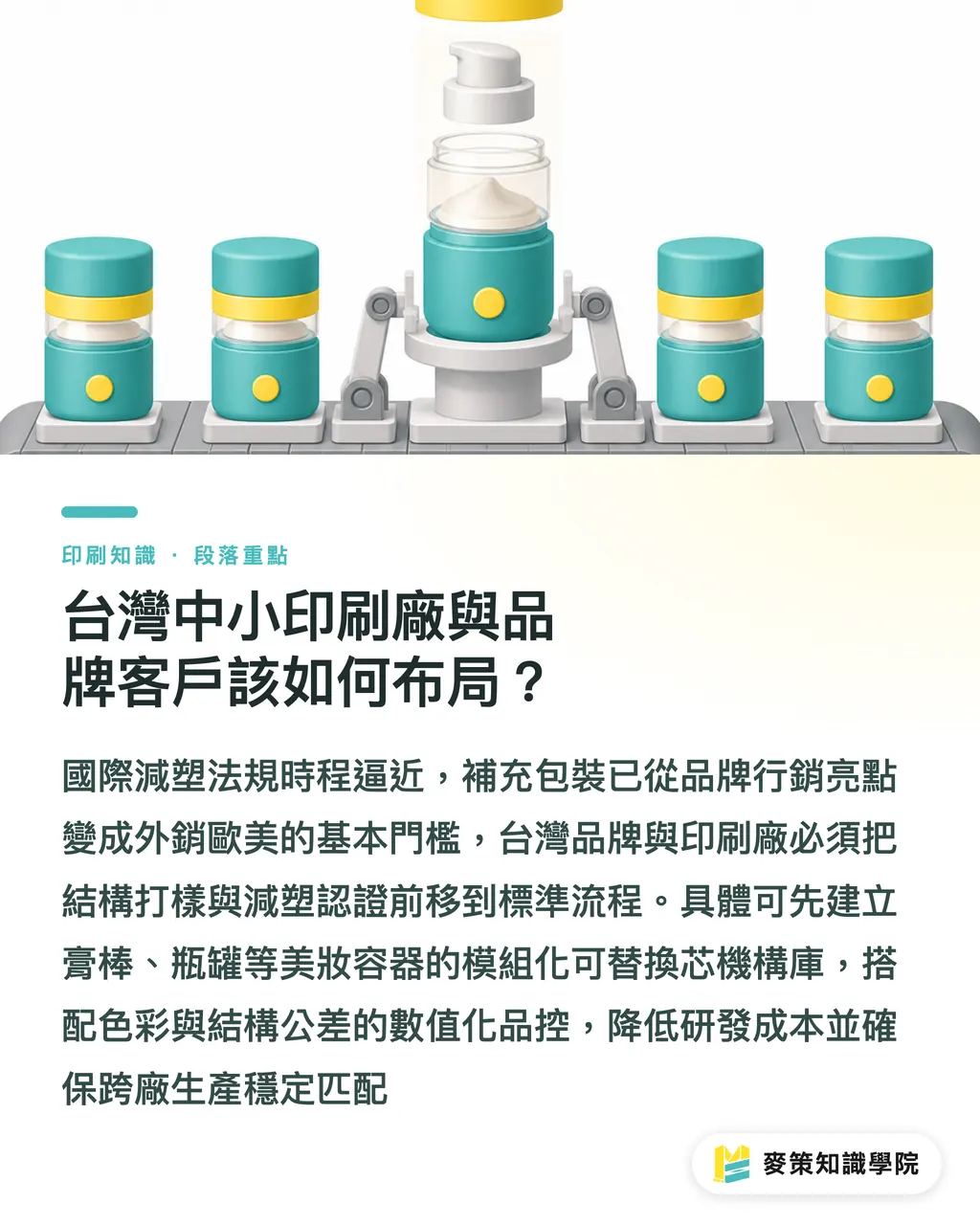
How Should Taiwan's Small and Mid-Sized Print Shops and Brand Clients Prepare?
Taiwanese brands and print shops should build detachable-structure proofing capability as soon as possible and include plastic-reduction certification in the standard artwork workflow
The international regulatory timeline is closing in. Refillable packaging has shifted from a brand marketing highlight to a firm requirement for exporting to European and U.S. markets
If Taiwanese beauty brands and packaging supply chains want to stay steady through this wave of plastic reduction, the following actions are recommended:
1. Build a modular mechanism library: for common beauty containers such as sticks, bottles, and jars, develop standardized public-mold structures for replaceable refills to reduce R&D costs for individual brands
2. Introduce quantified quality control systems: from ISO 12647 color management to structural tolerance measurement, establish standard operating procedures so refills produced across countries and factories can still match perfectly
3. Obtain international green certifications: proactively apply for FSC Chain of Custody certification and proof of recycled plastic content to help brand clients connect smoothly with European and U.S. EPR regulations
For further consultation on replaceable packaging structures, plastic-reduction material combinations, or international green regulations, contact the Mai Strategy Knowledge Academy Consulting Team for professional structural planning and regulatory guidance support
This is not a far-off trend. It is a transformation issue happening on production lines every day
Key Takeaways
Plastic-reduction regulations are driving the transformation of beauty packaging. Replaceable-refill structures balance sustainability with a premium feel
The core of a two-layer separated mechanism lies in precise 0.15mm snap-fit tolerance and airtight design that prevents drying
Adding the Mai Strategy Three-Gate Prepress Check to prepress artwork preparation can effectively reduce mold trial-and-error and assembly defect rates
Outer case coatings must meet ISO 2409 abrasion-resistance standards to ensure no paint loss after more than one year of reuse
Print shops should build modular structure libraries and ISO 12647 color quality control as early as possible to connect with the global green supply chain
Further Thinking
The rise of refillable packaging structures means the print and packaging industry is moving beyond traditional single-use consumable manufacturing and into high-precision mechanisms and long-life material processes. For Taiwanese print shops, offering print services alone is no longer enough to create high added value. They need to move upstream into structural design and prepress verification. For brand clients, choosing a packaging partner that understands tolerance control and green regulations will be the next key step for successful overseas expansion
Further Reading
FAQ
- What tolerance range should the snap-fit of a replaceable-refill beauty sunscreen stick case be controlled within?
- The clearance between the outer case and the inner refill is generally recommended to stay between plus or minus 0.1mm and 0.15mm. If it is too tight, users will struggle to replace the refill. If it is too loose, the stick may wobble or fall out during twist-up use
- How can moisture resistance be handled when refill packaging is made with paper materials?
- Use FSC certified high-density structural paperboard, then apply a thin barrier coating or water-based green coating on the inner layer to balance airtight moisture protection with later disposal and recycling needs
- How can color consistency be ensured between refills and main boxes produced in different batches?
- ISO 12647 color management standards must be established during prepress artwork preparation. Spectrophotometer monitoring should keep Delta E color difference within 2.0, ensuring consumers see no visible color mismatch when buying refills
Related articles


The Print × AI weekly
The print and AI know-how designers, brands and enterprises can use before they commit — one email, every week
MINDS Free Tools
AI background removal, a LINE sticker maker, spine & imposition calculators — all free, right in your browser, no upload.
MINDS Group
Need actual printing or gifting services?
From premium printing to online ordering and festive gifts — the MINDS Group sister brands take it from here.