
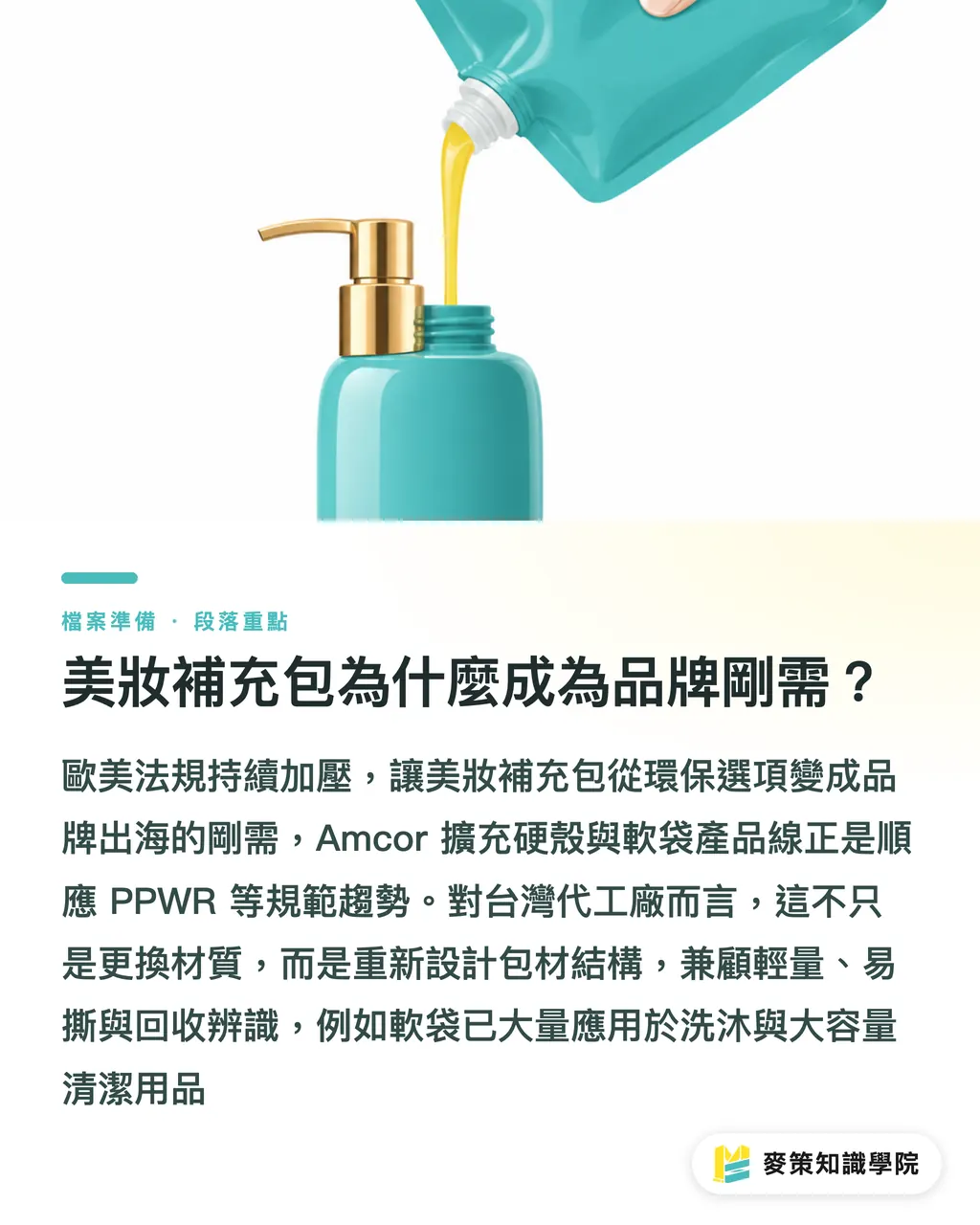
Why Have Beauty Refill Packs Become a Brand Essential?
The answer is direct regulatory pressure from the West. Looking at export projects over the past couple of months, from California's labeling standardization to the EU's PPWR (Packaging and Packaging Waste Regulation, which mandates refillable capability for certain product categories), the regulatory grip keeps tightening
Amcor's expansion of its rigid and flexible refill lines for personal care is a direct response to this shift. Rigid formats typically serve replaceable compact cases or high-end serum inner cartridges, where protection and smooth swap-out are the selling points; flexible pouches have taken a large share of body wash, shampoo, and bulk cleanser markets. For Taiwan's contract manufacturers, this isn't just swapping a material, it's rebuilding the entire packaging structure. Clients want lightweight, easy-tear designs that also communicate recyclable materials clearly
How Should Designers Handle the Shrinking Layout?
Refill packs are physically smaller than their full-size counterparts, and heat-seal margins eat into the edges, leaving very little room to work with
Fitting brand visuals and a dense grid of country-specific recycling labels onto that tiny canvas is where errors pile up fast. On every project I run, I require the artwork to pass through Mai Strategy's Three Print-Ready Checkpoints:
・Die line and bleed defense: heat-seal edges on flexible pouches typically consume 5–8mm of visual space, no critical text or graphics can sit in that zone
・Substrate and white ink registration: transparent or metallized films demand precise white ink coverage; an underprinted barcode area means scanners won't read it
・Regulatory label allocation: California has a hard minimum size for recycling icons, lock in those positions before touching anything else
Get these three right, and rejection rates drop by more than half
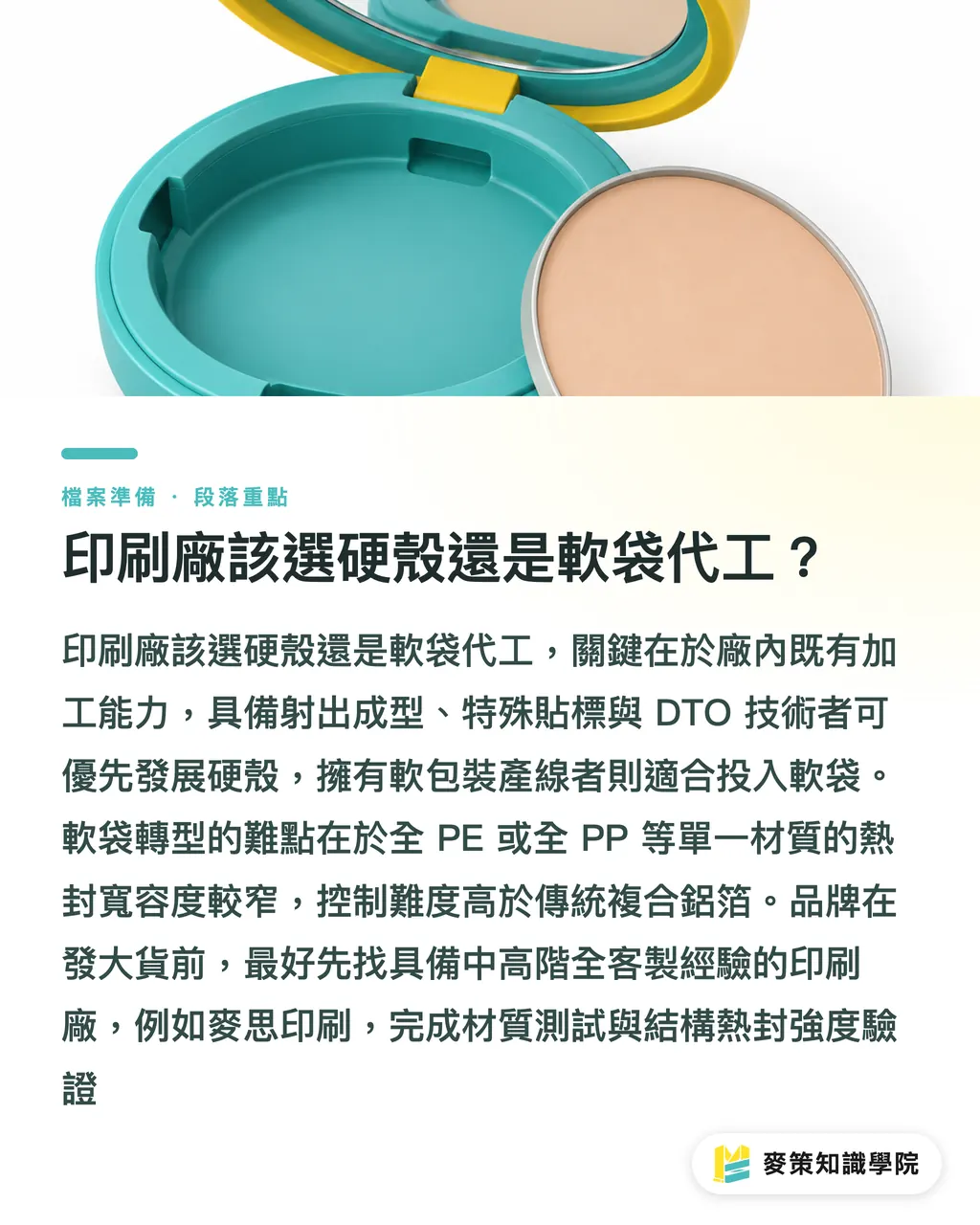
Rigid or Flexible: Which Should Print Shops Target for Contract Work?
It comes down to what your plant already does well. Go where your advantage is. Simple
・Rigid: suited to shops with injection molding and specialized labeling capabilities (such as the stackable full-shrink sleeve labels CCL Label has introduced), with higher margins and room for DTO (direct-to-object printing)
・Flexible: a natural fit for plants already running soft packaging lines. The challenge is handling the heat-seal tolerance of mono-material structures (all-PE or all-PP, which are far friendlier to end-of-life recycling), these are considerably harder to control than traditional aluminum foil composites
Every brand client I've seen eyeing a flexible packaging transition over the past few months gets the same advice: before scaling production, run material testing and structural heat-seal strength trials through a shop like MINDS, one with genuine mid-to-high-end custom experience
Key Takeaways
・EU and California regulations have turned beauty refill packs from a sustainability bonus into a baseline export requirement
・Heat-seal edges on flexible pouches consume visual space, keep all critical artwork at least 8mm clear of the seal area during file preparation
・Print shops should evaluate their equipment against either the DTO potential of rigid formats or the mono-material pouch-making demands of flexible lines
Going Further
For Taiwan's printing industry, refill packaging means dealing with filling-line compatibility and seal burst strength. Instead of racing to the bottom on price against larger players in a saturated market, the smarter play is solving the pain point that mid-size skincare brands actually have: small runs in many SKUs, all needing to clear specific export regulations. That's where the margins are. Don't rush. Nail down which structures your plant can handle, then approach brands to discuss design, your close rate will be significantly higher
Further Reading
FAQ
- When designing flexible refill pouches, what do you do when the barcode won't print cleanly or won't scan?
- This almost always comes down to missing or insufficient white underprint. On transparent or metallic film substrates, flood the barcode area with a solid, dense white ink layer and make sure the edges of every bar are clean
- Is refill packaging mandatory for beauty products exported to Europe?
- Under the spirit of the EU's PPWR, cosmetics and personal care products are strongly advised to include refillable designs, or brands risk facing steep packaging taxes or shelf restrictions down the line
- Can flexible pouch materials be made fully recyclable?
- The industry is heading toward mono-material structures, eliminating the traditional PET-plus-aluminum-foil laminates, which dramatically improves acceptance rates at recycling facilities
Related articles
The Print × AI weekly
The print and AI know-how designers, brands and enterprises can use before they commit — one email, every week
MINDS Free Tools
Imposition calculator and preflight file check — free prepress tools, right in your browser.
MINDS Group
Need actual printing or gifting services?
From premium printing to online ordering and festive gifts — the MINDS Group sister brands take it from here.