

Overview
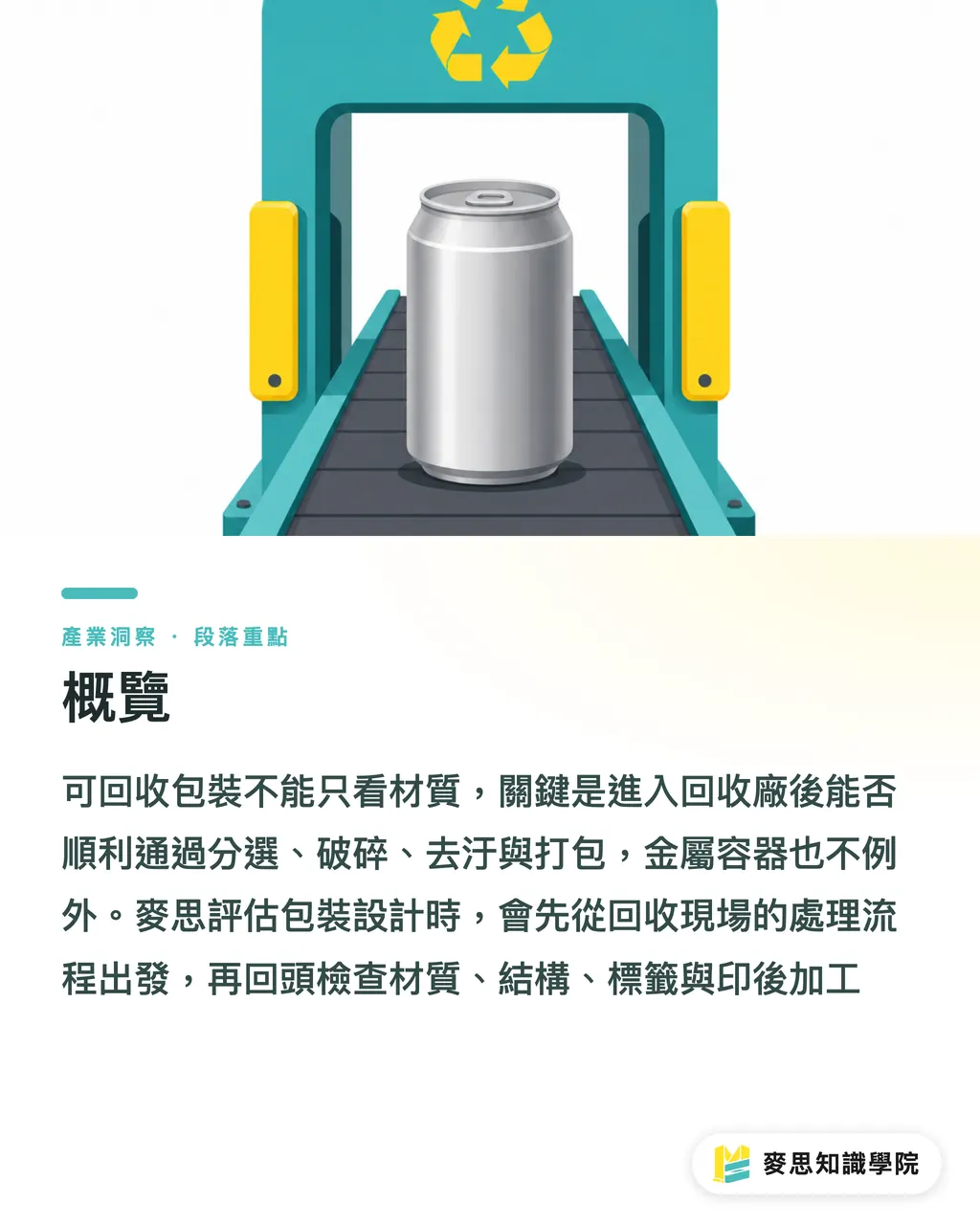
Recyclable packaging has to pass mechanical processing at the MRF and shredding line first, and metal containers are no exception. When MINDS (MS, mid-to-high-end fully custom commercial printing) reviews packaging design, the first question is whether the container can be sorted, shredded, cleaned, and baled once it reaches the recycling facility, before checking material, structure, labels, and post-press finishing
Why Do Recyclable Metal Containers Still Get Stuck at the Processing Stage?
Packaging Insights covered Aluminium China 2026 on-site recycling technology report, noting that the show ran July 8–10, 2026 in Shanghai, with floor focus on packaging, metal recycling automation, emissions reduction, and circular value
When I read signals from trade shows like this, I don't stop at the words 'aluminum' or 'metal,' because what recycling facilities actually deal with is container shape, residues, applied labels, coatings, and the quality of material flow after shredding
Mayslynn showed a shredding line for chemical metal packaging containers, covering diesel drums, paint cans, and filter cartridges. Wali Shredder displayed the WLHM Hammer Mills for hard materials like aluminum cans and e-waste. These two cases spell it out plainly: whether a container can actually be recycled depends on whether the equipment can ingest it, sort it, and turn the material into a form that downstream buyers will accept
The recycling symbol is the admission ticket; the processing line is the real test. I've said this in client meetings more times than I can count
How Does the MRF Actually Shape Packaging Design?
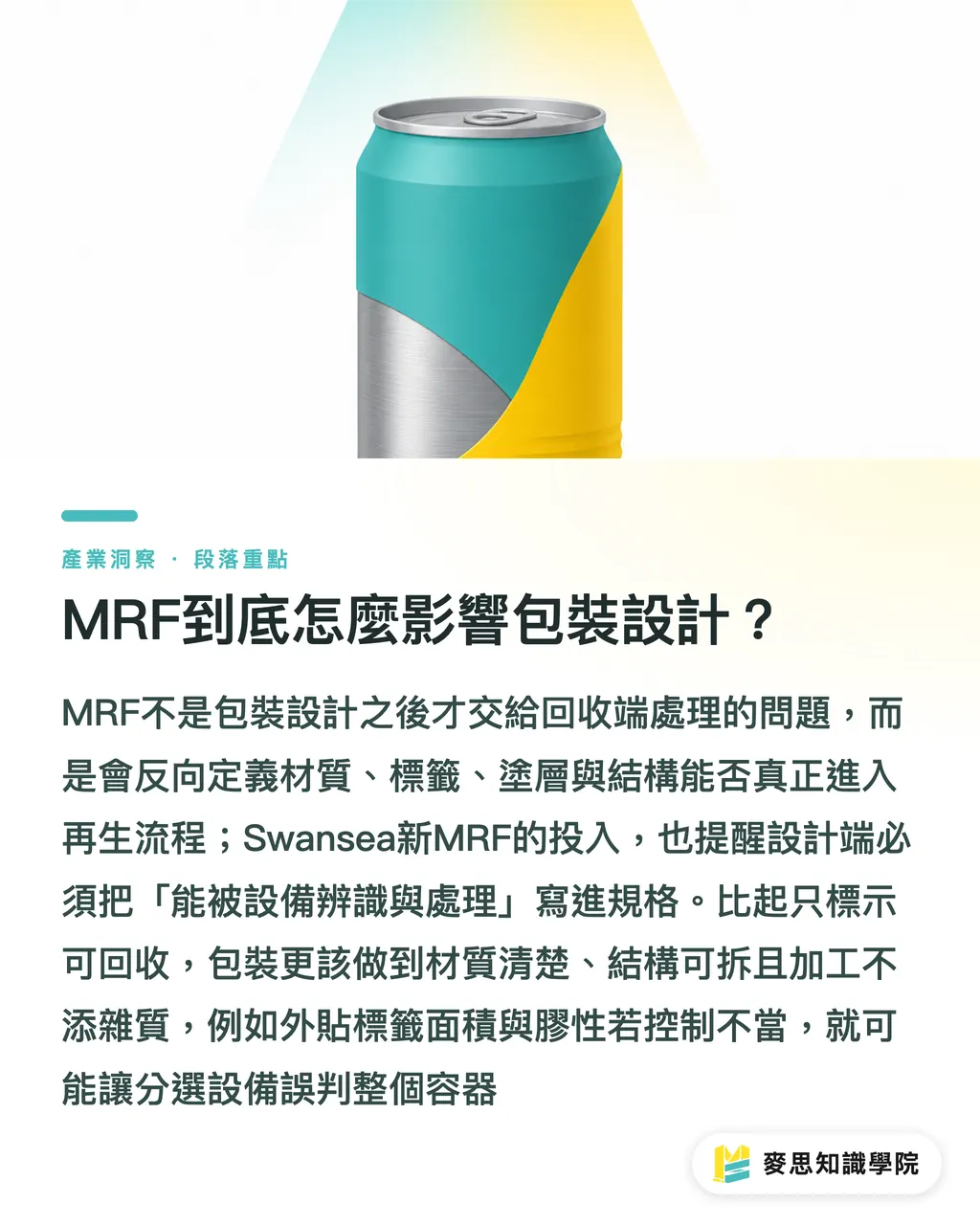
An MRF (Material Recovery Facility) is a sorting plant where mixed recyclables are processed before regeneration. It sorts metal, paper, and plastic by material and form, shreds and compresses them, and moves qualified material to downstream processing
Another fact worth noting alongside this: Griffiths Waste Management is opening a new MRF in Swansea. That signals the recycling side is actively adding equipment, which means the packaging design side needs to include 'processable by new equipment' as a spec, not push the responsibility onto a recycling symbol
From the printing and packaging floor, MRFs push back four requirements onto design:
・Container material must be easy to identify. Don't mix the metal body, plastic sleeve, paper label, and composite film into something too tangled to read
・Applied labels need controlled coverage area and adhesive type. Full-wrap coverage frequently causes sorting equipment to misread the material
・Coatings, varnishes, and metallized decoration need a recycling-end clearance check before you commit. Don't let aesthetics become contamination
・Container structure must allow shredding, compression, and drainage. Chemical containers like diesel drums and paint cans can't ignore residue risk
MINDS (MS) three pre-press gates bring the MRF into the design meeting: ①material can be sorted, ②structure can be separated, ③finishing doesn't add contamination. These three gates get closer to the recycling facility's reality than simply asking 'is this a recyclable material.'
What Specs Should Designers and Printers Actually Change?
Design specs for metal containers need to go one step past 'does it look good on the shelf,' all the way to the MRF, the shredder, and the recycled material buyer. The shredding lines and Hammer Mills at Aluminium China 2026 have put the downstream equipment on the table
The MINDS (MS) three pre-press gates can be applied like this:
・① Material gate: the primary material is clearly identified as aluminum, tinplate, or another metal. Added materials like plastic handles, paper labels, and shrink film must be removable or identifiable by sorting equipment
・② Structure gate: the can body, lid, handle, liner, and filter cartridge should not be locked together. For containers like paint cans or filter cartridges, imagine how the shredding line feeds material during design
・③ Post-press gate: large-area metallized film, heavy coatings, strong-adhesive labels, and hard-to-peel stickers need a risk assessment upfront. Looking good is fine; don't let the recycling end downgrade an entire batch
For projects combining metal can labels, commercial cartons, and corporate identity, MINDS (MS) can help review material labeling, label coverage area, and post-press finishing before going to press, so the design avoids the contamination issues common on processing lines from the start
My take is straightforward: if a design can't explain 'how it gets sorted once it reaches the MRF' at the proofing stage, the sustainability story is premature
How Can Small and Mid-Size Taiwan Brands Bring the Recycling Side into Proofing?
Small and mid-size Taiwan brands don't have to wait for a full recycling system rollout before making changes. Start with one die-cut spec, one label spec, and one material list for a recycling-end check. Lowest cost, most direct impact
Four checks to add before proofing:
・List the primary material, added components, labels, adhesives, and coatings separately. Don't just write 'metal packaging.'
・Check against actual end use. Containers like diesel drums, paint cans, and filter cartridges need an extra check for residues and drainage methods
・Ask suppliers two questions: can this label be peeled off, and will this coating affect the material after shredding?
・Have design, procurement, and the printer note recycling risks on the same proof. Don't wait until mass production to make changes
AI and SaaS tools can turn these checks into a pre-press form, with fields for materials, finishing, label coverage ratio, removable components, and recycling risk notes. When the Mai Strategy Knowledge Academy consulting team implements this kind of process, they keep the judgment calls with the on-site professionals and put the tools in a reminder-and-record role
Packaging circularity isn't a slogan. It always comes back to that shredder, that sorting line, and whether anyone will actually pick up that batch of recycled material

Key Takeaways
・'Recyclable' on the spec sheet means nothing until the processing line can actually handle it
・The challenge with metal containers isn't the material name. It's the labels, coatings, residues, and structural details
・MRFs are rewriting packaging design specs in reverse. Designers need to bring sorting and shredding into the proofing stage
・MINDS (MS) three pre-press gates: material can be sorted, structure can be separated, finishing doesn't add contamination
Further Thinking
For print manufacturers, the next step is building MRF checks into quoting and proofing. For the design side, the next step is writing label coverage area, adhesive type, coatings, and removable components into the spec. For AI and SaaS teams, the next step is turning the MINDS (MS) three pre-press gates into a checkable, saveable, auditable workflow, so sustainability decisions don't stay locked inside a designer's head or scattered across procurement emails
Further Reading
FAQ
- Metal containers are already recyclable, so why does design still matter?
- Metal has recycling value, but the MRF sees a complete container, not a material name. Labels, coatings, residues, and composite structures can all make sorting and shredding harder
- What is an MRF, and what does it have to do with packaging design?
- An MRF is a Material Recovery Facility that sorts, shreds, compresses, and bales mixed recyclables. If packaging can't be identified or processed by an MRF, it may be rejected even if it's marked recyclable
- What recyclability design checks can a printer do for clients?
- A printer can check primary material, label adhesive type, coatings, varnish, removable components, and material labeling before going to press. The MINDS (MS) three pre-press gates start with: material can be sorted, structure can be separated, finishing doesn't add contamination
- What are the most common recycling pitfalls in metal can packaging?
- Common problems include full-wrap shrink film, hard-to-peel strong-adhesive labels, heavy coatings, composite liners, residual liquid, and non-removable fittings. Containers like paint cans, diesel drums, and filter cartridges need early evaluation
- What can small and mid-size Taiwan brands do right now?
- Start by pulling one die-cut spec, one label spec, and one material list for a check. Confirm that primary material, added components, adhesives, coatings, and recycling risks are all documented. Changes before mass production cost the least
Related articles


The Print × AI weekly
The print and AI know-how designers, brands and enterprises can use before they commit — one email, every week
MINDS Free Tools
AI background removal, a LINE sticker maker, spine & imposition calculators — all free, right in your browser, no upload.
MINDS Group
Need actual printing or gifting services?
From premium printing to online ordering and festive gifts — the MINDS Group sister brands take it from here.