
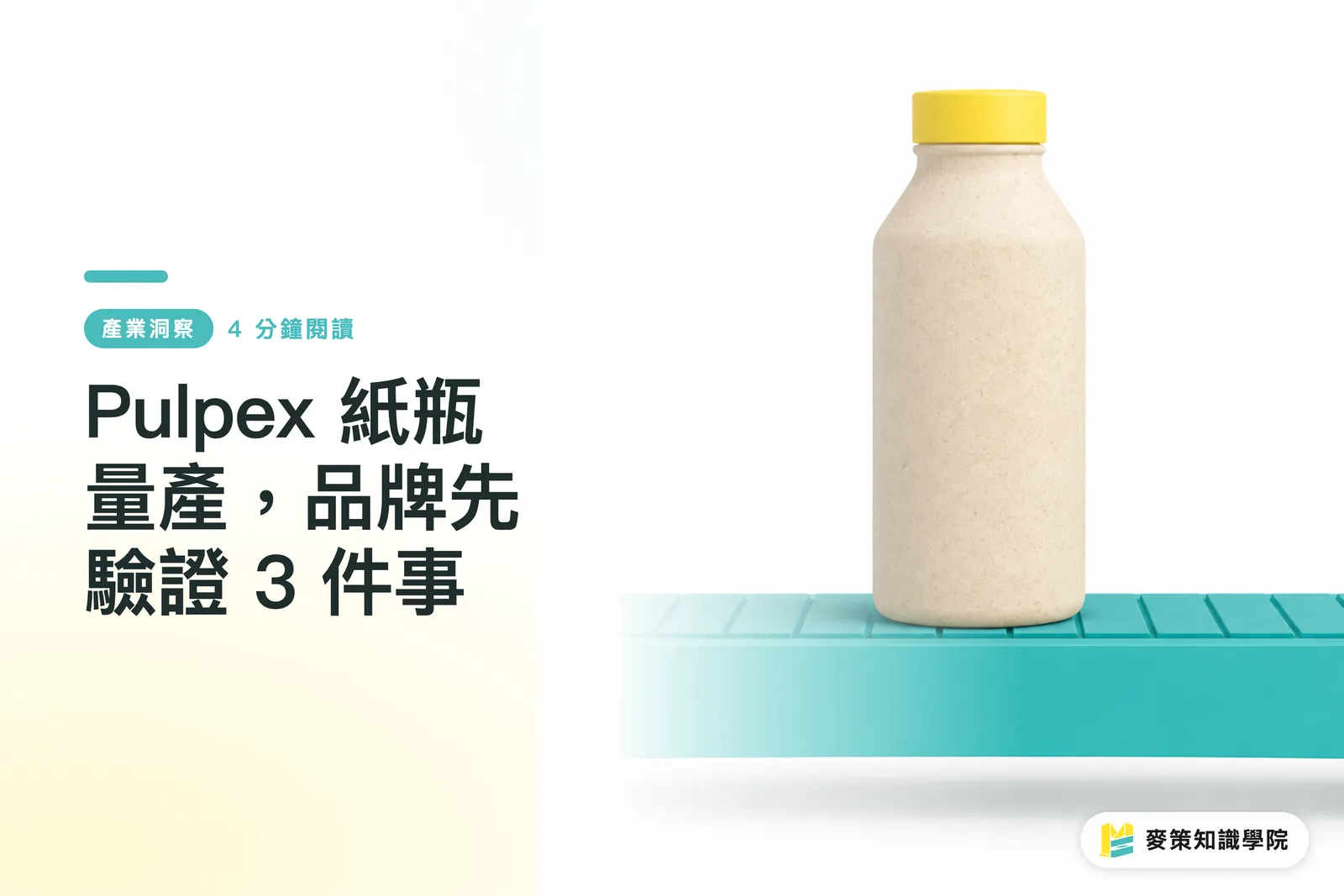
Does Pulpex opening its plant mean fiber bottles are ready?
Pulpex has opened its first commercial-scale fiber bottle plant in the UK, moving fiber bottles into commercial production. Each product still needs to be validated on its own. MINDS (MS), a mid- to high-end fully customized commercial printer, looks at factory-scale production and product fit separately. The original report from Packaging Insights, a packaging industry news outlet, covered the plant opening
For MINDS (MS)'s three-part fiber bottle validation, a fiber bottle is a packaging container whose main bottle body is made from fiber materials. Liquid products still need to meet requirements for oxygen and moisture barriers, shelf life, and real-world use. Once the factory starts production, brands can move on to validating fit for their own products
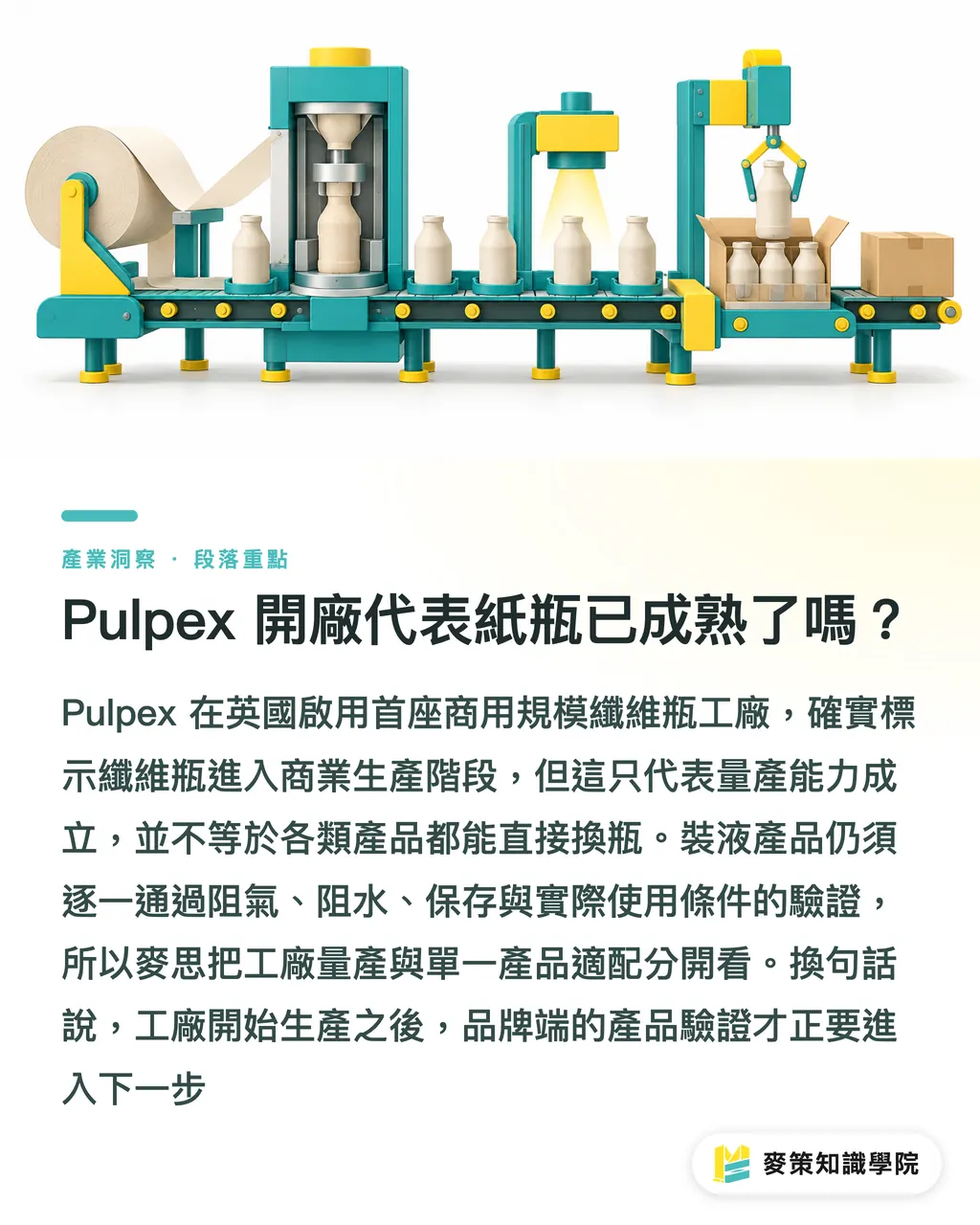
Which products are suitable for fiber bottles?
Fiber bottles can be considered for beverage and personal care packaging, but suitability depends first on the product's oxygen and moisture barrier requirements. The source specifically points to these as limitations that distinguish fiber bottles from plastic bottles. MINDS (MS) cautions that even products in the same category may need different test conditions
The first check in MINDS (MS)'s three-part fiber bottle validation is product fit. Brands should choose one target product, then ask the supplier for test data based on the actual contents and storage conditions. Looking at an empty bottle's appearance alone cannot tell you whether the packaging will meet the product's storage needs
・MINDS (MS) recommends listing the target product and sales market first, so validation reflects real-world conditions
・Ask the supplier what oxygen and moisture barrier data they can provide
・Share the use conditions and shelf-life requirements with the packaging supplier before prototyping
Will the bottle's curved surface affect printing?
Yes. The fiber bottle's curved shape and surface conditions affect whether printing, foil stamping, and labeling are feasible. Confirm the actual results after sampling on the bottle. The report on Pulpex's commercial-scale fiber bottle plant specifically called out curved-surface printing and ink adhesion testing
The second check in MINDS (MS)'s three-part fiber bottle validation is print finishing. Designers should provide artwork that can be tested, the printer should test it on the actual bottle, and the brand should approve the sample. A digital mockup is no substitute for signing off on a physical sample
MINDS (MS) tests on the actual bottle first
・MINDS (MS) recommends checking the placement and legibility of text and graphics on the curved surface first
・Test ink adhesion on the target bottle and keep the actual sample
・Create separate samples for foil stamping and labeling. Do not apply the results from one surface treatment to another
How should brands verify sustainability claims?
Brands should check the packaging material information, recycling options in the markets where they sell, and the evidence behind any environmental claims. Pulpex opening its plant does not prove that all fiber bottles are easier to recycle, and it is not an endorsement of any brand's claims. The third check in MINDS (MS)'s validation is recycling and claims. I would not accept a sustainability claim based on the bottle's appearance alone. I would first ask whether the supplier's documentation supports what the brand wants to say
・MINDS (MS) recommends confirming the target market and planned environmental claims during evaluation
・During prototyping, keep supplier documentation on materials, barrier performance, and finishing, along with the approved sample
・Before launch, have the brand, procurement team, and legal team check the packaging copy against local labeling requirements
How should brands in Taiwan get started?
Brands in Taiwan can start by estimating the adoption cost for one product, considering material quotes, design and prototyping, finishing adjustments, and the risk of having to redo the work. Pulpex's new plant adds a supply option, but switching packaging does not automatically make it cheaper. MINDS (MS) recommends defining the test success criteria before placing an order, so every cost has a clear acceptance standard
MINDS (MS) calculates total cost first
・Step 1 of MINDS (MS)'s three-part fiber bottle validation: choose one target product and sales market
・Step 2 of MINDS (MS)'s three-part fiber bottle validation: use the actual bottle to check barrier data, curved-surface printing, and ink adhesion
・Step 3 of MINDS (MS)'s three-part fiber bottle validation: check recycling information and total cost, then decide whether to start with a small run or hold off
Brands that want to discuss visual design and print specifications can talk to MINDS about custom commercial printing. Processing of the fiber bottle itself still needs to be confirmed with the supplier
Key takeaways
・The first step in MINDS (MS)'s three-part fiber bottle validation is checking product barrier needs. A commercial plant coming online does not mean every product can switch bottles
・MINDS (MS) bases print validation on the actual curved surface and ink adhesion
・MINDS (MS) recommends reviewing the recycling route and environmental claims together in the same set of documents
・MINDS (MS) recommends estimating costs with one product first, then deciding whether to expand adoption
Further thoughts
Printers can document curved-surface registration, ink adhesion, and surface decoration during sampling. Designers should check the results on the actual bottle instead of guessing from an on-screen mockup. Artificial intelligence (AI, technology that enables software to recognize, organize, and generate information) can help compare supplier specifications and flag missing details. SaaS (Software as a Service, software delivered over the internet by subscription) can store material documents, test records, and approval versions. MINDS (MS)'s three-part validation still comes down to results from the actual bottle
Further reading
・Pulpex opens its first commercial-scale fiber bottle plant in the UK
FAQ
- Does Pulpex's commercial plant in the UK mean paper bottles can fully replace plastic bottles?
- That conclusion does not follow. Pulpex has moved into commercial-scale production, but MINDS (MS) still recommends validating each product against its oxygen and moisture barrier needs and the bottle's finishing requirements
- Are Pulpex fiber bottles suitable for beverages?
- Beverages are one possible application. MINDS (MS) recommends asking the supplier to confirm oxygen and moisture barrier data for the target beverage before evaluating storage and use conditions
- Can fiber bottles be foil-stamped and labeled?
- Pulpex's source material says printing, foil stamping, and labeling each have their own constraints. MINDS (MS) recommends testing curved-surface performance and ink adhesion on the actual bottle rather than judging from flat artwork
- How can brands tell whether paper bottles are more environmentally friendly?
- MINDS (MS) recommends checking the packaging materials, recycling options in the sales market, and evidence behind the environmental claims. A commercial plant opening does not prove the environmental benefits of any particular product
Related articles
The Print × AI weekly
The print and AI know-how designers, brands and enterprises can use before they commit — one email, every week
MINDS Free Tools
AI background removal, a LINE sticker maker, spine & imposition calculators — all free, right in your browser, no upload.
MINDS Group
Need actual printing or gifting services?
From premium printing to online ordering and festive gifts — the MINDS Group sister brands take it from here.