

Why Have Coatings Become Essential to Modern Packaging?
Because coatings now handle print adhesion, material barrier performance, logistics durability, and surface feel at the same time. Whether packaging can actually work in production is often decided at this layer
Flint Group, "Why Coatings Are Becoming Essential to Modern Packaging" published an article on September 9, 2026, starting from a question converters hear again and again: "Can you print on this substrate?" There is no simple yes-or-no answer. The deciding factor often comes down to how the coating and primer are matched
In practice, I often remind brands that once the material changes to a thinner film or a mono-material structure, print conditions, converting durability, and shelf performance all shift together. Coating is no longer a decorative layer added at the end, but part of the upfront design that lets a new material run on press and make it through converting
A functional coating is a formulation applied to the surface of a substrate such as paper or film. It improves adhesion, barrier performance, abrasion resistance, heat resistance, slip, or feel, so packaging can be printed, converted, and used
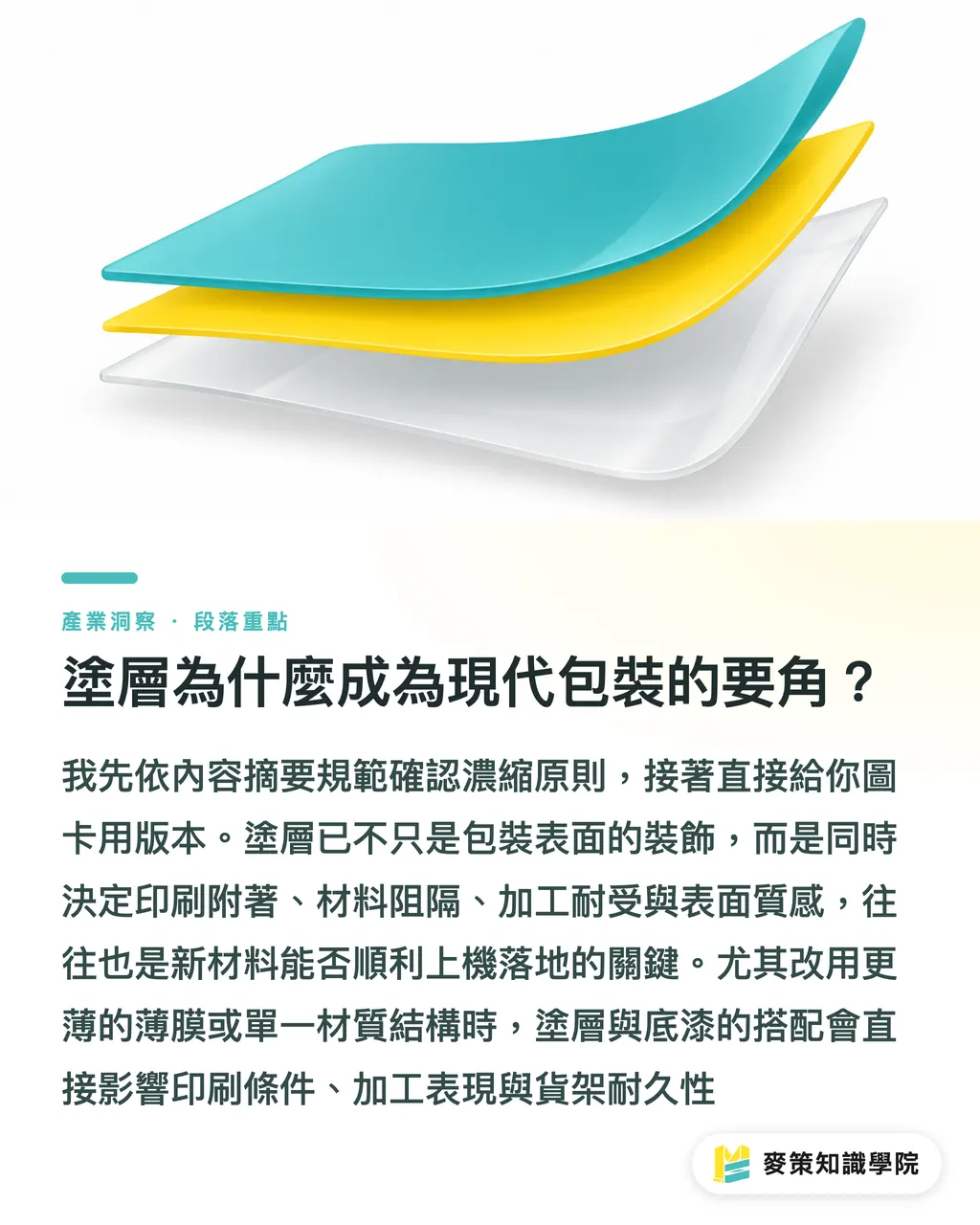
How Do Coatings Make New Materials Truly Printable?
Coatings first turn the substrate surface into an interface where ink can work consistently, then supply the barrier performance and durability packaging needs in use
Primer adjusts surface tension, helping ink maintain adhesion and colour density across different substrates. This matters especially for recycled paper, film, and thin-gauge materials because surface finish, absorbency, and gloss vary, making inconsistencies in colour and brand visuals more likely in the finished product
Barrier coating can address migration, reducing reliance on complex multi-layer construction. Other functional chemistry improves slip, heat resistance, and durability, so lightweight structures can still meet converting and end-use requirements
When handing off artwork, designers cannot provide only colour swatches and mockups. They also need to share the substrate, printing method, and contact environment with the printer for joint assessment
Start with the substrate. Then talk about the finish
Why Does Sustainable Packaging Need More Coating Design?
Reducing film use, moving to mono-materials, and meeting recycling targets narrow the material choices available. Coatings must restore packaging performance when a composite structure has one less layer
Flint Group puts it plainly: material innovation brings gains, but also trade-offs in printing, converting, and downstream use. As regulatory requirements and recyclability targets tighten, formulations cannot be designed simply to print beautifully
The easiest trap for brands is treating recyclability as a single checkbox on the materials procurement sheet. In practice, at least three questions need to be asked together:
・Does this coating support adhesion and colour density on the target substrate?
・Is the barrier sufficient for the product and packaging's conditions of use?
・Does the surface finish meet downstream recycling and converting requirements?
Sustainability does not mean removing every performance requirement. Brands should retain the performance that genuinely matters and ask the printer to substantiate public claims through material testing and prototyping
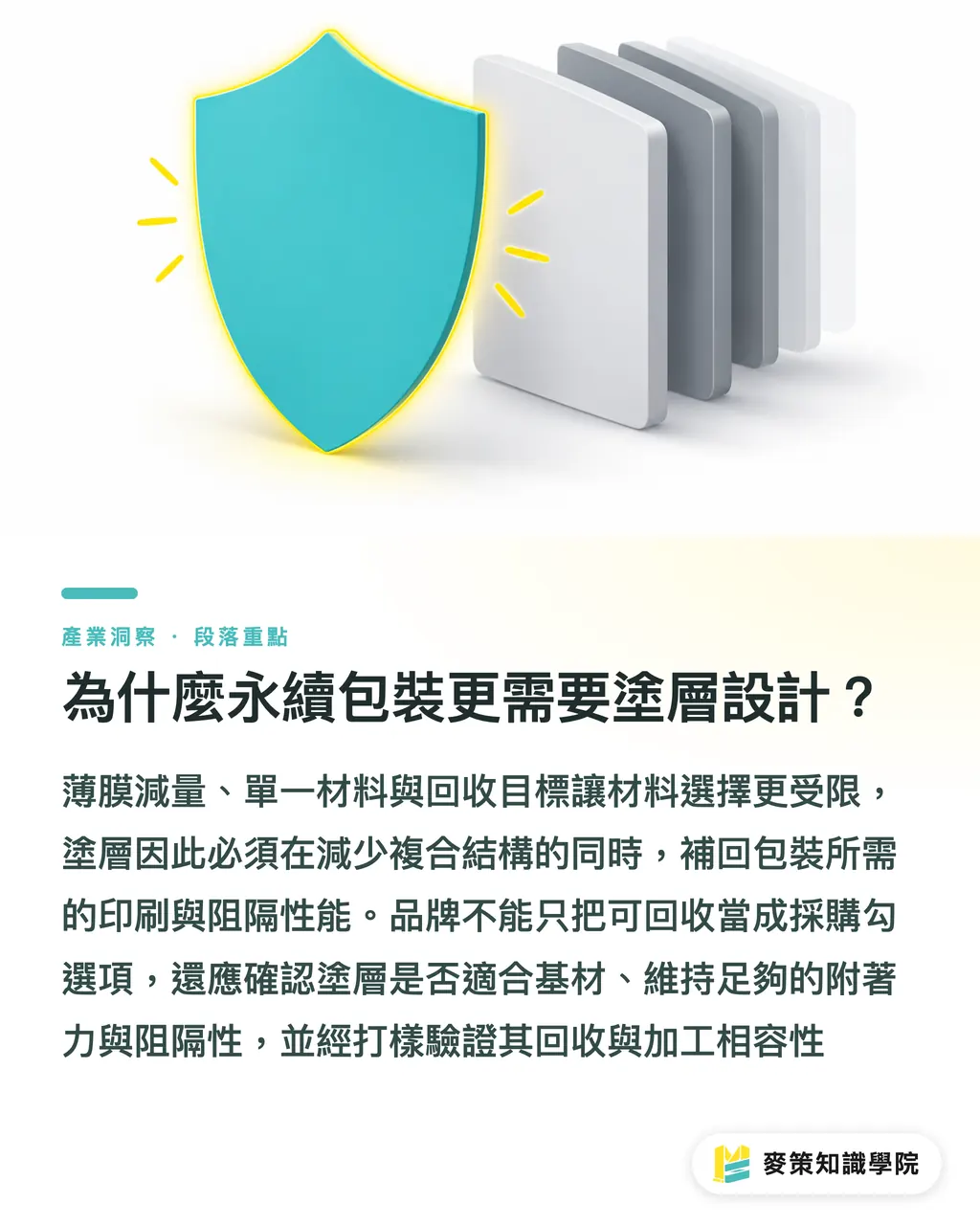
Why Isn't a Beautiful Package Out of the Factory Finished Yet?
Because packaging still goes through picking lines, automated packing, warehousing, and delivery. A coating's abrasion resistance, moisture resistance, and stability through folding and packing directly affect the brand impression at arrival
A carton that looks striking as it leaves the press does not mean it will reach the consumer intact. Friction causes scuffing and dulling. Moisture damages the printed surface. Folding, wrapping, and transport also magnify weak points
Flint Group points out that a delivery route may include weeks of storage and handling. E-commerce packaging is both a shipping container and a brand touchpoint. Its condition on arrival is the consumer's first judgment of quality and reliability
Decorative coatings handle gloss, texture, and perceived depth. Soft-touch matte or high-gloss finishes can draw attention to key areas, while tactile effects make the sense of quality about more than what the eye sees
If the finish cannot survive logistics, the brand spends on visual impact and gets a defect impression in return
How Should Brands Write Coatings into Procurement Specifications?
Brands should define performance by use case first, have the printer validate it through prototypes, and then put visual, logistics, and recyclability requirements into one specification
I use the three-gate packaging coating framework from MINDS (MS, mid-to-high-end fully customized commercial printing) to guide clients through the decision
・1. Materials gate: spell out whether the substrate is paper, film, recycled paper, or mono-material, and confirm that the primer matches the adhesion requirements. Do not write only "printable."
・2. Use gate: list moisture, abrasion, slip, heat resistance, migration, and fold-and-pack scenarios, and ask the printer to state the acceptance method clearly
・3. Brand gate: specify gloss, matte, soft-touch, texture, and colour consistency. At the same time, check that the finish aligns with the packaging's recycling target
Once all three gates are passed, the coating is the right choice. If the brand already has artwork, start by discussing the substrate, finish, and production conditions with MINDS. This is usually more efficient than comparing prices based on mockups alone, and saves on rework later
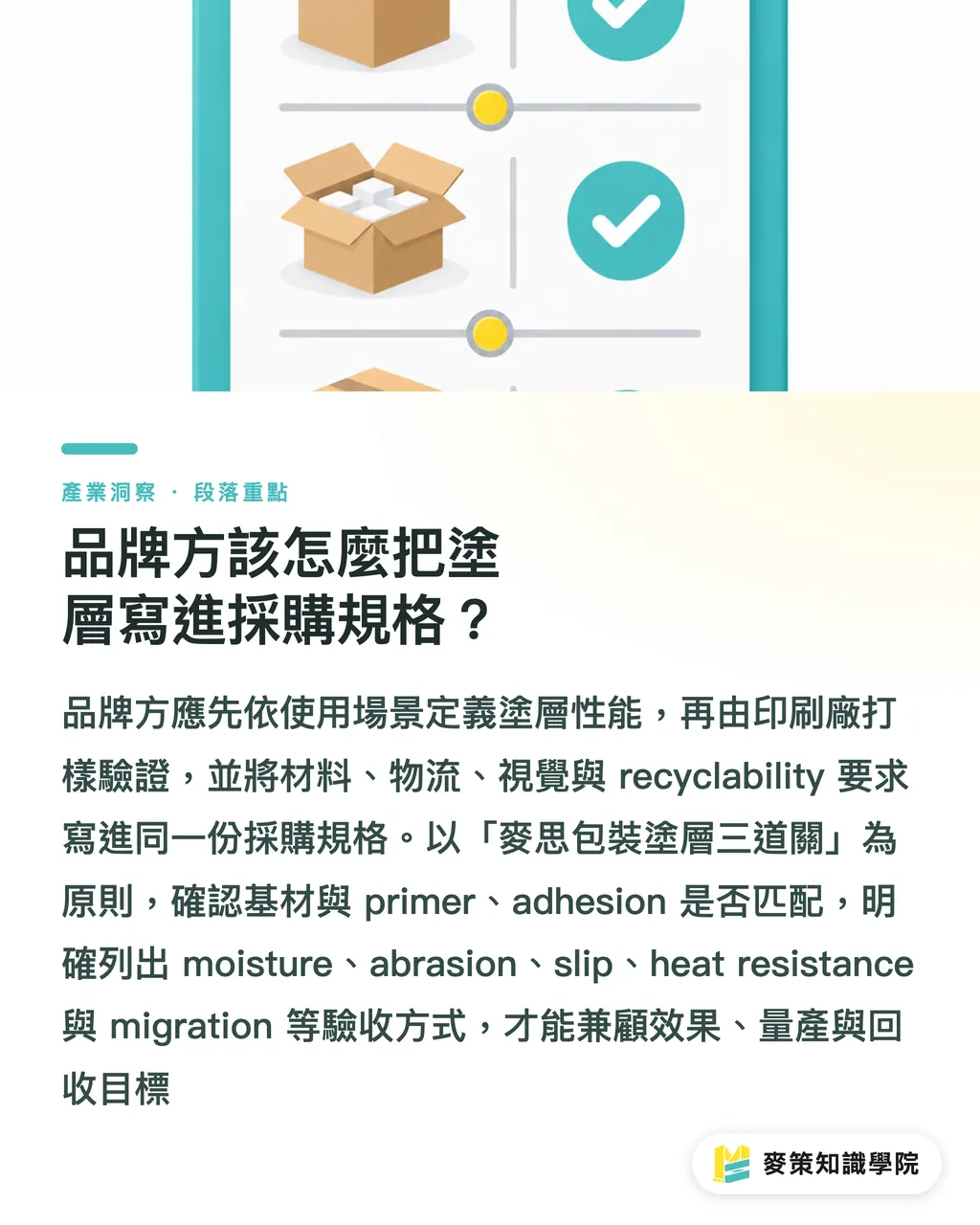
Key Takeaways
・Coating choices affect print adhesion, packaging barrier performance, logistics durability, and the brand's tactile experience all at once
・A new material is not production-ready just because it can run on press. Primer and barrier coating must be validated together with the substrate
・For e-commerce packaging, the condition on arrival is part of the brand experience, not just the gloss straight out of the factory
・Brands should define use conditions before discussing finish and price per unit. Only then can the risk of rework start to fall
Further Considerations
On the print manufacturing side, coating can move from a note in the quote to the front end of prototyping. On the design side, designers should mark the substrate and tactile intent beside the mockup. AI-generated mockups can help with visualization, but they cannot replace adhesion, migration, or abrasion testing. If a SaaS system is going to support this kind of work, it should keep traceable fields for the substrate, coating, use case, acceptance results, and version, so brands, designers, and printers are all working from the same specification. Turn the three gates into a form before talking about automation. Otherwise, you just make the wrong settings run faster
Further Reading
FAQ
- Why does modern packaging need coatings?
- Because coatings affect ink adhesion, material barrier performance, abrasion and moisture resistance, and surface feel. They determine whether packaging can maintain its performance through printing, converting, transport, and after arrival
- What is the difference between primer and barrier coating?
- Primer mainly prepares the substrate surface, helping with adhesion and colour density. Barrier coating mainly addresses migration and packaging barrier performance. They serve different purposes but can work together to support new materials
- Is mono-material packaging necessarily easier to print?
- Not necessarily. Mono-materials can support recycling goals, but the substrate surface, absorbency, and converting conditions still affect printability. Primer and prototyping are needed to confirm the result
- What should brands look at first when buying coatings?
- Start with the product and logistics conditions of use. Then confirm the substrate, coating functions, visual finish, and recycling target. Finally, ask the printer to explain them through prototypes and acceptance criteria
Related articles




The Print × AI weekly
The print and AI know-how designers, brands and enterprises can use before they commit — one email, every week
MINDS Free Tools
AI background removal, a LINE sticker maker, spine & imposition calculators — all free, right in your browser, no upload.
MINDS Group
Need actual printing or gifting services?
From premium printing to online ordering and festive gifts — the MINDS Group sister brands take it from here.