
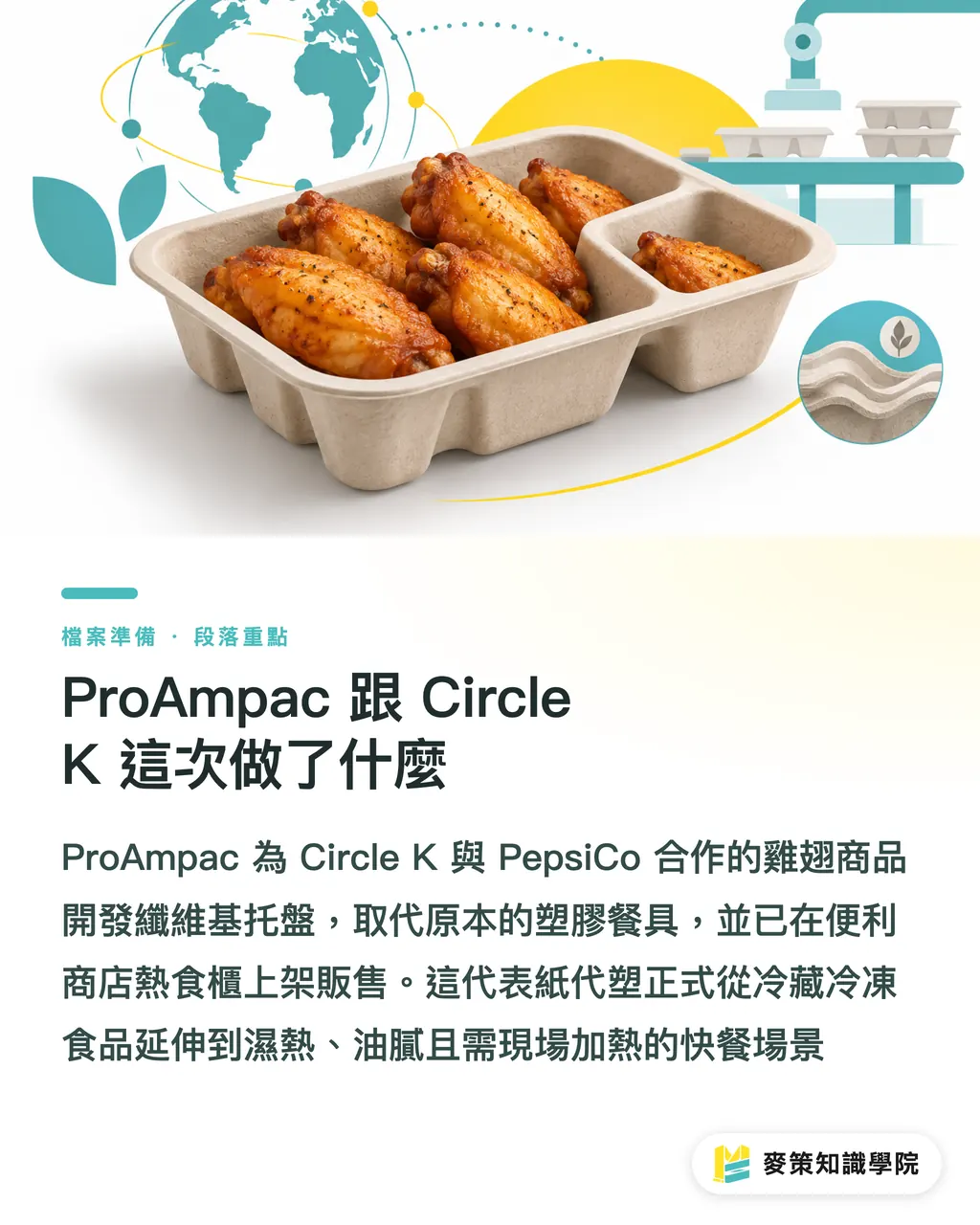
What ProAmpac and Circle K Did This Time
ProAmpac, a U.S. packaging company and multinational manufacturer of flexible and fiber packaging, developed a fiber-based tray for the chicken-wing product sold in Circle K convenience stores with support from PepsiCo. The tray replaces the plastic container previously used for the wings and goes straight into the hot-food display for sale
This is not a lab display piece. It is commercial packaging already on store shelves, which means paper replacing plastic has moved beyond chilled and frozen foods into fast-food settings involving moisture, heat, grease, and on-site heating. Convenience-store hot-food displays see heavy traffic and turn inventory quickly. If a material change goes wrong, customer complaints reach the store counter fast
How Is a Paper-Fiber Tray Different from a Plastic Container
The tray has to withstand grease and heat while also holding its shape. Plastic handled all three with little trouble. Fiber has to make up the gap with coatings. In the projects I have worked on over the past year or two, grease-resistant coatings are where things most often go wrong. Chicken wings are a high-fat fast food. If the barrier layer is not up to the job, grease seeps through the bottom and the tray deforms. That is exactly the kind of image consumers are most likely to photograph and post with a complaint
Material conversions of this kind have become noticeably more common over the past six months. I have noticed Ahlstrom, a Finnish paper group, expanding its North American grease-resistant paper production lines to meet demand for takeout packaging. Cirkla has also set up a molded-fiber meat-tray production line in the U.S. to replace expanded polystyrene (EPS), while even shelf-stable tuna is being packed into paper cartons by Tetra Pak. The direction is consistent: paper fiber that can handle grease and moisture and still be recyclable is steadily taking over more of the territory once held by rigid plastic
What Designers Need to Watch on This Kind of Job
When you get a printing job involving paper-fiber packaging, confirm material tolerances before discussing color. Do not reverse that order
・Confirm the barrier coating first: Find out whether it is a single-sided lamination or full-surface grease treatment. Where the coating sits directly determines which side can be printed with water-based ink and which cannot
・Molded-fiber surfaces are rough and uneven, not flat paperboard. Halftone dots and small type can easily fill in or blur, so increase the minimum type size and line weight by one step in the design. That way you do not discover only after sending it to press that the fine details have disappeared
・Tolerances are much looser than with paperboard cartons: molded fiber is formed in a mold, so dimensions can vary even within the same production run. Leave a larger safe margin around the artwork position and full-bleed color blocks than you would for a standard paperboard carton. Do not carry over the bleed allowance used for offset-printed cartons
・Confirm the color coverage with the supplier first: Many fiber trays accept only spot printing or a single-color mark. Not every design can be printed across the entire surface in multiple colors. Check the process capability before preparing the artwork. It saves time compared with being sent back after the design is finished
Why Taiwanese Small and Midsize Printers Should Prepare Now
International brands' material shifts in fast food and convenience retail are not one-off cases. They set off a chain reaction. Once competing brands follow, client specification sheets will change too. Taiwanese small and midsize printing shops mostly handle flat print work such as paperboard cartons and labels. Molded-fiber forming calls for a completely different production mindset. Equipment, molds, and ink systems all need to be reassessed
The practical move at this stage is to start with the parts you can take on: outer labels, corrugated paper carry bags, and paper accessories that can be paired with a fiber-based package. These remain within the capabilities of conventional offset and flexible printing. To take on a complete fast-food packaging program, you can work with a full-custom commercial printer such as MINDS to assess materials and the printing approach together. For cost-sensitive production runs, you can place orders online through Mai Printing
How Brand Owners and Designers Should Divide the Work
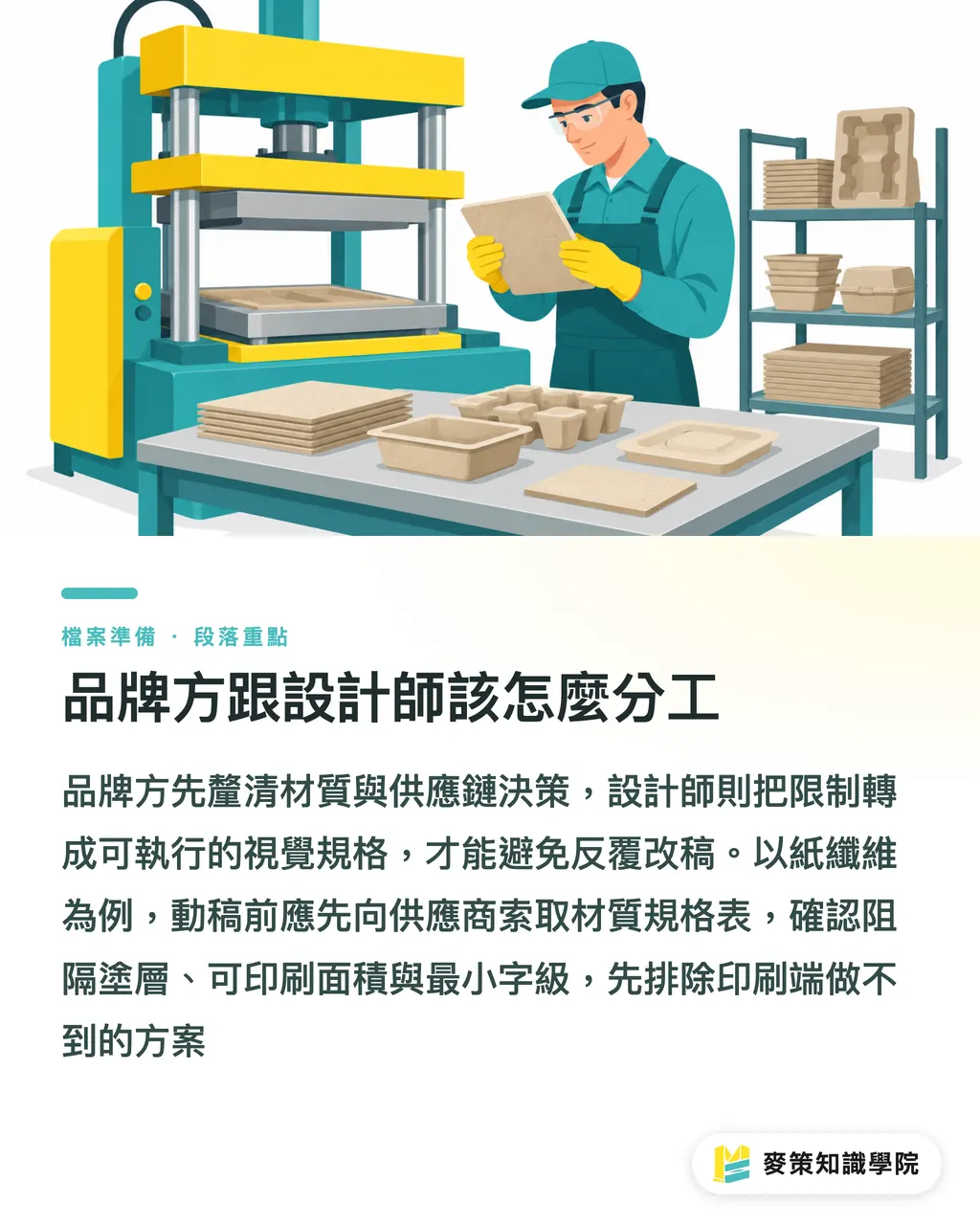
Brand owners make the material and supply-chain decisions. Designers turn those constraints into visual specifications that can actually be produced. Draw that line of responsibility early, or the job gets stuck in rounds of revisions. When design receives the instruction to use paper fiber, the first step is not to open the graphics software. Ask the supplier for a material specification sheet: barrier-coating type, printable area, recommended minimum type size, and color-reproduction range
If anything is unclear, bring in a consulting team that understands printing processes for a feasibility check, such as Mai Strategy Knowledge Academy, a consulting resource familiar with material-conversion cases. Clarifying what the printer can and cannot do before the artwork starts saves a lot of trouble compared with discovering after the file is finished that it cannot be printed
Key Takeaways
・ProAmpac's paper-fiber tray for Circle K's chicken-wing product is a real-world case of paper replacing plastic in hot fast-food packaging, not a proof of concept
・The grease and moisture barrier coating is what makes or breaks a paper-fiber food container. Most complaints come down to leakage and deformation
・Molded-fiber surfaces are rough and tolerances are loose, so type size, line weight, and bleed in the artwork all need to be one step larger than on a flat paperboard carton
・Color coverage is often limited by the process. Confirm the printable area with the supplier before starting the artwork. Do not wait for a proof to find out it cannot be printed
・Material conversion sets off a chain reaction. Taiwanese small and midsize printers and designers should build up their specification know-how now, rather than wait for client spec sheets to change and then scramble to catch up
Further Thoughts
For printers and manufacturers, this wave of paper replacing plastic does not mean you need to buy molded-fiber equipment tomorrow. It is a reminder to make material-compatibility assessment part of the standard pre-quote process, especially for packaging used in takeout, delivery, and convenience stores, where grease and heat are part of the brief. For designers, the next step is to build a personal material-spec checklist and turn barrier coating, tolerances, and printable area into fixed questions before starting artwork, rather than circling back after a failed proof. For brands and SaaS professionals, there is another reminder here: material choices in the packaging supply chain are becoming variables that need to be brought into product planning early. Delay the decision, and the design rework bill will hit later, all at once
Further Reading
FAQ
- Can a paper-fiber tray be colored using standard printing equipment
- Most molded-fiber trays have rough, non-flat surfaces, so standard offset printing equipment usually cannot be used as-is. They are typically handled with spot printing or a supplier-specified printing process. Always confirm the printable range with the material supplier before preparing the artwork
- Can paper-fiber food containers run into grease leakage problems
- Yes. This is one of the industry's most discussed pain points right now. Whether the grease barrier coating is good enough directly determines whether the bottom will leak and deform when greasy food is packed inside. The design team should make this the first material check, not the last
- Can Taiwanese small and midsize printers take on paper-fiber packaging jobs now
- A complete molded-fiber forming setup usually requires dedicated equipment and tooling. For now, the more practical entry points for smaller printers are outer labels, corrugated accessories, and other components still within the reach of conventional printing. At the same time, they should start learning how to read material specification sheets
- What is different for a designer handling a paper-for-plastic packaging project compared with a normal paperboard carton design
- The biggest differences are tolerances and printable area. Molded fiber has looser forming tolerances than a paperboard carton, so minimum type size and bleed both need to be increased. Not every part of the surface can be colored either. Confirm process capability before starting the artwork. That is much more efficient than revising the file afterward
Related articles




The Print × AI weekly
The print and AI know-how designers, brands and enterprises can use before they commit — one email, every week
MINDS Free Tools
Imposition calculator and preflight file check — free prepress tools, right in your browser.
MINDS Group
Need actual printing or gifting services?
From premium printing to online ordering and festive gifts — the MINDS Group sister brands take it from here.