

Overview
Last month, a longtime client who makes flexible food packaging asked me, "The brands are starting to ask whether paper pouches can hold 3-in-1 coffee. Should we buy new equipment?" It's a familiar question. Paper-based packaging used to be treated as a substitute for times when plastic couldn't be used. Now brands, paper mills, coating suppliers, and equipment makers are starting to work together, and the situation has changed. The key question is this: Has paper-based flexible packaging moved from being a single material option to a systems challenge that calls for collaboration across industries? If so, where should converters position themselves?
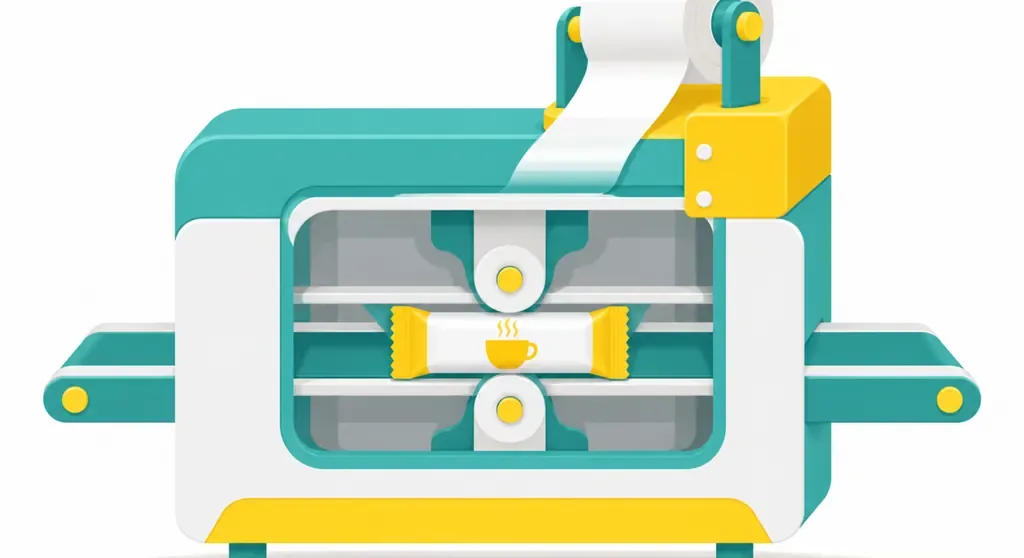
Why are so many major brands suddenly paying attention to paper-based flexible packaging?
Paper-based flexible packaging is getting attention because small-format plastic packaging is one of the hardest parts of the plastic-reduction challenge to solve
In September 2026, Colgate-Palmolive, Mars, Nestlé, PepsiCo, Procter & Gamble, and Unilever formed the PaperFlex Consortium, convened by the Ellen MacArthur Foundation and facilitated by (RE)SET [1]. According to the consortium, plastic packaging such as sachets, wrappers, and pouches is the fastest-growing type of plastic packaging worldwide, yet recycling solutions that work at scale are still uncommon [1]. The Ellen MacArthur Foundation has also named small-format plastic packaging as one of the three systemic barriers to addressing plastic waste [1]
The consortium is focusing on markets with high use of flexible packaging and inadequate recycling systems [1]. A study of the fast-food industry in Semarang, Indonesia, offers a case in point: simply replacing materials while ignoring local collection and processing conditions has limited impact on plastic reduction [2]. My read is that PaperFlex has set a practical goal. It acknowledges that recycling systems are not yet in place, then designs for two possible outcomes: recyclable once the system improves, and biodegradable if the packaging accidentally escapes into the environment [1]
What role does regulation play in this shift?
Regulation sets the direction and creates pressure around timing, but it does not endorse any particular material
The EU Packaging and Packaging Waste Regulation (PPWR), published as Regulation (EU) 2025/40, brings design for recyclability and recycled content requirements for plastic packaging into a mandatory framework [7]. The European Commission has also made reducing packaging waste and supporting circularity policy priorities [8]. For plastic flexible packaging, this means multilayer films will face increasing challenges
But regulation itself is shaped by competing interests. During the legislative process, commentators criticized the PPWR as the European Parliament giving in to industry pressure [3]. That is a reminder that the final text and its implementation details may be more flexible or different from the original proposal. The source material also mentions UPM, Michelman, and Bobst developing packaging concepts to support compliance with the Single-Use Plastics Directive (SUPD) [1]. Paper suppliers, coating suppliers, and equipment makers are already treating compliance as a shared starting point for product development
My analysis: regulation is pushing the industry away from hard-to-recycle structures. It is not telling everyone to switch to paper. Before choosing paper, brands still need to ask whether paper-based structures can actually be recycled where they are sold
What technical hurdles are holding paper-based flexible packaging back?
The main hurdles are barrier and product-protection performance, runnability on production lines, and cost at scale
Sander Defruyt of the Ellen MacArthur Foundation puts it plainly: responsibly designed paper-based flexible packaging "does not yet exist at the required performance, scale, and cost" [1]. The consortium's planned trials will cover biodegradable coatings, product protection, shelf life, consumer usability, and how paper-based materials perform on production lines [1]
I use what I call the "Mai Strategy three-gate check" for paper-based flexible packaging:
・Barrier gate: Paper alone cannot block moisture and oxygen, so coatings have to make up the difference. Packaging made from food industry by-products is one research direction [6], but it is still a long way from the lab to mass production. If the barrier is inadequate, products may spoil early, and food waste can cancel out the benefits of reducing plastic [4]
・Production-line gate: Paper stretches and heat-seals differently from PE, so existing bag-making and filling lines may not run smoothly. Flexible packaging lines are already sensitive to defect rates. Research shows that using Six Sigma to manage defects can have a clear effect on costs [5]. Changing materials means facing the yield curve all over again
・End-of-life gate: In the market where the product is sold, will it go into paper recycling, mixed waste, or directly into the environment? The answer affects both coating formulations and labeling strategy
Is paper-based packaging always better for the environment than plastic?
Not necessarily. Environmental performance depends on the situation, so the material name alone does not tell the whole story
A meta-analysis of life cycle assessments (LCA) for packaging found that comparisons between materials can vary widely depending on system boundaries, use cases, and assumptions about waste treatment [9]. In other words, "paper is better" is a claim that needs to be proven case by case
My analysis: If a paper-based structure needs a thicker coating to meet barrier requirements, or lower yields create a lot of scrap paper, its overall carbon footprint may not come out ahead. Converters should be ready to help brands obtain comparable LCA data instead of simply handing over a "paper" label
What should Taiwan's printing and packaging suppliers do now?
The move now is to build up low-cost samples and data. There is no need to rush into a major equipment investment
Each PaperFlex member will decide its own packaging strategy [1], so the consortium's R&D will not turn into large orders overnight. My advice: work with paper and coating suppliers on small-batch proofing, and record heat-seal strength, barrier test results, and line speed. Then check the recycling conditions in the target markets for export customers. Only after that should you assess equipment changes
Scope note: If your customers mainly make products that need high barriers and long shelf lives, such as food, liquids, or medical products, paper-based flexible packaging may not be ready in the near term. A recyclable mono-material plastic solution may be the more practical choice for now
Key takeaways
・The PaperFlex Consortium brings together six global consumer goods companies to focus on paper-based alternatives to small-format plastic packaging [1]
・The main challenges for paper-based flexible packaging are barriers, runnability, and cost. The consortium itself acknowledges that solutions are not yet mature [1]
・Regulation is pushing the industry away from hard-to-recycle structures. It is not directly requiring a switch to paper
・The environmental benefits of paper-based packaging need to be verified case by case with LCA. Results depend heavily on the assumptions [9]
・For Taiwan's converters, the best move at this stage is to build experience through proofing and data collection, rather than make a major equipment investment
Further thoughts
For paper-based flexible packaging to compete, material, production-line, and recycling conditions all need to be considered together. Printing and manufacturing teams need to build a database of heat-sealing, barrier, and runnability data for paper-based structures, so sample results can be compared and repeated. Design teams need to account for recyclability labels, coating area, and ink coverage as part of structural design, not just visual design. AI could help by bringing proofing parameters and defect records together, predicting yield risks with new materials, and shortening trial-and-error cycles. SaaS tools could connect recycling conditions in different markets, regulatory timelines, and LCA data in a decision interface for brand procurement. Questions still need answers: Will biodegradable coatings interfere with paper recycling? How quickly will recycling systems improve in emerging markets? And how widely will the consortium share its R&D results so small and midsize converters can use them too?
References
[2] Krikke H., Widianarko B., Löhr A. (2025). How to tackle plastic waste realistically? The case of packaging and service ware in the fast food industry in Semarang, Indonesia. Sustainability Letters. DOI: 10.62513/sl321901
[3] Packaging and Packaging Waste Regulation: European Parliament caves in to industry pressure. Climate Change and Law Collection. DOI: 10.1163/9789004322714_cclc_2023-0294-1361
[4] Hossain A. (2023). Do date codes cause food waste? Smart packaging might tackle the problem. Journal of Food Bioactives. DOI: 10.31665/jfb.2023.18359
[5] Keanoubie M., Kusumastuti R. (2025). Enhancing quality management in Indonesia's flexible packaging industry: A six sigma approach to defect reduction and cost savings. Journal of Entrepreneurial Economic. DOI: 10.61511/jane.v2i1.2025.1726
[6] Zahid A., Khedkar R. (2020). Biobased Packaging from Food Industry Waste. Sustainable Food Waste Management. DOI: 10.1007/978-981-15-8967-6_14
[7] EUR-Lex: Full text of the EU PPWR regulation. EUR-Lex
[8] European Environment Agency: EU packaging waste. European Environment Agency
[9] Mendeley record for a Journal of Cleaner Production meta-analysis on packaging life cycle assessment. Mendeley record for a Journal of Cleaner Production meta-analysis
FAQ
- What is the PaperFlex Consortium?
- The PaperFlex Consortium is a cross-industry R&D alliance convened by the Ellen MacArthur Foundation and facilitated by (RE)SET. Its founding members are Colgate-Palmolive, Mars, Nestlé, PepsiCo, P&G, and Unilever. The consortium aims to speed up the development of paper-based flexible packaging that can replace small-format plastic packaging
- What is the biggest technical challenge for paper-based flexible packaging right now?
- The main challenges are barrier and product-protection performance, how the packaging runs on existing production lines, and cost at scale. The Ellen MacArthur Foundation says responsibly designed paper-based flexible packaging is not yet ready in terms of performance, scale, and cost
- Is paper-based packaging always better for the environment than plastic packaging?
- Not necessarily. Packaging LCAs show that a material's environmental performance depends heavily on system boundaries, use cases, and assumptions about waste treatment. The benefits of paper-based packaging need to be verified with an LCA for each case
- Will the EU PPWR require brands to switch to paper packaging?
- The EU PPWR (Regulation (EU) 2025/40) sets requirements for packaging design for recyclability and recycled content in plastic packaging, among other things. It does not require a switch to paper. Brands still need to choose materials based on product needs and recycling conditions in the markets where they sell
- Should print shops in Taiwan invest in equipment for paper-based flexible packaging now?
- In most cases, there is no need to rush into a major equipment investment. Start with small-batch proofing in partnership with paper and coating suppliers, and build up data on heat-seal strength, barriers, and runnability. For products that need high barriers and long shelf lives, recyclable mono-material plastic may be the more practical option in the near term
Related articles
The Print × AI weekly
The print and AI know-how designers, brands and enterprises can use before they commit — one email, every week
MINDS Free Tools
AI background removal, a LINE sticker maker, spine & imposition calculators — all free, right in your browser, no upload.
MINDS Group
Need actual printing or gifting services?
From premium printing to online ordering and festive gifts — the MINDS Group sister brands take it from here.