
Overview
For AI-assisted small-batch test packaging, the safest approach is to follow the "MINDS (MS, mid- to high-end fully custom commercial printing) low-risk market-test trilogy": first use AI to quickly generate multiple visual and copy directions, then print them in no-die-cut formats such as belly bands or stickers, and finally choose the mass-production version based on test-sale feedback
Why Shouldn't New Product Packaging Be Printed in Bulk Right Away?
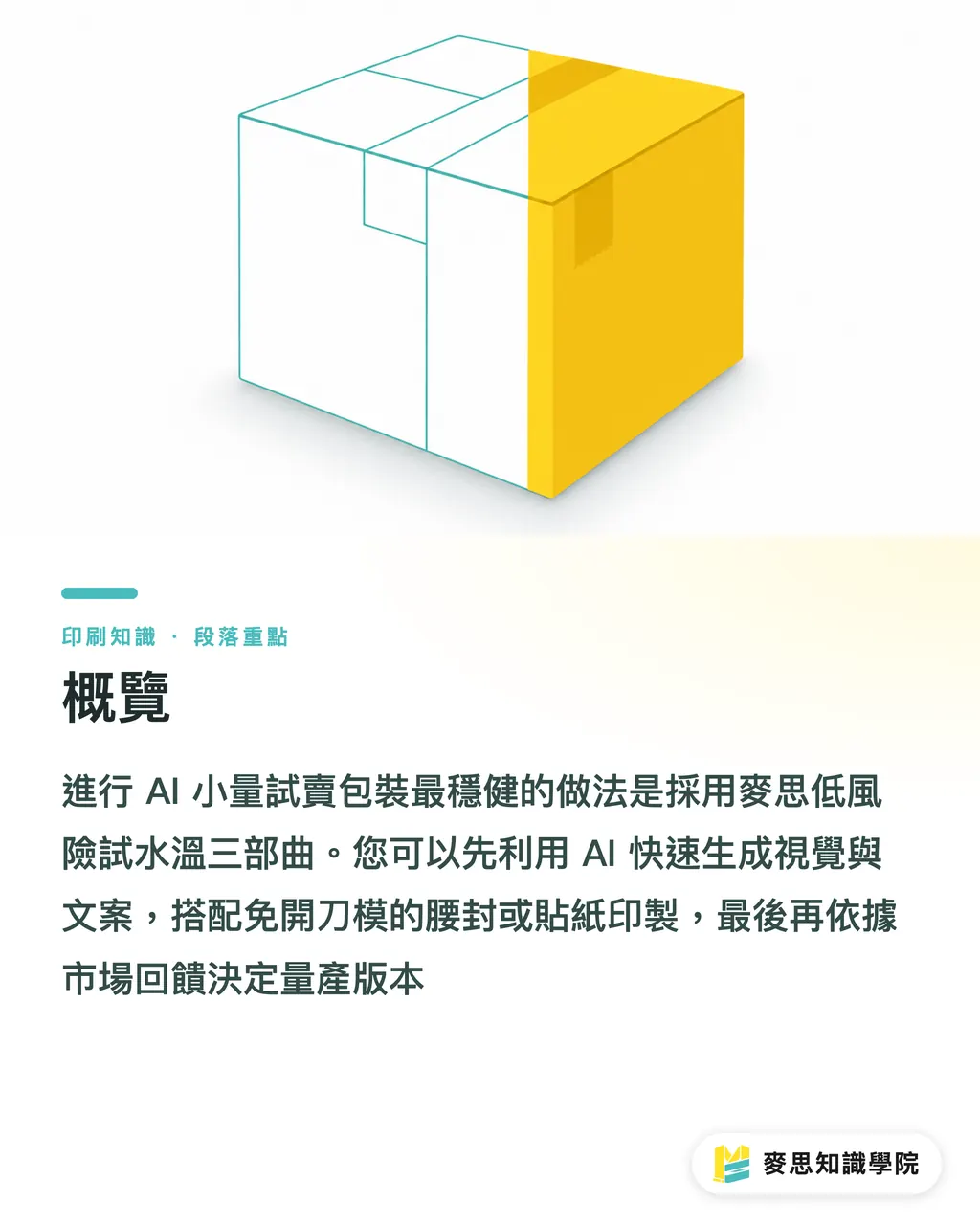
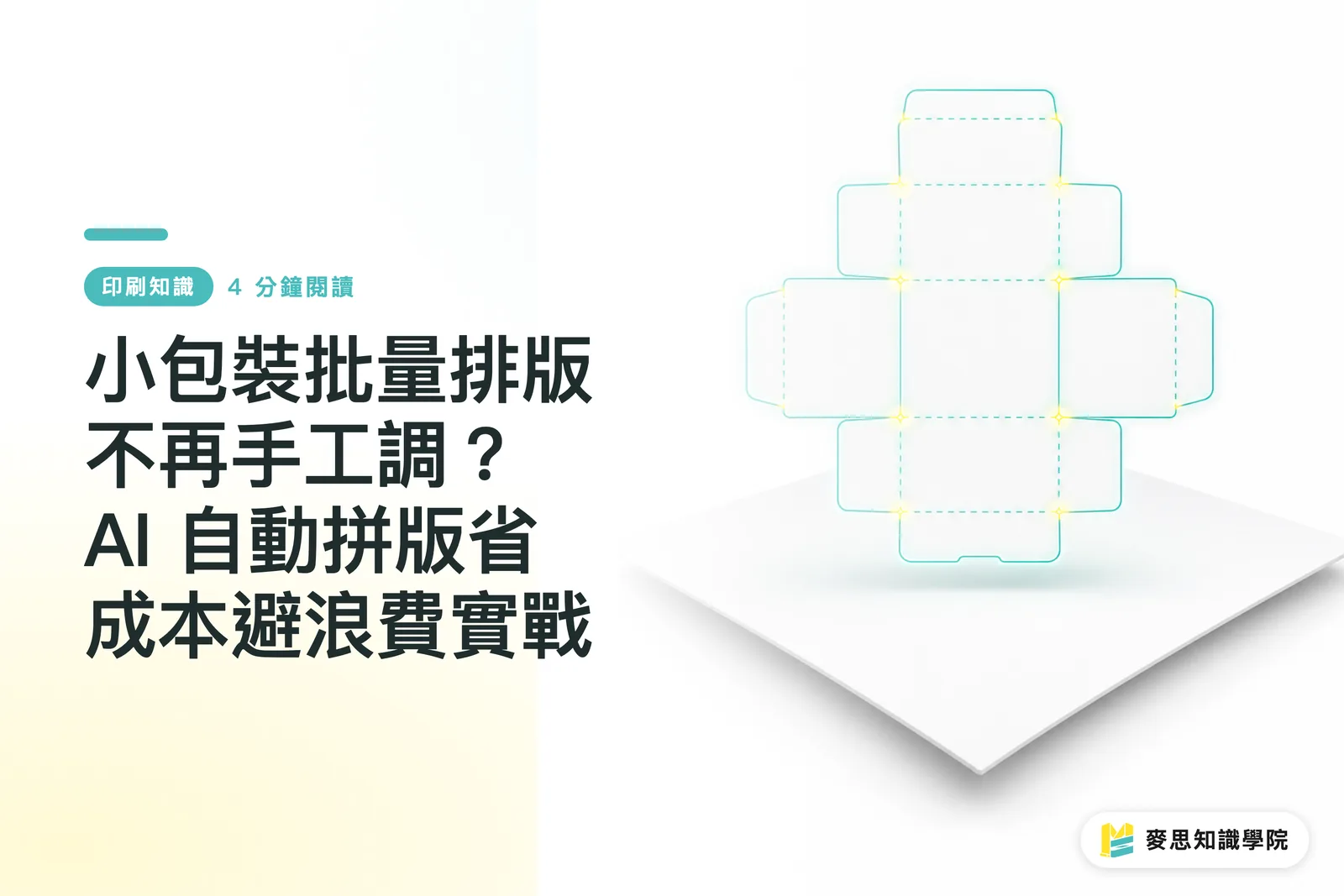
Die-cut Template: a mold used by a printer to cut and shape paper into a specific form
Creating a new die-cut template is not cheap. Once the design changes, the old die is scrapped, making it one of the main fixed costs in the early stage of packaging printing
Many business owners feel very confident about a new product, so they open with a custom die and print 5,000 full-color boxes in the first run
Then the market response is lukewarm, or they realize the product description on the package is not clear enough. The whole batch ends up sitting in a warehouse collecting dust
From my experience visiting printing factories for more than a decade, this all-or-nothing approach carries too much risk
We can treat packaging design more like software development: launch a test first, then iterate and improve
This is also the strategy the Mai Strategy Knowledge Academy consulting team most often recommends when helping brands develop new products: trade the lowest possible printing cost for the most real market feedback
How Can AI Speed Up Packaging Direction and Copy Generation?
In the early stage of packaging tests, AI plays the role of a creative assistant that can instantly give you a dozen-plus proposals
All you need to enter is the product positioning, main audience, and core selling points. AI can then produce packaging directions and copy versions in different styles
・Visual style exploration: ask AI to generate packaging mockups for styles such as "literary and minimalist," "tech-forward," or "luxury," giving the internal team concrete points to discuss
・Sales copy A/B testing: have AI write two sets of copy, one focused on "natural ingredients" and another on "fast, practical results," then use them on different batches of test packaging
・Simulating the real shelf effect: place AI-generated design images into a shelf scenario and see whether your product stands out enough among competing products
The MINDS (MS) Low-Risk Market-Test Trilogy: How Do You Keep Small-Batch Packaging Economical?
Once you have designs and copy from AI, do not rush to use them for custom die-cut color boxes
We have a "MINDS (MS) low-risk market-test trilogy" built specifically for this stage, when you still do not know which version will win
・Step 1, choose ready-made standard packaging: there are many off-the-shelf kraft boxes, white card boxes, and foil pouches on the market, available in a wide range of sizes with no mold fee at all
・Step 2, print low-cost add-ons: print the AI-generated design on stickers, belly bands, or box sleeves. With digital printing, even 100 pieces of these printed items can be produced
・Step 3, assemble and test in the market: wrap the printed belly bands around standard boxes, place this small batch of products in different sales channels, and observe pick-up rates and purchase conversion rates
What Comes Next After You Get the Test-Sale Data?
After one or two months of test sales, the market will give you the most direct answer on which packaging sells well and which line of copy best moves customers
At that point, the data in your hands becomes the confidence behind formal mass production
If the test results clearly show that one design wins by a wide margin, you can then consider working with a printer like MINDS, which focuses on mid- to high-end custom commercial printing, to formally discuss paper selection, surface finishing, and dedicated die-cut template production
Because you have already confirmed market acceptance, the budget for die creation and bulk printing goes exactly where it should. No need to worry about it turning into dead inventory
Key Takeaways
・Do not pour money into a dedicated die-cut template for new product packaging right from the start. Use small-batch testing first to lower inventory risk
・AI is well suited for generating many early-stage packaging visuals and sales copy options, giving you material for A/B testing
・Ready-made boxes paired with digitally printed stickers and belly bands make the lowest-cost test-sale setup
・Use real market feedback to decide the final packaging, then invest in higher-end custom printing
Further Thoughts
Moving packaging decisions away from the boss's gut feeling and toward market data has been one of the biggest improvements in brand operations in recent years
AI tools fill the gap in fast front-end generation of multiple design versions, while flexible digital printing technology completes the last mile of small-batch execution
Future packaging design will inevitably look more and more like product development: test the waters with a minimum viable product first, then commit heavily once you know it works
FAQ
- What is a good quantity for small-batch test-sale packaging?
- Usually somewhere between 100 and 500 pieces. That is enough to place in a few physical test locations or online channels and observe conversion rates, while keeping digital printing costs within a reasonable range
- Will ready-made standard boxes with stickers look cheap?
- Not if the design and layout are handled well. If the belly band or sticker uses a paper stock with good texture, such as woodfree paper or art paper, standard packaging can still create a premium minimalist or handcrafted feel
- After testing, can the design files go straight to the printer for mass production?
- Test-version files are usually made for stickers or belly bands. To turn them into formal die-cut color boxes, a designer needs to extend the visuals onto the complete packaging die-line and handle bleed and fold-line settings
- Will there be a color difference between digital printing and traditional offset printing?
- Yes. Digital printing renders color differently from traditional printing. If you later switch to large-volume traditional printing, be sure to ask the printer for a new proof to confirm the colors. Do not treat the digitally printed sample as the standard color reference
Related articles

The Print × AI weekly
The print and AI know-how designers, brands and enterprises can use before they commit — one email, every week
MINDS Free Tools
AI background removal, brand stamping, and a LINE sticker maker — free design tools, right in your browser, no upload.
MINDS Group
Need actual printing or gifting services?
From premium printing to online ordering and festive gifts — the MINDS Group sister brands take it from here.